
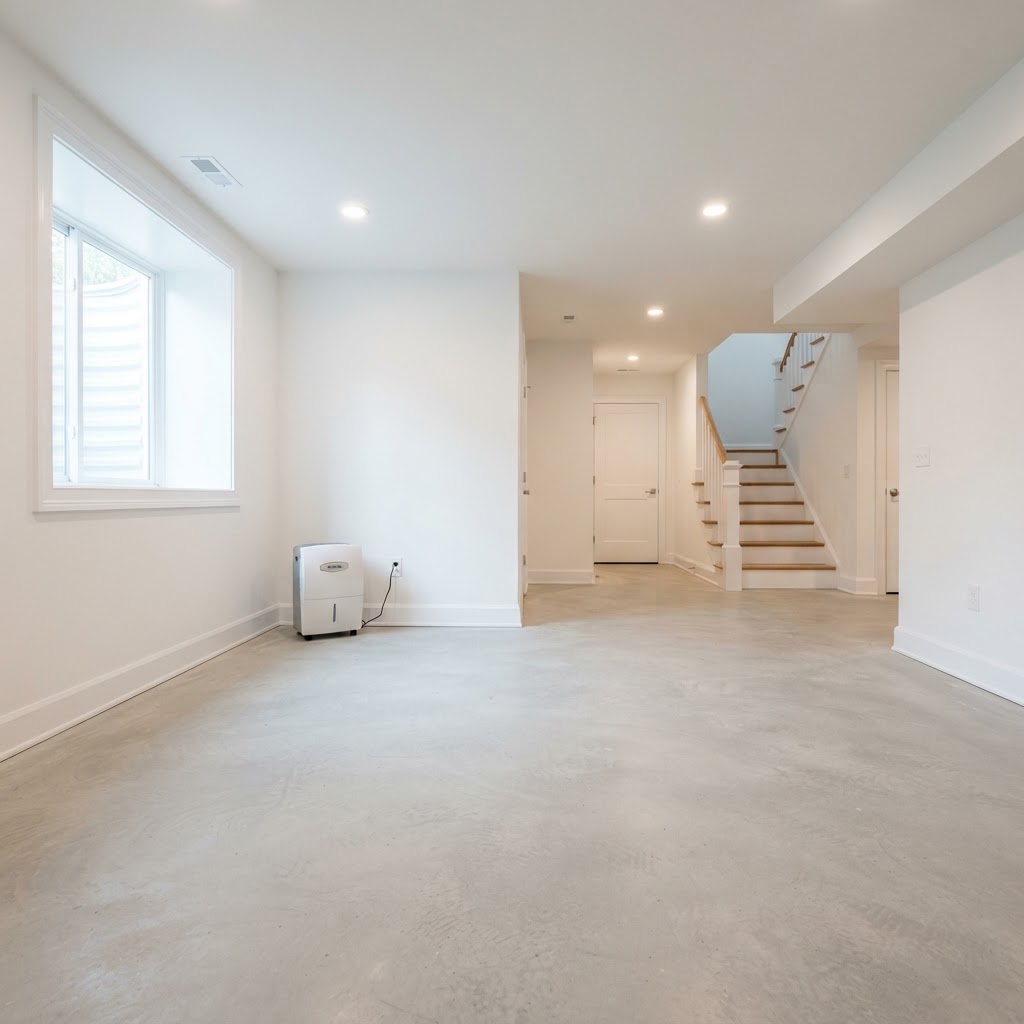
Why does concrete moisture testing matter before installing basement flooring in Arlington?
Concrete moisture testing matters before installing basement flooring in Arlington because concrete is porous and can transmit water vapor from the ground even when it looks and feels dry, and flooring installed over a slab with excessive moisture can swell, buckle, delaminate, grow mold, trap odors or lose its adhesive bond. Testing measures the moisture condition of the slab so that the flooring, adhesive, underlayment and any moisture mitigation system can be matched to what the slab is actually doing, and so that manufacturer warranty requirements are met. It also reveals problems, such as active leaks or poor drainage, that should be fixed before any flooring goes down. Floors and Beyond VA, a family-owned Northern Virginia flooring and remodeling contractor serving Fairfax, Loudoun, Prince William and Arlington counties since 1987, treats moisture assessment as a required first step for basement and slab flooring, using in-house crews and no subcontractors to carry out preparation and installation to manufacturer standards.
Basements are some of the most valuable space in Arlington homes. In neighborhoods such as Lyon Park, Cherrydale, Westover, Maywood, Waverly Hills, Arlington Ridge and Aurora Highlands, finished lower levels serve as family rooms, home offices, guest suites, gyms and rental units. In townhouses and condominiums, ground-level and below-grade spaces face similar issues. These spaces sit in or against soil, and the concrete slab beneath them is in constant contact with moisture in the ground. Arlington's older housing stock, compacted urban soils, mature trees, hillsides, stormwater patterns and in some neighborhoods higher water tables make moisture a real consideration. This guide is a specialist article on the subject. Instead of another general basement flooring roundup, it explains what moisture testing is, why it matters, how slabs behave, what the common tests measure, how results influence product choices and slab preparation and which signs mean the substrate needs attention before anything is installed. For related reading, see our articles on the best flooring options for basements with moisture issues, the best flooring on concrete basements and flooring for the basement.
How concrete holds and moves moisture
Concrete is a porous material made from cement, sand, aggregate and water. After it cures, it contains a network of tiny capillaries. These capillaries can hold water and allow water vapor to move through the slab.
Vapor transmission. When the soil beneath a slab is wetter than the air above it, water vapor moves upward through the concrete. This is called moisture vapor transmission. It happens slowly and continuously, even when no liquid water is visible.
Liquid water. When groundwater, surface runoff or plumbing leaks raise the water level against or beneath the slab, liquid water can enter through cracks, joints, penetrations and wall-floor intersections.
Hydrostatic pressure. In high water table conditions, water pressure can push moisture upward through the slab.
Residual construction moisture. New slabs contain mixing water that takes a long time to dissipate.
Slab-on-grade, below-grade and on-deck conditions. Slabs poured directly on the ground, or below grade as in a basement, are exposed to ground moisture. Upper-level concrete decks in multi-story buildings may hold residual moisture or be affected by plumbing leaks, but they do not typically experience ground moisture.
Vapor barriers. Modern construction often places a vapor barrier beneath the slab. Many older Arlington homes have none, or a barrier that has degraded. This is invisible and unknown without records.
Seasonal changes. Ground moisture varies with rainfall, snow melt and seasonal groundwater levels. A slab that tests dry in a dry season may test wetter after heavy rain. Humid summers also drive indoor humidity into cool basements, where it condenses on cool surfaces.
The key point is that appearance and feel are unreliable indicators. A slab can look and feel dry and still emit enough moisture to damage flooring.
What happens when flooring is installed over too much moisture
Moisture-related flooring failures are common and often expensive. Typical consequences include the following.
Adhesive failure. Moisture and the alkalinity it carries can break down adhesives, causing planks, tiles or sheet products to loosen, bubble or release.
Swelling, cupping and buckling of wood products. Wood and wood-based flooring absorb moisture and expand, causing cupping, crowning, buckling and gaps. Engineered wood is more stable than solid wood but not immune.
Mold and mildew. Trapped moisture beneath flooring creates conditions for mold, particularly under carpet, pad, laminate and vinyl. Mold can cause odors and indoor air quality concerns.
Odors. Musty smells arise from moisture and microbial growth.
Discoloration and staining. Moisture can bring minerals to the surface, leaving stains and efflorescence.
Delamination and blistering. Layers of sheet and plank products can separate.
Telegraphing and joint failures. Swelling beneath planks puts stress on locking joints.
Warranty denial. Many flooring manufacturers specify moisture limits and testing requirements. Failure to test and document can void warranties.
These problems frequently appear weeks or months after installation, when the cost of removal and replacement is highest. Testing before installation is a small step that prevents large problems.
Common methods of testing concrete for moisture
Professionals use standardized test methods that measure moisture in different ways. Each has its strengths, and flooring manufacturers specify which tests and limits they accept for their products. The following are common categories.
Relative humidity testing inside the slab
This method measures the relative humidity within the concrete using probes placed in holes drilled into the slab and allowed to equilibrate. It reflects the moisture condition deep in the concrete, where moisture that will eventually reach the surface resides. It is widely considered a reliable indicator of the moisture condition a flooring system will experience and is commonly referenced by manufacturers. It requires time for equilibration and careful procedure.
Moisture vapor emission rate testing
This method measures the rate at which moisture vapor leaves the slab surface over a period of time, typically using a sealed dish containing a desiccant placed on the slab. The weight gain of the desiccant indicates how much moisture was emitted. It reflects surface conditions and can be affected by ambient temperature and humidity. It is referenced by some manufacturers.
Surface moisture meters
Handheld meters measure moisture near the surface. They are quick and useful for screening and for comparing areas, but they are not a substitute for standardized quantitative tests and are not generally accepted as the basis for warranty compliance.
Plastic sheet test
A simple, qualitative test tapes a plastic sheet to the slab for a period and checks for condensation or darkening. It indicates that moisture is present but does not quantify it.
Alkalinity testing
Concrete is naturally alkaline. Excess moisture can bring alkaline salts to the surface, which can attack adhesives. Testing slab surface alkalinity helps determine adhesive compatibility.
Slab temperature and ambient conditions
Test results depend on temperature and humidity. Standards typically require that the building be at normal service conditions, with the heating and cooling system operating, for a period before and during testing. Testing in unconditioned or unrepresentative conditions can give misleading results.
Which test applies depends on the flooring product and its manufacturer's requirements. We follow each manufacturer's written instructions and document results. Specific thresholds vary by product and are set by manufacturers, so this article does not state numerical limits.
How test results guide product and preparation decisions
Testing is not pass-or-fail in a vacuum. Results influence a series of decisions.
Within acceptable limits for the chosen product. Installation can proceed, following the manufacturer's preparation and installation requirements.
Elevated but manageable. Options include applying a moisture mitigation system, such as a penetrating sealer or membrane designed to reduce vapor transmission; selecting a more moisture-tolerant product, such as porcelain tile, certain luxury vinyl plank systems or specialized products with moisture-resistant adhesives; or using a subfloor system that separates the flooring from the slab.
High or variable. Investigate the cause. Solutions may include improving exterior drainage, repairing leaks, addressing grading and gutters, installing interior drainage and sump systems, applying waterproofing or specialized mitigation or deferring flooring until conditions improve. Some basements are not suited to moisture-sensitive flooring at all.
Evidence of liquid water or hydrostatic pressure. Flooring is not the solution. Waterproofing, drainage and structural remedies come first.
Results also indicate how to treat adhesives. Moisture and alkalinity can attack some adhesives, so manufacturers specify compatible products for various moisture conditions.
Product limitations in basements
Different floor coverings tolerate moisture differently, and the test results interact with these limitations.
Solid hardwood. Generally not recommended below grade or directly over concrete.
Engineered hardwood. More stable but still moisture-sensitive. May be acceptable with testing, mitigation and manufacturer approval.
Luxury vinyl plank. Plank resists water, and rigid-core products are dimensionally stable. But moisture can still become trapped beneath planks, causing mold or odors. Manufacturers specify moisture limits and require testing. "Waterproof" refers to the plank, not the system. Our article on whether vinyl flooring is waterproof explains this distinction, and our vinyl flooring page describes our installations.
Porcelain and ceramic tile. Tile itself is unaffected by moisture, and it tolerates damp basements well. But thin-set mortars and substrates are still affected by moisture, and waterproofing or crack isolation may be needed. See our tile and stone page.
Carpet. Carpet and pad can trap moisture and promote mold. Moisture-resistant carpet and pad systems, vapor barriers and humidity control are necessary. Our article on basement carpet mold prevention and building science explains the science. See our carpet page.
Rubber flooring. Durable and water-resistant, rubber suits gyms and play areas but still depends on proper moisture control. See our rubber flooring page.
Laminate. Wood-based laminates swell if moisture reaches the core and are generally less suitable for damp basements.
Sealed or coated concrete. Sometimes the best answer in utility spaces. Coatings themselves have moisture limits and adhesion requirements.
Slab preparation beyond moisture
Even when moisture is acceptable, the slab must be prepared.
Flatness. Flooring manufacturers specify flatness tolerances. Many basement slabs are not flat. High spots may be ground down, and low spots filled with leveling compound. Floating floors and thin products are especially sensitive.
Cleanliness. Dust, oil, paint, curing compounds, old adhesive and sealers can interfere with bonding. Surfaces must be clean and sound.
Cracks and joints. Hairline cracks are common. Active cracks that move may require special treatment, including crack-isolation membranes for tile. Control joints and expansion joints must be respected rather than covered rigidly.
Surface soundness. Weak, dusty or flaking concrete must be addressed, since flooring bonds to the surface layer.
Slab penetrations and drains. Floor drains, cleanouts and utilities must be accommodated.
Old adhesives and flooring. In older homes, historic adhesives and flooring materials, such as certain tiles and mastics, may contain asbestos. A responsible contractor advises on testing and safe handling before disturbing them. Follow guidance from appropriate authorities.
Heights. Basements often have limited ceiling height and stair clearances. Flooring and subfloor system thickness must fit.
Our flooring installation guide explains our preparation process in more detail.
Signs the substrate needs attention before installation
Learn to recognize the warning signs. Any of the following suggests that further investigation is wise before choosing or installing flooring.
Efflorescence. White, powdery mineral deposits on concrete or walls, left behind as moisture evaporates.
Staining and water lines. Dark spots, rings or lines on the slab or lower walls.
Musty odors. A persistent damp smell.
Visible mold or mildew. On walls, baseboards, stored items or flooring.
Damp spots or condensation. Areas that feel cool and damp or collect condensation.
Peeling paint or blistering coatings. Especially on walls and slabs.
Rust. On metal fixtures, furnace bases and appliance feet.
Cracks that leak or stain. Especially during or after rain.
History of flooding or water intrusion. Ask previous owners, review disclosures and check for signs of repairs.
Sump pump activity. Frequent pumping suggests significant groundwater.
Poor exterior drainage. Downspouts discharging near the foundation, soil sloping toward the house, window wells filling with water.
High indoor humidity. Persistent humidity that does not respond to dehumidification.
Previous flooring failures. Cupped wood, loose tiles, stained carpet or peeling vinyl in the existing floor.
Uneven or soft areas. May indicate deterioration or voids beneath the slab.
If any of these are present, investigate before spending on finished flooring. Depending on the cause, the right professional might be a drainage or waterproofing specialist, plumber or building scientist. A responsible flooring contractor will tell you when the issue is bigger than flooring and will not install over an unresolved problem.
Humidity control and ventilation
Even a dry slab benefits from a healthy basement environment. Dehumidification helps control summer humidity, preventing condensation and mold growth. Proper ventilation and conditioned air reduce moisture. Insulating and air-sealing basement walls and rim joists can help. Keep gutters clear, downspouts directed away from the foundation and grading sloped away from the house. These steps address the source of many basement moisture issues. Our basement finishing services integrate flooring with insulation, framing, drywall and other elements of the project.
Ground-level units and townhouses
Condominiums and townhouses in Arlington often have ground-level or below-grade units where slab moisture is a concern, along with building-specific factors such as shared drainage, neighboring units and association rules. Testing and documentation are important, both for warranties and for any disputes. See our condominium remodeling page and our article on condo remodeling rules and permits.
The testing and installation process we follow
Our process is straightforward. During the free in-home consultation, we inspect the basement for visible moisture signs, discuss history and usage and take precise laser measurements at no charge. Based on the flooring you are considering, we determine the testing the manufacturer requires, perform it under proper conditions and document results. We then discuss what the results mean, including whether mitigation, a different product or additional investigation is advisable. If conditions are suitable, we prepare the slab, install the flooring according to the manufacturer's instructions and finish with transitions and trim.
Our in-house crews carry out the work, and we are fully licensed, bonded and insured for every project.
What drives the scope of a basement flooring project
We do not publish prices in articles, but the factors that shape any estimate are clear. The flooring material and its quality tier. Square footage and layout. Moisture testing and any mitigation required by results. Slab preparation, including grinding, leveling, crack treatment and cleaning. Subfloor systems and underlayments. Removal of existing flooring and adhesives. Stairs. Transitions, trim and molding. Furniture moving and access. And the company, including its crews, licensing, bonding and insurance.
At Floors and Beyond VA, we provide an honest, all-inclusive estimate, and what we quote is what you pay. Our estimates include old flooring removal, new materials, professional installation, furniture moving, transitions, molding and full cleanup. Our article on flooring cost factors in Northern Virginia explains why estimates differ.
Common mistakes with basement flooring
The first mistake is skipping moisture testing because the slab looks dry.
The second is relying on a quick surface meter instead of standardized testing.
The third is testing in unrepresentative conditions, such as an unconditioned space.
The fourth is installing over active water problems.
The fifth is assuming "waterproof" means no preparation is needed.
The sixth is ignoring slab flatness.
The seventh is using incompatible adhesives or underlayments.
The eighth is forgetting humidity control.
The ninth is covering mold or musty conditions instead of resolving them.
The tenth is hiring on price alone for a project where preparation determines success.
Frequently asked questions
Do I need to test my basement slab for moisture? Yes. Testing, following the manufacturer's requirements, is the most important step before installing flooring.
Can I tell if my slab is dry by looking at it? No. Slabs can emit moisture without showing visible signs.
What are the common moisture tests? In-slab relative humidity testing, moisture vapor emission testing and supplementary screening, depending on the manufacturer.
What happens if the test shows high moisture? We discuss options: mitigation, a more moisture-tolerant product, fixing the source or deferring flooring.
Can I put hardwood in my Arlington basement? Solid hardwood is generally not recommended. Engineered hardwood may work with testing and mitigation.
Is LVP safe in a damp basement? The plank resists water, but moisture control and preparation still matter.
Is Floors and Beyond VA licensed and insured? Yes. We are fully licensed, bonded and insured for every project, and our in-house crews work with no subcontractors.
Do you serve my Arlington neighborhood? Yes, including Lyon Park, Cherrydale, Westover, Maywood, Waverly Hills, Arlington Ridge, Aurora Highlands, Clarendon, Courthouse, Ballston, Shirlington and Columbia Pike, along with Fairfax, Loudoun and Prince William counties.
Ready to start your basement flooring the right way?
The right basement floor starts with an honest look at the slab. Floors and Beyond VA brings nearly forty years of Northern Virginia experience, in-house crews with no subcontractors, full licensing, bonding and insurance and a free in-home consultation with samples and precise laser measurements at no charge.
Request your free Arlington basement flooring estimate: Contact Floors and Beyond VA
You can also call (703) 906-5698.




