
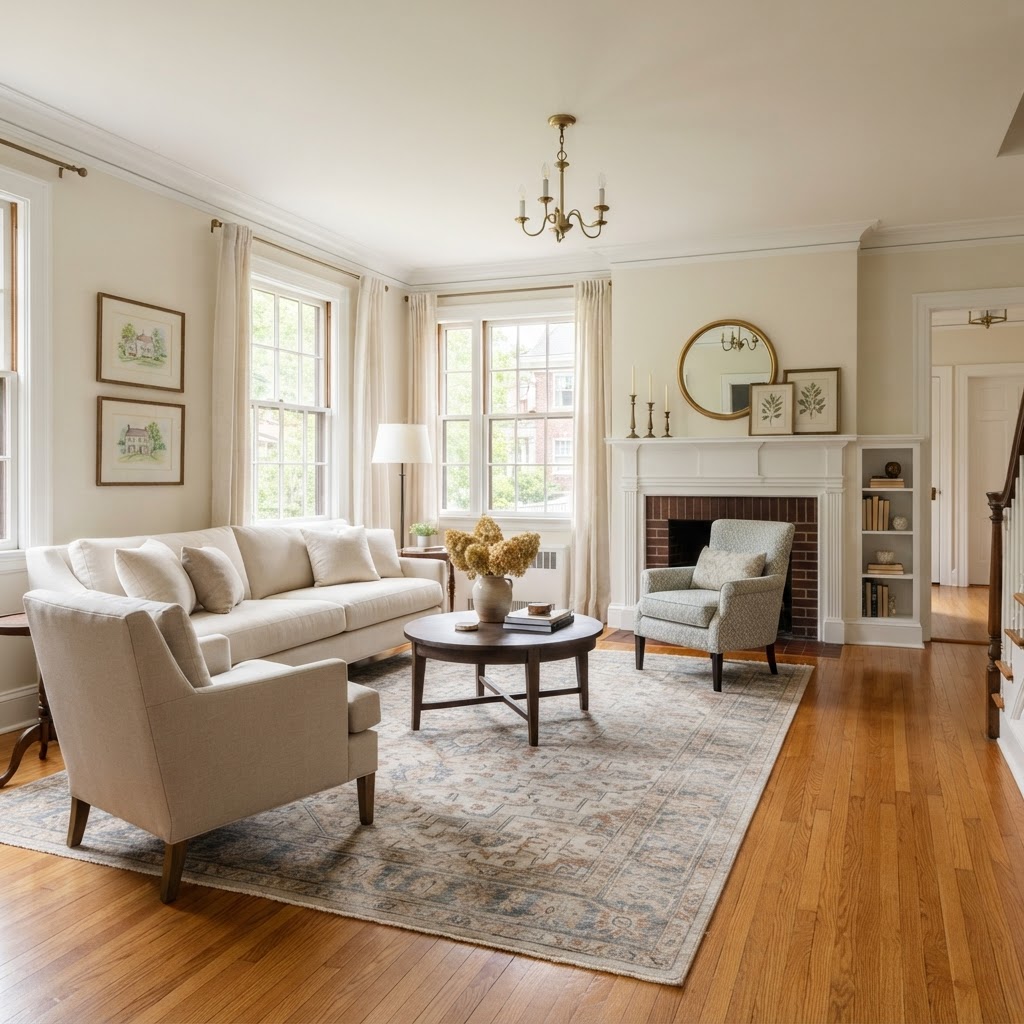
The best flooring for an Arlington, VA home depends on the room, the age of the house and how your household lives, but a reliable starting point is hardwood for main living areas and bedrooms, luxury vinyl plank for kitchens, basements and busy family spaces, tile for bathrooms, entryways and laundry rooms, and carpet for bedrooms, stairs and media rooms where comfort and sound control matter. Arlington's mix of 1920s bungalows, mid-century Cape Cods, newer infill homes and a large number of condominiums means no single material wins everywhere, and the right answer often combines several. Floors and Beyond VA, a family-owned Northern Virginia flooring and remodeling contractor serving Fairfax, Loudoun, Prince William and Arlington counties since 1987, installs all of these materials with in-house crews and no subcontractors, and we start every project by asking how you actually live in the house before recommending a floor.
Searching for flooring in Arlington, VA produces a long list of materials, brands and opinions. This guide narrows the field by explaining what each category does well, where it struggles, and which Arlington homes and rooms it suits best. It covers hardwood, luxury vinyl plank, tile and carpet, and it addresses budget as a matter of priorities and trade-offs rather than numbers. To explore the products themselves, visit our wood flooring, vinyl flooring, tile and stone and carpet pages.
What makes Arlington homes different
Flooring decisions in Arlington are shaped by the housing stock and the lifestyle of the county. Arlington is one of the most densely built places in Virginia, and its neighborhoods differ sharply. In Lyon Park, Cherrydale, Westover, Ashton Heights and Arlington Ridge, many homes date from the 1920s through the 1950s: brick colonials, Cape Cods and bungalows with original oak flooring, plaster walls and modest room sizes. In Clarendon, Ballston, Rosslyn, Courthouse, Crystal City and Pentagon City, a large share of residents live in condominiums and apartments, where building rules, sound transmission and concrete subfloors drive flooring choices. In neighborhoods such as Aurora Highlands, Virginia Square and parts of North Arlington, teardowns and additions have produced newer homes with open plans and modern construction.
Each of those situations calls for a different approach. Original hardwood in a 1940s Cape Cod often can be refinished, which fits our refinish-first philosophy. A condominium in Pentagon City may need carpet with a quality pad or an approved sound-rated underlayment to satisfy association rules. A new rear addition may need new flooring that blends with the existing floors in the rest of the house. A finished basement in a hillside home near the Potomac may need a moisture-tolerant floor and careful subfloor preparation. Understanding your house is the first step toward choosing the right material.
Hardwood: the Arlington classic
Hardwood is the signature flooring of older Arlington homes, and it remains a top choice for living rooms, dining rooms, bedrooms and hallways.
Why homeowners choose it. Hardwood is warm, timeless and widely appealing to buyers. It pairs with traditional and modern interiors, and it can be refinished multiple times, which gives it an exceptionally long life when cared for. In a region where many people sell and buy homes regularly, hardwood is often seen as a feature that supports a home's appeal.
Solid and engineered. Solid hardwood is milled from a single piece of wood and can be sanded and refinished several times, making it ideal for above-grade rooms. Engineered hardwood is built in layers with a real wood surface on a stable core, which makes it more dimensionally stable when humidity changes and allows installation in some places where solid wood is not recommended, such as over concrete. Our wood flooring page describes both.
What to watch. Hardwood can scratch and dent, and it dislikes standing water. In Arlington's humid summers and dry, heated winters, seasonal movement is normal, and proper acclimation and installation matter. Kitchens, bathrooms and below-grade basements need extra thought.
Refinish first. If you own an older Arlington home with original hardwood, check its condition before replacing it. Many floors that look tired can be restored through sanding and refinishing. Our guides on whether your hardwood floors can be saved and whether refinishing is worth it explain how to judge.
Luxury vinyl plank: practical, water-resistant and versatile
Luxury vinyl plank, often shortened to LVP, has become one of the most popular flooring choices in Arlington for good reasons.
Why homeowners choose it. LVP is highly water-resistant, durable under daily use, comfortable underfoot compared with tile, and available in convincing wood and stone looks. It handles kitchens, mudrooms, laundry rooms, finished basements and playrooms well, and it is a practical answer for households with children, pets and active routines.
What to watch. Quality varies widely. Thickness, wear layer, core construction and installation all influence performance, and a poorly installed floor over an uneven subfloor can show gaps or movement. LVP can also dent under very heavy loads and may fade under strong direct sunlight if the product is not designed for it. Our guides on choosing luxury vinyl plank flooring in Northern Virginia and what SPC core flooring is go deeper.
Best Arlington uses. Kitchens in older homes where the budget is better spent on cabinets and counters, basement family rooms, rental-ready properties, and condominiums where the association permits it and the underlayment meets sound requirements.
Tile: the right answer for wet and high-wear areas
Tile, whether porcelain or ceramic, is the traditional solution for areas that see water and heavy use.
Why homeowners choose it. Tile is waterproof when installed correctly, extremely durable, easy to clean and available in enormous variety. It works well in bathrooms, showers, entryways, mudrooms, laundry rooms and kitchen floors or backsplashes. It is also an excellent partner for radiant floor heating.
What to watch. Tile is hard and cold underfoot unless heated, and dishes dropped on it tend to break. Grout needs maintenance, and installation quality is critical: flat subfloors, correct setting materials and proper waterproofing in showers make the difference between a floor that lasts decades and one that cracks. Slip resistance matters in bathrooms and entries. See our tile and stone page for options.
Best Arlington uses. Bathrooms in older homes where original tile has failed, entry foyers that take rain and snow, and kitchens where durability is the priority.
Carpet: comfort and quiet
Carpet remains a strong choice in the right places.
Why homeowners choose it. Carpet is warm, soft and quiet. It absorbs sound, which is especially valuable in Arlington's multifamily buildings and in bedrooms above living areas. It provides traction on stairs, cushions falls for children and older adults, and creates a cozy feel in bedrooms and media rooms.
What to watch. Carpet shows wear and soil more than hard surfaces, and it needs regular vacuuming and periodic professional cleaning. Fiber, density and padding quality determine how well it performs. Our carpet page and our guide to choosing carpet explain the options.
Best Arlington uses. Bedrooms, stairs, home theaters, finished basements where warmth matters, and condominiums where sound rules favor it.
Matching material to room
A room-by-room view makes decisions easier.
Living and dining rooms. Hardwood is the natural choice, particularly in older homes where it continues from room to room. Engineered hardwood or wood-look LVP can work in newer or more active homes.
Kitchens. Hardwood is possible, but kitchens favor water-resistant and durable surfaces. LVP and tile are common. If your kitchen opens to the dining room, think about how the floors meet. Our kitchen remodeling page covers coordinated projects.
Bathrooms. Tile is the standard. Porcelain performs especially well.
Bedrooms. Hardwood and carpet are both favorites. Carpet adds warmth and sound control, while hardwood offers a cleaner look.
Basements. LVP, tile or carefully chosen engineered options, after moisture testing. See our guide to basement flooring.
Stairs. Hardwood, carpet or a runner, depending on style and household needs.
Entryways and mudrooms. Tile or LVP for durability and ease of cleaning.
Home offices. Hardwood, carpet or LVP, depending on noise and comfort preferences.
Budget, lifestyle and the trade-offs that matter
We do not publish prices in articles, but we can describe how budget interacts with choice. Budget is best treated as a set of priorities. Where does the floor see the most use? Where would a failure cost the most? Where do you want to invest in beauty, and where in durability?
A common strategy is to invest in the floors you see and touch every day, such as the main level, while choosing economical but durable materials in secondary spaces. Another is to prioritize the subfloor and installation, because preparation determines how long any floor lasts. A third is to phase the project, completing the main living area first and returning to bedrooms later, while planning transitions so the home looks cohesive.
Lifestyle matters as much as budget. Households with dogs and young children often prefer LVP or tile in busy areas. Remote workers may want sound-absorbing surfaces in offices. People who entertain often value hardwood for its look. Owners who plan to sell within a few years should consider broad appeal. Owners who plan to stay should consider long-term durability and repairability.
What drives the scope of a flooring project in Arlington
The scope of a project depends on several factors. We list them here without prices, because the right proposal requires seeing your home.
The material you choose shapes the product scope. The square footage and layout, including stairs, closets and transitions, determine quantities. The condition of the existing floor and subfloor affects preparation: squeaks, unevenness, moisture or damage may need repair. Removal of old flooring and disposal add steps. Access conditions, such as condominium elevators, limited parking and working-hour restrictions, influence logistics. Trim, baseboards and transitions finish the work. And timing, including coordination with other renovation trades, shapes the schedule.
Floors and Beyond VA provides an honest, all-inclusive estimate, and what we quote is what you pay. Our estimates include old flooring removal, new materials, professional installation, furniture moving, transitions, molding and full cleanup.
A practical way to decide: three questions
When homeowners feel overwhelmed by choices, we reduce the decision to three questions. The first is what the room asks of the floor. A kitchen asks for water and stain tolerance, a bedroom asks for comfort and quiet, an entry asks for grit and moisture resistance, and a living room asks mostly for looks and longevity. The second is what the house underneath can support. A wood subfloor above grade can take nailed hardwood, a concrete slab in a basement or a high-rise condominium calls for different assemblies, and an older house with uneven framing may need leveling before any product goes down. The third is how long you plan to live with the decision. Someone selling in two years may choose broadly appealing, neutral finishes, while someone staying for twenty can justify a floor that is more expensive up front but easier to refinish and repair.
Answering these three questions in order usually narrows a dozen possibilities to two or three. From there, full-size samples in your own light settle the matter. This is also why we like to see the house before recommending anything: the same material can be the right call in a Cherrydale kitchen and the wrong one in a Crystal City condominium, and a thoughtful recommendation depends on those specifics.
Combining materials so the whole house feels connected
Most Arlington homes use more than one floor, and the art lies in making the combination feel intentional. A few principles help. Keep the number of materials modest, often two or three across a level, so the eye is not distracted by constant changes. Run a continuous floor through open sightlines, such as from a kitchen into a dining room, rather than breaking at an arbitrary doorway. Choose undertones that harmonize: a warm hardwood pairs naturally with warm-gray tile, while a cool-gray vinyl may clash with honey-toned oak nearby. Plan transitions where the floor changes at a natural boundary, such as a doorway or an archway, and keep the heights flush so they are safe and tidy. And let the most important floor lead: if refinished original oak is the star of the home, other materials should support it quietly.
In Arlington's smaller homes and condominiums, where rooms are close together, restraint is especially effective. One well-chosen floor running through the main living area, with tile in wet rooms and carpet in bedrooms where allowed, often looks more spacious than a patchwork of different finishes.
Common mistakes to avoid
The most common mistake is choosing a floor from a photograph without seeing a full-size sample in your own light.
Another is replacing hardwood that could be refinished, especially in older Arlington homes where original floors are valuable.
A third is ignoring the subfloor. Uneven or damp subfloors undermine any material.
A fourth is using the wrong material in wet areas. Solid hardwood in a bathroom or unprotected carpet in a damp basement can cause problems.
A fifth is overlooking condo rules, which may restrict hard flooring or require sound-rated underlayment.
A sixth is choosing too many different floors. Excessive variety can make a small home feel choppy.
A seventh is picking the cheapest bid without comparing scope. A low number may leave out removal, furniture moving, transitions or preparation.
How Floors and Beyond VA helps Arlington homeowners
We begin with a free in-home consultation. We bring samples, take precise laser measurements on every room at no charge, evaluate your subfloor and existing floors, and discuss your goals and household. We recommend materials for each space and provide a clear estimate. Our in-house crews handle the installation, so the people who advise you are accountable for the result. We are fully licensed, bonded and insured for every project.
We serve Arlington and the surrounding area, including Clarendon, Ballston, Rosslyn, Courthouse, Crystal City, Pentagon City, Shirlington, Lyon Park, Cherrydale, Westover, Virginia Square and Aurora Highlands, as well as Fairfax, Loudoun and Prince William counties.
Frequently asked questions
What is the most popular flooring in Arlington, VA?
Hardwood and luxury vinyl plank are the most popular, with tile used in bathrooms and carpet in bedrooms and stairs.
Is hardwood worth it in an Arlington home?
Yes, particularly in main living areas, and especially if you have original floors that can be refinished.
Is luxury vinyl plank waterproof?
Most LVP is highly water-resistant. Installation and subfloor condition still matter.
What flooring is best for a condo in Arlington?
It depends on your association's rules. Carpet with a quality pad is often accepted; hard flooring may require sound-rated underlayment and approval.
Can I put flooring in my basement?
Yes, after moisture testing and proper preparation. LVP and tile are common choices.
Should I refinish or replace old hardwood?
Refinish first whenever the wood is sound.
Do you provide free estimates?
Yes. We offer a free in-home consultation with samples and laser measurements.
Does Floors and Beyond VA use subcontractors?
No. Our in-house crews handle the work.
Do you serve my Arlington neighborhood?
We serve Arlington County and neighboring Northern Virginia communities.
Ready to choose the best flooring for your Arlington home?
The right floor fits your house, your budget and the way you live. Floors and Beyond VA offers nearly forty years of Northern Virginia experience, in-house crews with no subcontractors, free in-home consultations with samples, and all-inclusive estimates.
Schedule your free flooring consultation in Arlington: https://floorsandbeyondva.com/Contact
You can also call (703) 906-5698, or send us a message through our contact page.
Our flooring company in Arlington, VA walks you through every option during a free in-home consultation.




