
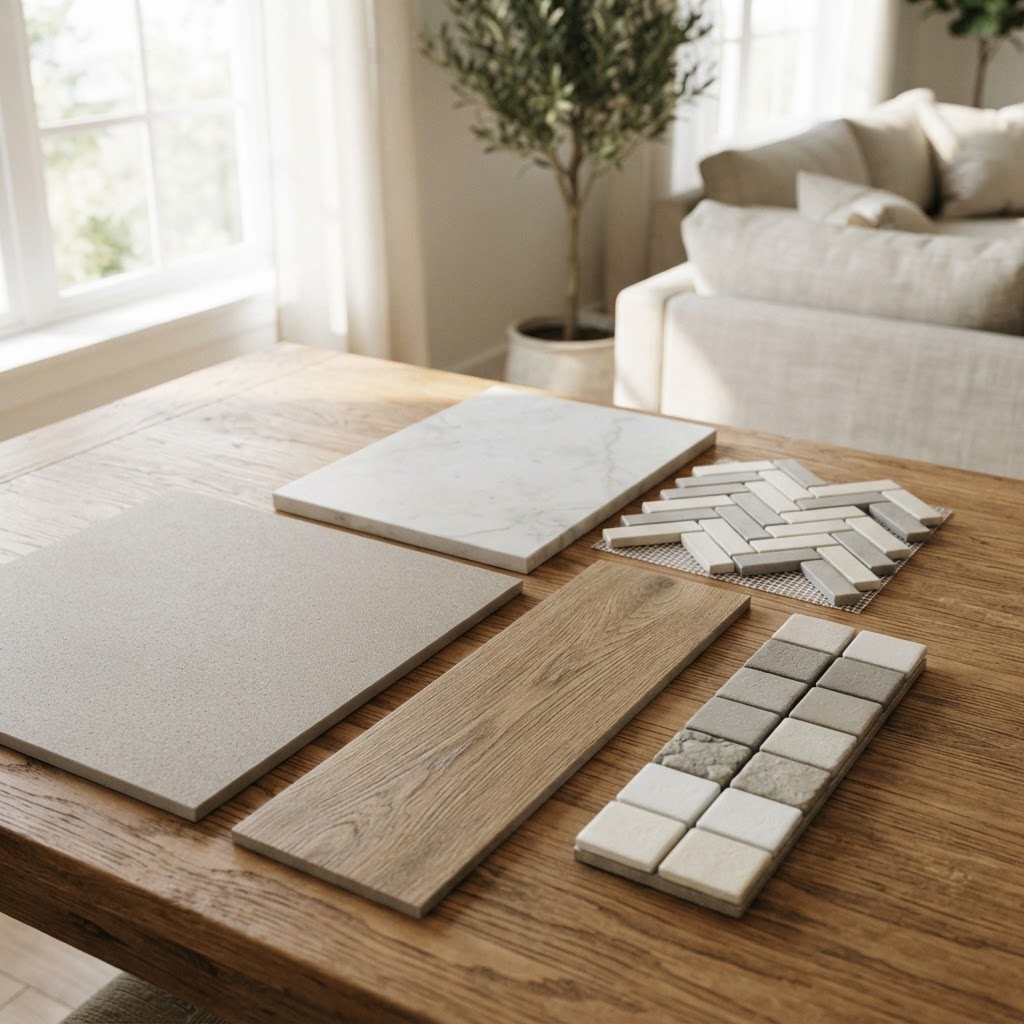
The short answer: a tile shoppe is a retail destination or service that offers a selection of tile, setting materials and advice. The best way to choose is to match the material and finish to how each room is used, test samples in your own home, and plan measurement, grout and installation before you buy. If you would rather see tile in your own rooms, contact Floors and Beyond VA for a free in-home consultation, where we bring samples to your space and give you an all-inclusive estimate.
Floors and Beyond VA, a family-owned Northern Virginia flooring and remodeling contractor serving homeowners since 1987, has no showroom: instead, we bring tile samples to your home, give a free in-home consultation and recommend and install tile as a licensed local professional.
Many Northern Virginia homeowners start their tile search by visiting shops or browsing online. That is a good way to learn what exists. But choosing tile for a busy kitchen, a family bathroom or an entry that takes snow and mud is different from picking a pretty sample. This guide explains what to expect from a tile shoppe, how to evaluate materials and finishes for high-traffic homes, how to match tile to room use, budget and climate, and what to know about measuring, sample testing, grout, installation, timing and permitting in the DC metro area.
What a tile shoppe typically offers
A tile shoppe, whether a dedicated store, a showroom or a dealer, generally provides a range of products and services.
- Tile selection. Porcelain, ceramic, natural stone, glass, mosaic and decorative tile in many sizes, colors and finishes.
- Setting materials and accessories. Mortar, grout, sealers, trim pieces, edge profiles and underlayments.
- Samples. Many shops loan or sell samples so you can test at home.
- Advice. Staff may help with choosing, estimating quantity and understanding care.
- Ordering and delivery. Special orders, lead times and delivery logistics.
- Referrals. Some shops refer installers, and some offer installation.
We do not name or compare particular retailers in this article. Instead, we help you think about what you need from any source and what to ask.
How to evaluate tile materials
- Porcelain. Dense, durable, low water absorption, suited to floors, showers and outdoor use. A leading choice for high-traffic areas.
- Ceramic. Slightly softer and more porous, good for walls and many floors. Check that the product is rated for floor use.
- Natural stone. Marble, travertine, slate, limestone and granite offer unique character. Most need sealing and more care. Some are soft and can etch.
- Glass tile. Beautiful for backsplashes and accents, not for floors.
- Mosaics. Small pieces on mesh sheets, used for shower floors, accents and patterns.
- Large-format tile. Fewer grout lines and a modern look, requiring a very flat substrate and skilled installation.
- Wood-look and stone-look porcelain. Plank and slab tile that mimic natural materials with the durability of porcelain.
Ask for technical information: whether the tile is rated for floors, wet areas and freeze-thaw if used outdoors, its slip resistance, its water absorption and its recommended installation method.
Finishes and surface
- Polished. Glossy and reflective, elegant but slippery when wet.
- Matte. Softer, more forgiving, more grip.
- Honed. Smooth but not shiny, typical of natural stone.
- Textured or structured. Added grip, good for entries and showers.
- Glazed versus unglazed. Glazed surfaces resist stains. Unglazed, through-body tile hides chips.
For high-traffic homes, a matte or lightly textured porcelain is the safe, practical choice. Save glossy tile for walls or low-traffic accents.
Matching tile to room use
- Entry and mudroom. Durable porcelain with texture. It takes water, salt and grit.
- Kitchen. Porcelain or durable ceramic. Consider grout color and cleaning.
- Bathrooms. Slip-resistant tile on the floor, easy-to-clean tile on walls. Our guide to anti-slip bathroom tile explains what makes a tile truly slip-resistant.
- Laundry room. Waterproof, durable tile that handles leaks.
- Living areas. Wood-look porcelain or large-format tile can add durability and a sleek look, though comfort and warmth should be considered.
- Basements. Porcelain handles moisture well, but cold and hardness may call for rugs or radiant heating.
- Outdoor and covered porches. Choose tile rated for outdoor use and freeze-thaw. Verify with the manufacturer.
Climate considerations in Northern Virginia
Our region has humid summers, cold winters and temperature swings. Tile itself handles these well. The substrate and installation matter more. Floors over crawl spaces or slabs should be stable and dry. Outdoor tile must withstand freezing and thawing. Entries benefit from tile that resists salt and moisture.
Radiant heating under tile is a popular upgrade in cold climates. It should be planned with qualified professionals.
Budget thinking
We do not publish prices in articles because they depend on the tile, size, pattern, labor and preparation. Here is how to think about budget.
Tile cost varies widely by material, brand, size and finish. Natural stone and handmade tile are usually more costly than standard porcelain. Installation cost depends on tile size and pattern, flatness of the substrate, complexity of the layout and number of cuts. Demolition, disposal, waterproofing and repairs add to the total.
To control costs, prioritize. Use premium tile in focal areas and economical tile elsewhere. Choose standard sizes if you want to limit labor. Order enough material with a reasonable allowance for cuts and breakage. Leave time for decisions to avoid rush charges. Our pricing and policy page explains how our estimates work.
Measuring and ordering
Accurate measurement prevents shortages and waste. Measure the length and width of each area, subtract openings if appropriate and add an allowance for cuts, breakage and pattern. Diagonal and herringbone layouts need a larger allowance. Keep extra tile for future repairs.
Our precise laser measurements, provided at no charge, give accurate numbers. We help you order the right quantity from the source you choose, so you do not buy too little or far too much.
Also note the dye lot or batch. Tile from different batches can vary in color. Order all you need at one time.
Sample testing
Samples tell you more than photos. Here is how to test them.
- Look in your own light. Morning, evening and lamp light show different aspects.
- Place next to cabinets, counters and walls. Colors interact.
- Check texture underfoot. Walk barefoot on a sample.
- Test with water. Pour a little water on a sample to feel how it behaves.
- Check with grout samples. Grout changes the look.
- Live with it. Leave samples for a day or two.
We bring samples to your home so you can do all of this where the tile will live.
Grout and installation options
- Grout color. Matching grout makes tile look seamless. Contrasting grout highlights pattern. Mid-tones hide stains.
- Grout type. Cement-based grout is traditional and may need sealing. Epoxy grout is highly stain-resistant and durable, good for showers and kitchens.
- Grout width. Narrow lines look sleek. Wider lines suit handmade tile and add traction.
- Setting method. Thinset mortar on a prepared substrate is standard. Large-format tile requires specific mortars and flatness.
- Waterproofing. Showers and wet areas require proper waterproofing membranes.
- Layout. Straight, offset, herringbone, diagonal and other patterns each have different labor and waste.
- Edges and trim. Bullnose, Schluter-style profiles and metal edges finish the tile. Plan them early.
Professional installation matters, because tile problems are costly to fix. Our flooring installation guide walks through our process.
Timing and permitting in the DC metro area
Tile projects take time. After selection, tile may need to be ordered, delivered and acclimated. Demolition and substrate preparation come next. Setting, curing, grouting and sealing follow, each with cure times. We explain the schedule during your consultation.
Permits may be required for certain work, such as changes to plumbing, electrical or structure. Requirements vary by jurisdiction. We do not state specific permit rules in this article. Verify with the local building authority for your project. In condominiums and townhome communities, associations may require approvals. Check early.
Where we fit in
Floors and Beyond VA is a local, licensed installer. We bring tile samples to your home, help you evaluate options and install the tile you choose. We are not a retail store, and we do not push particular brands. If you have already picked tile from a shop, we can install it, and we can help you check quantities and details before you buy.
Working with a tile shop and an installer together
Many homeowners buy tile from a shop and hire an installer separately. This can work well if both sides communicate. Before you buy, share the product details with your installer. Confirm the tile is suitable for the application, that the size and pattern are practical and that the quantity is right. Ask your installer about the setting materials and the layout. After delivery, check boxes for damage and matching batch numbers. Keeping everyone informed prevents delays.
How to tell quality tile from a photo and in person
Quality tile has consistent size, flat surfaces and good edges. Rectified tile has precisely cut edges for narrow grout joints. Look for chips, warping and color variation within a box. Lay several pieces side by side to see the variation. Ask about the manufacturer's rating for floor use and wet areas. A trustworthy supplier provides technical data.
Tile in open-plan homes
When tile runs through an open plan, layout planning is crucial. The pattern should align with doorways, islands and focal walls. Transition points should be planned. Tile and wood-look planks can create continuous floors that bridge kitchen and living areas. We map these lines with homeowners before ordering.
Heating, cooling and comfort on tile
Tile feels cool in summer and cold in winter. Rugs, radiant heating and thoughtful layout help. Radiant systems are a significant project and should be planned with qualified professionals. In bathrooms and kitchens, small mats provide comfort where you stand. Choosing a slightly warmer tile color can also make a room feel cozier.
Outdoor and covered spaces
Patios, porches and covered entries use tile that tolerates weather. Look for products rated for outdoor use and freeze-thaw cycles, and confirm with the manufacturer. Slip resistance is vital outdoors. Because our region has real winters, outdoor tile should be chosen with care. Our patio and deck services can complement tile for outdoor living areas.
Maintenance routines for different tile types
Porcelain and ceramic need regular sweeping and mopping with suitable cleaners. Natural stone needs sealing and gentle cleaners. Glass tile benefits from non-abrasive products. Grout should be cleaned periodically and resealed if it is cement-based. Keep a simple care plan taped inside a cabinet so you remember what to use. Our floor care page covers the routines in more detail.
Planning for repairs and spare tile
Keep a few spare tiles from your order. Tiles can crack from dropped objects or settling. With spares and notes about the product, repairs are straightforward. Without them, matching can be difficult as discontinued styles vanish and batches vary.
A representative example of the process
Here is a representative scenario, not an account of any particular customer. A family in a Fairfax townhome wanted new tile for a kitchen and entry. They had browsed shops and online, found several options they liked and were unsure how to narrow down. During a free in-home consultation, samples were placed in the actual space. Under their kitchen lights, one option looked flat and another glowed. Walking on the samples showed that a polished tile felt slippery, while a matte option felt secure. Measurements revealed the quantity needed, and the estimate showed the full project including removal, installation and trim. Their decision felt easier because the information was in front of them.
Where to start if you feel overwhelmed
Choose the room that matters most. Decide how it is used and what you need from the floor. Narrow to two or three candidates. Bring samples home. Call us for a consultation. Let us measure, assess the substrate and provide a written estimate. Then decide. Breaking the process into steps makes tile selection manageable.
Tile and the resale conversation
Buyers in Northern Virginia notice tile in kitchens, baths and entries. Clean, current, durable tile with tidy grout signals care. Extremely trendy patterns may date quickly, while classic shapes and calm colors age well. If you plan to sell within a few years, favor timeless choices. If you plan to stay, choose what you love and what fits your life. Either way, quality installation is what buyers and inspectors notice most.
Talking to us early
If you are still in the browsing stage, call us. A short conversation can save hours of searching and prevent expensive mistakes. We will tell you what to look for, what to avoid and what questions to ask any supplier. There is no pressure and no cost for the first conversation.
What drives the scope of a tile project
The scope depends on the area, tile size and pattern, the substrate condition, waterproofing needs, removal of existing flooring, the number of cuts and transitions, furniture and fixtures to move and finishing work.
We take precise laser measurements at no charge and give a written, all-inclusive estimate covering old flooring removal, new materials, installation, furniture moving, transitions, molding and cleanup. What we quote is what you pay.
Why Northern Virginia homeowners choose Floors and Beyond VA
- Family-owned since 1987. We know Northern Virginia homes.
- In-house crews only. Skilled tile setters on our own team.
- Free in-home consultation with tile samples. See tile where it will live.
- Precise laser measurements at no charge. Accurate quantities.
- Honest, all-inclusive estimates. No surprises.
- Fully licensed, bonded and insured. You are protected.
- Supply recommendations and installation. We help you choose and install.
- No showroom. We come to you.
Floors and Beyond VA saves you time by combining product advice with professional installation.
Common mistakes when choosing tile
- Choosing from a photo. View samples in your home.
- Picking polished tile for floors. Choose grip.
- Ignoring substrate flatness. Large tile magnifies problems.
- Under-ordering. Plan for cuts and breakage.
- Skipping batch checks. Order at once.
- Neglecting grout. It matters.
- Not planning for permits or association rules. Verify early.
Frequently asked questions
Should I buy tile first or hire an installer first?
Talk to an installer early. We can advise on what to buy and how much.
Do you sell tile?
We recommend products and bring samples, and we handle installation. Ask us about sourcing during your consultation.
Can you install tile I bought elsewhere?
Yes, after we review the details.
How much extra tile should I order?
It depends on layout. We advise during measurement.
Does tile need sealing?
Some tile and grout do. We give care instructions.
What about resilient alternatives?
Our guide to sheet linoleum flooring covers the resilient options and where they work best.
Related resources
Our tile and stone page describes the materials we install, our kitchen remodeling page covers full kitchen projects, and our overview of flooring installation in Tysons shows how we work in the region.
Ready to choose your tile?
Free in-home consultation
Let us bring samples to your home and plan your project. You get an honest, all-inclusive estimate covering removal, materials, installation, transitions, trim and cleanup.
Contact Floors and Beyond VAFloors and Beyond VA
Family-owned flooring and remodeling since 1987, serving Northern Virginia
Phone: (703) 906-5698
Web: floorsandbeyondva.com




