
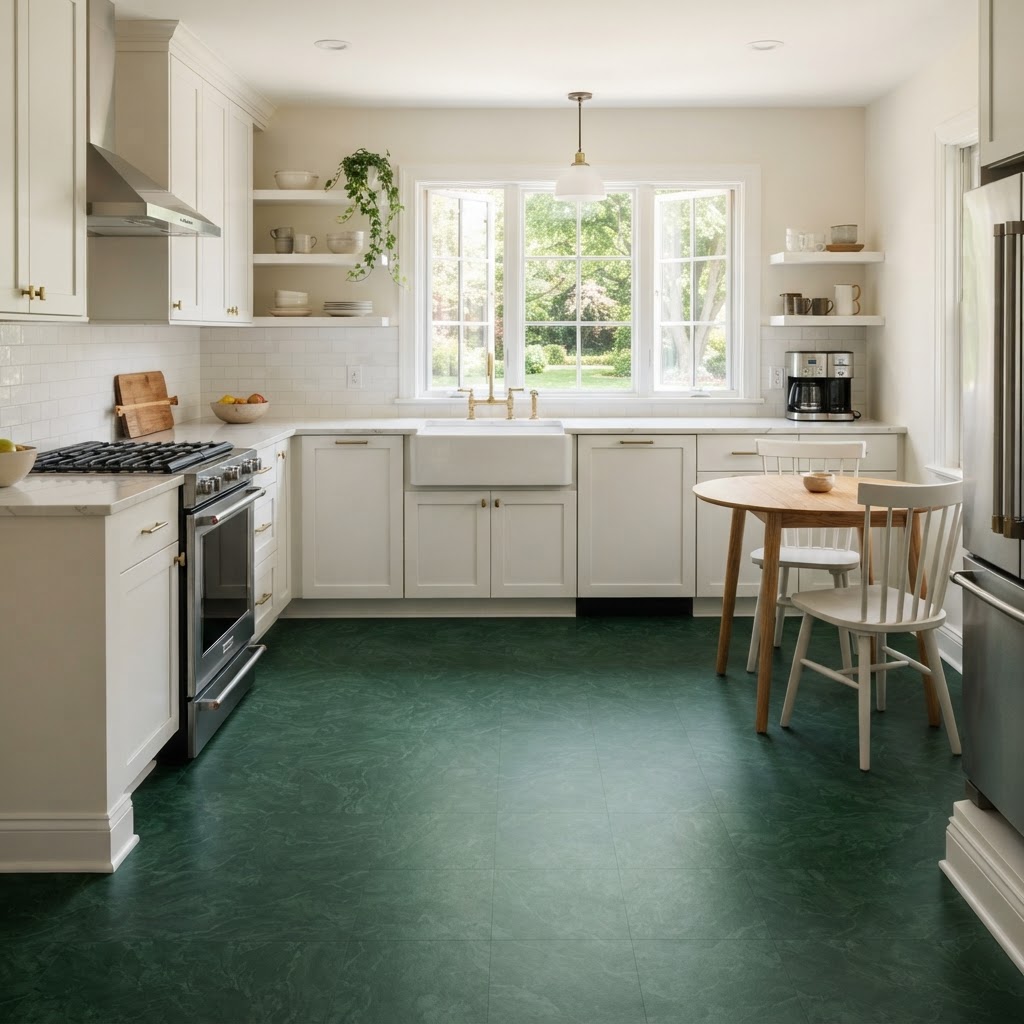
The short answer: sheet linoleum is a resilient floor made from natural materials such as linseed oil, wood flour, cork dust and resins pressed onto a backing and sold in wide rolls. It is a good fit for kitchens, laundry rooms, playrooms and other dry-to-moderate-moisture areas where you want a durable, low-seam, naturally derived floor. It is different from vinyl, even though people often confuse them. To see whether linoleum suits your rooms, contact Floors and Beyond VA for a free in-home consultation and an all-inclusive estimate covering removal, material, installation and cleanup.
Floors and Beyond VA, a family-owned Northern Virginia flooring and remodeling contractor serving homeowners since 1987, offers a free in-home consultation where we compare resilient options in your space and provide an all-inclusive estimate.
Linoleum has a long history and a quiet loyal following. Many older Northern Virginia homes had it in kitchens and entries. Today's versions come in rich colors and patterns, with finishes that are easier to maintain than their predecessors. This guide explains what sheet linoleum is, how it compares with vinyl, laminate and tile, where it works best, design options, installation and seam considerations, maintenance, local factors such as humidity and basement use, cost and timeline expectations, and when we might recommend something else.
What sheet linoleum is made of
True linoleum is made primarily from renewable ingredients. Linseed oil, from flax seeds, is combined with pine rosin, wood flour and cork dust, along with mineral fillers and pigments. The mixture is calendered onto a jute or similar backing and cured. The result is a dense, flexible material with color running through its thickness.
Because the color runs through, minor surface wear is less noticeable than with a printed floor. Linoleum is also naturally antistatic, which attracts less dust, and it tends to be resilient underfoot.
Linoleum is often confused with vinyl sheet flooring. They look similar in a showroom, but they are different materials. Vinyl is synthetic. Linoleum is natural. The properties, care and installation differ.
Pros of sheet linoleum
- Durability. A well-maintained linoleum floor can last a long time. Color-through construction hides wear.
- Natural, renewable ingredients. Appeals to homeowners who prefer natural materials.
- Few seams. Sheet goods are wide, so a room can often be covered with minimal seams, reducing places for dirt and moisture to enter.
- Comfort. Resilient and warmer underfoot than tile.
- Design variety. Rich solid colors, marbled effects and patterns are available, and pieces can be cut and combined for inlays and borders.
- Low static and dust attraction. A cleaner feel in many homes.
- Repairability. Surface scratches can sometimes be addressed with appropriate treatments, and finishes can be refreshed.
Cons of sheet linoleum
- Moisture sensitivity. Linoleum is not ideal in places with standing water or high humidity. Seams and edges must be sealed and the subfloor must be dry.
- Finish and maintenance. Some linoleum needs periodic sealing or finishing to maintain protection and appearance, depending on the product.
- Color change. Linoleum can undergo an effect sometimes called ambering, where a yellowish tone appears when the floor is covered or kept in low light and then fades with light exposure. It is usually temporary.
- Sensitivity to harsh chemicals. Strong alkaline cleaners can damage the surface.
- Installation skill. It requires careful adhesive work and seam welding or sealing.
- Limited use in wet rooms. Bathrooms and basements with moisture need caution.
How it compares with other resilient floors
Versus vinyl sheet
Vinyl is typically more water-resistant and less maintenance-intensive. Linoleum is natural and can be more durable in the right setting but needs more care. Vinyl comes in a wider range of printed looks. Linoleum offers solid and marbled colors.
Versus luxury vinyl plank
Plank products imitate wood and stone and can be waterproof. Linoleum is better for solid, graphic color. Planks are better for basement and wet-prone areas. Our guide to wear layers in vinyl plank flooring explains what to compare on the plank side.
Versus laminate
Laminate has a fiber core and is vulnerable to moisture. Linoleum is more flexible and comfortable but needs sealed seams.
Versus tile
Tile is harder, cooler and more permanent. Linoleum is softer and quieter and easier on dropped dishes. Our tile and stone page covers the ceramic and porcelain side if you want to compare.
Each has its place. We help you weigh them with an eye on your room and household.
Best room uses
- Kitchens. A popular use. Linoleum is comfortable for standing and holds up to daily traffic. Seams must be sealed carefully and spills wiped promptly.
- Laundry rooms and mudrooms. Fine when leak risk is managed and the floor is kept dry. Consider waterproof alternatives if there is flood risk.
- Playrooms and family rooms. The softness is a benefit, and color-through construction handles wear.
- Home offices and studios. Comfort and design flexibility are helpful.
- Hallways and entries. Suitable with entry mats to catch grit and water.
- Basements. Use caution. Moisture is the enemy, and a dry, tested slab and appropriate adhesive are required. Many basements are better served by waterproof vinyl plank or tile. Our guide to flooring for a moist basement explains why.
- Bathrooms. Generally not recommended, particularly around tubs and showers.
Design and color options
Linoleum offers rich, saturated colors that are hard to find in other flooring. Greens, blues, reds and earthy neutrals are available, along with subtle marbled patterns. Solid-color floors create a modern, graphic look. Marbled floors feel traditional and forgiving.
Patterns and borders can be created by cutting and combining pieces. A checkerboard kitchen floor or an inlaid border adds personality. Consider how the floor will relate to cabinetry, counters and walls. Samples in your light help.
For a Northern Virginia home with a historic character, a linoleum floor in a period-appropriate color can look right at home. For a modern townhouse, a bold solid color can be fresh.
Installation and seam considerations
Sheet linoleum installation is a skilled job. Key steps include these.
- Subfloor preparation. The subfloor must be clean, dry, smooth and sound. Imperfections can telegraph through. Underlayment may be required.
- Acclimation. Rolls should rest in the room at proper conditions before installation, per the manufacturer.
- Layout and cutting. Sheet goods are cut to fit with minimal seams. Good layout hides seams in low-visibility areas and aligns patterns.
- Adhesive. The sheet is adhered to the subfloor with the recommended adhesive. Coverage and rolling are important for bonding.
- Seams. Seams are joined and sealed according to the manufacturer. Some systems use heat welding, others use chemical bonding. A tight seam resists moisture and dirt.
- Edges and transitions. The perimeter is trimmed neatly. Base boards, cove bases or shoe molding finish the edge. Transitions to other floors are planned.
- Initial finish. Some products need a sealer or finish after installation and curing.
Because of this complexity, professional installation is strongly advised. Floors and Beyond VA follows manufacturer instructions and takes time on the details. Our linoleum flooring page lists the products we install.
Maintenance tips to maximize lifespan
Sweep or vacuum regularly. Damp mop with a neutral cleaner recommended by the manufacturer. Avoid harsh alkaline cleaners, abrasives and steam unless approved. Wipe spills promptly, especially acidic substances. Use felt pads under furniture and avoid dragging heavy items. Place mats at entries. Reapply sealer or finish as recommended. Protect from prolonged direct sunlight where possible.
If you notice a gap at a seam, lifting at an edge or cupping near a wall, call a professional. These can signal moisture or adhesive problems that worsen if ignored. Our floor care page lists the cleaners we recommend.
Local factors in Northern Virginia
Humidity swings are part of life here. Hot, humid summers and dry winters stress many floors. Linoleum is fairly stable, but moisture from below is a concern. Slab-level rooms in townhomes, finished basements and kitchens built over crawl spaces deserve moisture checks. We examine the subfloor and discuss options. If there is an active leak or drainage problem, the first step is a licensed plumber or waterproofing professional.
Older homes in Vienna, Falls Church and Arlington may have uneven subfloors that need leveling. Newer homes in Ashburn and Sterling usually have flat subfloors but may carry construction moisture that should settle before installation. In condominiums in Tysons and Reston, check association guidelines.
Cost expectations and timeline
We do not publish price figures in articles because they depend on the product, the room and the preparation required. Cost drivers include the size and shape of the room, the grade and thickness of the linoleum, the number of seams, the amount of subfloor preparation, removal of existing flooring, the complexity of patterns and borders, transitions and trim, and furniture and appliance moving.
Timeline depends on preparation, acclimation, adhesive cure and finish requirements. A simple kitchen may go quickly, while a project with extensive subfloor repair or a custom pattern takes longer. We explain the schedule at your consultation and tell you if any step, such as curing, affects timing. Our pricing and policy page explains how estimates work.
Examples of what we can show you
We do not claim particular past customers in this article. Instead, we invite you to talk with us about what you envision. During a free in-home consultation, we can show samples of linoleum and alternative materials, discuss layout and seams and explain how we would approach your room. If we have relevant examples we can share, we will discuss them with you directly.
Linoleum and the history of Northern Virginia kitchens
Many mid-century kitchens in Northern Virginia homes were originally finished with linoleum, sometimes in patterned checks. When homeowners peel back later layers, they occasionally find old linoleum underneath. If you discover it, do not assume it is safe to remove casually. Older resilient flooring and adhesives can contain materials that require care. If you suspect hazardous materials, consult appropriate licensed professionals before disturbing the floor. We follow safe practices and recommend testing when appropriate.
Using linoleum with radiant heat and other systems
Linoleum can be installed over some radiant heating systems, provided the manufacturer allows it and temperature limits are respected. Check the product specifications and discuss the plan with qualified professionals. Heat can affect adhesive and the floor if limits are exceeded.
Pets, kids and everyday life on linoleum
Linoleum handles daily life well. Dropped toys rarely dent it. Pet nails may leave marks, but color-through construction reduces visibility. Spills should be wiped promptly. Furniture should have protective pads. If you have a puppy or a very active household, we talk about the right finish and care.
Seasonal care and refreshing the finish
Over time, the protective finish on some linoleum can dull in high-traffic paths. Cleaning with recommended products and applying a manufacturer-approved finish can restore the look. Do not use random polishes from the cleaning aisle, since some leave films that attract dirt. Follow the manufacturer's maintenance schedule, and ask us for guidance if you are unsure.
Replacing a section versus the whole floor
Because sheet goods are installed in large pieces, repairing a damaged area can be more challenging than replacing a plank. Small damage may be patched by a skilled installer, but color matching can be difficult as the floor ages. Plan for the possibility of replacement if damage is widespread. Keep leftover material from the installation, if the manufacturer recommends, for repairs.
Choosing linoleum for sustainability
Homeowners who care about natural materials sometimes choose linoleum for its renewable ingredients. Ask the manufacturer for documentation. Sustainability also depends on how long the floor lasts, so choosing a high-quality product and caring for it well is part of the equation.
Pairing linoleum with cabinets, counters and walls
Linoleum's saturated colors can anchor a room or provide a pop against neutral cabinets. A deep blue or green floor pairs with white cabinets for a fresh, classic look. A warm neutral marbled floor pairs with wood cabinets and stone counters. Because linoleum is so colorful, bring home several large samples and look at them in the room's real light before deciding. Our guide to how lighting changes the way floors look explains why samples look different at night.
When we recommend something else
If your room has moisture risk, heavy water exposure or a slab that tests wet, we may recommend vinyl plank or tile. If you want a wood look, a plank product may suit better. If you want a very low-maintenance floor, vinyl sheet may be the more practical choice. We give honest guidance and respect your preferences.
One last consideration: patience with natural materials
Linoleum rewards owners who follow instructions and accept a little character. Small color shifts, soft sheen changes and gentle patina are part of its charm for many people. If you want a floor that never changes, another material may suit better.
What drives the scope of a sheet linoleum project
The scope depends on the room size, the layout, the subfloor condition, the product, the removal of old flooring, appliances and fixtures to move, transitions and trim, and any inlay patterns. Kitchens with islands, cabinets and appliances need careful cutting.
We take precise laser measurements at no charge and prepare a written, honest, all-inclusive estimate covering old flooring removal, new materials, installation, furniture moving, transitions, molding and cleanup. What we quote is what you pay.
Why Northern Virginia homeowners choose Floors and Beyond VA
- Family-owned since 1987. We have worked in local kitchens for decades.
- In-house crews only. Careful hands do careful seams.
- Free in-home consultation with samples. Compare materials in your space.
- Honest advice. We tell you when a different floor suits a room better.
- Precise laser measurements at no charge. Accuracy supports minimal seams.
- All-inclusive estimates. What we quote is what you pay.
- Fully licensed, bonded and insured. Protection for your home.
- Refinish-first thinking. We save what can be saved and replace what cannot.
Floors and Beyond VA helps you decide whether sheet linoleum is the right choice, and installs it with care if it is.
Common mistakes with sheet linoleum
- Installing over a damp subfloor. Moisture ruins adhesion.
- Skipping acclimation. Rolls need time.
- Using harsh cleaners. They damage the surface.
- Ignoring seams. Poor seaming lets moisture in.
- Choosing it for a wet room. Use water-ready materials.
- Dragging appliances. Protect the floor during moves.
- Neglecting finish and sealing. Follow manufacturer directions.
Frequently asked questions
Is linoleum the same as vinyl?
No. Linoleum is made from natural materials, and vinyl is synthetic.
Is linoleum waterproof?
It resists spills when properly sealed but is not ideal for standing water or wet rooms.
Does linoleum fade or change color?
It can show a temporary ambering effect that usually fades with light.
Can I install linoleum in a basement?
Only in a dry, tested basement. Many basements are better with vinyl plank or tile.
How long does linoleum last?
With proper care, it can last a long time. Maintenance matters.
Where can I learn about carpets and other resilient choices?
Our carpet flooring page covers the soft-surface options we install.
Related resources
Our vinyl flooring page covers the resilient options we install, our flooring installation guide explains our process, and our overview of flooring installation in Tysons shows how we work in the region.
Ready to explore sheet linoleum?
Free in-home consultation
Let us visit your home, compare options and give you a clear estimate. You get an honest, all-inclusive quote covering removal, materials, installation, transitions, molding and cleanup.
Contact Floors and Beyond VAFloors and Beyond VA
Family-owned flooring and remodeling since 1987, serving Northern Virginia
Phone: (703) 906-5698
Web: floorsandbeyondva.com




