
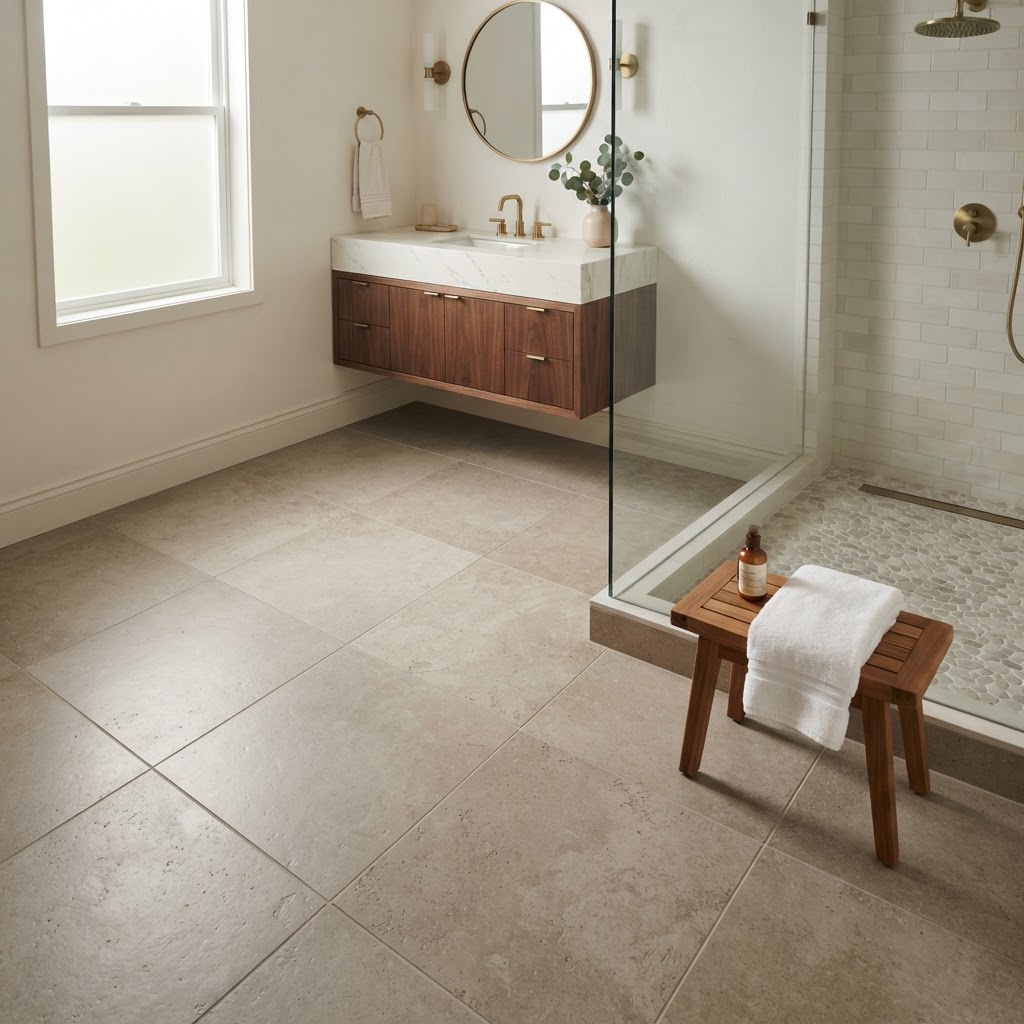
The short answer: a bathroom tile is truly anti-slip when its surface texture, material and published slip-resistance rating give reliable grip when wet, and when tile size, grout and installation support that grip in daily use. Look for a tested rating, a textured or matte finish rated for wet areas, and smaller tiles with more grout lines in showers.
Floors and Beyond VA, a family-owned Northern Virginia flooring and remodeling contractor serving homeowners since 1987, brings samples to your home so you can feel the surface and see the style before you decide.
Safety is the reason many people begin a bathroom tile search. A fall in a bathroom can be serious, and hard, wet surfaces are unforgiving. But safe does not have to mean ugly. The market offers textured porcelain, matte ceramics, natural stone with honed finishes and even some textured vinyl tile that give real traction with real style. This guide explains how slip resistance is measured, compares materials, shares guidance on tile size, grout and local code concerns, and shows how safety upgrades can look attractive in Northern Virginia homes.
Understanding slip-resistance ratings
Several terms appear in tile specifications, and they can confuse. Here is what they generally mean.
- R-ratings. Some manufacturers use R-ratings, a scale developed for evaluating slip resistance of surfaces under oil-contaminated conditions, more common in European and commercial settings. Higher ratings indicate more grip.
- DCOF. The dynamic coefficient of friction measures how much resistance a tile provides when a person is moving across it while wet. In the United States, DCOF is widely used for hard-surface tile. Manufacturers publish a value, and the industry standard recommends minimum values for different uses. We do not state specific thresholds in this article, because standards change and local requirements vary. Ask the manufacturer for the tested value and ask us to help interpret it.
- COF. Coefficient of friction is the older, broader term, sometimes used in marketing. Check whether it refers to static or dynamic measurements, and how the test was done.
- Pendulum and ramp tests. Other test methods are used in different regions and settings.
The key point is that a published, tested rating for wet conditions is more reliable than a salesperson saying a tile is non-slip. Always ask for documentation.
Surface finish and texture
The surface of the tile is where traction happens.
- Matte finishes are generally grippier than polished finishes. Polished porcelain looks beautiful but can be slippery when wet.
- Textured finishes include structured surfaces, fine grit, embossed patterns and slightly rough stone looks. These add mechanical grip.
- Honed natural stone has a smooth but not glossy surface. Some stones are more slip-resistant than others, and sealing and maintenance matter.
- Slip-resistant coatings and treatments can be applied during manufacturing or added after installation in some cases. Their durability varies, and they may wear down.
Texture adds grip but can also hold dirt and soap residue. The balance between safety and cleanability is a recurring theme.
Comparing materials
- Porcelain. Dense, durable and water-resistant. Many textured porcelain options provide excellent traction. It is a leading choice for bathroom floors and showers.
- Ceramic. A traditional choice, generally less dense than porcelain but suitable for many bathroom applications. Matte and textured glazes improve grip. Our guide to non-slip ceramic bathroom tiles covers where each tile belongs.
- Natural stone. Beautiful and unique, with natural variation. Stone can be slippery if polished and needs sealing and care. Some varieties perform well in honed or textured finishes.
- Textured luxury vinyl tile. Some LVT products have embossed stone looks and offer surface traction. They are warm and comfortable, and suited to guest baths and powder rooms. For showers and regular wet zones, tile remains the traditional answer. Our vinyl flooring page covers those products.
Our tile and stone page explains the materials and installation methods we work with.
Tile size matters for traction
Smaller tiles mean more grout lines, and grout lines add grip. That is why mosaics are a classic choice for shower floors. A small mosaic also conforms to the slope of a shower pan, which makes drainage easier.
Larger tiles look sleek and need fewer grout lines but offer less incidental traction. They need a textured surface to compensate. For bathroom floors outside the shower, medium-sized tiles with a matte or textured finish strike a good balance.
Large-format tiles require a very flat substrate, and their installation demands skill. Our crews plan layout carefully so that cuts fall in sensible places and joints align.
Grout choice
Grout is more than filler. It affects traction, cleanliness and appearance.
- Cement-based grout is traditional. It is slightly porous and may need sealing, but it provides texture.
- Epoxy grout is highly stain-resistant and durable, popular in showers. It can be less forgiving to install and has different working properties.
- Grout color influences the look. A grout close to the tile color creates a seamless surface. A contrasting grout emphasizes the pattern. In bathrooms, mid-tone grouts hide soap scum and stains better than white.
Narrow grout lines look tidy but offer less grip. Wider lines add traction but need more cleaning. We discuss the trade-offs with you and advise on sealing.
Showers, tubs and wet zones
The shower floor is the highest-risk area. Choose a tile with strong wet traction, preferably a small format with ample grout lines, and make sure the slope toward the drain is correct. A shower floor that holds water becomes slippery and unhealthy.
Entry zones, the area just outside the shower or tub, are also high-risk because wet feet step onto the floor. Textured tile there is a smart safeguard. A bath mat adds a layer of safety but should have a non-slip backing and be washed regularly.
Accessibility, ADA and local code concerns
If you are designing a bathroom for aging in place or for someone with mobility needs, accessibility guidelines may apply. The Americans with Disabilities Act and building codes address slip resistance and layout in certain settings, particularly commercial and public buildings. In private homes, requirements are less strict, but thoughtful design still matters.
We do not state specific code thresholds in this article, because requirements differ by project and jurisdiction and change over time. Verify current requirements with the local building authority. We recommend considering curbless showers, grab bars installed by a qualified professional, adequate lighting and slip-resistant flooring as part of a safer bathroom.
Making safety look good
Safety features have improved dramatically. Textured porcelain can look like wood, stone or concrete. Matte ceramic in soft colors feels calm and modern. Mosaic patterns on shower floors add visual interest. Honed stone-look tiles bring spa character. A thoughtful palette ties walls, floor and fixtures together.
Consider a consistent tone across the floor and walls to make a small bathroom feel larger. Use a patterned accent on the floor for personality. Keep contrast moderate if vision is a concern, and make sure edges and transitions are clearly visible.
Here is a representative scenario, not an account of any particular customer. A family in an older Fairfax home had a bathroom with glossy tile that felt treacherous after showers. By choosing a matte, textured porcelain with a mosaic shower floor and a coordinating wall tile, they preserved a bright, clean look while gaining real traction. The change was as much about confidence as appearance.
Maintenance for slip resistance
Slip resistance is not permanent if the surface is neglected. Soap film, hard-water deposits and body oils can fill texture and reduce traction. Clean regularly with products recommended by the tile and grout manufacturers. Avoid sealers or waxes that leave a slick film. Rinse after cleaning.
Stone requires sealing at the intervals the stone supplier recommends. Grout needs periodic cleaning and sometimes resealing. Replace worn mats. A bathroom that is cleaned well stays safer. Our floor care page covers the cleaning and sealing products we recommend.
Budget thinking for bathroom tile
We do not list prices in articles because they depend on the material, size, pattern and complexity. Here are the factors that drive cost.
Material choice matters, with natural stone, handmade tiles and intricate mosaics typically costing more than standard porcelain or ceramic. Labor depends on tile size, layout complexity, shower construction, waterproofing, floor preparation and the number of cuts. Demolition, disposal and repairs add to the scope.
The best way to understand cost is to see the whole bathroom. Our free in-home consultation includes samples and precise laser measurements, and our written estimate is all-inclusive. What we quote is what you pay. Our pricing and policy page explains how estimates work.
When tile is part of a larger bathroom remodel
Many homeowners begin with a safety concern and discover they would like to update more. Because Floors and Beyond VA also handles bathroom remodeling, we can coordinate tile with vanities, fixtures, lighting and layout changes. Planning everything together avoids rework, such as cutting a new floor to fit a vanity installed later.
Choosing tile for different bathroom users
A bathroom serves many people. A young family needs traction for wet children and easy cleaning. An older adult needs stable footing and good visibility. A guest bathroom needs to look inviting while staying safe. A primary bath may call for a spa feel. Considering who uses the room most helps you weigh safety against style.
For households with young children, textured tile and soft bath mats reduce slips. For older adults, consider a shower floor with strong grip, grab bars installed by a qualified professional, good lighting and clear transitions. For guests, matte tile in a warm neutral is both welcoming and safe.
Lighting, contrast and visibility
Safety is not only about the tile surface. Poor lighting, confusing patterns and low contrast can make steps and edges harder to see. Use bright, even lighting. Make sure thresholds, steps and the edge of a shower curb are visible. Avoid highly reflective surfaces that create glare. These design choices, together with a slip-resistant tile, create a safer room.
Planning the sequence of a bathroom tile project
A bathroom tile project typically moves from demolition to inspection of the substrate, repair, waterproofing, layout, setting, grouting and sealing. Each stage needs time to cure before the next begins. Rushing waterproofing or grout cure leads to problems. We explain the sequence at the outset so you know when the bathroom will be usable and when it will not.
Replacing tile in an occupied home
Bathrooms are essential rooms. If the home has only one, planning matters. We discuss alternatives, such as staging the work so you have access to another bathroom, or coordinating with a friend or relative if needed. We keep the work area clean and contained, and we keep you informed as the project progresses.
Frequently overlooked details in slip-resistant bathrooms
Several small details make a large difference to safety. Thresholds between the bathroom and hallway should be low and clear. Rugs and mats should have secure, non-slip backings and lie flat. Soap and shampoo storage should keep bottles off the floor. Towel bars and grab bars installed by qualified professionals can provide support. Night lighting helps with early-morning trips. A bathroom that is safe is usually a bathroom where many small things have been thought through.
When to replace tile versus treat it
If your existing tile is intact but slippery, treatment may be an option. If it is cracked, loose, stained beyond cleaning or hiding moisture issues, replacement is wiser. We inspect the tile and substrate during your consultation and give an honest recommendation. Sometimes the best solution is to replace only the shower floor and leave the rest of the room alone. Sometimes a full renovation makes more sense. You decide with clear information in front of you.
Working with a family's timeline
Bathroom projects touch daily life. We understand the need for predictable schedules and clear communication. We explain what to expect each day, how long surfaces need to cure, and when you can use the shower again. If anything unexpected arises, we tell you right away and discuss options.
Thinking about resale and daily comfort
A safe bathroom is also a marketable one. Buyers notice clean, well-lit rooms with durable, attractive floors, and they appreciate thoughtful safety features that do not look clinical. Within your own routine, comfort counts too. A floor that feels pleasant underfoot, dries quickly and cleans easily makes every morning smoother. We help you balance these practical gains with the look you want, and we explain how each choice will behave over time.
What drives the scope of a bathroom tile project
The scope depends on the size of the bathroom, the type of tile, the layout, the condition of the subfloor and walls, the need for waterproofing, the removal of existing floors and fixtures and the number of cuts and transitions. Showers add significant complexity.
We take precise laser measurements at no charge and provide a written, all-inclusive estimate covering removal, materials, installation, waterproofing, transitions, trim and cleanup. What we quote is what you pay.
Why Northern Virginia homeowners choose Floors and Beyond VA
- Family-owned since 1987. We know local homes, from condominiums to historic houses.
- In-house crews only. Skilled employees handle tile work.
- Free in-home consultation with samples. Feel the texture and see the color in your light.
- Site-specific recommendations. We look at your bathroom, not a catalog.
- Precise laser measurements at no charge. Accuracy matters in small spaces.
- Honest, all-inclusive estimates. What we quote is what you pay.
- Fully licensed, bonded and insured. Your home is protected.
- Remodeling experience. We can coordinate tile with broader bathroom updates.
Floors and Beyond VA helps you choose a bathroom floor that is safe and beautiful.
Common mistakes when choosing slip-resistant tile
- Choosing polished tile for a wet floor. Gloss is slippery.
- Relying on a salesperson's claim. Ask for tested, published ratings.
- Ignoring grout. Grout contributes to traction and maintenance.
- Using large tiles in a shower floor. Smaller formats grip better.
- Skipping waterproofing and slope. Water that pools is slippery.
- Neglecting cleaning. Residue reduces traction.
- Forgetting about the entry zone. The step out of the shower matters.
Frequently asked questions
Is porcelain or ceramic better for bathroom floors?
Porcelain is denser and often preferred, though many ceramics work well with the right finish. Ask for the tested rating.
Can I make existing tile less slippery?
Some treatments exist, with varying durability. We can advise on options.
Is textured tile hard to clean?
It can hold more residue than smooth tile, but regular cleaning keeps it manageable.
Do I need a special tile for the shower floor?
Choose a tile with strong wet traction, and consider small formats.
Can tile be installed over my existing bathroom floor?
Sometimes. We inspect the substrate first.
Related resources
Our bathroom remodeling page describes how we approach bathroom projects, our tile and stone page covers materials and methods, and our overview of where we work around Tysons, Fairfax, Vienna, Reston and McLean shows how we work across the region. For the vinyl alternative, read our luxury vinyl plank guide.
Ready to make your bathroom safer?
Free in-home consultation
Let us bring samples to your home and recommend a floor that suits your space. You get an honest, all-inclusive estimate covering removal, materials, installation, waterproofing and cleanup.
Contact Floors and Beyond VAFloors and Beyond VA
Family-owned flooring and remodeling since 1987, serving Northern Virginia
Phone: (703) 906-5698
Email: hello@floorsandbeyondva.com
Web: floorsandbeyondva.com




