
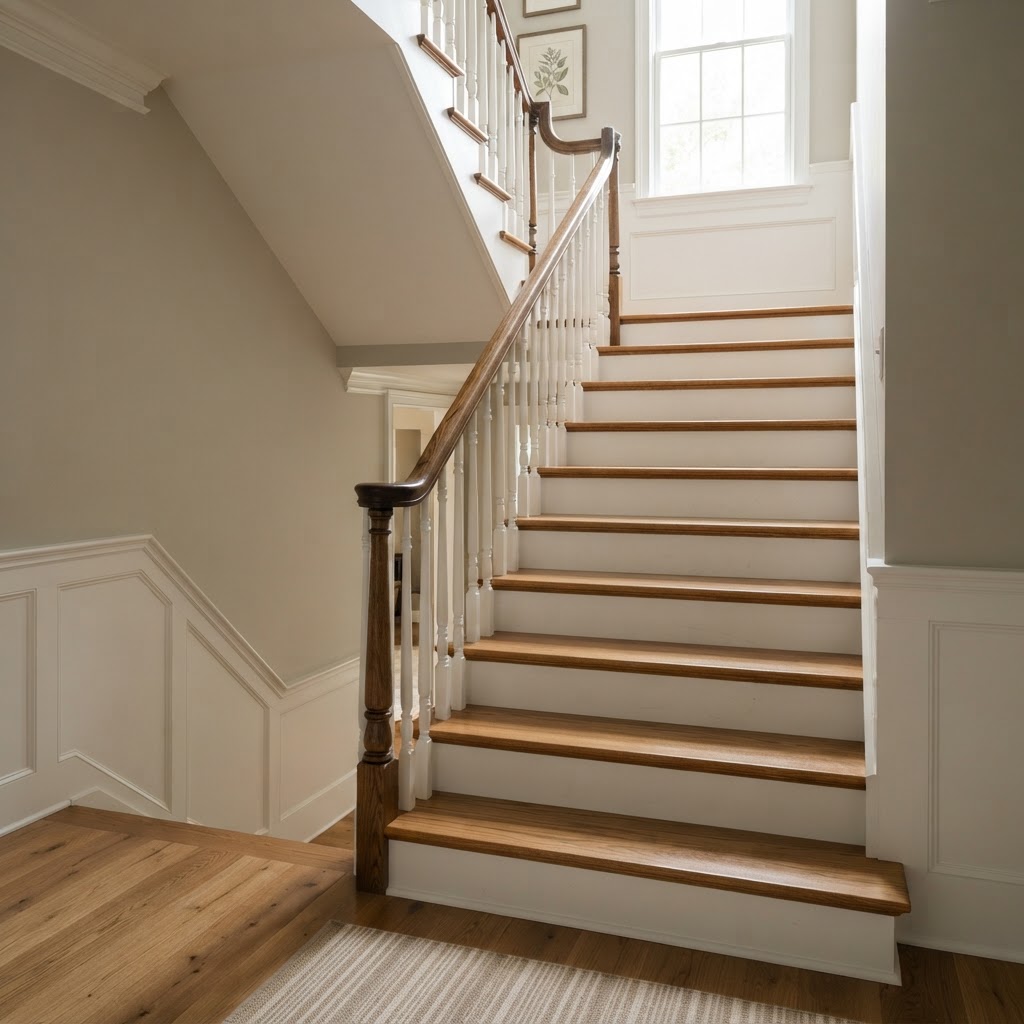
The short answer: the best stair tread material depends on how the stairs are used. Solid hardwood is the classic, durable choice that can be refinished, luxury vinyl plank tread systems suit busy and moisture-prone areas, carpet offers traction and quiet, and rubber is a practical, slip-resistant choice for utility and commercial stairs. Refinish when the treads are structurally sound and the wear is cosmetic; replace when they are cracked, loose, deeply worn or unsafe. For help choosing treads that are safe and suit your floors, contact Floors and Beyond VA for a free in-home consultation and an all-inclusive estimate covering treads, installation and finishing.
Floors and Beyond VA, a family-owned Northern Virginia flooring and remodeling contractor serving homeowners since 1987, offers a free in-home consultation to measure your stairs, show samples in your own lighting and provide an all-inclusive installation estimate.
Stairs are the hardest-working flooring in a multi-level home. Every family member crosses them many times a day, often carrying something. They are also a safety feature, and they set the tone for the entire house. Updating the treads can transform a home, but the work is detailed and the margin for error is small. This guide explains common materials, safety and code considerations, size and nosing options, styling tips to match your existing floors and maintenance and restoration advice.
Understanding stair parts
A few terms help. The tread is the horizontal surface you step on. The riser is the vertical face between treads. The nosing is the front edge of the tread that overhangs the riser. Stringers are the structural boards that support the treads, running along the sides. The handrail, balusters and newel posts complete the stair assembly.
Different projects touch different parts. Replacing treads alone changes the surface you step on. Replacing risers changes the look from the front. Updating nosing changes both the safety and the style. Some projects involve all of these, along with painting or staining the stringers and updating the railing.
Hardwood stair treads
Solid hardwood treads, usually oak, maple or hickory, are the traditional choice. They are strong, durable and beautiful. They can be stained to match your floor or finished in a contrasting tone. Because they are solid wood, they can be sanded and refinished multiple times over their life.
Hardwood treads often pair with painted risers, a classic combination that brightens the stairs and hides scuffs. Alternatively, risers can be stained to match the treads for a rich, unified look.
Safety note: smooth finished wood can be slippery, especially in socks. Choose a finish with some traction and consider a runner if you have children or older relatives. Textured or satin finishes are generally less slippery than high-gloss ones.
Luxury vinyl plank stair solutions
Luxury vinyl plank manufacturers offer stair nosing and tread components designed to match their planks. These systems provide a consistent look from floor to stairs and handle moisture well, making them suitable for basement stairs and busy households.
Installation of vinyl on stairs requires precision. The treads must be sturdy and flat, and the nosing profiles must be installed correctly. Poorly installed vinyl on stairs can loosen or create tripping hazards. This is an area where professional installation is worth it.
Carpet on stairs
Carpet offers excellent traction, quiet and comfort. It is a popular choice for families with young children and for homes where noise travels. Carpet can be installed fully wall-to-wall on the stairs, or as a runner down the middle with hardwood visible at the sides.
Stair carpet takes a beating, especially at the nosing. Choose a dense, durable carpet with a quality pad and expect to replace it eventually. Waterfall installation, where the carpet flows over the nosing, and cap-and-band styles each have their own look and installation methods.
Rubber treads
Rubber stair treads provide strong traction and durability. They are common in commercial buildings, garages, basements and utility stairs. They are easy to clean and tolerate moisture. For residential interiors, rubber is less common as a primary finish but can be a practical choice for service stairs, workshops and exterior steps where permitted.
Mixing materials: runners and combinations
A popular approach is hardwood treads with a carpet runner. The runner adds traction, protects the wood and offers a chance to introduce color or pattern. The exposed wood on either side frames the runner. Runners are fastened with rods or tacking strips, depending on style. They can be replaced without redoing the treads.
Another approach is vinyl treads with painted risers for a clean, easy-to-maintain stair in a basement or playroom.
Safety and code considerations
Stairs are regulated because falls are a serious risk. Building codes address things like tread depth, riser height, uniformity, nosing projection, handrails, guards and lighting. We do not state specific code numbers in this article, because requirements differ by jurisdiction and edition and change over time. Verify current requirements with the local building authority and a qualified professional, especially if you are changing tread thickness, nosing projection or riser height.
A key point is that changing the thickness of a tread or covering can change the height of the first and last risers, which affects uniformity. Even small differences can create tripping hazards. A knowledgeable installer measures carefully and adjusts so that every riser remains consistent.
Other safety tips include secure handrails, good lighting, clear paths and slip-resistant finishes. Never leave items on stairs. If you have young children or older relatives, consider additional safety measures such as gates, nonslip treads and night lights.
Size and nosing options
- Bullnose. A rounded front edge. It is the classic profile for hardwood treads and offers a soft, traditional look.
- Square nose. A flat, sharp edge. It suits modern and craftsman styles but can chip more easily.
- Flush or hidden nosing. Used with some vinyl systems, giving a streamlined look.
- Return nosing. For open-sided stairs, a return wraps around the end of the tread so the exposed side looks finished.
Tread thickness varies. Thicker treads feel more solid and can be refinished more times. Overhang is also important. Too much overhang can catch toes. Too little can reduce usable foot space.
Styling tips to match existing floors
- Match the species. If your main floor is red oak, red oak treads will blend. Stain tones should match as closely as possible, though newly stained wood may look different from aged wood. Refinishing the main floor and treads together produces a cohesive result.
- Contrast deliberately. A dark tread against a light floor can be striking when done on purpose. Painted risers add crispness.
- Consider the view. Stairs are often visible from the entry. They should relate to the entry floor and any railings.
- Coordinate railings. If you are updating treads, consider whether the railing and balusters need refreshing. Painting or staining can change the look dramatically.
- Think about transitions. Where the stair meets the landing and adjacent floor, details matter. A tread that matches the landing hardwood looks seamless.
Maintenance and restoration of worn treads
Hardwood treads show wear first at the front edge and in the center. Light scratches can often be refreshed with a screen and recoat. Deeper wear calls for sanding and refinishing. Stairs can be sanded by hand and with specialized equipment, a labor-intensive process that benefits from experience. Our floor restoration service covers refinishing in detail.
Cleaning is simple: vacuum or sweep regularly, use a damp cloth with an approved cleaner, avoid soaking the wood and use felt pads or rugs where appropriate.
Squeaks are common in older stairs. They can result from movement between treads, risers and stringers. A professional can often reduce or eliminate squeaks by securing parts. We evaluate the structure as part of an inspection.
Carpeted stairs benefit from regular vacuuming and periodic professional cleaning. When the carpet is worn at the nosing or matted, replacement is the remedy.
When to refinish and when to replace
Refinish when: the treads are structurally sound, the wear is mostly in the finish, scratches are not deep, there is enough wood thickness left and you like the existing wood.
Replace when: treads are cracked, split or loose, they have been sanded too thin, there is rot or insect damage, the nosing is damaged beyond repair, or you want to change the material or style entirely.
Cover when: a stair is structurally fine but you want a new look. Capping treads with new material is an option in some cases, with attention to riser height.
An in-person inspection is the best way to decide. We examine the treads, risers and stringers, check for movement and measure thickness where possible.
Stairs in different Northern Virginia homes
- Colonials in Fairfax and Vienna. Formal staircases often have oak treads that can be refinished. Painted risers and a runner can refresh the look.
- Split-levels and ramblers. Short flights with landings need careful transitions. Hardwood or carpet are common.
- Townhomes in Reston, Centreville and Woodbridge. Narrow stairs see heavy use. Durable, slip-resistant treads and neat nosing matter.
- New construction in Ashburn and Sterling. Builder stairs often have carpet or thin treads. Upgrading to hardwood treads is a common project.
- Historic homes in Leesburg and Falls Church. Original treads may be worth preserving. Restoration requires care.
- Condominium stairwells. Rules often apply. Verify with building management.
Budgeting without numbers
We do not publish prices in articles. Stairs are priced differently from flat floors because each tread and riser requires custom cutting and fitting. Cost drivers include the number of stairs, the material, the type of nosing, whether risers are replaced, whether the stair is open or closed, the condition of the structure, the complexity of landings and winders, and finishing work such as painting or staining.
A free in-home consultation lets us measure each stair, examine the structure and provide a written, all-inclusive estimate. What we quote is what you pay. Our pricing and policy page explains the details.
Lighting and visibility on stairs
Stairs are one of the places where lighting is a genuine safety matter. Shadows can hide the edge of a tread. Glare can wash out detail. A runner with a pattern can make steps harder to read, while solid colors with a visible nosing help. Make sure every flight has good, even lighting and switches at both ends. If you are changing tread colors, check how they look at night. Our guide to how lighting changes the way floors look explains why.
Protecting stairs during other projects
Painting, moving furniture and carrying materials can damage freshly finished stairs. Cover treads with breathable protection when other trades are working. Avoid tape directly on a new finish. Plan the stair work for a time when traffic can be limited, and ask us how long the finish should cure before heavy use.
Pets, kids and stair traction
Pets can slip on smooth hardwood stairs, and children in socks can slide. A runner, textured finish or rubber tread can reduce risk. Keep nails trimmed and consider baby gates when needed. These simple measures reduce falls without hiding the beauty of the wood.
Open staircases and visual impact
In open-plan homes, stairs are a sculptural element. Hardwood treads with a thin profile and minimal risers feel contemporary. Painted risers and stained treads feel classic. The railing, balusters and wall color all contribute. We help you consider the entire assembly and coordinate the flooring work with any carpentry or painting you plan.
Noise, squeaks and comfort
Stairs transmit sound through the house. Carpet and pad deaden it, while hardwood and vinyl can be louder. Squeaks come from movement where parts meet, and they often worsen as seasons change. A careful installer secures treads, risers and stringers and may add fasteners or adhesive to reduce movement. If noise is your main concern, choose carpet or a runner, and ask us about securing the structure.
Planning the sequence of a stair project
A stair project typically moves through inspection, demolition of old coverings, repair of the structure, installation of treads and risers, nosing, finishing and railing coordination. Stain and finish need cure time between coats. We explain the sequence and let you know when the stairs will be usable. In a home with one staircase, we discuss how to keep access to upper floors during the work.
Choosing a stain or paint for risers and stringers
Risers and stringers frame the treads. White or light painted risers are classic and brighten stairs, while stained risers create a rich, continuous look. Painted stringers hide minor wear, and stained stringers add warmth. Choose finishes that stand up to scuffs, such as durable enamel paints. Samples help, because stairs are usually seen in softer light than the main rooms.
A short stair safety checklist
Check that treads are firm, nosings are not loose, handrails are secure, lighting is bright and clutter is cleared. Make sure runners are fastened. Replace worn carpet that can catch a heel. These small checks prevent accidents, and any stair work we do includes a look at them.
Why Northern Virginia homeowners choose Floors and Beyond VA
- Family-owned since 1987. We know the region's stairs, from historic to new.
- In-house crews only. Our employees do the careful carpentry.
- Free in-home consultation. We measure stairs and show samples in your lighting.
- Precise laser measurements at no charge. Accuracy matters on stairs.
- Honest, all-inclusive estimates. No surprises.
- Fully licensed, bonded and insured. Protection for your home.
- Safety-minded installation. We keep risers consistent and treads secure.
- Refinish-first philosophy. We save treads that can be saved.
Floors and Beyond VA treats stairs as the high-stakes work they are.
Common mistakes with stair treads
- Changing tread thickness without checking riser heights. It creates tripping hazards.
- Choosing a slippery finish. Pick traction.
- Ignoring squeaks and loose treads. Fix the structure.
- Matching stain poorly. Test samples on the actual wood.
- Skipping the nosing details. They define both safety and look.
- Attempting complex stairs without experience. Angles and winders are challenging.
- Forgetting about lighting. Good lighting prevents falls.
Frequently asked questions
Can I install vinyl plank on my stairs?
Yes, using the right nosing and installation method.
Can I refinish stairs?
Often yes, if the treads are structurally sound and thick enough to sand.
How do I stop stairs from being slippery?
Use a runner, a textured finish or nonslip treads.
Do I have to replace the risers too?
Not always. Risers can be painted or replaced depending on condition.
Does stair work require a permit?
Requirements vary. Verify with the local building authority.
Where can I learn more about base boards and trim near the stairs?
Our guide to base boards, materials and profiles covers the trim details that finish a stairwell.
Related resources
Our wood flooring page describes the hardwood services we provide, our floor restoration page covers refinishing, and our overview of flooring installation in Tysons shows how we approach projects across the region.
Ready to update your stairs?
Free in-home consultation
Let us measure your stairs, show samples in your light and give you a clear, all-inclusive estimate covering removal, materials, installation, transitions, molding and cleanup.
Contact Floors and Beyond VAFloors and Beyond VA
Family-owned flooring and remodeling since 1987, serving Northern Virginia
Phone: (703) 906-5698
Web: floorsandbeyondva.com




