
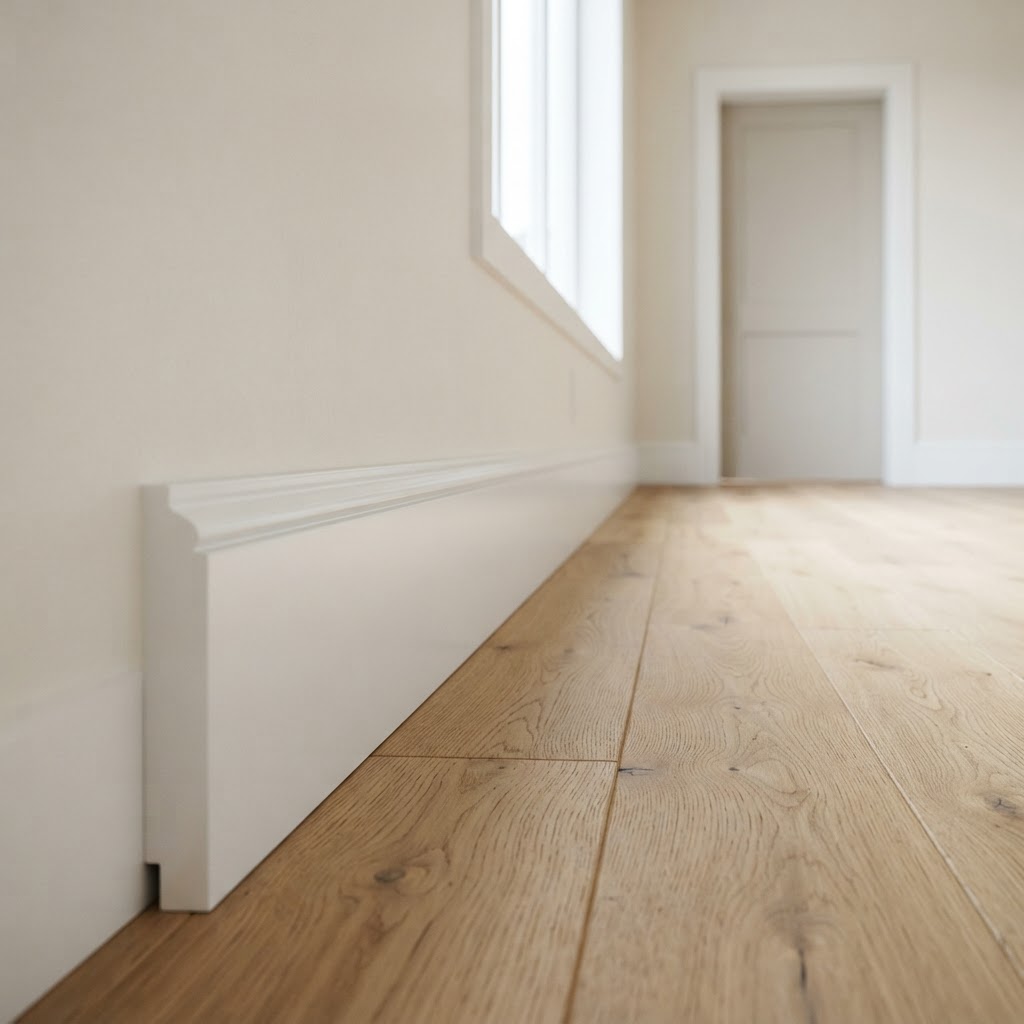
The short answer: base boards are the trim pieces that run along the bottom of your walls where they meet the floor, hiding the expansion gap, protecting the wall from scuffs and giving a room a finished look. Choose them by matching the height to your ceilings and style, the material to your moisture and budget needs, and the finish to your flooring: stained wood to echo hardwood, painted trim for a crisp contrast with luxury vinyl plank, tile or carpet. For help choosing base boards that finish the room properly, contact Floors and Beyond VA for a free in-home consultation and an all-inclusive estimate covering trim, installation and finishing.
Floors and Beyond VA, a family-owned Northern Virginia flooring and remodeling contractor serving homeowners since 1987, handles trim as part of the flooring project so the whole job looks complete.
Base boards are easy to overlook until they are missing, chipped or wrong. A beautiful new floor next to worn, undersized or mismatched trim looks unfinished. A well-chosen base board does the opposite: it frames the floor like a picture frame and makes the entire room feel intentional. This guide explains materials and profiles, how to pick height and finish, how to match trim to hardwood, vinyl plank, carpet and tile, what installation involves and when to replace trim during a floor restoration or remodel.
What base boards actually do
A base board has three jobs. The first is practical: it covers the gap that flooring needs along the wall so that the floor can expand and contract with the seasons. Without it, you would see the edge of the floor and a strip of bare subfloor. The second is protective: it takes the knocks from vacuums, furniture and shoes that would otherwise mark the wall. The third is visual: it creates a transition between the vertical plane of the wall and the horizontal plane of the floor, giving the eye a place to rest.
Because they sit at the junction of two surfaces, base boards also hide imperfect joins. Walls are rarely perfectly straight, and floors are rarely perfectly flat. A good base board and a bead of caulk make small irregularities disappear.
Common materials
- Solid wood. Traditional and versatile. Species such as pine, poplar and oak are common. Wood can be stained or painted, and it takes nail and glue well. Wood moves with humidity, so installation should allow for it. It is a classic choice for older homes and a natural match for hardwood floors.
- Medium-density fiberboard, or MDF. An engineered material made of wood fibers and resin. It is smooth, consistent and takes paint beautifully, so it is a popular choice for painted trim. It is generally more economical than solid wood. It is vulnerable to water, which swells the edges, so it is best in dry areas and should be sealed carefully.
- PVC and other synthetic trim. Moisture-proof and rot-resistant, ideal for bathrooms, basements and laundry rooms. It paints well and does not swell. It can feel different from wood and may require specific adhesives and fasteners.
- Finger-jointed pine. Short pieces of pine joined together to make long lengths. Economical and paintable, but not usually stain-grade because the joints show.
- Vinyl and rubber cove base. Common in commercial spaces and sometimes used in utility areas. Flexible and easy to clean, but not typically chosen for traditional living rooms.
- Tile base. Matching tile pieces used as a base board in bathrooms and kitchens, often called bullnose or cove. It continues the surface of the floor up the wall.
Common profiles and styles
Profile means the shape of the board's face. Some popular choices follow.
- Flat or square-edge. A simple rectangular board with little or no decoration. It suits modern, craftsman and minimalist interiors. Flat boards are easy to paint and clean.
- Colonial or ogee. A graceful, curved profile with layered curves. It suits traditional homes, including many colonials in Fairfax, Vienna and Falls Church.
- Craftsman. A flat board with a simple cap or step along the top. It suits bungalows, cottages and mid-century homes, and it pairs beautifully with simple door casings.
- Ranch or rounded. A softly rounded top edge, common in mid-century ramblers across Northern Virginia.
- Stepped or built-up. Multiple pieces combined to create a deeper, more architectural profile, with a base, a cap and sometimes a shoe. These suit formal rooms and taller ceilings.
- Shoe molding and quarter round. Small trim pieces installed at the bottom of the base board to cover the gap between the base and the floor. We cover these in detail below.
Choosing the right height
Height changes the personality of a room. A taller base board makes ceilings feel higher and adds weight and formality. A shorter one is lighter and more casual.
Consider your ceilings. In a house with standard ceiling height, a modest base board looks proportional. In a home with tall ceilings, such as many newer homes in Ashburn or older homes with high ceilings in Arlington, a taller base board balances the room. As a rule of thumb, base boards should feel in scale with door casings and crown molding, if present. Mismatched proportions look off.
Consider style. Modern designs often use tall, flat base boards for a clean look. Traditional homes use more elaborate profiles. Craftsman designs use simple, solid boards.
Consider practicality. A taller board protects more of the wall from furniture and vacuums. In a household with kids and pets, extra height can be a benefit.
Matching base boards to your flooring
Hardwood
Stained wood base boards can echo the floor in a traditional look, but a slightly lighter or darker stain can add depth. Many homeowners prefer white or painted trim for a crisp contrast. Shoe molding in a stain or paint that matches the base or the floor can make the transition smooth. If you are refinishing hardwood, think about trim at the same time. Our refinishing work often includes removing and reinstalling base boards so the sander can reach the edges. Our floor restoration service explains how that works.
Luxury vinyl plank
Painted base boards are the most common pairing. White or a soft off-white gives a clean, bright finish. A color matched to the wall can feel more modern. Vinyl floors need an expansion gap, hidden by the base board or shoe molding. Keep the floor from being pinned beneath the trim.
Carpet
Carpet tucks near the base board, and a base board with a small gap at the bottom lets the carpet edge slip beneath. Painted base boards suit carpeted rooms well. Be aware that carpet installation can scuff a freshly painted base board, so the order of painting and installation matters.
Tile
In bathrooms and kitchens, tile base or painted PVC trim works well. Tile base creates a continuous surface that is easy to wipe. In entries, painted wood or PVC is common. Match the grout color for a seamless look.
Paint versus stain
Paint is the most popular finish for base boards. It hides imperfections, brightens the room and is easy to touch up. Semi-gloss or satin sheens clean easily and resist scuffs. Painted MDF and PVC offer a smooth finish.
Stain highlights the grain of solid wood and is a good choice for traditional, craftsman and rustic interiors. Stain-grade wood costs more and shows flaws, so it requires good material and careful installation.
Think about the whole room. If doors and window trim are painted white, painted base boards will match. If they are stained, stained base boards will relate. Mixing finishes can work, but it needs a plan.
Installation considerations
- Walls that are not straight. Few walls are perfectly flat or square. A skilled installer scribes, shims and uses flexible caulk to follow the wall. Gaps along the top edge are filled with paintable caulk. The bottom is handled with shoe molding or a carefully set board.
- Corners. Inside corners can be coped, where one board is cut to fit over the profile of the other, which holds up better over time than a simple mitered joint. Outside corners are mitered and glued. Good corners are a sign of quality.
- Fastening. Base boards are nailed into studs where possible, with adhesive in some cases. Nails are set and filled.
- Transitions. Where base boards meet door casings, thresholds, stairs and cabinets, the details need to be resolved. Plinth blocks are sometimes used at door casings, giving a classic look.
- Shoe molding and quarter round. These small pieces cover the gap at the floor. Shoe molding is slightly taller and more graceful than quarter round, which is a simple rounded quarter circle. They allow the floor to move without exposing gaps. They are especially useful when floors are slightly uneven.
- Caulking and painting. Caulk fills small gaps at the top and in corners. Paint finishes the work. Doing the painting after installation gives the best result.
- Order of operations. In a flooring project, the typical order is to remove the base boards, install the floor, then reinstall or replace the base boards and add shoe molding. For carpet, base boards are often installed before the carpet, with a small gap beneath. We coordinate this so there is no rework.
When to replace trim during a floor restoration or remodel
Sometimes the old base boards can be reused. Sometimes it is wise to replace them. Consider these situations.
Reuse if the boards are in good condition, the profile suits the home and you want to preserve original character. Careful removal and reinstallation keeps historic trim intact. This is common in older homes in Vienna, Falls Church and Arlington.
Replace if the boards are damaged, rotted, heavily chipped or stripped of detail by years of paint. Replace them if they are too short to cover a thicker new floor, or too low for the style you want. Replace them if you are changing the look of the room, such as moving to taller trim for a more modern feel.
Add shoe molding if there is none and the new floor leaves a gap. This is a small addition with a large visual payoff.
Match new trim to old when you are adding to existing rooms, so the house looks consistent.
When we refinish hardwood floors, the sanding goes all the way to the wall, and we remove base boards when needed so the finish is clean. Replacing damaged trim at this point saves time and money compared with doing it later.
Examples tied to Northern Virginia home styles
- Colonials and traditional homes in Fairfax, Vienna and Falls Church. Taller, layered profiles in white, with stained or painted shoe molding, echo the home's formal character.
- Mid-century ramblers and split-levels. Simple, rounded or flat boards in modest height suit the era. Painted white or a warm off-white looks fresh.
- Craftsman bungalows in Arlington. Flat boards with a simple cap, sometimes stained to match original trim, honor the home's character.
- Townhomes in Reston, Woodbridge and Centreville. Clean, moderate-height base boards in painted finishes keep the look contemporary and easy to maintain.
- New construction in Ashburn and Sterling. Builder trim is often modest and sometimes lightweight. Upgrading to taller, more substantial base boards can give a home a custom feel.
- Condominiums in Tysons and Arlington. Modern flat profiles in painted finishes, with attention to association rules for work hours and materials.
- Historic homes in Leesburg and Manassas. Careful preservation or period-appropriate reproduction.
Budgeting without numbers
We do not publish prices in articles because they depend on material, profile, height, the length of wall, the condition of existing trim and the complexity of the home. Here is how cost works. Material choice matters, with solid wood and built-up profiles generally costing more than MDF or finger-jointed pine. Taller boards use more material. Labor depends on corners, doorways, stairs and uneven walls. Painting or staining adds to the scope. Removing and reinstalling existing trim is typically less costly than buying new, but it takes care.
For a firm figure, you need a measurement and an estimate. Our estimates are all-inclusive. They cover removal of old flooring, new materials, installation, furniture moving, transitions, molding and cleanup. What we quote is what you pay. Our pricing and policy page explains the details.
Timeline expectations
Trim work follows flooring. After the floor is installed, base boards and shoe molding go in, followed by caulking and touch-up painting. We explain the sequence and the time each step takes during your consultation. If you want full painting of new trim, we coordinate that as well.
Caring for base boards over the years
Painted base boards benefit from gentle cleaning with a damp cloth and mild cleaner. Touch up chips promptly to prevent moisture from entering exposed wood. Check caulk lines now and then, since seasonal movement can open small gaps. Keep vacuum heads and furniture legs from banging the trim, and consider furniture pads. These small habits keep trim looking fresh for many years and spare you a full repaint.
Why Northern Virginia homeowners choose Floors and Beyond VA
- Family-owned since 1987. We know the region's homes, from colonials to condos.
- In-house crews only. Our own employees handle floors and trim.
- Full-service finishing. We take care of the trim details that make a floor look complete.
- Free in-home consultation with samples. We bring samples and discuss trim in your space.
- Precise laser measurements at no charge. Accuracy supports cutting and ordering.
- Honest, all-inclusive estimates. What we quote is what you pay.
- Fully licensed, bonded and insured. Your home is protected.
- No showroom. We bring everything to you.
When you hire Floors and Beyond VA, you hire a team that thinks about the whole room.
Common mistakes with base boards
- Choosing trim that is too short for the room. It can look stingy.
- Forgetting shoe molding. Gaps and uneven floors show.
- Painting before installing the floor. Floor installation can scuff the paint.
- Using MDF in wet areas. It swells. Choose PVC.
- Mismatching profiles. Base boards should feel related to door and window trim.
- Pinning the floor with trim. Floating floors need room to move.
- Skipping caulk. A bead of caulk makes the difference.
Frequently asked questions
Do I need new base boards with new flooring?
Not always. Existing trim may be reused if it is in good shape and the style fits.
What height should I choose?
Choose a height proportional to your ceilings and style, and compare samples in the room.
Is shoe molding necessary?
It is not required in every case, but it covers gaps and is often helpful, especially over a new floor with slight unevenness.
Should base boards match the floor?
They can, but many homeowners prefer painted white or a deliberate contrast.
Can you install trim in a condominium?
Yes, and we recommend confirming building requirements for work hours, materials and elevator use.
Do base boards need to come off when floors are refinished?
Often yes, so the sander can reach the edges and the finish is even all the way to the wall. We remove and reinstall them as part of the work.
Related resources
Our flooring installation guide explains our process, our home remodeling page shows how trim fits into a larger project, and our guide to flooring installation in Tysons shows how we work in the region.
Ready to finish your floors with the right trim?
Free in-home consultation
Let us visit your home, bring samples and plan the trim with your floor. You get an honest, all-inclusive estimate covering removal, materials, installation, transitions, molding and cleanup.
Contact Floors and Beyond VAFloors and Beyond VA
Family-owned flooring and remodeling since 1987, serving Northern Virginia
Phone: (703) 906-5698
Web: floorsandbeyondva.com




