
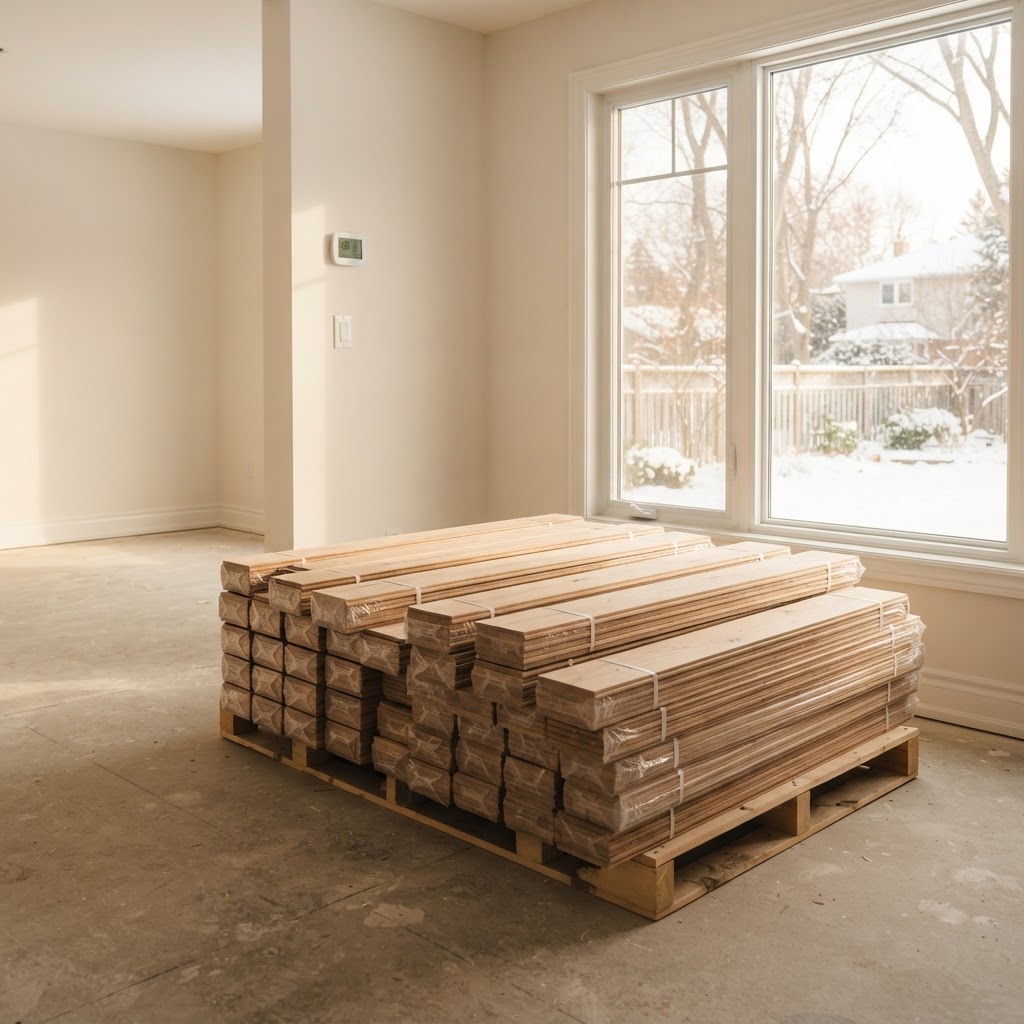
Installing new floors in winter in Northern Virginia works well when the job is planned around the season. Cold outdoor temperatures are not the real issue. The real issue is what heating does to the air inside your home. Forced-air heat dries the air, and dry air changes how wood, adhesives, and finishes behave. Plan for that, and a winter installation can be one of the best times to get new floors in.
Floors and Beyond VA installs and refinishes floors year-round across Northern Virginia. This guide explains how winter affects each type of flooring, what we do differently between December and March, how to prepare your home, and what winter projects look like in three communities with very different housing: Arlington, McLean, and Leesburg.
Can you install hardwood floors in the winter?
Yes. Hardwood can be installed successfully in winter as long as the home is heated to normal living conditions, the wood is acclimated to that environment, and the installer plans for the floor to expand when humidity returns in spring and summer.
Wood is always trading moisture with the air around it. In a Northern Virginia summer, indoor humidity can run high, and wood swells. In winter, heating can drop indoor humidity far lower, and wood shrinks. The industry generally recommends keeping homes with wood floors between about 60 and 80 degrees Fahrenheit and roughly 30 to 50 percent relative humidity year-round. In a heated home with no humidifier, winter humidity can fall well below that range.
That is the heart of winter installation. If hardwood is installed in very dry conditions, it is installed at its smallest. When humidity rises in spring, it will try to expand. An experienced installer accounts for this with proper acclimation, correct expansion space at walls, and in some cases a recommendation to run a humidifier so the home stays closer to its year-round average. Our article on why hardwood floors gap in winter explains the movement in more detail.
What does acclimation mean in winter?
Acclimation means letting the flooring reach a moisture balance with the home it will live in before it is installed. In winter, that means the flooring should sit in the heated home, not in a cold garage or a delivery truck, until its moisture content is where it should be.
A common mistake is treating acclimation as a fixed number of days. The real goal is a measured match between the moisture content of the wood and the subfloor, and between the wood and the home's normal conditions. A good installer checks with a moisture meter instead of a calendar. Some products, especially many engineered hardwoods and LVP lines, have specific manufacturer instructions for acclimation temperature and time, and those instructions should be followed to keep the warranty valid.
In winter, it is also important that the home is heated to normal living temperature during acclimation and installation. A house that is kept cold while vacant, or a new addition that is not yet on the heating system, is not ready for flooring.
Does cold weather affect LVP, tile, and carpet installation?
Yes, each in its own way. LVP is sensitive to temperature, tile setting materials cure more slowly in the cold, and carpet becomes stiffer and harder to stretch when it is cold.
LVP and other vinyl products expand and contract with temperature more than with humidity. Most manufacturers specify a temperature range for storing and installing their products. If LVP is installed cold and the room later warms up, it can expand against walls and cabinets and buckle. If it is installed in a room that is warm only during installation and then left unheated, it can contract and open gaps. The fix is simple: store and install it in a room held at normal living temperature, and keep it there.
Tile setting materials such as thinset and grout depend on temperature to cure properly. In cold rooms, especially basements, garages, and rooms over unheated spaces, they cure more slowly. Installers working in winter keep the work area heated and allow more time before grouting or walking on the tile.
Carpet is more flexible when it is warm. In a cold room, carpet and backing are stiffer, which makes it harder to stretch tightly. Carpet installed loose will ripple later. Delivering carpet in advance so it warms up indoors makes a real difference.
Can you refinish hardwood floors in the winter?
Yes, and winter is often a good time for it, but the finish choice matters. With windows closed, ventilation is limited, so low-odor, faster-curing finishes are usually the better choice.
Traditional oil-based finishes have a strong odor and need good ventilation and longer cure times, both harder to manage when it is cold outside. Waterborne finishes have much lower odor, dry faster between coats, and are better suited to closed-up winter homes. Some homeowners still prefer the warmer amber tone of oil-based products, and that is a conversation to have with your installer.
Cold also slows curing for any finish. The home needs to stay heated during and after the refinishing so each coat dries properly. Floors and Beyond VA plans refinishing schedules around this, and we will tell you how long to wait before walking on the floor, putting furniture back, and laying rugs down.
How should you prepare your home for a winter flooring installation?
Keep the home heated to normal living temperature before, during, and after the installation, clear the rooms in advance, and plan a path from the door to the work area that protects your other floors from snow, salt, and slush.
Here is what helps most. Set the thermostat to your normal winter setting a few days before the flooring arrives and leave it there. If you run a whole-home humidifier, keep it on at its usual setting. Clear furniture and breakables from the rooms. Set up a protected entry route, since crews will be bringing materials in and old flooring out, and road salt and snowmelt damage finishes quickly. And plan for the doors to be open for short stretches while materials come in, which is normal and will not undo acclimation if the house is otherwise kept warm.
After installation, protect new floors from winter grit. Use walk-off mats at every exterior door, take shoes off at the entry, and clean up salt residue promptly. Calcium chloride and rock salt can leave a white film on finished hardwood and dull the finish if left to sit.
Is winter a good time to schedule new floors?
For many homeowners, yes. Winter is when people spend the most time indoors and notice tired floors the most, and it fits well around the holidays, before spring listing season, and before outdoor projects take over the calendar.
If you are planning to sell in spring, winter is the time to get floors done so the house is ready for photos. If you are hosting during the holidays, plan backward from the date and leave margin for curing. And if your project includes refinishing, finishing before the humid months means the floor has time to settle into its first seasonal cycle.
Winter flooring installation in Arlington, VA
Arlington housing ranges from high-rise condos in Rosslyn, Ballston, and Crystal City to garden-style apartments, row houses, and older single-family homes in neighborhoods like Lyon Park and Cherrydale. Each brings its own winter considerations.
Condo projects in Arlington are governed by building rules, and winter does not change those. Most buildings require elevator reservations, loading dock scheduling, certificates of insurance, and work-hour limits. Many also require sound-reducing underlayment for hard flooring. Older buildings with steam or hot-water radiator heat can be especially dry in winter, which makes acclimation and humidity control even more important for wood floors.
Arlington row houses and older homes share walls and often have original hardwood that is better refinished than replaced. Winter refinishing in these homes usually calls for waterborne finishes because ventilation is limited and neighbors are close. Our article on Arlington condos, row houses and older brick homes covers the noise side of these projects. Learn more about our work in the county on our flooring company in Arlington, VA page.
Winter flooring installation in McLean, VA
McLean has large homes, many of them colonials and custom builds, with extensive hardwood, formal rooms, and often hydronic or radiant heat in at least some areas. Those details shape winter projects.
Large homes often have separate heating zones, and some zones may be kept cooler in winter, such as a guest wing or a formal living room. Before flooring is installed, every room in the project needs to be heated to normal living temperature, not just the ones the family uses daily. Radiant floor heating requires its own care. The heat is usually turned down before installation and brought back up gradually afterward, following the flooring manufacturer's instructions, so the floor is not shocked by a sudden temperature change.
Many McLean homeowners use winter for restoration projects on original oak floors in older colonials, because the work happens when outdoor entertaining is on pause. We cover that decision in our article on hardwood floor refinishing in McLean homes. See our hardwood flooring in McLean, VA page and our flooring company in McLean, VA page for more.
Winter flooring installation in Leesburg, VA
Leesburg has two very different kinds of homes: historic houses in and around the old downtown, some well over a century old, and newer subdivisions built over the past few decades. Winter affects each differently.
Older Leesburg homes are often drafty, with uneven heat between rooms and floors. Original wood floors in these homes have been through many winters and summers, and they have already moved a lot. Winter refinishing works well, but the installer has to watch for cold rooms that will cure slowly and for gaps that will close up again when humidity returns. Filling every winter gap in an old floor can cause problems in summer, so a careful installer explains which gaps to leave alone.
In newer Leesburg neighborhoods, the winter concern is often new construction or recent renovations. A home or addition that was recently built may still be releasing moisture from framing, drywall, and concrete. Flooring should go in only after the space has been heated and has stabilized, which a moisture meter can confirm. We wrote about the range of Leesburg homes in our article on Leesburg historic homes and new neighborhoods. Learn more on our flooring company in Leesburg, VA page.
Will new floors installed in winter gap or buckle later?
They should not, if they are acclimated and installed correctly. Some small seasonal movement is normal in any wood floor, but a properly installed winter floor should not cup, buckle, or develop large permanent gaps.
The key is that the installer understands Northern Virginia's seasonal swing. Wood installed in a dry winter home will tighten up as humidity rises in spring. That is expected and is why expansion space at walls matters. Floors that develop serious problems after a winter installation usually were not acclimated, were installed in an unheated space, or were installed tight to walls and cabinets with no room to move. Running a humidifier in winter to keep indoor humidity closer to the recommended range reduces movement for years after the install.
Why Northern Virginia homeowners choose Floors and Beyond VA in every season
Floors and Beyond VA is a family-owned flooring company that has served Northern Virginia since 1987. Our in-house crews install and refinish hardwood, LVP, carpet, and tile year-round across Fairfax, Loudoun, Prince William, and Arlington counties, and we know how this region's seasons affect every floor we put in.
We start every project with a free in-home visit. We check moisture in the subfloor and the flooring, look at how your home is heated, and plan acclimation and scheduling around the season so your floor performs the way it should in January and in July.
Thinking about new floors this winter? Book your free in-home estimate at floorsandbeyondva.com/Contact and a Floors and Beyond VA specialist will come to you.

