
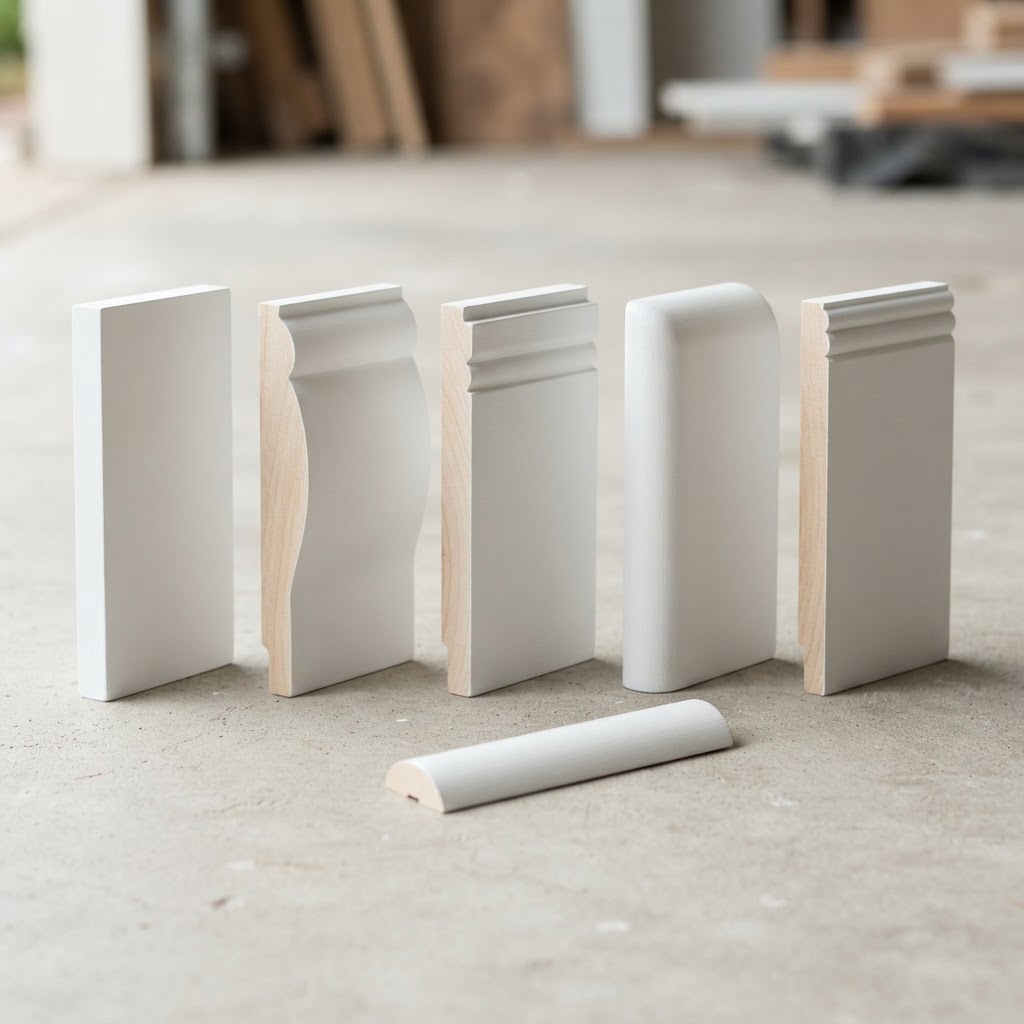
The short answer: choose baseboard trim by deciding on a profile that fits your home's style, a height that suits your ceilings, a material that matches the room's moisture and budget, and a paint or stain that complements the flooring. Painted MDF or wood suits most living areas, PVC suits bathrooms and basements, and stained solid wood works where you want to echo hardwood. For help matching trim to your floors, contact Floors and Beyond VA for a free in-home consultation and an all-inclusive estimate covering trim, installation and finishing.
Floors and Beyond VA, a family-owned Northern Virginia flooring and remodeling contractor serving homeowners since 1987, treats trim as part of finishing a floor, so you get a polished result with no loose ends.
If you have ever looked at a freshly installed floor and felt the room still looks unfinished, the missing piece is probably trim. The baseboard is the frame of the floor. It hides the necessary gap along the wall, protects the wall from scuffs and ties together the floor, walls and doors. This guide compares profiles and heights, materials such as wood, MDF and PVC, paint versus stain for different floor types, and the installation details that make a difference: transitions, shoe molding, caulking and uneven walls. It also offers realistic thinking about cost and timeline.
The role of baseboards in finishing a flooring project
A flooring project is not complete until the edges are resolved. Flooring is installed with a small gap along the walls, called an expansion gap, that lets the floor move with changes in temperature and humidity. That gap must be covered. Baseboards and shoe molding do the covering. Without them, the edge of the floor and the bottom of the wall are exposed and look raw.
Trim also helps with minor irregularities. If a wall bows slightly or the floor runs out of level, a baseboard and a bead of caulk make the variation invisible. Skilled installers use this principle every day.
For hardwood refinishing, trim is part of the plan from the start. The sander needs to reach the wall, and the finish should not creep onto the trim. For carpet, trim often goes in first and the carpet slips beneath it. For tile, trim may be tile itself or painted PVC.
Popular profiles
Profile is the shape of the face of the board. These profiles are common in Northern Virginia homes.
- Flat or square. Clean and simple, with no decoration. It fits contemporary, craftsman and minimalist interiors, and it is easy to paint and clean.
- Colonial or ogee. A curved, layered profile with a traditional feel. It suits colonials, federal-style homes and formal rooms.
- Craftsman. A flat board with a simple cap or step. It pairs well with simple door casings and works in bungalows and mid-century homes.
- Rounded or ranch. A softly rounded top edge, common in mid-century ramblers.
- Stepped or built-up. Multiple pieces stacked to create a deep, custom look.
- Beaded. A decorative bead along the face, found in cottage and farmhouse styles.
Whichever you choose, keep the profile consistent through the main rooms of the house, and relate it to door and window trim. A random mix of profiles feels haphazard.
Choosing heights
Height changes the proportion of the room. Here are some guidelines.
In rooms with typical ceilings, moderate height trim looks proportional. In rooms with tall ceilings, taller trim balances the volume and gives a more custom look. In small rooms, very tall trim can feel heavy. In large rooms, very short trim can look weak.
Match the trim to the door casing. Baseboards are often slightly taller than the casing's width so that the casing sits neatly on a plinth block or meets the base cleanly.
Think about practicality. Taller boards protect more of the wall from furniture and vacuums and can reduce touch-up painting. In homes with pets, taller boards can be a help.
Think about floors. Thick flooring, such as hardwood or tile, may need slightly taller baseboards to look balanced. Thin flooring, such as vinyl plank, works with a range of heights.
Material comparison: wood, MDF and PVC
- Solid wood. Natural, strong and available in many species. It can be stained or painted. It moves with humidity and can split if nailed poorly. It is usually the most expensive. It suits traditional homes, stained finishes and historic restoration.
- MDF. Smooth, uniform and economical. It takes paint beautifully and does not show grain. It is heavier, can be brittle at edges and swells if it gets wet. It is best in dry areas and should be sealed on cut ends.
- PVC. Waterproof, rot-proof and insect-proof. It suits bathrooms, laundry rooms, basements and areas with moisture risk. It paints well and holds a clean line. It can expand and contract with temperature, and it needs the right adhesives and fasteners.
- Finger-jointed pine. A paint-grade option made of joined short pieces. Economical and paintable, but joints can telegraph through stain.
- Composite and polymer blends. Some products blend wood fibers and resin for moisture resistance and a smooth finish.
When in doubt, choose the material for the room first, then the profile. A powder room with a leaky toilet history deserves PVC. A formal dining room might deserve stained or painted solid wood.
Paint versus stain by floor type
Hardwood floors
Painted white or off-white base boards create a crisp contrast that makes hardwood glow. Stained base boards in a matching or slightly darker tone create a traditional look but can feel heavy in small rooms. Shoe molding can match either the floor or the baseboard. Decide on a rule, and apply it consistently.
Luxury vinyl plank
Painted trim is the standard. White, soft white or a color that matches the walls feels clean. Painted trim hides small gaps and complements both wood-look and stone-look planks.
Carpet
Painted trim pairs naturally with carpet. A satin or semi-gloss finish resists scuffs. Because carpet installers sometimes touch the base boards, painting trim after the carpet is installed gives the cleanest result, or leave a touch-up plan.
Tile
In wet rooms, painted PVC or tile base works well. In kitchens and entries, painted wood or MDF is common, with attention to moisture. Matching tile base creates a seamless look but takes more labor.
Mixed floors
When different floors meet in a house, keep the trim consistent. It unifies the home.
Finishes and sheen
Semi-gloss and satin paints are popular for trim because they wipe clean. Flat paint hides flaws but marks easily. A high-quality primer helps adhesion. For stained trim, choose a clear coat that resists wear. Test stains on the actual wood. MDF does not take stain.
If your doors and windows are painted a certain white, use the same on the trim. Slight color differences between whites are noticeable in strong light. Our guide to how lighting changes the way floors look explains why whites read differently under different bulbs.
Installation considerations
- Transitions. Where baseboards meet door casings, thresholds, stair skirts and built-ins, details matter. A plinth block at the base of a casing allows a neat meeting of profiles. Where trim meets stairs, careful scribing is needed.
- Shoe molding. This slim piece, often curved or quarter-round, attaches to the baseboard or the floor and covers the gap. Shoe molding is more graceful than a plain quarter round and available in various profiles. It also helps hide unevenness in the floor. Attach shoe molding to the baseboard, not the floor, to allow the floor to move.
- Caulking. Paintable caulk fills the gap between the top of the baseboard and the wall, and in corners. Good caulking creates a seamless look. It should not be used to bridge large gaps.
- Uneven walls. Few walls are flat. A skilled installer uses shims, scribes the board to the wall and adjusts joints. In some cases, a flexible baseboard or additional filler piece is needed.
- Corners. Inside corners are often coped for a tight fit that stays closed as the wood moves. Outside corners are mitered and glued.
- Fasteners. Nails into studs and sometimes adhesive secure the boards. Nail holes are filled and sanded.
- Order of work. Paint the walls first when possible, install the floor, then install trim, caulk and touch up. For refinishing, remove trim, refinish the floor, then reinstall or replace the trim and add shoe molding.
Dealing with historic and uneven houses
Older homes in Vienna, Falls Church, Arlington and Leesburg often have walls and floors that are out of square. Original trim may have profiles that are hard to match. We recommend preserving original trim where possible. When replacement is necessary, we work with profiles that suit the home and finish them to blend. In a historic house, a perfect modern line may look out of place. A faithful fit is better.
When to replace trim during a restoration or remodel
Replace trim if it is damaged, rotted or heavily chipped, if it has lost its detail under layers of paint, if it is too short for the new floor, or if you want to change the style. Reuse trim if it is in good condition and suits the house. Add shoe molding if gaps are visible. Match new trim to old in rooms that connect.
Doing trim work at the same time as flooring saves time and money. A single team can remove, protect, install and finish.
Examples tied to home styles
- Colonial in Fairfax or Vienna. A taller, layered profile in white with painted shoe molding.
- Mid-century rambler in Falls Church. A simple, rounded profile in white or soft off-white.
- Bungalow in Arlington. Flat craftsman trim, possibly stained to match original woodwork.
- Townhome in Reston or Woodbridge. Clean, moderate-height painted trim.
- New build in Ashburn. Upgraded taller trim to add presence.
- Condominium in Tysons. Modern flat trim, with attention to building rules and noise.
Realistic budgeting and timelines
We do not publish prices in articles. Cost depends on material, profile, height, length of wall, number of corners, doors and stairs, condition of existing trim and finish. Labor depends on complexity. A house with long straight walls is simpler than a house with many bay windows, built-ins and angles. Painting and caulking add to the scope.
Timelines vary with the size of the house and the finishing steps. Trim typically follows flooring, then caulking and paint touch-ups. We explain the sequence at the consultation.
For a firm figure, you need a measurement and an estimate. Ours are all-inclusive and include removal of old flooring, new materials, installation, furniture moving, transitions, molding and cleanup. What we quote is what you pay. Our pricing and policy page explains the details.
Trim around doors, windows and built-ins
Base boards are part of a family of trim. Door casings, window casings, crown molding and built-in details all contribute to the look. When you replace base boards, check how they meet other trim. Plinth blocks at the base of casings create a clean break. Where base boards meet built-in cabinets or fireplaces, special cuts are needed. We plan these junctions in advance.
Painting trim: preparation matters
Good paint work begins with clean, sanded, primed surfaces. Fill nail holes and gaps, sand lightly, and apply quality paint in thin coats. Allow adequate drying time. Tape off floors carefully. If a new floor is already installed, protect it with proper coverings. Trim painted before the floor can be scuffed. Trim painted after can drip. Plan the sequence and the protection.
Making a small room feel bigger with trim
Trim can influence the size of a room visually. Painting the base boards the same color as the walls reduces contrast and makes walls feel taller. Painting them white adds contrast and defines the room's edges. Taller trim emphasizes ceiling height. Choose based on the effect you want.
A representative example of matching trim to a floor
Here is a representative scenario, not an account of any particular customer. A family in a Falls Church rambler refinished their oak floors and found that the old base boards, painted many times, had lost their crispness. Replacing them with a simple, slightly taller painted profile and adding a matching shoe molding changed the whole room. The floor looked richer, the walls looked taller and the room felt finished. The trim was a small part of the project, but it carried much of the visual impact.
Questions to ask before you choose trim
Ask what height suits your ceilings. Ask what material fits each room. Ask who will paint and when. Ask how corners and uneven walls will be handled. Ask whether the old trim can be saved. Ask what the estimate includes. These questions help ensure that trim fits the plan and does not become an afterthought.
What drives the scope of a trim project
The scope depends on the linear footage of wall, the profile and height, the material, the condition of the existing trim, the number of corners and openings, the type of flooring and the finish. Stairs and curved walls take extra time. The need for paint or stain, caulk and touch-ups adds to the scope.
Why Northern Virginia homeowners choose Floors and Beyond VA
- Family-owned since 1987. We know the region's homes and their trim.
- In-house crews only. Our employees handle floors and finish details.
- Full-service finishing. One team, one plan.
- Free in-home consultation with samples. We discuss trim in your space.
- Precise laser measurements at no charge. Accurate counts.
- Honest, all-inclusive estimates. No surprises.
- Fully licensed, bonded and insured. You are protected.
- No showroom. We come to you.
Floors and Beyond VA makes sure your floor and trim look like they belong together.
Common mistakes with baseboard trim
- Choosing trim that is too short. It looks stingy.
- Painting before the floor. It can get scuffed.
- Attaching shoe molding to the floor. It restricts movement.
- Using MDF in wet areas. Choose PVC.
- Skipping caulk. It makes the difference.
- Mismatching profiles. Keep a consistent style.
- Ignoring uneven walls. Plan for scribing.
Frequently asked questions
Should baseboards match my doors?
They should be compatible. Many homes use the same white across trim.
Do I need shoe molding?
Often it helps hide gaps and unevenness.
Can I stain MDF?
Not well. Use solid wood for stain.
Is PVC trim good for bathrooms?
Yes, because it resists moisture.
Can you replace trim in a condo?
Yes, with attention to building rules.
Where can I learn more about choosing base boards generally?
Our guide to base boards, materials and profiles covers the broader decisions room by room.
Related resources
Our flooring installation guide explains the installation process, our floor restoration page covers refinishing, and our overview of flooring installation in Tysons shows how we approach projects in the region.
Ready to finish your floors with the right trim?
Free in-home consultation
Let us visit your home with samples and plan the trim with your flooring. You get an honest, all-inclusive estimate covering removal, materials, installation, transitions, molding and cleanup.
Contact Floors and Beyond VAFloors and Beyond VA
Family-owned flooring and remodeling since 1987, serving Northern Virginia
Phone: (703) 906-5698
Web: floorsandbeyondva.com




