
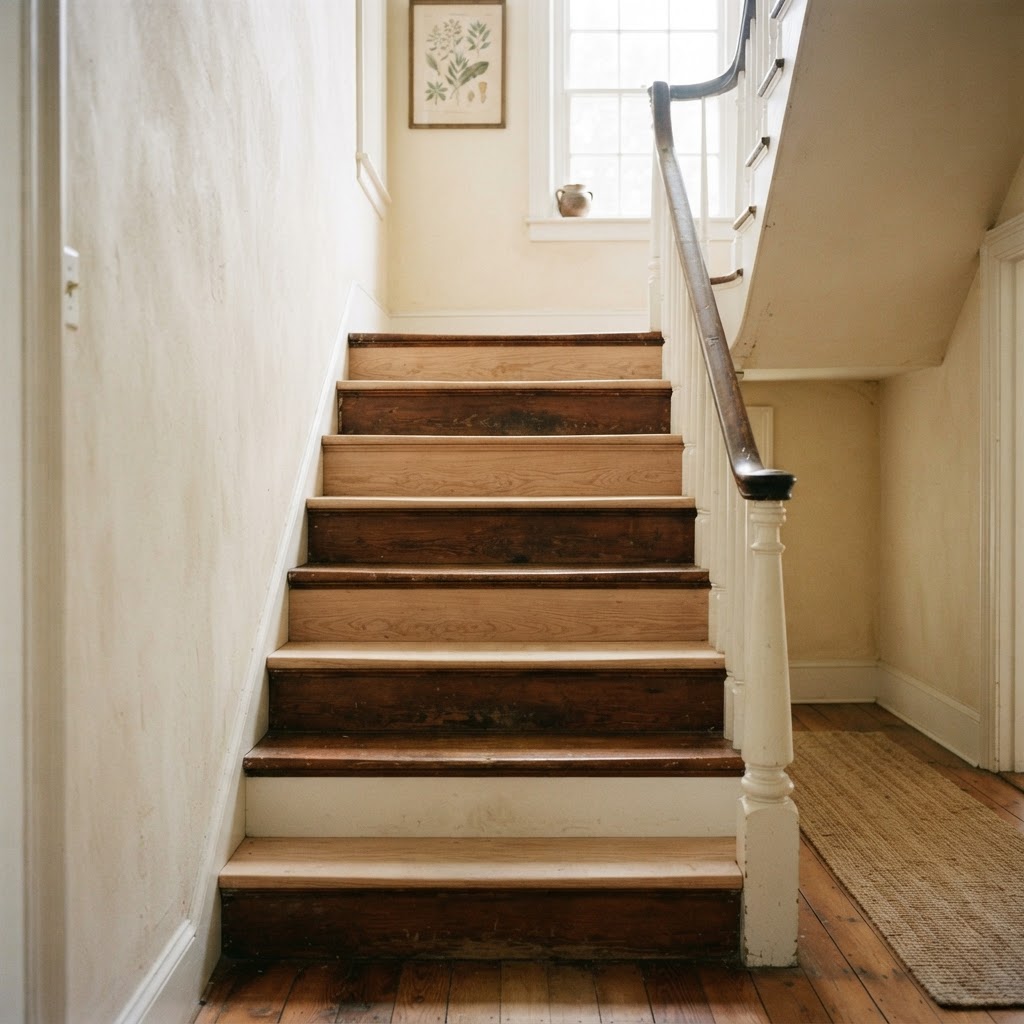
Stairs are the hardest-working part of a house. Every trip up and down puts weight on the same narrow surface, and over decades even sturdy oak treads wear, dull and scratch. Stairs are also the first thing a guest sees, and a staircase that looks tired can make freshly refinished floors look unfinished.
Across Northern Virginia, from Alexandria rowhouses with steep pine stairs to McLean colonials with wide oak staircases to Loudoun townhomes with carpeted builder-grade treads, stair projects come in many forms. This guide explains the options, how to tell whether your stairs can be refinished or need to be replaced, how stairs are matched to the floors around them, what the work involves and what to ask before you hire. Floors and Beyond VA is a family-owned flooring company that has served Northern Virginia since 1987, and our own crews handle stair work as part of flooring projects and as standalone jobs.
Why stairs deserve their own plan
Stairs combine several parts that wear in different ways. Treads, the horizontal surfaces you step on, take direct impact. Risers, the vertical faces between treads, take scuffs from shoes. Nosings, the rounded front edges of treads, are the most worn and the most easily damaged. Stringers, the side supports, and balusters and handrails above them are part of the look and the safety of the staircase.
Because stairs are small, vertical and detailed, they take more labor per square foot than a flat floor. Sanding requires care at every edge. Finishing is done tread by tread. Replacement requires accurate cutting and secure fastening. A stair project is therefore best planned on its own, even when it is part of a larger floor project.
Can my stairs be refinished
Often yes, if the treads are solid wood and in sound condition. Many Northern Virginia houses built before the 1980s have oak treads and risers, sometimes under carpet. The checks are similar to those for a floor. How much wood remains on the tread? Is it solid wood or a thin veneer? Are there cracks, splits or loose treads? Are there stains from pets or leaks? Is the nosing intact?
Refinishing sands the treads to bare wood, repairs small damage and applies new stain and finish. The result can look new and keeps the original wood. Where the stairs are in good shape, this is usually the best option because it preserves the staircase and avoids the work of replacement. It sits alongside our floor restoration work as the same kind of project, applied to a vertical surface.
Treads under carpet
Carpeted stairs are common, and they may hide solid wood. To check, lift a corner of the carpet at the back of a tread or at the bottom of the stairs. If you see wood, ask a flooring company to inspect it. If you see plywood or particleboard, the stairs were built to be covered, and the options are to cover them with new treads or to leave them carpeted.
Taking carpet off stairs leaves tack-strip holes and staple marks. Stair carpet is also often installed over a pad that can leave residue. A careful crew removes these and decides whether the wood can be refinished or needs to be covered.
When stairs need replacement
Stairs are better replaced when treads are cracked, split, rotted or loose beyond repair, when the wood is too thin from earlier sanding, when the treads are veneer or plywood not meant for refinishing or when you want a different species, color or look that staining cannot achieve. Replacement is also the answer when carpeted builder-grade stairs are not suited to being exposed.
New treads are usually made from solid oak or another hardwood. They are cut to fit each step, which in older houses is important because no two treads are exactly the same size. Risers can be replaced or covered. New nosings are often part of the tread. The stairs are then stained or painted to match. The same hardwood flooring vocabulary applies, since treads are simply hardwood cut to fit a staircase.
Covering existing stairs
Another option is to cover the existing stairs with new tread caps and risers. Tread caps are thin hardwood pieces that fit over the existing tread, including the nosing, and risers are applied to the vertical faces. This is faster and less disruptive than full replacement and works well when the underlying structure is sound. It is common in homes with builder-grade carpeted stairs that the owners want to expose.
Luxury vinyl plank flooring also has stair parts, including stair nosing and risers, that match the floor. It is practical for families with children and pets, and it is available in many looks. Our guide to LVP flooring for stairs covers those options.
Stained treads with painted risers
A classic combination in older Northern Virginia homes is stained wood treads with painted white risers. It is bright, traditional and hides scuffs on the risers, which are easy to touch up. It also forgives mismatches between old and new wood, because the treads are the only wood on show. If you are updating a staircase, this look is worth considering.
Full-wood staircases, where risers are stained as well, suit larger homes and more formal styles. They require a closer match of wood across treads and risers.
Matching stairs to the floor
Stairs and floors need to look related, though they need not be identical. If the main floor is oak with a certain stain, the stairs can be refinished in the same stain, which gives a unified look. If the floors are changing to a new color, the stairs should be done at the same time so the tone and sheen match. Where the stairs are painted, the treads should still coordinate with the floor at the top and bottom of the staircase.
In houses where some floors are new and others are not, such as an addition, a staircase can be a natural boundary between old and new. Plan where one finish ends and the next begins so the change looks intentional.
Stair finishes and safety
Stairs need a finish that is durable and not slippery. A glossy finish on a stair tread can be slick, especially in socks. Lower-sheen finishes are safer and hide wear. Some finishes include anti-slip additives. Runners or tread pads add grip and protect the wood. If the household includes young children, older adults or pets, tell your contractor. Handrails, balusters and newel posts also matter for safety. Loose handrails or wobbly balusters should be repaired when the stairs are refinished.
Building code and stair dimensions
Stairs are regulated for safety, and changes to height or dimensions can affect compliance. Replacing treads or adding tread caps changes the height of each step slightly, and a good crew accounts for that so the rise stays even from bottom to top. Uneven rise is a tripping hazard, and even a small difference can be dangerous. When floors change height at the top or bottom of the stairs, the first and last steps need to be adjusted. A flooring company that works on stairs regularly knows to check these details.
Handrails, balusters and newel posts
A staircase is more than treads. Handrails, balusters and newel posts are visible and structural. When refinishing stairs, consider whether the railing needs attention. Loose balusters can be re-secured. Handrails can be sanded and refinished or replaced. Painted balusters with stained handrails are a common combination. Some owners replace outdated railing styles as part of the update. Plan the railing work with the stairs so finishes coordinate and the work is sequenced properly.
What the work involves
Stair refinishing typically proceeds as follows. The crew protects walls, floors and railings. Carpet, if present, is removed and the treads are inspected. Loose treads are secured and squeaks addressed. The treads and risers are sanded, with edges and corners hand-finished. Stain is applied, if used, and finish goes on in several coats with drying time between them. Painted risers are primed and painted.
Because the staircase is often the main route through a house, refinishing is usually staged. A common approach is to finish every other tread at first so the household can use the alternates, then finish the rest. Ask your contractor how they will keep the staircase usable and what the plan is for drying.
Stair replacement involves removing old treads and risers, checking and repairing the structure, cutting and fitting new treads and risers, fastening them securely, finishing them and completing trim and nosing details.
How long stair projects take
A typical staircase refinish takes several days because of the staging and drying times between coats. Replacement takes longer, depending on the number of steps and the complexity. A staircase with a landing, curved sections or a custom railing takes longer still. Ask for a written schedule and for clear guidance on when stairs can be used and when furniture or heavy items can be carried up and down.
Historic and older houses
In older houses in Alexandria, Arlington and other established neighborhoods, stairs can be steep, narrow and irregular. Each step may be a slightly different size. Original pine or oak treads often carry decades of character. A careful crew works with the stairs as they are, repairing and refinishing instead of replacing, and takes extra care to protect plaster walls and original woodwork. Lead-safe practices apply in homes built before 1978. Ask any contractor how they handle lead safety and dust.
Newer homes and townhomes
Newer townhomes and single-family homes often have carpeted stairs over builder-grade treads. Converting them to wood or luxury vinyl treads gives a major lift to the whole house. Because many homes in a community share a layout, an experienced crew can plan the work efficiently. Associations may have rules about work hours and noise, which we confirm before starting.
Squeaky stairs
Stairs squeak for the same reason floors do: parts that were once tight have loosened and rub against each other. Treads can pull away from risers or stringers over time, and nails can work loose. A careful crew can often fix squeaks by fastening treads from above or below, adding blocks and securing the joints before refinishing. Doing this first matters, because sanding and finishing over a loose tread locks the movement into the finished stairs. A quiet staircase is part of the quality of the job, and Floors and Beyond VA addresses squeaks and loose treads before any finish is applied.
Stairs and pets
Pets and stairs do not always agree. Claws scratch finishes, and slick surfaces make some dogs hesitate or slip. Lower-sheen finishes and textured products help, and runners or tread pads add grip. If you have an older dog or a puppy in training, mention it so the finish and any grip additions can be chosen to suit. Luxury vinyl plank stair parts have a scratch-resistant surface that holds up well to pets.
Lighting and safety
New stairs deserve good light. Poorly lit stairs are a safety issue, and bright, even light shows off the finish. Consider fixtures at the top and bottom, night lights and switches at both ends. Handrails should be continuous and firmly attached. If anyone in the household has mobility concerns, mention it, because small changes such as a second handrail, tread contrast or non-slip finishes can make a staircase safer.
Stairs in condos and townhome communities
In townhomes, stairs often connect three levels, and the work affects neighbors through noise and dust. Associations may set work hours and require insurance certificates. Stairs inside a condo unit are less common, but some buildings have private interior stairs, and the same rules apply. Confirm the rules first and share them with your contractor, who should plan the sequence so stairs are usable as much as possible.
Moving furniture and life during stair work
A staircase is often the only route between levels, so plan for the days of work. Move anything you need upstairs or downstairs before the crew begins, and decide where the household will sleep and eat if one level is cut off for a time. Ask the crew how long the stairs will be unusable at each stage and when furniture can be carried across the finished treads. Heavy items such as mattresses and appliances should wait until the finish has fully cured. Short, clear planning prevents most frustrations, and a good company will give you a schedule that accounts for the way your household moves through the house.
How to choose a stair contractor
Ask a few practical questions. Will someone visit and look at the stairs before giving a plan? Can they tell whether the treads are solid wood? Do their own employees do the work? Have they done stairs like mine, in houses like mine? How will they keep the staircase usable? How will they handle handrails and balusters? How will they match the stairs to my floors?
Floors and Beyond VA has been family-owned since 1987, and we start every project with an in-home estimate and a written plan. See local work on our Flooring Company in Alexandria, VA and Flooring Company in McLean, VA pages.
What to have ready
Before the visit, lift a corner of carpet on one tread if you have carpeted stairs. Take photos of any damage. Think about the look you want, including whether you prefer stained or painted risers. Tell us about loose treads, squeaks and railing problems. If you are also refinishing floors, mention it so the work can be coordinated.
Caring for your stairs
Felt pads on furniture that crosses the stairs, runners or tread pads for grip and prompt cleanup of spills protect the finish. Avoid wearing shoes with hard heels on freshly finished stairs until the finish has cured. Use the cleaner recommended for your finish. A maintenance coat every few years renews the surface.
Frequently asked questions
Can I refinish my stairs?
Often yes, if the treads are solid wood in sound condition. A visit will confirm.
Can I expose the wood under my stair carpet?
Sometimes. If there is solid wood under the carpet it can often be refinished. If the treads are plywood or particleboard, they can be covered with new treads.
What is the difference between replacing treads and adding tread caps?
Replacement removes the old tread. Tread caps fit over the existing tread and are faster and less disruptive when the structure is sound.
Should risers be painted or stained?
Painted risers with stained treads are a classic look and hide scuffs. Stained risers suit a full-wood style.
How long does a staircase take?
Several days for refinishing and longer for replacement. Ask for a written schedule.
Can the stairs be used during the work?
Often partly. Crews can stage the work so the stairs remain usable for much of it.
Ready to update your stairs?
If your stairs look tired next to your floors, the best first step is a visit from someone who will look at the wood and explain what is possible. Floors and Beyond VA is a family-owned flooring company serving Fairfax, Loudoun, Prince William and Arlington counties, Alexandria and the Washington, DC area since 1987. Schedule an in-home estimate or call (703) 906-5698.




