
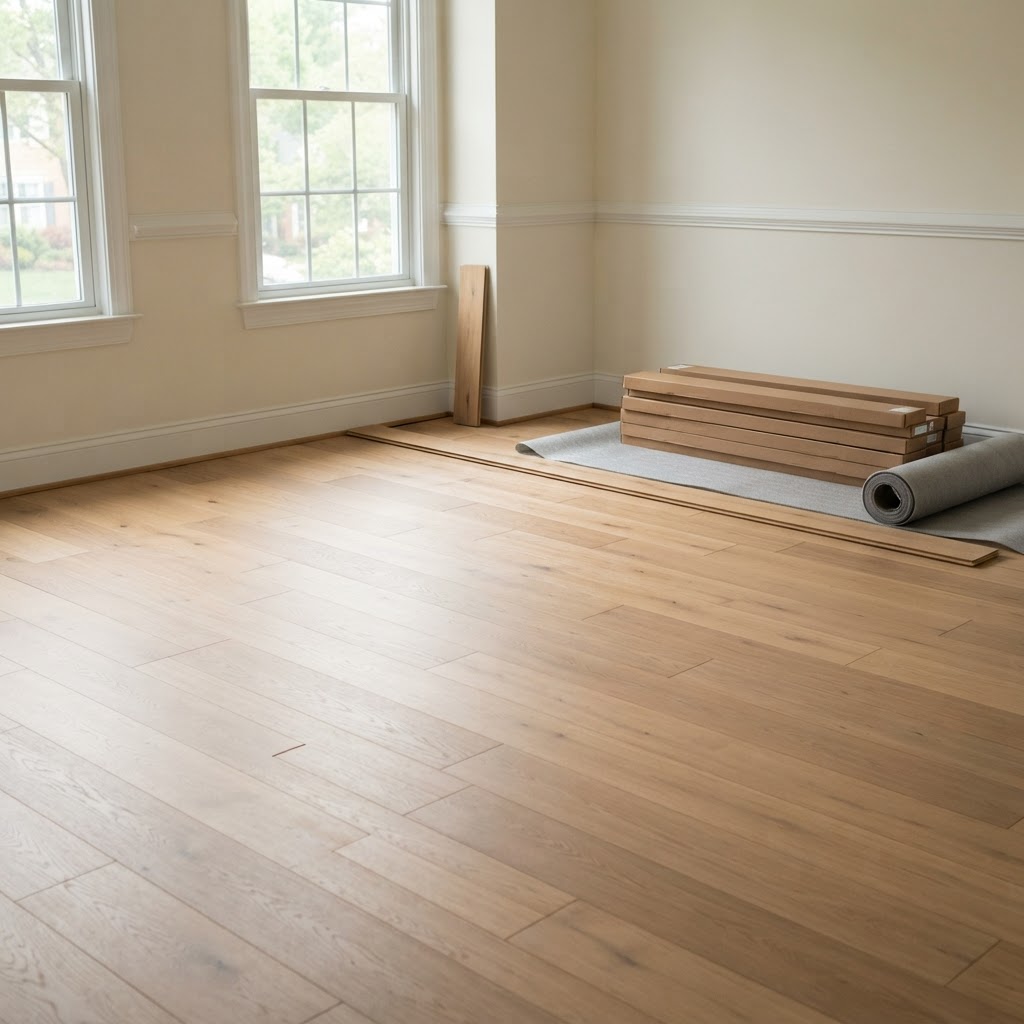
Searching for flooring installation near me turns up a long list of names, maps and star ratings, and it is hard to tell from the list who will do careful work. In Northern Virginia, where homes range from Alexandria rowhouses to Loudoun townhomes to Arlington condos, the right installer is the one who has done your kind of job many times and who looks at your house before promising anything.
This guide explains what near really means in this region, how to tell a careful installer from a careless one, what preparation separates a floor that lasts from one that fails, how installation actually unfolds from the first visit to the final cleanup, and which questions to ask. Floors and Beyond VA is a family-owned flooring company that has served Northern Virginia since 1987, and our own crews handle every installation from measuring to the last transition strip. You can see the full range of flooring we install.
What near really means in Northern Virginia
On a map, two addresses can be six miles apart and an hour apart in a car. Traffic on Interstate 66, the Beltway, Route 7 and the Dulles corridor changes everything about how near a crew really is. A nearby installer can start early, finish on time and return quickly if something needs attention. It also usually knows your area's housing, the common subfloor problems and the typical association rules.
Near should not be the only test, though. A company based in the next county with deep experience in your kind of home may serve you better than a nearby company with none. The question is whether the installer works in your area regularly and understands your project. Floors and Beyond VA works throughout Fairfax, Loudoun, Prince William and Arlington counties, in Alexandria and in the Washington, DC area.
Who actually does the installation
One of the most important questions is who will be in your house. Some companies use their own employees, and others hire subcontractors for each job. Both can work, but the difference shows in accountability. When a company's own crews do the work, the person who measured your rooms is connected to the people installing the floor, and problems have a clear owner. When work is subcontracted, the crew may be strangers to the company, and communication has more links where it can break.
Ask directly. At Floors and Beyond VA, our own crews measure, prepare the subfloor and install, and that is a primary reason we do what we do the way we do it.
The visit comes first
A careful installer visits before giving a plan. A phone quote cannot account for a damaged subfloor, a damp slab, an out-of-level surface or the transitions between rooms. During a visit, the installer measures, checks the subfloor, notes the condition of walls and trim, asks about how you use each room and shows you samples. You should leave with a clear understanding of what is recommended and why, and a written plan to follow.
A visit also lets you judge the people. Are they on time? Do they listen? Do they explain things clearly? Do they look at your home or at their phones? These small impressions predict a lot about the project.
Choosing the right floor for the room
An installer's recommendation should come from your house and your life. Hardwood, whether solid or engineered, offers a natural surface that can often be refinished and suits living areas. Luxury vinyl plank is dimensionally stable and waterproof, which makes it popular for kitchens, basements and busy households. Tile suits bathrooms and entries. Carpet remains a choice for bedrooms and some lower levels.
Solid hardwood is a single piece of wood nailed to a wood subfloor and is best suited to above-grade rooms. Engineered hardwood has a real wood surface over a layered core and suits slabs and a wider range of conditions. Luxury vinyl plank has a printed wear layer over a stable core. Which is best depends on the room, the subfloor, the moisture conditions, the household and the look you want. A company that offers all of these can give balanced advice. Our hardwood flooring and luxury vinyl plank flooring pages cover both in detail.
Subfloor preparation: the part you do not see
Most floor failures trace back to preparation. A new floor is only as good as what is under it. Preparation includes checking flatness, repairing loose or damaged areas, removing old adhesive and testing for moisture.
On wood subfloors, loose boards and squeaks are secured, dips are shimmed or leveled and soft areas near leaks are repaired. On concrete, the slab is tested for moisture with a calcium chloride test or in-slab relative humidity probes and compared to the manufacturer's limits. A high reading may call for a moisture barrier or a different product. High spots are ground and low spots filled with leveling compound. Old glue, from removed vinyl or tile, is scraped or ground off.
This work is unglamorous and invisible once the floor is down, which is exactly why careless installers skip it. When an installer describes preparation in detail, that is a good sign.
Moisture testing and acclimation
Moisture is the enemy of most flooring. Wood and some other materials absorb and release moisture, and a floor installed at the wrong moisture level can cup, gap or buckle later. Two practices protect against this. The first is testing the subfloor, especially concrete, before installing. The second is acclimating materials, which means letting them sit in the home for the period the manufacturer specifies so they adjust to the indoor temperature and humidity. Your installer should explain both and tell you how long acclimation will take for your product.
Installation methods
Flooring is installed in several ways, and the right method depends on the product and the subfloor. Nail-down installation fastens solid or engineered hardwood to a wood subfloor and gives a stable, quiet floor. Glue-down installation bonds planks to the subfloor with adhesive, common over concrete. Floating installation connects planks to each other over an underlayment without fastening to the subfloor, which suits luxury vinyl plank and some engineered hardwood and allows quick installation over many surfaces. Each has strengths. The installer should tell you which they recommend and why.
Underlayment and sound
Underlayment is the layer between the subfloor and the floor, and it affects comfort, sound and moisture performance. A cushioned or acoustic layer under a floating floor reduces footstep noise, which matters in two-story homes, townhomes and condos. In condominiums and many townhome communities, associations require a minimum sound rating, and the underlayment must be documented. A good installer chooses an underlayment that is compatible with your floor and meets your building's requirement. This explanation of underlayment for LVP flooring covers the options in plain terms.
Condos, townhomes and associations
Many Northern Virginia homes belong to an association with flooring rules. Typical requirements include a minimum sound rating, approved products, written approval before work begins, a certificate of insurance from the contractor and defined work hours. Some buildings also require elevator reservations. Ask your management office for the rules before choosing a floor. A good installer will ask for them too, and will prepare the paperwork your association needs.
Stairs, transitions and trim
Details at the edges of a floor decide how finished it looks. Stairs need treads, nosings and risers that match the floor. Transitions between rooms and between floor types need to be at a safe height and finished cleanly. Baseboards and shoe molding need to be removed and reinstalled or replaced neatly. Doors may need to be trimmed to clear the new floor height. An installer who plans these details at the start produces a floor that looks designed.
What happens on installation day
On the first day, the crew protects your home, usually with floor and wall protection along the path from the entry to the work area, and sets up for dust control. Furniture is moved or confirmed to be moved. Old flooring is removed and disposed of, and the subfloor is inspected, prepared and cleaned. Materials are checked against the order. Installation begins in the room that gives the best layout, usually working from a reference line so the planks run straight. Cuts are made outside where possible to keep dust down.
Along the way, the crew should keep you informed. If they find something unexpected, such as water damage under old flooring, they should show you and explain the options before continuing. At the end of each day they clean up, and at the end of the project they complete transitions, trim and a final walkthrough.
How long installation takes
Timing depends on the scope. A single room of luxury vinyl plank can be done in a day or two. A full main level of hardwood takes several days. Basements and whole-house projects take longer. Subfloor repairs, moisture mitigation and stair work add time. Material lead times can also affect the schedule, since special orders may take weeks. Ask for a written schedule and for prompt notice if anything changes.
Living in your home during the work
Most installations happen while people live in the house. Plan where you will cook, sleep and work, and where pets will stay. Rooms being worked on will be unavailable. Expect noise, some dust and strangers in your home. Professional crews minimize the disruption by protecting your property, containing dust and cleaning daily. If you work from home, tell your installer so the noisiest work can be scheduled around your calls.
After installation: care and warranty
When the job is finished, ask for care instructions specific to your floor, including cleaning products to use and avoid, how long to keep heavy furniture off and how to handle humidity. Felt pads under furniture, mats at doors and prompt cleanup of spills extend the life of any floor. Keep documentation of the product, including the manufacturer's warranty. Ask your installer how they handle problems after the job and who you should call.
Reading a written plan
A good written plan removes guesswork. It lists the rooms and the work in each, names the product by brand, line and color, describes the preparation steps such as leveling or moisture testing and states how stairs, transitions and trim will be handled. It explains the schedule, the protection and cleanup, and how changes are handled if something unexpected is found. If a plan is vague about preparation or materials, ask for detail before agreeing. A plan that reads clearly to you will read clearly to the crew, and that prevents most disagreements.
Red flags when hiring an installer
Some warning signs show up early. An installer who will not show a license or proof of insurance is telling you something. So is one who gives a firm quote without seeing your home, one who pushes you to decide immediately, one who asks for most of the payment before work begins and one who cannot say who will be doing the work. Be careful with companies that have no physical presence or whose name and address change often. A real company has a history and a reputation it wants to protect. Reviews are useful, but look at patterns over several years instead of a short burst of praise, and read how the company responds to complaints. Our guide to how to choose an LVP installer goes deeper on this.
Seasons and timing in Northern Virginia
Humidity affects flooring, and Northern Virginia's seasons swing from damp summers to dry winters. Installing hardwood during extremes of humidity can lead to later movement, so a careful installer controls conditions where possible and lets materials acclimate. Finishes dry more slowly in damp weather. Good crews also book up in spring and early summer, so start planning a month or two ahead if you have a firm date. If your schedule is flexible, late fall and winter can be easier to book for interior work.
Choosing between new flooring and refinishing
Not every project needs new flooring. If you have solid hardwood in good condition under old carpet or a worn finish, refinishing can renew it without removing it. Refinishing preserves the original floor and is often less disruptive than replacement. A flooring company that does both installation and refinishing can tell you which is better for your house. Ask whether the company will inspect your floor and say plainly if it can be saved.
Questions to ask any flooring installer
Ask whether they are licensed and insured in Virginia, and ask for proof. Ask whether their own employees do the work. Ask whether someone will visit before giving a plan. Ask how they prepare the subfloor and test for moisture. Ask what the written plan will include. Ask about the schedule and how they protect your home. Ask for references from jobs like yours. A company that welcomes these questions is usually one that does the work well.
What to have ready for the first visit
Have a few things ready to make the visit more useful. Write down the rooms you want included and the look you want. Gather any association rules. Take photos of existing damage, squeaks or trouble spots. Think about how you use each room. Know your timeline, including any dates you cannot move.
When you are ready, schedule an in-home estimate and we will look at your floors, check the subfloor and give you a written plan.
Common Northern Virginia installations
Some projects come up again and again in our work. Luxury vinyl plank on main levels and in basements is common in Loudoun and Prince William. Engineered hardwood over concrete is common in condos in Arlington, Tysons and Reston. Replacing carpet with hardwood or luxury vinyl plank in bedrooms and living spaces appears in every county. Solid hardwood installation suits houses with wood subfloors. Stair updates often accompany them. For typical local work, see our Flooring Company in Fairfax, VA and Flooring Company in Ashburn, VA pages.
Why local experience matters
An installer who works in your area knows the typical subfloors, the common moisture problems and the way associations handle approvals. That experience shortens estimates, prevents surprises and improves results. It also means that if you have a question next year, the person who did the work is nearby.
Frequently asked questions
What does near me mean when choosing a flooring installer?
A company that works in your area regularly and can return easily. Drive time matters as much as distance.
Should my installer visit before giving a plan?
Yes. A phone quote cannot account for subfloor, moisture and transitions.
Do I need to acclimate my flooring?
Often yes, as the manufacturer specifies. Your installer will tell you how long.
What is the difference between nail-down, glue-down and floating?
Nail-down fastens to a wood subfloor, glue-down bonds to the subfloor and floating connects planks to each other over underlayment.
Do condos have extra requirements?
Often yes, including sound ratings, insurance certificates and approved products.
How long does installation take?
A room may take a day or two and a full level several days. Ask for a written schedule.
Ready to talk about your floors?
If you are comparing flooring installers in Northern Virginia, the best next step is a visit from someone who will look at your home and explain what they see. Floors and Beyond VA is a family-owned flooring company serving Fairfax, Loudoun, Prince William and Arlington counties, Alexandria and the Washington, DC area since 1987. Schedule an in-home estimate or call (703) 906-5698.




