
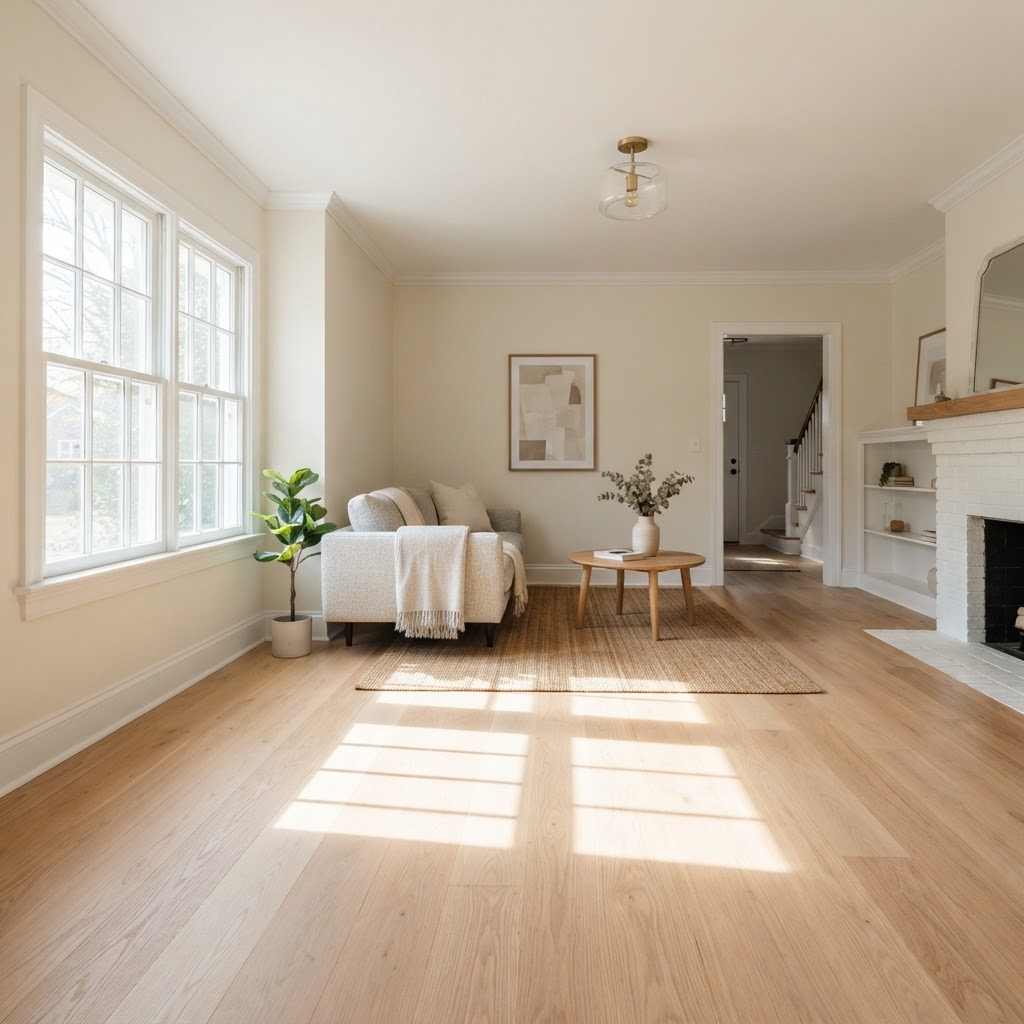
How do you choose a natural-looking finish for red oak hardwood floors?
You choose a natural-looking finish for red oak hardwood floors by understanding that red oak has a warm, pinkish-orange undertone that any clear finish will either emphasize or soften, then testing real finish samples on your own sanded boards, viewing them in your home's morning, afternoon and evening light, comparing sheen levels, and deciding how much warmth you want to keep, tone down or neutralize. Water-based clear finishes keep red oak closest to its raw color, oil-based finishes deepen it toward amber, and some natural-effect systems and carefully chosen stains can reduce the pink so the floor reads as quiet and organic rather than orange. No finish removes the character of the wood entirely, and a trustworthy contractor will tell you honestly what a sample can and cannot do. Floors and Beyond VA, a family-owned Northern Virginia flooring and remodeling contractor serving Fairfax, Loudoun, Prince William and Arlington counties since 1987, refinishes red oak floors with in-house crews and no subcontractors, and we bring sample boards to your Arlington home so that you can judge finish options in the light where you will actually live with them.
Red oak is the most common hardwood in Arlington's older houses. In neighborhoods such as Lyon Park, Lyon Village, Cherrydale, Westover, Ashton Heights, Maywood, Waverly Hills and Arlington Ridge, early and middle twentieth-century bungalows, Cape Cods and colonials were very often laid with narrow strip red oak, and many of those floors are still in service beneath carpet, old finish or decades of wear. When homeowners decide to refinish, a question comes up almost immediately: how do we get a natural look? They usually mean a floor that looks like wood rather than like a stain color, one that is warm without being orange, light without being washed out and calm enough to suit current interiors. This guide explains what actually determines how red oak looks after refinishing and how to make a good choice. It covers sample testing, undertones, sheen, lighting and realistic expectations. For broader background, see our wood flooring page and our hardwood floor refinishing field guide for Northern Virginia.
Why red oak looks the way it does
Understanding the wood explains the finish choices.
Undertone. Red oak contains natural pigments and extractives that give it a warm cast, ranging from pale pink and salmon to a golden or reddish brown. The actual color varies from board to board, from tree to tree and by where the tree grew. This is the single most important fact about red oak. When people say a floor looks too orange or too pink, they are reacting to this undertone, usually intensified by an amber-tinting finish and by decades of light exposure.
Grain. Red oak has an open, porous grain with bold, visible figure, especially in plain-sawn boards, where cathedral patterns appear. The open pores take up stain and finish readily, and they show texture even under a smooth coating.
Hardness and durability. Red oak is a hard, stable species well suited to flooring and can be sanded and refinished repeatedly when the wear layer allows.
Aging. Red oak changes color over time. Light exposure, oxidation and finish aging tend to deepen and warm it. A finish that looks light and neutral on installation day will look different years later. An old floor with a yellowed oil-based finish looks far more orange than the raw wood beneath it.
This last point is good news for homeowners. After sanding, the underlying wood is often lighter and more neutral than the old surface suggested, which means you have more options than you may expect.
What "natural" really means
Natural is a design intention, not a technical specification, and people use the word in a few different ways.
Preserving the raw wood color. The floor looks like the freshly sanded wood, with minimal added tone. This is the most literal meaning.
Reducing the orange. The floor retains some warmth but loses the strong pink or orange cast, reading as soft beige, light tan or gentle honey.
A matte, low-sheen surface. The floor looks like bare wood because it is not shiny. The finish is nearly invisible to the eye and the texture of the wood shows.
An organic, slightly imperfect look. The floor shows grain, color variation and character rather than a uniform, glossy, stained surface.
A light, airy palette. The floor is pale and bright, supporting a Scandinavian, coastal or minimalist look.
Be clear with your contractor about which of these you want, because different meanings point to different finishes. Bring photographs of floors you like, and also tell us what you dislike. Pictures online are unreliable because screens vary and lighting is unknown, so use them as a conversation starter, not a specification.
The finish families and how each affects red oak
The type of finish you choose has more influence on the final look than almost any other variable.
Water-based polyurethane
Water-based finishes dry clear and tend to remain clear over time. They add very little amber, so they keep red oak closest to its raw color. On red oak, that means the natural pink undertone remains visible, but without added yellow-orange. Water-based finishes are available in a range of sheens, including very low-sheen matte options, and they dry relatively quickly with lower odor than traditional oil-based products. Because they do not amber, they are a common choice for homeowners who want to avoid an orange floor and prefer a lighter, cooler, more modern look. Because they are so clear, they can also make the pink in red oak more noticeable, since nothing is masking it.
Oil-based polyurethane
Oil-based finishes add a warm amber tone that deepens with time. On red oak, they produce a rich, traditional, golden-orange color, which many people love and others find too warm. They are durable and have a long track record. If you want a classic warm look and you already have a floor that has aged gracefully, oil-based finish continues that story. If you are trying to reduce orange, oil-based finish works against you.
Hardwax oils and penetrating oil finishes
These finishes soak into the wood instead of forming a thick film on top. They can produce a very natural, low-sheen, tactile surface that shows the wood's grain. They come in clear and tinted versions. Some deepen the wood's color slightly, while others are formulated to stay closer to the raw tone. They are typically maintained with periodic renewal rather than full refinishing, and spot repairs are comparatively easy. They offer a distinct look and a different maintenance approach than film-forming polyurethanes, so discuss care expectations.
Natural-effect and color-neutralizing systems
Some professional systems are designed to counteract or reduce the warm tones in oak, using specially formulated sealers, stains or pigmented finishes. These can shift red oak toward a more neutral or cooler tone. They require testing, because results depend on the particular boards, and they can look too gray or flat if overdone.
Stains
A stain adds pigment on purpose. Light or neutral stains can balance the pink in red oak, while darker stains hide the undertone more completely. A natural look can be achieved by a very light, carefully chosen stain or by no stain at all, and the best option is determined by testing.
Your contractor should explain the tradeoffs among these systems in plain language, including durability, maintenance, drying times and how each will age. Our estimates include materials, so we discuss these choices openly during the consultation.
Undertones: pink, orange, gold and gray
Undertone is what separates a floor that feels right from one that feels slightly off, even when the stain color seems correct.
Warm undertone (pink, red, orange). Natural to red oak. Warm finishes, such as oil-based polyurethane, amplify it. Clear water-based finishes leave it visible.
Neutral undertone. Achieved by balancing warm wood with a slightly cooler or earthier tint.
Cool undertone (gray, ash). Can offset pink but, applied heavily to red oak, may look muddy, greenish or artificial. Gray tones on red oak need very careful testing because the warm base fights the cool pigment.
Golden or honey undertone. A pleasant, warm, natural-looking middle ground when the pink is muted.
When you evaluate samples, look past the headline color and ask what the undertone is doing. Does the floor look pink in the afternoon? Does it look yellow under warm bulbs? Does it look gray on a cloudy morning? These shifts are not flaws in the sample; they are how finishes interact with light, and they are the reason sample testing in your own home matters.
Interior colors around the floor matter too. Warm wall colors, wood trim, cabinets and furniture all influence how the floor reads. A red oak floor that looks pink next to cool gray walls may look harmonious next to cream or warm white walls. Consider the whole palette.
Sample testing: the step that prevents regret
Choosing from a catalog or a small chip is the most common source of disappointment. A proper test follows a process.
Test on your wood. Samples should be applied to your actual sanded floor, in an inconspicuous area, or to sample boards of the same species. Different boards accept finish differently. Red oak in particular varies, and what looks beautiful on one board may differ on another.
Test with the finish system. A stain sample without the topcoat is not representative. The topcoat changes color and sheen. Ask to see the full system.
Test multiple options side by side. Compare a clear water-based finish, a warmer oil-based option and perhaps a natural-effect or lightly tinted option next to each other. Differences you cannot see in your head become obvious on the floor.
Test in several lights. Observe samples in morning light, midday, late afternoon and evening, and under your artificial lighting. Arlington homes vary widely: a Westover Cape Cod with shaded windows reads differently than a Clarendon condominium with a wall of glass.
Test in raking light. Look across the surface from a low angle, as sunlight does in the early morning and evening, to see sheen, texture and imperfections.
Test next to your surroundings. Place samples near cabinets, trim, rugs and furniture, which influence perception.
Let samples dry and cure. Finishes change as they dry. Judge them after they have dried completely and, if possible, after a day or two.
Live with them. If you can, look at the samples for a few days. First impressions of floor color are often wrong.
During our free in-home consultation, we bring samples and discuss options in your home. We do not have a showroom because the decision belongs in your light. If you want to understand how samples reach you, our article on how to get flooring samples delivered explains the process.
Sheen: the second half of the look
Sheen is how much light the finish reflects, and it strongly influences whether a floor looks natural.
Matte or flat. The lowest sheen. It looks the most like bare wood, hides minor scratches and dust well and has a modern, organic feel. It can show some marks differently and is slightly more demanding in how it handles cleaning products, so follow care guidance.
Satin. A soft, low glow. A popular middle ground, natural-looking but with a bit more depth and easier cleaning.
Semi-gloss. Noticeably shiny. Traditional in some settings but rarely described as natural.
Gloss. Very reflective, formal and dramatic, and it shows every imperfection. Seldom chosen for a natural look.
For a natural appearance, most homeowners prefer matte or satin. The growing preference for lower sheen has practical reasons as well as aesthetic ones: lower sheen hides dust, scratches and footprints better and keeps attention on the grain.
Sheen interacts with color. A glossy finish exaggerates warmth and reflects surroundings, while a matte finish mutes color and looks softer. When comparing samples, hold sheen constant so that you can judge color, and then vary sheen separately.
Lighting: the variable you cannot ignore
Light changes everything about how a floor looks.
Natural light direction. South-facing rooms receive strong, warm light that emphasizes golden tones. North-facing rooms have cooler, softer light that can make a floor look flatter or grayer. East and west exposures shift through the day.
Window size and shading. Large windows or glass doors flood floors with light, which exaggerates sheen and highlights color. Trees, porches, neighboring buildings and awnings reduce light. In Arlington, mature trees in Lyon Village, Maywood and Ashton Heights shade many homes, while high-rise condominiums in Rosslyn, Courthouse and Ballston often have abundant light.
Artificial light. Warm bulbs push everything yellow and orange, while cool bulbs push toward blue and gray. Consider the bulbs you use.
Time of day and season. Floors look different at dawn, noon and dusk, and in winter versus summer.
Light exposure over time. Sunlight changes wood color. Rugs and furniture create uneven fading, so consider rearranging periodically.
Test in the actual rooms, and look at samples at several times of day.
Preparing red oak for refinishing
A natural-looking result also depends on preparation.
Sanding. Thorough, even sanding removes old finish and a thin layer of wood, exposing fresh color. The grit sequence and technique affect how the wood takes finish. Over-sanding or uneven sanding leaves visible marks.
Removing stains and discoloration. Pet stains, water marks and iron stains in oak can turn dark. Some can be lightened or removed with treatment, while others remain visible. Be realistic.
Filling and repairing. Gaps, nail holes and damaged boards may be filled or replaced. Fillers can show differently than wood under finish.
Pores and grain. Red oak's open grain can trap dust and finish. A good process addresses this.
Dust control. Fine dust embedded in finish ruins the look. Modern dust containment systems reduce this.
Old finishes and wax. Some finishes and waxes can interfere with adhesion and must be completely removed.
Age of the home. In very old houses, older paints or finishes may contain hazardous materials. Responsible contractors take precautions and recommend testing where appropriate.
Our refinish-first philosophy rests on the fact that most original floors can be renewed beautifully. Our article on whether it is worth refinishing hardwood floors explains when refinishing makes sense, and our article on whether your hardwood floors can be saved helps with the decision.
Realistic expectations
Honesty about limits prevents disappointment.
Red oak will not look like white oak. The undertone is different. A finish can reduce the pink, but the species remains red oak. If your heart is set on a pale, neutral, almost gray-beige look, consider whether white oak or an engineered white oak product would suit better. Our article on engineered wide plank flooring in Northern Virginia discusses alternatives.
Samples are guides. Final results will differ slightly because each board is unique.
Color evolves. The floor will change as it ages, usually warming and deepening.
Not all stains can be removed. Deep pet stains or water damage may remain visible.
Perfection is not natural. Wood has variation. A floor with grain, color shifts and character is part of the appeal.
Maintenance affects appearance. Low-sheen finishes require appropriate cleaning products. Our floor care page offers guidance.
Different rooms, different light. The same finish will look different from room to room.
We prefer to say plainly what a finish can do. If your goals and your wood are not a good match, we will tell you before you commit.
Matching and continuity across the home
If only part of the home is being refinished, or if new boards are being added, the finish choice has to account for what remains.
Continuous floors. In open layouts, refinish connected areas together so that the finish is consistent.
Adjacent rooms. Floors in nearby rooms should relate in tone and sheen.
New boards in old floors. When boards are added, refinishing the whole area together blends old and new. Our article on flooring damage repair for water, scratches and buckling explains repairs.
Stairs and trim. Stair treads and wood trim should coordinate with the floor.
Condominiums. Building rules may govern the finish products you can use because of odor and cure time. See our condominium remodeling page.
What drives the scope of a refinishing project
We do not publish prices in articles, but the factors that shape any estimate are clear. The square footage of floor. The condition of the existing floor and the amount of repair needed. The finish system you choose and the number of coats. Staining or color treatments. Stain and damage treatment. Stairs. Furniture moving and access. Trim and baseboard protection. And the company, including its crews, licensing, bonding and insurance.
At Floors and Beyond VA, we provide an honest, all-inclusive estimate, and what we quote is what you pay. Our estimates include old flooring removal where needed, new materials, professional installation, furniture moving, transitions, molding and full cleanup. Our article on flooring cost factors in Northern Virginia explains why estimates differ.
Common mistakes when choosing a red oak finish
The first mistake is choosing a color from a photograph instead of a sample on your own floor.
The second is testing in only one light.
The third is ignoring undertone and focusing only on the stain name.
The fourth is forgetting that oil-based finishes amber over time.
The fifth is choosing high sheen and then disliking the reflections.
The sixth is applying a cool gray tint to warm red oak without testing.
The seventh is judging samples before they dry and cure.
The eighth is expecting red oak to look like another species.
The ninth is refinishing connected rooms in different finishes.
The tenth is hiring on promises instead of on samples and process.
Frequently asked questions
Can red oak look natural and not orange? Yes, often. Sanding exposes the raw wood, and a clear water-based finish or a natural-effect system can keep the tone soft and subtle.
Is water-based or oil-based better for red oak? It depends on the look you want. Water-based finishes stay clearer and keep the floor lighter. Oil-based finishes add warmth and depth.
What sheen looks most natural? Matte and satin finishes look most like bare wood.
Can you remove the pink from red oak? You can reduce it with specific finishes and treatments, but the species' character remains.
How many samples should I look at? Several, side by side, in your own light, after they dry.
Should I stain red oak? Not necessarily. Many homeowners prefer a clear or lightly toned finish. Samples will help you decide.
Is Floors and Beyond VA licensed and insured? Yes. We are fully licensed, bonded and insured for every project, and our in-house crews work with no subcontractors.
Do you serve my Arlington neighborhood? Yes, including Clarendon, Courthouse, Ballston, Rosslyn, Shirlington, Lyon Park, Lyon Village, Cherrydale, Westover, Ashton Heights, Maywood, Waverly Hills, Arlington Ridge, Aurora Highlands, Fairlington, Columbia Pike and Nauck, along with Fairfax, Loudoun and Prince William counties.
Ready to choose the right finish for your red oak floors?
A natural-looking floor begins with honest samples in your own light. Floors and Beyond VA brings nearly forty years of Northern Virginia experience, in-house crews with no subcontractors, a refinish-first philosophy and a free in-home consultation with samples and precise laser measurements at no charge.
Request your free Arlington flooring estimate: Contact Floors and Beyond VA
You can also call (703) 906-5698.
our flooring company in Arlington, VA finishes red oak floors to match the natural, low-sheen look most homeowners want.




