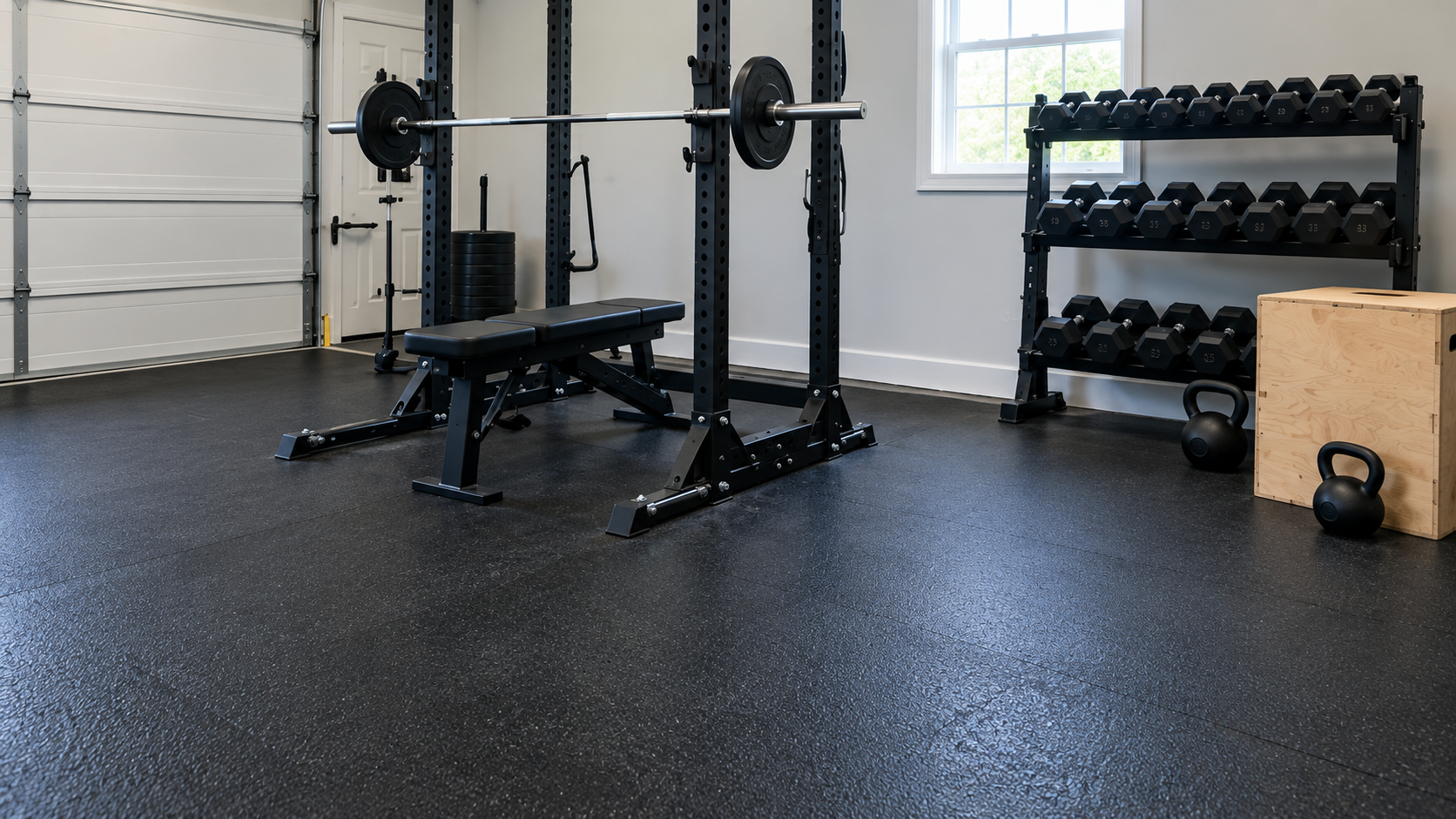
Yes — horse stall mats are one of the most popular and cost-effective home gym floors. The same dense 3/4-inch recycled rubber that cushions a horse protects your subfloor and equipment from dropped weights, absorbs impact and noise, and grips under a rack. The trade-offs are real: they’re heavy, can carry a rubber smell at first that airs out, and need a flat, firm base. For a garage or basement gym, they’re hard to beat on toughness per dollar — which is why Floors and Beyond VA installs them for gyms across Northern Virginia.
Are horse stall mats good for a home gym?
Yes — they’re the value benchmark that purpose-built gym floors get compared to.
Stall mats became a home-gym staple for a simple reason: they deliver most of what an expensive gym floor does — drop protection, impact absorption, and grip — at a fraction of the cost. That dense 3/4-inch rubber shrugs off dropped dumbbells and loaded barbells, protects the concrete slab underneath, and keeps a rack from sliding. For a garage gym in Ashburn or a basement setup in Sterling or Fairfax, they’re often the smartest money you can spend on the floor.
Why lifters use horse stall mats
Four reasons stall mats dominate DIY gym builds.
Drop protection
Thick, dense rubber absorbs the shock of dropped weights, protecting both your plates and the slab beneath from cracks and chips.
Impact & noise
The mass of a stall mat deadens the bang of a dropped barbell and dampens vibration — a real benefit in a basement or an attached garage.
Grip & stability
A textured top keeps racks, benches, and treadmills from creeping, and gives you sure footing for lifts — the mats’ weight keeps them planted.
Cost per square foot
Pound for pound, stall mats are among the cheapest ways to cover a gym in tough rubber — the reason they’re the default DIY choice.
Horse stall mats vs. gym flooring rolls and tiles
Stall mats win on toughness and price; purpose-built floors win on looks and finish.
| Option | Best for | Trade-off |
|---|---|---|
| Horse stall mats | Heavy lifting, garages, value builds | Heavy, industrial look, initial smell |
| Rolled rubber | Large, seamless finished gyms | Costlier; harder to move and install |
| Interlocking rubber tiles | Clean look, easy DIY install | More seams; pricier per square foot |
| Foam tiles | Stretching, light cardio, kids | Not for heavy weights — dents and tears |
Stall mats are the value champ, but not always the right fit. If you want a polished, finished-looking studio, rolled rubber or interlocking tiles look cleaner; for light cardio or a kids’ play-and-stretch area, foam is more comfortable and never suits heavy weights. Floors and Beyond VA will tell you honestly when a stall mat is the smart pick and when a purpose-built gym floor is worth the difference.
Getting it right: thickness, smell, and the base
Three details decide whether a stall-mat gym floor is great or frustrating.
Start with thickness: 3/4-inch is the home-gym standard, and dedicated lifting or deadlift platforms often double up or step to a full inch for heavy drops. Next, plan for the smell — new recycled rubber off-gasses a rubber odor that fades over days to weeks, so airing the mats out before install matters more in a closed basement than a ventilated garage. Finally, the base: stall mats want a flat, firm surface, ideally a clean concrete slab, with interlocking or tight-cut seams so nothing shifts mid-workout. In the slab garages and basements common across Ashburn, Sterling, Woodbridge, and Fairfax, Floors and Beyond VA confirms the slab is flat and dry, then cuts and fits the mats so the floor stays put and performs.
Frequently asked questions
How thick should stall mats be for a home gym?
Three-quarter inch is the standard — enough rubber to protect the subfloor, absorb impact, and stay put under a rack. Dedicated lifting and deadlift zones often double up 3/4-inch mats or use a full inch for heavy dropped loads. Cardio and general training are fine at 3/4-inch. Match the thickness to the heaviest thing you’ll drop.
Do horse stall mats smell in a home gym?
New recycled-rubber mats often have a noticeable rubber odor at first — the most common complaint in a closed indoor gym. It fades over days to a few weeks and airs out faster with ventilation, so letting the mats breathe before install helps. It’s much less of an issue in a ventilated garage than a sealed basement, and quality mats off-gas less.
Can you put horse stall mats over carpet or concrete?
Over concrete is ideal — a clean, flat slab is exactly the firm base stall mats want. Over low-pile carpet they can work in a pinch, but plush carpet lets mats and equipment shift and can trap moisture, so it’s not a good long-term base. Whatever the surface, it needs to be flat and firm, with interlocking or tight-cut seams so the mats don’t creep.
Build your home gym floor the right way.
Floors and Beyond VA confirms your slab, recommends the right thickness, and cuts and installs stall mats or purpose-built gym rubber — free assessment, before any work begins.
Schedule Your Free Assessment