
How much does it cost to install new hardwood floors in McLean, VA?
The cost of installing new hardwood floors in McLean depends on the type of hardwood, the species and width, the square footage, the condition of the subfloor, what must be removed, how the floor is installed and finished, and how complex the home is, with stairs, patterns and transitions adding detail. Because those variables differ so much from house to house, no honest number can be given without seeing your home, which is why a detailed in-home evaluation and written estimate are the only reliable way to learn what your project will involve. Floors and Beyond VA, a family-owned Northern Virginia flooring and remodeling contractor serving Fairfax, Loudoun, Prince William and Arlington counties since 1987, provides a free in-home consultation, precise laser measurements at no charge and an honest, all-inclusive estimate, and what we quote is what you pay.
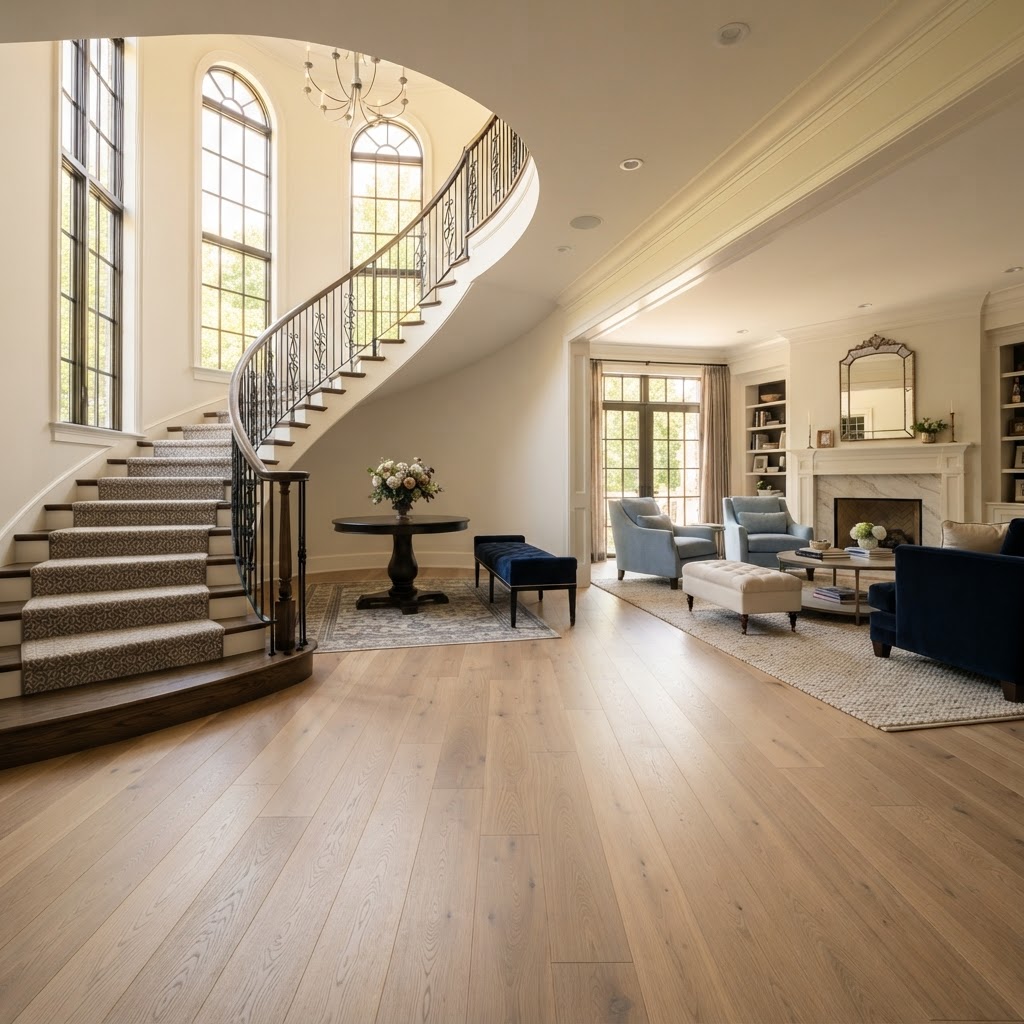
We deliberately do not publish dollar figures here. Prices quoted in generic online articles are often outdated, rarely reflect McLean homes and almost never tell you what is or is not included. A figure for "hardwood installation" might cover only labor, or only material, or both, or might assume a perfect subfloor and an empty room. What does help is understanding what actually goes into a hardwood estimate, so that when you receive one you can read it with confidence. McLean homes are often larger and more detailed than average, with open floor plans, wide planks, grand foyers and curved staircases, and those features influence scope. This guide explains each driver in depth. For our hardwood services, see our wood flooring page.
Driver one: solid or engineered hardwood
The construction of the hardwood is one of the first decisions, and it shapes both the material and the installation.
Solid hardwood is a single piece of wood from top to bottom. It is typically nailed or stapled to a wood subfloor and can be sanded and refinished many times. It suits above-grade rooms with stable wood subfloors.
Engineered hardwood has a real wood surface over a layered core. It is more stable when humidity changes, can be installed over concrete slabs and in many basements with moisture control, works over radiant heat when approved, and suits wide planks. It can be nailed, glued or floated depending on the product. The thickness of the wear layer determines how many times it can be refinished.
Both types look like real wood once installed. The choice influences the material cost tier, the installation method and the preparation required. Our article on engineered wide-plank flooring in Northern Virginia explains why engineered is so common in larger homes, and our wood flooring page describes what we install.
Driver two: species, grade and plank size
Species affects hardness, grain, color and availability. Red oak is the traditional regional favorite. White oak has become very popular for its neutral tone and versatility. Hickory is very hard with dramatic variation. Maple is smooth and light. Walnut is rich and luxurious. Exotic species occupy a different tier of price and availability.
Cut matters too. Plain-sawn boards show a cathedral grain, while quarter-sawn and rift-sawn cuts produce straighter grain and added stability, and they are more specialized.
Grade describes the amount of natural variation. Clear grades are uniform. Select and common grades show more character with knots and color variation.
Plank width and length. Narrow strips are classic. Wider and longer planks create a contemporary look and tend to be more specialized and more sensitive to humidity, which is why they are often engineered. McLean's larger, open homes often suit wide planks.
Each of these choices affects the material portion of an estimate, and some also affect installation. Wider planks require flatter subfloors and more careful acclimation. Specialty cuts may require more selecting and layout time.
Driver three: prefinished or site-finished
Prefinished hardwood arrives with a factory finish. Installation is faster because there is no sanding or coating on site, and the home is usable sooner. The edges are slightly beveled.
Site-finished hardwood is installed unfinished, then sanded flat and stained and coated in place. This yields a seamless surface and complete control over color and sheen. It involves more steps: sanding in multiple passes, staining, and multiple coats of finish with dry time between them. The process adds time and requires that the home stay free of heavy traffic during curing.
The finish type also matters. Water-based finishes dry clear with low odor and cure relatively quickly. Oil-based finishes add warmth and depth with longer cure times and stronger odor. Penetrating oils and hardwax oils give a natural look with different maintenance. The number of coats and the finishing system influence labor and schedule.
Driver four: square footage and measurement
Area determines how much material and labor the project requires. Larger continuous areas can be more efficient per square foot, while many small rooms, closets and alcoves raise the amount of cutting and setup.
Accurate measurement is crucial. Hardwood must be ordered with an allowance for cuts, waste and culling of boards with defects. The allowance varies with the pattern and room shape: straight lays need less than diagonal or herringbone. Ordering too little can delay the project and risk mismatched lots, and ordering too much wastes material. We take precise laser measurements on every room at no charge, which protects you from both problems. Our guide on how much flooring you need explains how overage works.
Driver five: demolition and removal of existing flooring
Taking out the old floor is real work, and the effort depends on what is there.
Carpet and pad come up relatively quickly. Glued-down vinyl or glued hardwood requires scraping or grinding adhesive. Tile set in mortar is heavy and labor-intensive. Existing nailed hardwood must be removed carefully if the subfloor is to be preserved. Multiple layers of flooring multiply the effort. Disposal requires hauling and disposal fees.
In older McLean homes, some flooring and adhesive materials may contain hazardous substances such as asbestos, and homes of a certain age may have lead-based paint on trim and surfaces. A responsible contractor will advise on testing and safe practices before disturbing these materials. Our estimates include old flooring removal, so it does not appear later as a surprise.
If you are converting from carpet to hardwood, our article on carpet-to-hard-flooring conversion in Northern Virginia explains what the process involves, and our article on whether flooring can be put over tile addresses another common question.
Driver six: subfloor condition and preparation
What lies beneath the hardwood often has more influence on a project than anything else, and it is hard to judge until old flooring is removed.
Moisture. Wood subfloors and concrete slabs both need to be dry. Moisture content of the wood flooring and the subfloor should be measured and recorded. Concrete should be tested using accepted methods such as calcium chloride or in-situ relative humidity testing. Mitigation may be needed. Our articles on the best flooring on concrete basements in Northern Virginia and the best flooring options for basements with moisture issues explain the testing.
Flatness. Subfloors must be flat within the manufacturer's tolerance. Dips and humps can cause squeaks, hollow spots and gaps. Wide planks are less forgiving. Leveling, sanding high spots and patching low spots are common corrections.
Structure. Loose or damaged sheathing, squeaks and rot must be repaired. In older homes, board sheathing or uneven framing can require additional work.
Underlayment. Different installation methods and conditions call for different underlayments, including moisture barriers and sound-reducing products. In townhomes and condominiums, associations may require specific sound ratings. Our articles on condo remodeling rules and permits and flooring in condo remodels cover those requirements, and our condominium remodeling page describes the services.
Acclimation. Wood needs to adjust to the home's indoor environment before installation, and this affects scheduling.
A quote that spends little on preparation may be assuming a perfect subfloor, which is rare. A thorough in-home evaluation identifies likely preparation needs so the estimate reflects reality.
Driver seven: installation method
How the hardwood is installed affects materials, labor and performance.
Nail-down or staple-down is standard for solid hardwood over wood subfloors and is used for many engineered products. It produces a firm, quiet floor.
Glue-down bonds planks to the subfloor with specialized adhesive. It is common for engineered hardwood over concrete and requires a clean, flat, prepared surface.
Floating connects planks to each other over an underlayment. It is available for many engineered products and works over concrete or existing flooring when conditions allow.
Each method has different material needs, labor and subfloor requirements. Our flooring installation guide explains the process.
Driver eight: stairs
Stairs are detail-intensive and are usually scoped separately from open floor area. Each step involves a tread, often a riser and a nosing, all cut, fitted and fastened precisely. Open stairs, curved stairs, winders, landings and stairs with returns add complexity. Stairs may involve new hardwood treads and risers, or refinishing existing ones, or a mix of materials, such as painted risers with stained treads.
McLean homes with grand staircases, multiple flights or custom millwork can have a significant stair component. If you want stairs included, make sure the estimate says so explicitly.
Driver nine: patterns, borders and layout complexity
A straight lay across a square room is the simplest installation. Complexity adds time and material.
Herringbone, chevron, diagonal lays, borders, medallions and inlays require more cutting, more precise layout and more waste. Rooms with many corners, angles, curved walls, bay windows, columns and built-ins demand additional labor. Large open floor plans may need planned expansion breaks. Mixed materials within an area add transitions.
These features are common in McLean's custom and larger homes, which is part of what makes experienced crews valuable.
Driver ten: trim, molding and transitions
The edges of a hardwood floor are where it meets the rest of the house.
Baseboards and shoe molding may be removed and reinstalled or replaced. Reinstalling saves material but takes care to avoid damage and often requires touch-up painting. Replacing allows a fresh look.
Transitions and thresholds are needed where hardwood meets another flooring or where heights differ.
Door trimming may be needed to clear thicker flooring.
Vents and fixtures must be integrated.
A quote that omits these details can seem lower and leave you with unfinished edges. Ours includes transitions and molding in the all-inclusive estimate.
Driver eleven: furniture, access and scheduling
Moving furniture takes time, especially in larger homes with many rooms and heavy pieces. Access matters, too: stairs, narrow entries and long carries influence logistics. Hardwood projects include acclimation, installation, sanding, finishing and curing, and rooms may be unusable for a period. Phasing the project by level or zone can keep part of the home usable. Our guide to preparing your home for new floors helps you plan.
Driver twelve: the company behind the estimate
Who does the work, and how the company is structured, affects estimates.
A company with in-house crews employs the people installing your floor, trains them and is directly accountable for the outcome. A company that subcontracts adds a layer between you and the installer. Licensing, bonding and insurance are real costs of operating properly. In Virginia, contractors performing work above certain thresholds generally must hold a DPOR license, and requirements can change, so verify current rules directly. Warranties differ, and a workmanship warranty is only as good as the company behind it.
Floors and Beyond VA uses in-house crews with no subcontractors and is fully licensed, bonded and insured for every project. Our article on choosing a local flooring contractor over a big-box store explains what to look for.
How to read a hardwood estimate
A good estimate makes the scope clear. Look for:
Product details. Species, grade, width, thickness, solid or engineered, prefinished or unfinished.
Quantities. Square footage and how it was measured.
Preparation. Subfloor inspection, leveling, moisture testing and repairs.
Removal and disposal. Whether included.
Installation method and finishing. Nail, glue or float; sanding, stain and number of coats if site-finished.
Stairs, closets and transitions. Whether included and how handled.
Trim and molding. Removed and reinstalled, or replaced.
Furniture moving and cleanup. Who handles them.
Timeline. Start and duration, including cure time.
Warranty. Product and workmanship.
Payment terms. Deposit and schedule.
Compare quotes by scope, not just totals. If two estimates differ, ask the lower-priced company what is not included. At Floors and Beyond VA, we provide an honest, all-inclusive estimate, and what we quote is what you pay. It includes old flooring removal, new materials, professional installation, furniture moving, transitions, molding and full cleanup. Our article on flooring cost factors in Northern Virginia explains why legitimate estimates differ.
When refinishing is the smarter path
If you already have hardwood, the most economical and sustainable option may be to refinish it. Scratches, dullness, fading and outdated color are usually correctable by sanding and refinishing. Solid hardwood can be refinished many times, and engineered hardwood can be refinished depending on its wear layer. Replacement makes sense when there is widespread water damage, structural problems, thin wear layers or a desire to change materials entirely. Our articles on whether your hardwood floors can be saved and whether refinishing is worth it walk through the decision.
Planning hardwood alongside other projects
Hardwood is often part of a larger project. A kitchen remodel, an addition, a basement finish or a whole-house renovation all involve flooring decisions, and coordinating them avoids duplicate work. See our kitchen remodeling, home additions, basement finishing, whole house remodels and home office design pages. For the primary suite and bathrooms, which usually pair hardwood with tile, our primary suite remodeling and bathroom remodeling services help.
Common mistakes when budgeting for hardwood
The first mistake is relying on online averages. They do not reflect your home.
The second is comparing totals instead of scope.
The third is ignoring the subfloor.
The fourth is forgetting removal, stairs, trim, transitions and furniture moving.
The fifth is underestimating waste and overage.
The sixth is choosing solid hardwood where engineered is the safer option.
The seventh is choosing the lowest bid by default.
The eighth is replacing hardwood that could be refinished.
The ninth is skipping verification of licensing and insurance.
The tenth is committing before seeing samples in your home.
Frequently asked questions
How much does it cost to install new hardwood floors in McLean? It depends on the type, species, square footage, subfloor, removal, finishing, stairs, trim and layout. A reliable figure comes from an in-home evaluation and a detailed written estimate.
Why don't you publish prices? Every home is different, and generic numbers can mislead. We provide a detailed estimate after seeing your home.
What does your estimate include? Old flooring removal, new materials, professional installation, furniture moving, transitions, molding and full cleanup. What we quote is what you pay.
Do you charge for measuring? No. We take precise laser measurements at no charge, and the in-home consultation is free.
Is solid or engineered hardwood less expensive? It varies by product. The right choice depends on the subfloor, moisture and plank width, not just the material.
Does stair installation cost more? Stairs are detailed work and are scoped separately. Make sure they are included in your estimate.
Can I refinish instead of replacing? Often yes, if your hardwood is sound. We take a refinish-first approach.
Does Floors and Beyond VA use subcontractors? No. Our in-house crews handle every project, and we are fully licensed, bonded and insured.
Do you serve my McLean neighborhood? Yes, including Langley, Chesterbrook, Franklin Park, Salona Village, Hamilton, Dunn Loring, Vienna, Great Falls and Tysons, along with Fairfax, Loudoun, Prince William and Arlington counties.
Ready for an honest hardwood installation estimate?
The best way to learn what new hardwood will take in your McLean home is to have someone look at it. Floors and Beyond VA brings nearly forty years of Northern Virginia experience, in-house crews with no subcontractors, a refinish-first philosophy and an honest all-inclusive estimate to every hardwood project.
Request your free McLean hardwood flooring estimate: https://floorsandbeyondva.com/Contact
You can also call (703) 906-5698 or email hello@floorsandbeyondva.com.




