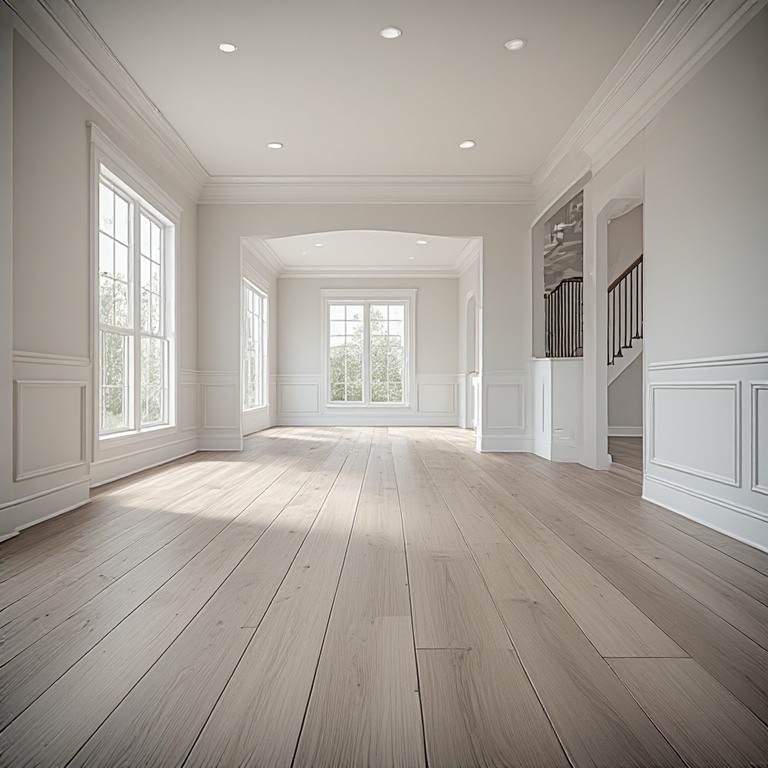

Does carpet improve home theater sound?
Yes — carpet meaningfully improves home theater sound. A carpeted floor over a thick pad absorbs the sound reflections a hard floor bounces back, which shortens reverb, reduces echo and “flutter,” sharpens dialogue, and tightens bass. It’s one of the easiest acoustic wins in a media room, especially in the hard-surfaced basement theaters common across Northern Virginia. One important distinction: carpet absorbs sound to improve how the room sounds inside — it does not soundproof the room.
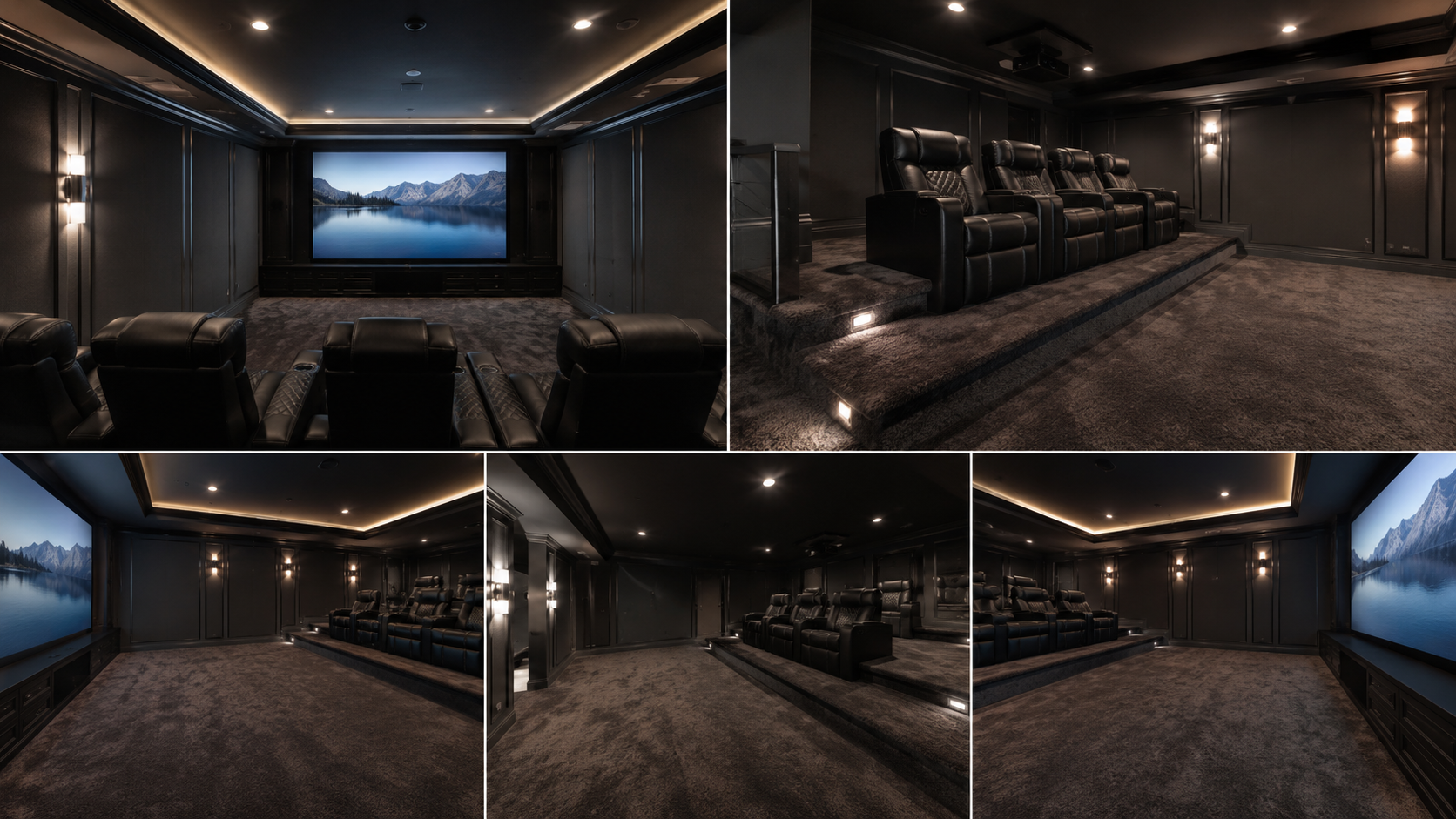
Does carpet improve home theater sound?
Yes — the floor is the biggest reflective surface in the room, and carpet tames it.
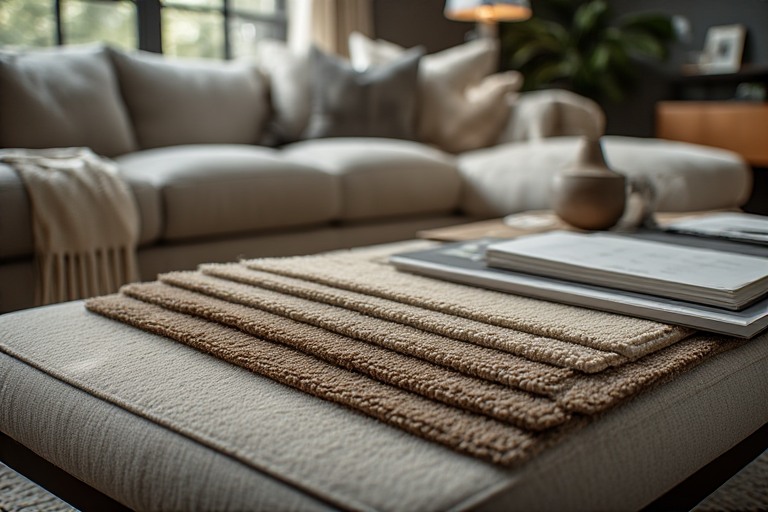
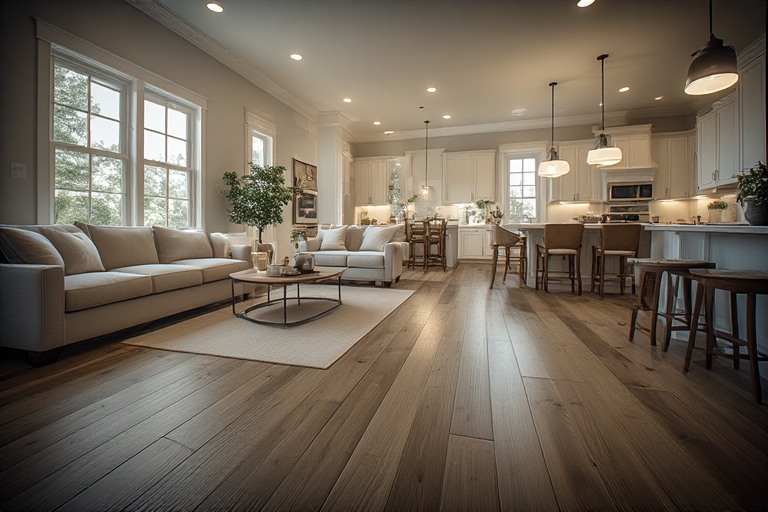
In a media room, sound doesn’t just travel from the speakers to your ears; it also bounces off every hard surface, including the floor, and arrives a fraction of a second later as a reflection. Those reflections smear dialogue and muddy bass. A hard floor is one of the worst offenders because it sits directly between your speakers and your seats. Carpet over a dense pad absorbs much of that reflected energy, so what you hear is cleaner and closer to what the mix intended. For basement theaters across Ashburn, Reston, and Woodbridge, it’s the single easiest acoustic upgrade available.
How does carpet fix home theater acoustics?
It targets the specific problems a hard floor creates.
Floor reflections
Sound bouncing off a hard floor reaches your ears just after the direct sound, blurring detail. This first-floor reflection is one of the most audible problems in an untreated room.
Absorption
Carpet pile and a dense pad absorb mid and high frequencies rather than reflecting them, so the reflected energy that reaches your seats is greatly reduced.
Shorter reverb
Less reflected sound means a shorter reverb time, which is what makes dialogue intelligible and bass feel tight instead of boomy and echoey.
The pad matters
A thicker, denser pad absorbs more than the carpet alone. In a theater, the pad isn’t just comfort — it’s a real part of the acoustic treatment.
Carpet vs. hard floor in a media room
On the things that matter in a theater, carpet wins most of them.
| Factor | Carpet + pad | Hard floor |
|---|---|---|
| Echo / reverb | Absorbed — shorter, cleaner | Reflected — longer, echoey |
| Dialogue clarity | Sharper | Smeared by reflections |
| Bass | Tighter | Boomier |
| Screen glare | Dark carpet absorbs light | Reflects light onto screen |
| Comfort / warmth | Warm and quiet underfoot | Hard and cold |
The distinction that trips people up: carpet gives you absorption, which improves the sound inside the room. It does not give you isolation, which is what stops sound from reaching the rest of the house. Those are two different jobs. Carpet is a major absorption win; soundproofing lives in the walls, ceiling, and door. Floors and Beyond VA is clear about which problem the floor solves.
Getting it right: color, pad, and the basement slab
Pick a dark color, a dense pad, and confirm the slab first.
To get both the acoustic and the visual benefit, choose a dark, low-sheen carpet so it absorbs stray light and keeps the screen image crisp, and pair it with a thick, dense pad that does double duty as sound absorption. Because most Northern Virginia home theaters are finished basements over a concrete slab — in Brambleton, Sterling, Centreville, and Manassas — the slab comes first: Floors and Beyond VA tests it for moisture and specifies a moisture-barrier pad before the carpet goes down, so the acoustic upgrade doesn’t become a moisture problem later.
Frequently asked questions
Do you still need acoustic panels if you have carpet?
Carpet handles the floor, but walls and ceilings still reflect sound, so most dedicated theaters benefit from some panels too. Carpet and a thick pad cover the largest single reflective surface — the floor — which is a big, easy win; panels then handle the rest. In a casual media room, carpet alone makes a clear difference; in a dedicated theater, carpet plus a few panels is the usual pairing.
What color carpet is best for home theater sound and picture?
Color doesn’t change the acoustics, but it strongly affects the picture, so dark, low-sheen carpet is best. Deep charcoal, navy, burgundy, or near-black absorbs stray light instead of reflecting the screen and ambient light back, keeping the image crisp. You get the acoustic benefit from the pile and pad and the visual benefit from the dark color at once.
Is carpet enough to soundproof a home theater?
No — and it’s an important distinction. Carpet provides absorption, improving how the room sounds inside by taming reflections and reverb. It doesn’t provide isolation, which blocks sound from traveling to other rooms; that needs treatment in the walls, ceiling, and door. Carpet is a major, low-effort absorption upgrade, not a soundproofing solution on its own.
Better movie sound starts at the floor.
Floors and Beyond VA specs the dark color, dense pad, and moisture-safe assembly for your media room — free assessment, before any work begins.
Schedule Your Free Assessment