
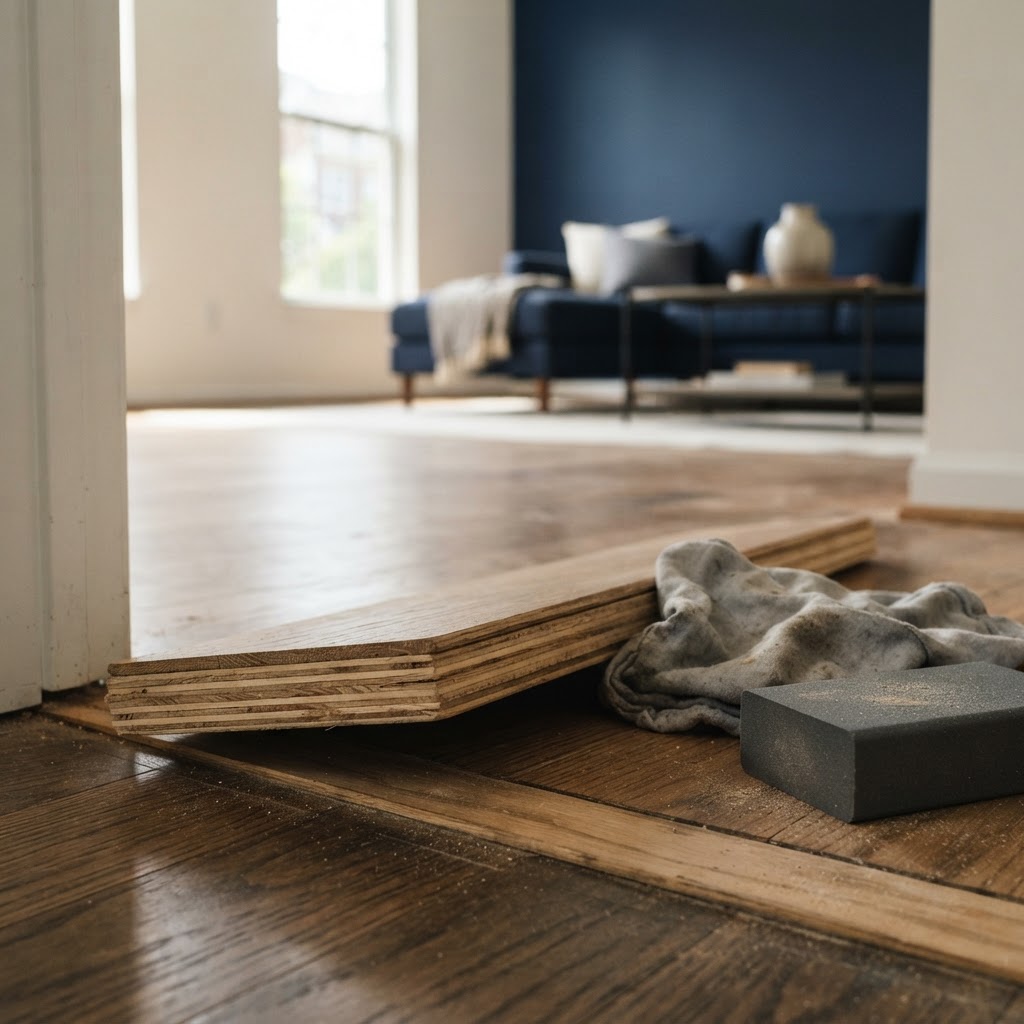
Often yes, but it depends on the thickness of the real-wood top layer. Thin wear layers may allow only a screen and recoat, moderate ones one light sanding, and thick ones several. Floors and Beyond VA checks the wear layer before any sanding, because sanding through it cannot be repaired.
What decides it
Engineered planks have a real-wood veneer over a plywood-style core. That veneer is called the wear layer, and its thickness in millimeters sets how much can be sanded away. It is not always visible, so it is checked from the product specifications, from a plank edge at a vent or transition, or by a professional in a hidden area.
How many times
Thin wear layers: usually no sanding, but a screen and recoat may still work. Moderate wear layers: possibly one light sanding. Thick wear layers: one or more sandings, much like solid wood. A floor that has been sanded before has less margin left. The manufacturer's guidance always applies.
Lighter options first
Professional cleaning can restore a dull floor, and a screen and recoat renews the finish and sheen while removing very little wood. Individual damaged boards can be repaired or replaced. Full sanding is saved for floors that need a new color or deeper correction and have enough wear layer to allow it.
When refinishing is not possible
Very thin veneers, floors already sanded to the limit, deep gouges through the veneer, and water damage with cupping or separating layers usually need repair or replacement. Some factory-textured or wire-brushed surfaces also cannot be reproduced after sanding.
Northern Virginia specifics
Engineered flooring is common in condos around Tysons, Reston and Arlington because it suits concrete slabs and radiant heat. Newer townhomes in Loudoun and Prince William may have thinner builder-grade veneers, and Floors and Beyond VA measures before it recommends anything. In older Arlington and Alexandria homes, engineered additions often sit beside original solid oak, so matching color takes testing.
How Floors and Beyond VA checks an engineered floor
At Floors and Beyond VA, the first job on any engineered floor is to find out what is under the finish. Our crews look at the product records, inspect an exposed plank edge where there is one and, when needed, check a hidden area to measure the wear layer. Only then do we talk about options. We take a refinish-first approach, which for engineered floors usually means starting with the lightest process that will work, such as cleaning or a screen and recoat, and saving full sanding for floors with enough veneer to allow it. If the floor is too thin to renew, we tell you that plainly and help you compare replacement options. Our crews are our own employees, and they know how little room there is for error on a thin veneer.
Frequently asked questions
What happens if the veneer is sanded through?
The core is exposed and the damage cannot be fixed by finishing. Boards may need replacing.
Can I change the color?
Only with a full sanding, so it depends on having enough wear layer.
Is a screen and recoat safe?
Often yes, because it removes very little material, but finish compatibility should be tested.
When to call a professional
Do not sand an engineered floor yourself or hire anyone who will not check the wear layer first. Floors and Beyond VA is family-owned, has served Northern Virginia since 1987 and takes a refinish-first approach with its own crews. We will check your floor and give a straight answer. Schedule an in-home estimate at floorsandbeyondva.com/Contact or call (703) 906-5698.
Read the full guide: engineered hardwood floor refinishing in Northern Virginia.
Learn about our hardwood flooring in Tysons, VA.




