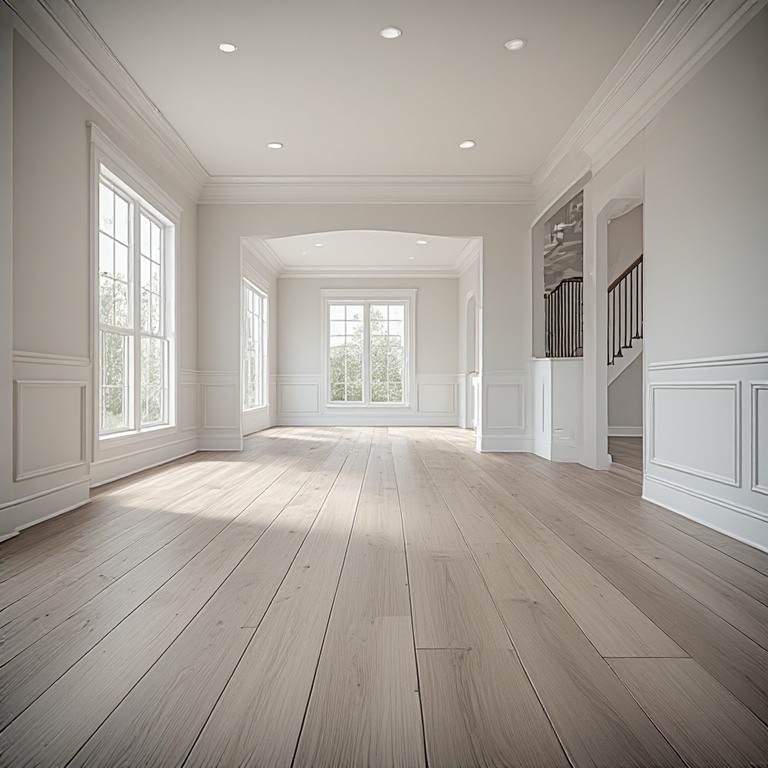

For most Northern Virginia basements, Floors and Beyond VA recommends waterproof, rigid SPC luxury vinyl laid over the concrete slab — it handles slab moisture, seasonal humidity, and the occasional damp event without swelling. Porcelain tile is the most water-tolerant choice for walk-out or moisture-prone basements, while carpet suits only dry, finished rec rooms. Solid hardwood and laminate are the wrong call below grade.
What's the best basement flooring for a Northern Virginia home?
Waterproof SPC luxury vinyl over the slab is the default for most finished basements here.
A basement is below grade, which means the floor lives against a concrete slab that can pass moisture and through a region where summer humidity runs high. That rules the decision more than looks do. Rigid SPC luxury vinyl answers it well: its waterproof stone core sits directly on the slab, stays stable through humidity swings, and shrugs off the minor dampness a basement can see. For finished basements across Ashburn, Woodbridge, and Brambleton, it has become the practical default.
Why can't you use hardwood or laminate below grade?
Both react badly to the moisture a basement carries.
Solid hardwood absorbs moisture from a slab and moves — cupping, gapping, and lifting over time — which is why it does not belong below grade. Laminate is worse in a basement: its fiberboard core swells and crumbles once water reaches it, and a basement is exactly where an unnoticed leak or humid spell tends to happen. Waterproof SPC and porcelain tile sidestep both problems, which is why they dominate below-grade installs.
In basements with any water-intrusion history — older homes near high water tables, or spaces without a sump — a click-together SPC floor has a real edge: after a water event the planks can often be lifted, dried, and relaid. Glue-down vinyl and laminate usually can't be saved. Floors and Beyond VA weighs that flood risk before choosing between a click and a glue-down assembly.
Basement flooring by scenario
Match the floor to how wet and how finished the space really is.
| Basement type | Best flooring | Why |
|---|---|---|
| Dry, finished rec room | Click SPC LVP (carpet in a dry zone) | Warm, finished feel with waterproof security |
| Walk-out / moisture-prone | Porcelain tile or SPC | Highest water tolerance for exposed exits |
| Basement gym / utility | Rubber or SPC | Impact protection over a stable, waterproof base |
| Flood-risk / no sump | Click SPC or tile | Can be dried or lifted and relaid after water |
How do you prep a basement slab before flooring?
Test moisture, flatten the slab, and decide whether an air-gap membrane belongs underneath.
Good basement flooring starts below the finish. The slab is checked for moisture, because a slab that reads high needs a vapor strategy before anything goes down. It is ground or filled where it is out of flat, since rigid planks and tile both telegraph dips. And in many finished basements a dimpled subfloor membrane or rigid underlayment is added over the slab to create an air gap that makes the floor noticeably warmer underfoot and buffers minor moisture. Floors and Beyond VA runs this assessment first, so the assembly matches the specific basement rather than a generic spec.
Frequently asked questions
Can you put luxury vinyl plank in a basement?
Yes — rigid SPC luxury vinyl is the ideal basement floor for most homes here. Its waterproof stone core sits directly on the slab and handles vapor, humidity, and minor dampness without swelling. A click-together SPC floor also has an edge below grade: if the basement takes on water, the planks can often be lifted, dried, and relaid.
Is carpet a good idea for a basement?
Only in a dry, well-finished rec room with reliable humidity control. In any space with a history of dampness, a sump pump, or walk-out exposure, carpet is risky because it holds moisture and can grow mold. There, waterproof SPC or porcelain tile is the safer choice.
Do you need a subfloor or underlayment in a basement?
Not always, but a dimpled subfloor membrane or rigid underlayment over the slab adds an air gap that makes the floor warmer and buffers minor moisture. Whether it is needed depends on the slab's moisture level and the room's use, which is why Floors and Beyond VA tests the slab first.
Finishing a basement? Start with a moisture check.
Floors and Beyond VA will test your slab, weigh any water risk, and spec the right waterproof assembly — free, before any work begins.
Schedule Your Free Assessment