
The short answer: a mil is one-thousandth of an inch, and in vinyl plank flooring it measures the thickness of the clear wear layer on top of the plank, which protects the printed design from scratches, scuffs and stains. A thicker wear layer generally means better durability, a longer lifespan and stronger warranty coverage, and it is the most important number to check when comparing planks. For help matching a wear layer to the way your rooms are used, contact Floors and Beyond VA for a free in-home consultation and an all-inclusive estimate with precise measurements.
Floors and Beyond VA, a family-owned Northern Virginia flooring and remodeling contractor serving homeowners since 1987, offers free in-home consultations where we show samples in your lighting and provide all-inclusive quotes for the wear layer that fits your household.
The word trips people up because it sounds like millimeter, which is a different unit. A mil is much smaller, so the numbers are small, and the differences between them are easy to underestimate. This guide explains what the wear layer is, how thickness affects performance, which levels fit common Northern Virginia scenarios such as families with pets, rentals and busy foyers, how to weigh cost against longevity and what questions to ask before you buy.
The wear layer in plain language
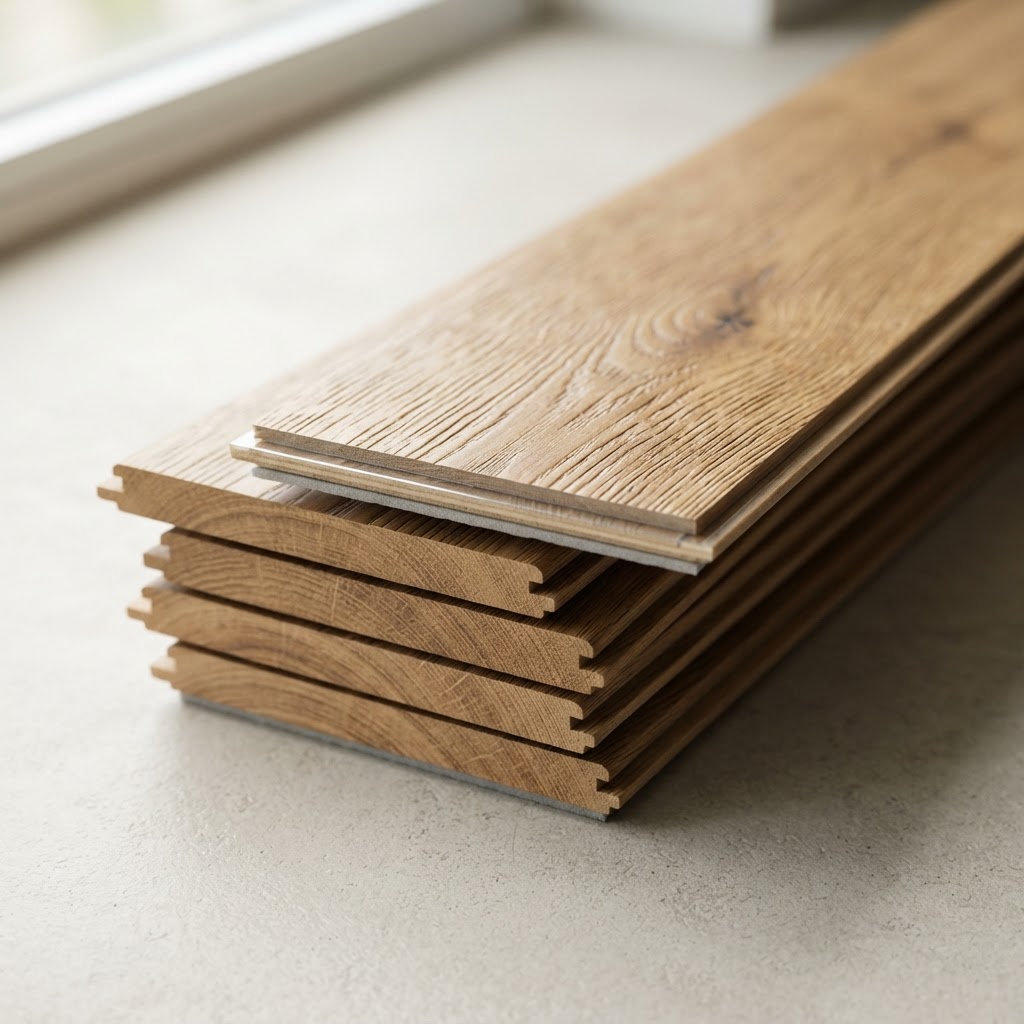
Look at the cross-section of a vinyl plank and you will see several layers. At the top is the wear layer, a clear coating. Beneath it is the printed film that gives the plank its look. Under that is the core, and at the bottom is the backing or attached pad.
The wear layer is what you actually walk on. It resists scratches from pet nails, scuffs from shoes, stains from spills and abrasion from grit. Over time, traffic wears it down. When it is gone, the print beneath is exposed and the floor begins to look worn. A thicker wear layer simply takes longer to wear through.
Mil is not the whole story. The material and surface treatment of the wear layer matter too. A well-formulated thinner layer can outperform a poorly made thicker one. But all else equal, thickness is a reliable indicator.
Mil versus millimeter
Do not confuse the wear layer with the overall thickness of the plank. Overall thickness is often listed in millimeters and includes the core, the print layer, the wear layer and any attached pad. A plank can be thick and still have a thin wear layer. The core adds stiffness and stability, not scratch resistance.
When you shop, look for two separate numbers: the wear layer in mils and the total thickness in millimeters. They describe different things.
Typical wear layer levels
Wear layers are sold in a range of thicknesses. Because we avoid digits in this article, we describe them in words. Common categories include products at the lighter end, around six mil, which suit light-duty residential use such as guest rooms and closets. Mid-range products, around twelve mil, are common in typical residential applications. Heavier products, around twenty mil, suit busy homes and light commercial spaces. The heaviest products, thirty mil and above, are designed for demanding residential and commercial use.
Manufacturers use different standards, and categories overlap, so treat these as general guidance. Always read the specific product data and warranty.
How thickness affects durability and appearance
- Scratch and scuff resistance. A thicker layer provides more material to absorb abrasion, and it often includes a tougher surface treatment.
- Longevity. Because wear layers wear down gradually, thicker layers tend to last longer in the same conditions.
- Appearance retention. A thicker wear layer helps the floor keep its look. A thin layer may dull or show wear paths in hallways and entries.
- Dent resistance. The core and total thickness matter more for dents, but wear layer thickness can contribute to the overall robustness.
- Warranty. Warranties often differentiate residential and commercial coverage and may relate to wear layer thickness. Read the terms for exclusions and conditions.
What to choose in common Northern Virginia scenarios
- Families with pets. Dog nails and accidents are tough on floors. A heavier wear layer in the higher categories is a sensible choice, along with a textured surface that hides small scratches. Keeping nails trimmed helps any floor.
- Families with children. Toys, spills and constant movement favor a thicker wear layer and a stain-resistant surface.
- Rental units. Turnover and varied tenants favor durability and easy replacement. A robust wear layer reduces the frequency of replacements and repairs. Consistency across units helps maintenance.
- High-traffic foyers and entries. Grit, salt and wet shoes make entries punishing. Use a heavier wear layer or consider porcelain tile for the main entry zone, with a floor mat to catch debris.
- Kitchens. Spills, dropped items and chair movement call for a durable layer in the middle to upper categories.
- Bedrooms and guest rooms. Lower traffic may allow a lighter wear layer without problems.
- Basements. A durable wear layer is wise in playrooms and gyms. Moisture suitability depends on the core and the slab, not the wear layer. Our guide to flooring for a moist basement explains those conditions.
- Light commercial spaces. Use products rated for commercial use. Our guide, commercial vinyl plank flooring for Northern Virginia businesses, covers this in detail.
Cost versus longevity
We do not publish prices in articles because they depend on the product, the space and the installation. We can describe the trade-off.
Thicker wear layers generally cost more per square foot of material. Over the life of the floor, they may cost less per year if they last longer and avoid early replacement. If you expect to stay in the home for a long time, or if the space gets hard use, paying for a heavier wear layer tends to be wise. If the space is rarely used or you plan to renovate soon, a lighter layer may suffice.
The cost of installation is similar regardless of the wear layer, so a floor that must be replaced early costs you the labor again. That is a strong argument for choosing durability up front in busy areas. Our pricing and policy page explains how estimates work.
Beyond mils: other quality indicators
- Surface coating. Ceramic bead, aluminum oxide or advanced polyurethane coatings enhance scratch and scuff resistance.
- Core quality. A rigid, dense core resists dents and stays stable.
- Print quality. High-definition printing and realistic texture make the floor look better and hide wear.
- Locking system. A robust click system keeps seams tight.
- Warranty terms. Look at coverage length, residential versus commercial status and installation requirements.
- Manufacturer reputation and documentation. Clear technical data is a good sign.
A short checklist of questions to ask before you buy
- What is the wear layer thickness in mils?
- What is the total thickness in millimeters?
- What type of core does the plank have?
- What surface coating is on the wear layer?
- Is the product rated for residential, light commercial or commercial use?
- What are the warranty terms, including exclusions?
- What installation method and subfloor preparation does the manufacturer require?
- Does the plank have an attached underlayment?
- What are the acclimation and storage requirements?
- How should the floor be cleaned and maintained?
Bring this list to your consultation. We are happy to go through it with you.
Seeing samples in your own light
A wear layer cannot be judged by looking at it. Appearance depends on light, color and texture. That is why we bring samples to your home. We can show you examples of different wear layer levels and surface finishes side by side, beside your cabinets and walls. You can scratch-test a small sample if you like, and see how it feels underfoot.
Maintenance to protect the wear layer
Sweep or vacuum regularly. Use a soft-bristle head. Place mats at entries. Use felt pads on furniture. Avoid dragging heavy items. Clean with products approved by the manufacturer and avoid abrasive tools. Do not use harsh solvents that can dull the surface. Keep pet nails trimmed. Protect floors from direct sunlight where possible. Our floor care page lists the cleaners we recommend.
Reading a product sheet without being fooled
Marketing language can be vague. Words like heavy duty, commercial or waterproof do not tell you much without numbers. A good product sheet lists the wear layer in mils, the overall thickness in millimeters, the core type, the surface treatment, the installation method and the warranty terms. If any of these is missing, ask. A trustworthy manufacturer provides clear data.
Beware of a plank with a thick overall profile advertised as extra durable when the wear layer is thin. The thickness that protects your finish is the wear layer, not the core. Also beware of comparing wear layers across products with different surface treatments as if they were identical. A tougher coating can make a thinner layer perform well.
How warranty terms relate to wear layer
Warranties often have separate terms for residential and commercial use, and some are prorated. Some exclude damage from pet claws, furniture or improper cleaning. Some require professional installation. A longer warranty does not always mean a better floor, but it does suggest the manufacturer's confidence. Read the fine print and keep your records. We can help you interpret the terms during a consultation.
Matching wear layer to lifestyle, not to a number
It is tempting to chase the biggest number. A better approach is to describe your household and choose accordingly. A couple who travels and rarely uses the guest room does not need the same wear layer as a family with three dogs. A rental owner who expects turnover may want the toughest floor. A homeowner who plans to renovate again in a few years may be fine with a mid-level product. We ask about your plans and recommend what makes sense.
Wear layers in different rooms of the same house
You can choose different wear layers in different areas. Entries, kitchens and family rooms take the most abuse and justify heavier layers. Bedrooms, offices and guest rooms can use lighter ones. Using the same look with different wear layers is not always possible, so consider whether to use one durable product throughout for visual consistency. Many homeowners decide that a single, durable floor throughout is simpler and looks better.
Signs your current vinyl floor is wearing through
If you have an existing vinyl plank floor, watch for dull patches, visible scratches that catch light, worn paths in hallways, loss of pattern clarity near the door and areas where the print seems faded. These signs suggest that the wear layer is thinning. Early cleaning mistakes can also dull the surface. When wear reaches the print layer, replacement is the practical remedy.
Installation quality and wear layer performance
A strong wear layer cannot compensate for poor installation. Gaps, bumps, loose planks and trapped debris all create stress points that lead to early wear. Our crews prepare the subfloor, follow manufacturer instructions, maintain expansion gaps and finish with clean transitions. A well-installed floor lets the wear layer do its job. Our flooring installation guide walks through the sequence.
A few words on realistic expectations
No vinyl floor is scratch-proof. A higher mil rating makes scratches less likely and less visible, but heavy furniture dragged across the floor, grit ground underfoot or sharp objects can damage even the toughest wear layer. Maintenance habits matter as much as the number on the box. Treat your floor kindly, and it will reward you.
Choosing confidently with local help
Product claims can be overwhelming. Working with a local installer who sees many floors in many homes gives you practical insight about what lasts. Over many years of working across Northern Virginia, we have seen which combinations of wear layer, surface and maintenance keep floors looking good. We share that experience freely during consultations.
Questions we hear most often
Homeowners frequently ask whether they are paying for a number they will never notice. The honest answer is that the benefit shows up slowly, as the floor keeps its look while others dull. Others ask whether a thicker layer feels different underfoot. Usually it does not, since comfort comes mainly from the core and underlayment. A few ask whether the layer can be topped with a polish. We advise against home products that leave a film, and we recommend cleaners approved by the manufacturer.
What drives the scope of a vinyl plank project
The scope depends on the area, layout, subfloor condition, plank type and wear layer, removal of existing flooring, transitions, furniture and stairs. The wear layer itself usually does not change installation labor, but the overall product selection influences material cost.
We take precise laser measurements at no charge and give a written, all-inclusive estimate covering old flooring removal, new materials, installation, furniture moving, transitions, molding and cleanup. What we quote is what you pay.
Why Northern Virginia homeowners choose Floors and Beyond VA
- Family-owned since 1987. We know the homes and households of the region.
- In-house crews only. Our employees install your floor.
- Free in-home consultation with samples. We show wear layer options in your light.
- All-inclusive quotes for the recommended wear layer. You see the full picture.
- Precise laser measurements at no charge. Accuracy supports a clean layout.
- Honest advice. We tell you when a thinner layer is enough or when to invest more.
- Fully licensed, bonded and insured. You can hire with confidence.
- Remodeling experience. We can plan flooring alongside other projects.
Floors and Beyond VA helps you choose the right mil for the way you live.
Common mistakes when choosing a wear layer
- Confusing mil with millimeter. They are different measurements.
- Choosing by overall thickness. A thick plank may have a thin wear layer.
- Buying the thinnest layer for a busy area. It may wear out early.
- Overspending in a rarely used room. Match the layer to the use.
- Ignoring the surface coating. It affects performance.
- Overlooking warranty terms. Residential and commercial coverage differ.
- Forgetting the subfloor. Even the best wear layer cannot hide a bad install.
Frequently asked questions
Is a higher mil always better?
Generally for durability, yes, but other factors matter too, and you should match the layer to your needs.
What mil is best for pets?
A heavier wear layer is advisable for pet households, along with a textured surface.
Can the wear layer be refinished?
Vinyl cannot be sanded and refinished like hardwood. It is replaced when worn.
Does the wear layer affect water resistance?
Not primarily. Water resistance depends on the overall construction and installation.
Do rentals need a heavy wear layer?
Often yes, because turnover and varied use are demanding.
Where can I learn about the plank's overall construction?
Our guide to choosing luxury vinyl plank flooring covers core types, underlayment and installation in more detail.
Related resources
Our vinyl flooring page lists the products we install, our floor care page covers cleaning and protection, and our guide to commercial vinyl plank flooring explains the heavier duty end of the range.
Ready to choose your vinyl plank?
Free in-home consultation
Let us bring samples to your home and recommend the right wear layer. You get an honest, all-inclusive estimate covering removal, materials, installation, transitions, molding and cleanup.
Contact Floors and Beyond VAFloors and Beyond VA
Family-owned flooring and remodeling since 1987, serving Northern Virginia
Phone: (703) 906-5698
Email: hello@floorsandbeyondva.com
Web: floorsandbeyondva.com




