
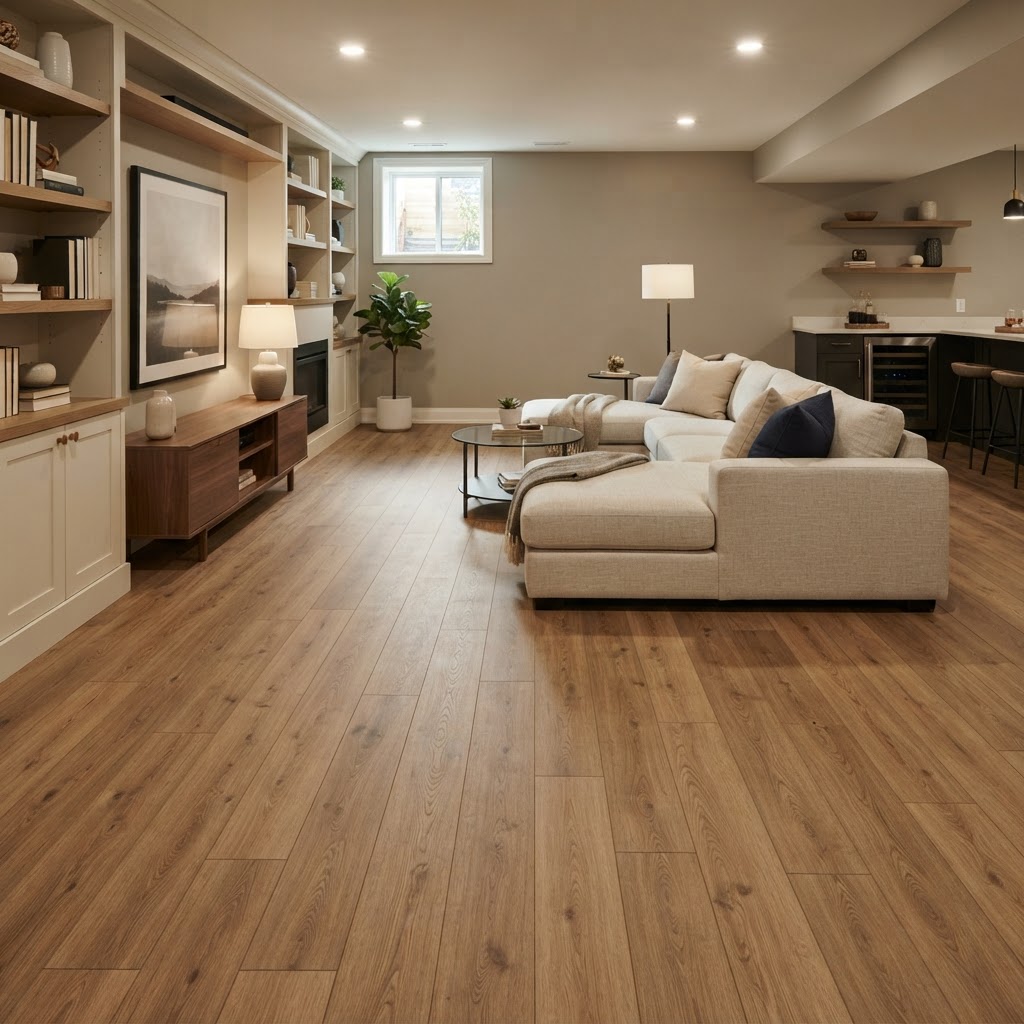
The short answer: the best flooring for a moist basement is usually waterproof rigid-core luxury vinyl plank or porcelain tile, installed over a slab that has been tested and prepared, because both resist surface moisture and stay stable when humidity rises. Sealed concrete or epoxy works well for utility spaces, while solid hardwood and standard carpet are poor fits.
Floors and Beyond VA, a family-owned Northern Virginia flooring and remodeling contractor serving homeowners since 1987, offers free in-home consultations that include on-site moisture assessments, so the floor you choose matches the conditions of your actual basement.
Basements are a major source of both opportunity and anxiety. They can become family rooms, guest suites, offices and gyms, but they sit below grade, close to soil that holds water. Northern Virginia's heavy storms, clay soils and humid summers make moisture a recurring concern. Choosing flooring without understanding the moisture is how people end up replacing a new floor a few years later. This guide explains common basement moisture problems, evaluates the best flooring options, covers testing and preparation and helps you think through budget.
Understanding basement moisture
Moisture reaches a basement in several ways.
- Vapor through concrete. Concrete is porous. Moisture in the soil moves upward through the slab as vapor, even when the surface looks dry.
- Hydrostatic pressure. When the ground is saturated, water can be pushed through cracks, joints and the floor to wall junction.
- Leaks. Plumbing leaks, appliance leaks and failed window wells let liquid water in.
- Condensation. Warm, humid air meeting cool surfaces leaves water on walls, pipes and floors.
- Poor drainage. Gutters, downspouts and grading that direct water toward the foundation load the basement with moisture.
These are different problems with different solutions. Flooring does not repair any of them. If your basement has active leaks or drainage problems, the first step is a licensed plumber, a waterproofing professional or both. We do not diagnose or repair the structural source of water intrusion. We help you choose flooring that suits the conditions after the source is addressed.
How to tell what you are dealing with
Common signs of moisture include a musty smell, efflorescence on block walls, stains at the base of walls, peeling paint, rust on metal items, condensation on pipes and a sump pump that runs often. You may also notice that cardboard boxes become soft or carpet feels damp.
A simple observation, such as taping a small plastic sheet to the floor and checking beneath it, can hint at vapor, but it is not a substitute for proper testing. Professional testing uses methods such as relative humidity probes in the slab or other approved tests. We take on-site moisture measurements during our consultation and explain the results.
Moisture testing and subfloor preparation
Before any flooring goes in, the slab should be tested and prepared. Testing tells you whether the floor is within the limits of the product you want to install. Preparation includes cleaning, patching cracks, removing old adhesive and leveling low spots. If the slab is too wet, options include addressing the source, installing a moisture-mitigating system or choosing a more tolerant material.
Many flooring manufacturers set moisture limits for installation and warranty coverage. We follow those limits. If readings exceed them, we discuss what can be done and whether to delay. Rushing an installation over a wet slab invites failure.
Raised or dimpled underlayments create an air gap between the slab and the floor, allowing some moisture vapor to dissipate. They can help in some situations but are not a cure for active leaks or hydrostatic pressure.
Waterproof luxury vinyl plank
Rigid-core luxury vinyl plank is a leading choice for basements. The planks resist surface moisture, do not swell like wood and install over prepared concrete. They look like wood or stone, feel comfortable underfoot and are quiet. Many include attached underlayment.
Limitations: vinyl does not stop vapor coming from the slab, and extremely wet slabs can cause problems with adhesives or odors. Quality varies, and thin products may telegraph slab irregularities. A good installer prepares the surface thoroughly. Our guide to how to choose luxury vinyl plank flooring helps you pick the look and the wear layer.
Porcelain and ceramic tile
Tile does not care about moisture. Porcelain especially is dense and waterproof. It is excellent for basement bathrooms, laundry rooms, kitchenettes and entries. Tile can be cold, so some homeowners add radiant heat in finished areas, which should be handled by qualified professionals.
Tile requires a stable, flat slab and proper setting materials. Cracks in the slab can telegraph through, and crack isolation membranes are sometimes used. Because of the labor involved, tile tends to be a larger project than vinyl. Our tile and stone page covers materials and installation methods.
Sealed concrete and epoxy
For unfinished or utility areas, sealing the concrete and applying an epoxy coating produces a durable, easy-to-clean surface. Epoxy can be decorative with flakes and colors. It resists many chemicals and stains. It is a popular choice for workshops, mechanical rooms and gyms.
Concrete coatings require careful surface preparation, and moisture vapor can lift them. Not all coatings tolerate damp slabs. Some basement owners use sealed or stained concrete as a finished look, which suits modern designs.
Engineered wood: with precautions
Engineered hardwood is more stable than solid wood and is sometimes used in dry, climate-controlled basements. But even engineered wood is sensitive to moisture and is generally not our first recommendation for a basement with any history of dampness. If a basement is truly dry, well controlled and tested, engineered wood may be possible with a proper moisture barrier and manufacturer approval. We approach this option cautiously and say so honestly.
Solid hardwood is generally not suitable over concrete in a basement.
Carpet and carpet tile
Standard carpet over a damp slab invites mold and odors. Some basements have dry conditions and benefit from the warmth of carpet. Where carpet is chosen, a moisture-appropriate pad and product are important. Carpet tiles allow individual replacement if a spill or leak occurs. We discuss risk openly.
Pros and cons at a glance
- Waterproof vinyl plank. Pros: water-resistant surface, warm, quiet, attractive, easy to install over prepared slabs. Cons: does not stop vapor, needs a flat slab, quality varies.
- Porcelain tile. Pros: waterproof, durable, long-lasting. Cons: cold, harder, more labor, grout upkeep.
- Sealed concrete or epoxy. Pros: durable, easy to clean, economical for utility areas. Cons: limited warmth, needs good preparation, can be slippery when wet.
- Engineered wood. Pros: real wood look. Cons: moisture-sensitive, only for dry, tested conditions.
- Carpet. Pros: warm, comfortable. Cons: vulnerable to moisture, odor and mold.
Budget thinking
We do not publish prices in articles because basement conditions vary widely. Here is how cost tends to behave. Material choice affects cost, with porcelain and custom coatings usually more involved than vinyl. Preparation can be a significant part of the scope, including testing, patching, leveling and moisture mitigation. Size and layout matter, as do stairs, closets and mechanical rooms. Removal of old flooring and disposal add to the scope.
A common strategy is to use waterproof vinyl in most of the basement, tile in the bathroom and laundry area and coatings in utility spaces. This combination balances comfort and durability.
The best way to know the cost of your project is a written, all-inclusive estimate. Ours covers removal of old flooring, new materials, installation, furniture moving, transitions, molding and cleanup. What we quote is what you pay. Our pricing and policy page explains how estimates work.
Basement flooring as part of a larger finish
Many homeowners treat flooring as the beginning of a larger basement project. Because Floors and Beyond VA also does basement finishing, we can coordinate flooring with framing, insulation, walls, lighting, bathrooms and bars. Sequence matters. Installing flooring too early risks damage, and too late complicates work. A single team planning the entire project keeps it coherent.
Regional notes
In Woodbridge, Manassas and Centreville, basements in townhomes and family houses often have slabs that deserve careful testing. In Ashburn and Sterling, newer homes may carry construction moisture that settles over time. In older Fairfax, Vienna and Arlington houses, stone or block foundations and aging drainage create unique conditions. Condominium garages and below-grade units add association rules.
We tailor recommendations to each home and encourage you to verify association requirements when relevant. Our overview of where we work around Tysons, Fairfax, Vienna, Reston and McLean shows the region we serve.
Humidity control and ventilation in finished basements
A finished basement needs air movement and humidity control. Without them, even the best floor may be affected by musty conditions. Dehumidifiers are common in below-grade spaces, and proper ventilation helps. Heating and cooling distribution should reach the basement. A licensed heating and cooling professional can advise on equipment. Floors and Beyond VA does not install that equipment, but we are glad to explain how humidity affects flooring and to coordinate with the professionals you hire.
Insulation, subfloor systems and warmth
Basement floors are often cold. Some homeowners add insulated subfloor panels or raised systems that create a thermal break and a small air gap above the slab. These can improve comfort and help with minor moisture, but they raise the floor height, which affects doors, stairs and ceiling clearance. They are not a substitute for fixing leaks. We discuss whether such a system makes sense for your basement.
Area rugs and warm flooring such as vinyl with attached underlayment can also improve comfort. Radiant heating is another option that should be planned with qualified professionals.
Planning the layout of a finished basement
Flooring decisions are easier when the layout is known. Where will the walls go? Where is the bathroom? Is there a bar, a media room, a gym or a bedroom? The best practice is to plan the flooring materials by zone. Tile for the bathroom and wet bar, vinyl for the main living area, coatings for utility space. Continuous flooring through connected rooms looks clean. Transitions at doors can separate zones.
We help you map out these decisions and coordinate with basement finishing work, so the sequence of framing, insulation, drywall, paint and flooring makes sense.
Egress, stairs and safety in below-grade rooms
Basements used as bedrooms or living spaces have safety requirements, such as egress windows, smoke detection and sturdy stairs. We do not state specific code requirements, since they vary by jurisdiction and change. Verify current requirements with the local building authority and a qualified professional. Flooring should support safe footing, particularly on stairs. Slip-resistant surfaces, secure treads and good lighting all matter.
Pets, kids and noise in the basement
Basements are often the busiest part of the house, with play areas, pets and entertainment. Flooring must stand up to toys, spills and rough play. Waterproof vinyl with a durable wear layer handles most of it. Underlayment can reduce noise to the floor above. Area rugs add comfort and absorb sound. Considering how the space will really be used helps you choose well.
What to do after a water event
If a basement floods or a pipe bursts, safety comes first. Stay away from electrical hazards, stop the water source if you can do so safely and call a licensed plumber and a water-mitigation professional. Document the damage and contact your insurance company. Do not install new flooring until the structure is dry and the cause is fixed. When you are ready, we can help you choose and install a floor that suits the repaired space.
Using samples and trials in a basement
Before committing to a basement floor, consider living with samples. Place them on the slab in different areas and watch how they look at various times of day. Because basements often have limited natural light, color can appear very different than in a bright showroom. A warm tone may look welcoming under lamps. A cool tone may feel stark. We bring samples so you can judge.
Planning for the future
Basements often change purpose over the years. A playroom becomes a teen hangout, then a guest suite or a home office. A floor that adapts to those changes is a good investment. Neutral, durable choices tend to serve well across life stages. We help you plan for flexibility without sacrificing the look you want today.
A last word on patience
Basements reward patience. Taking time to test, to fix the source of moisture and to prepare the slab is what separates a floor that lasts from one that fails. We would rather help you do it right once than see you replace a floor twice.
What drives the scope of a basement flooring project
The scope depends on the size and layout, the slab condition and moisture readings, the product selected, preparation needs, removal of existing floors, transitions at stairs and doors, furniture and the number of rooms or fixtures to work around.
We take precise laser measurements at no charge and give a written, honest, all-inclusive estimate.
Why Northern Virginia homeowners choose Floors and Beyond VA
- Family-owned since 1987. We know local basements.
- In-house crews only. Our own employees install your floor.
- Free in-home consultation with on-site moisture assessment. We look before we recommend.
- Samples brought to you. See options in your actual light.
- Precise laser measurements at no charge. Accurate planning.
- Honest, all-inclusive estimates. No surprises.
- Fully licensed, bonded and insured. Peace of mind.
- Basement finishing experience. We can coordinate the whole project.
Floors and Beyond VA helps you choose a basement floor that holds up in real conditions.
Common mistakes in basement flooring
- Ignoring the source of moisture. Fix leaks and drainage first.
- Skipping testing. A dry-looking slab can still transmit vapor.
- Installing hardwood over concrete. Choose suitable products.
- Using carpet without considering moisture. Risk of odor and mold.
- Skimping on preparation. It determines longevity.
- Trusting "waterproof" as a cure-all. Surface waterproofing does not solve vapor or leaks.
- Neglecting ventilation and humidity control. A licensed heating and cooling professional can advise on equipment.
Frequently asked questions
Can I put hardwood in a basement?
Solid hardwood is generally not suitable. Engineered wood is possible only in dry, tested conditions.
Is luxury vinyl plank safe for a damp basement?
It resists surface moisture, but the source of dampness must be addressed and the slab tested.
Do I need a vapor barrier?
Sometimes. It depends on slab readings and the product.
What about flooding?
Waterproof flooring tolerates water on the surface better than most, but flooding requires professional mitigation and may require flooring replacement.
Can I finish my basement in stages?
Yes. We can plan phases.
Related resources
Our basement finishing page describes how we help families turn lower levels into living space, our vinyl flooring page covers the products we install, and our guide to flooring options for basements with moisture issues goes deeper on product comparisons.
Ready to choose your basement floor?
Free in-home consultation
Let us visit, measure moisture and recommend a floor that suits your basement. You get an honest, all-inclusive estimate covering removal, materials, installation, transitions and cleanup.
Contact Floors and Beyond VAFloors and Beyond VA
Family-owned flooring and remodeling since 1987, serving Northern Virginia
Phone: (703) 906-5698
Email: hello@floorsandbeyondva.com
Web: floorsandbeyondva.com




