
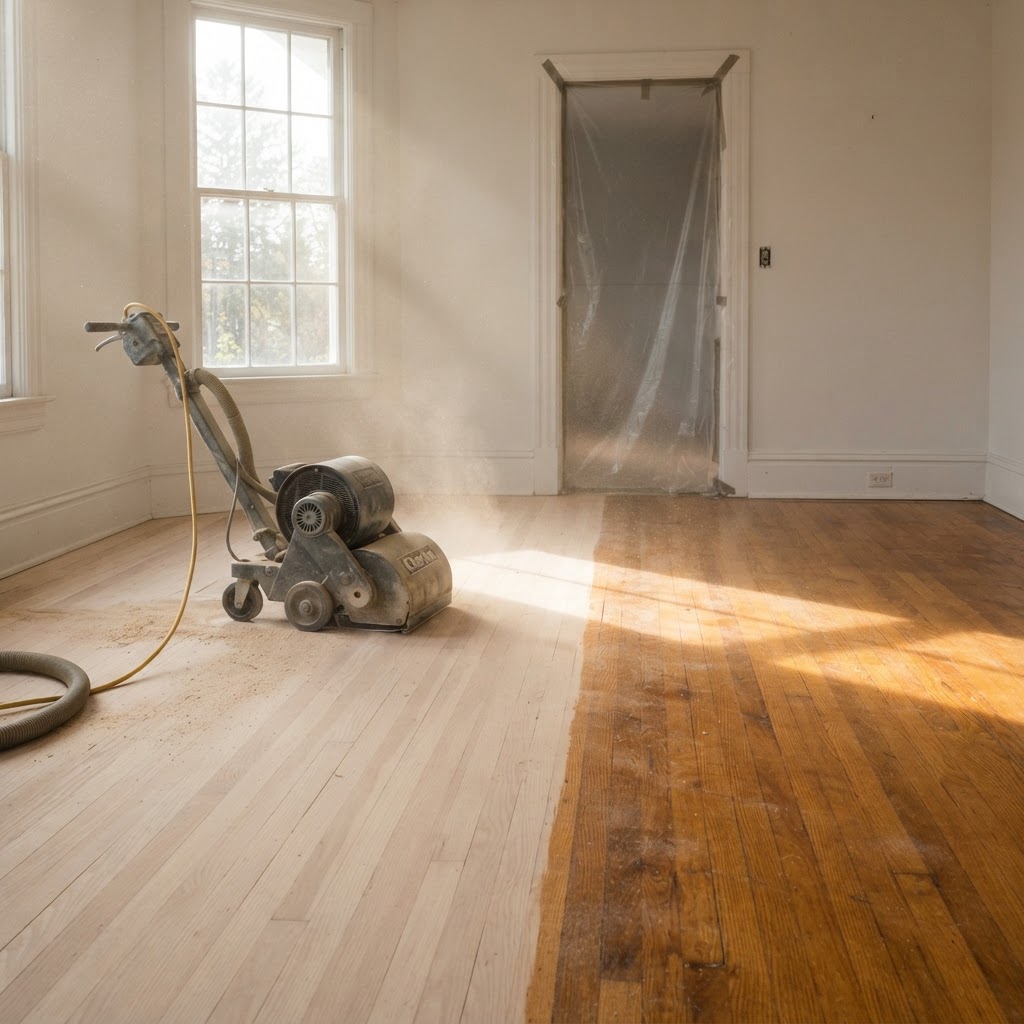
Refinishing hardwood floors looks straightforward in videos: sand, stain, finish. In practice, it is one of the harder home projects, because mistakes are visible, permanent and hard to undo. Sanding machines can take off too much wood in seconds, finishes need clean conditions and the whole process takes days. This guide gives an honest look at how hard it is to refinish hardwood floors, what the steps involve and when it makes sense to hire a professional. Floors and Beyond VA is a family-owned flooring company that has served Northern Virginia since 1987, and our own crews handle the work from the first visit to the final cleanup.
The Steps
Prepare the room by removing furniture, covering vents and setting nails. Sand with a drum or large sander and edger in several passes with finer grits. Vacuum and clean thoroughly. Stain if you are changing the color. Apply finish in coats, with drying time between them and light abrading in some systems. Allow the floor to cure before returning furniture and rugs.
Where It Gets Hard
The sanding machine is the biggest challenge. A drum sander can leave chatter marks, dips or gouges if it is tipped or left in one place. Edges, corners and stairs need an edger and hand work. Stain can blotch on some woods, such as maple, birch and pine. Finish can show bubbles, lap marks or dust if applied in the wrong conditions. Dust control is difficult, and fine dust gets everywhere.
Time and Effort
A single room can take a weekend, and a whole level can take a week or more with drying time. You cannot walk on the floor during certain stages, so you need somewhere else to live or a plan for access. The work is physical and the equipment is heavy.
Equipment
You need a drum or large orbital sander, an edger, a buffer, sandpaper in several grits, vacuums, applicators, stain, finish and protective gear. Renting is possible, but the machines take practice. Dust containment systems, used by professionals, reduce mess a great deal.
Common Mistakes
Sanding too aggressively, especially on thin or engineered floors. Skipping grits. Not removing all the old finish. Applying finish too thickly or in a dusty room. Not letting coats dry. Using the wrong product over an existing finish. Walking on the floor too soon. Failing to test stain on a sample.
Safety
Floors in homes built before 1978 may contain lead paint dust or lead in older finishes, and sanding can spread it. Use lead-safe practices or hire a certified professional. Solvent-based finishes have fumes that need ventilation, and sanding dust can irritate lungs. Wear a respirator and eye protection.
When Diy Can Work
A simple floor in a small room, solid wood with plenty of thickness, a homeowner who is comfortable with tools and willing to practice on a closet. A screen and recoat of an intact finish is more manageable than a full sanding.
When to Hire a Professional
Large areas, stairs, old or thin floors, stains and a color change, floors with damage or gaps or any home that may have lead. A professional brings sanding experience, dust containment and a predictable result. At Floors and Beyond VA, we sand a small test patch so you see the wood before deciding.
In Northern Virginia Homes
In Northern Virginia, a large share of the homes are old enough that lead-safe practices matter, and many have solid oak that is thick enough to refinish. Rental machines and big-box finishes are easy to find, but results vary a great deal. If you decide to try it yourself, practice on a closet or a spare room first, and be honest about whether the stairs and open areas are within your comfort. Many homeowners start a DIY project and call a professional to finish it, so it is worth knowing where you will stop.
Hardwood Floor Restoration: DIY or Professional
Restoration is harder than refinishing, because it adds repairs, matching and blending to the sanding and finishing. A DIY restoration can work on a small, solid, thick floor with minor damage. It becomes risky when boards must be replaced, when the floor is thin or old, when there are stains to treat or when the work includes stairs. A common approach is to hire a professional for the repairs and sanding and handle the painting and furniture moving yourself. If you are unsure, ask for an in-person assessment and a test patch before you decide.
Frequently Asked Questions
Can I refinish my hardwood floors myself?
Yes, but it is a demanding project. Many homeowners find professional results are worth it.
How long does it take?
A room can take a weekend, and a whole level several days, plus cure time.
What is the hardest part?
Sanding evenly without damaging the wood, and applying the finish cleanly.
Is it easier to screen and recoat?
Yes, if the finish is intact, but it will not fix deep damage or change color.
What about lead?
If your home is older than 1978, use lead-safe practices or hire a certified professional.
Ready When You are
If you are weighing DIY against hiring, a visit and a test patch will show what your floor needs and how big the job is. Floors and Beyond VA serves Fairfax, Loudoun, Prince William and Arlington counties, Alexandria and the Washington, DC area. Schedule an in-home estimate at floorsandbeyondva.com/Contact or call (703) 906-5698.
LINKS TO ADD (anchor text -> URL) - "floor restoration" -> /floor-restoration - "hardwood flooring" -> /hardwood-flooring - "restore or replace hardwood floors" -> /blog/restore-or-replace-hardwood-floors-northern-virginia - "restoring old wood floors without sanding" -> /blog/restoring-old-wood-floors-without-sanding-northern-virginia - "old hardwood floor refinishing" -> /blog/old-hardwood-floor-refinishing-northern-virginia - "contact Floors and Beyond VA" -> /contact - "Paired NoVA Guide entry: "How hard is it to refinish hardwood floors?"" -> /nova-guide/how-hard-is-it-to-refinish-hardwood-floors

