
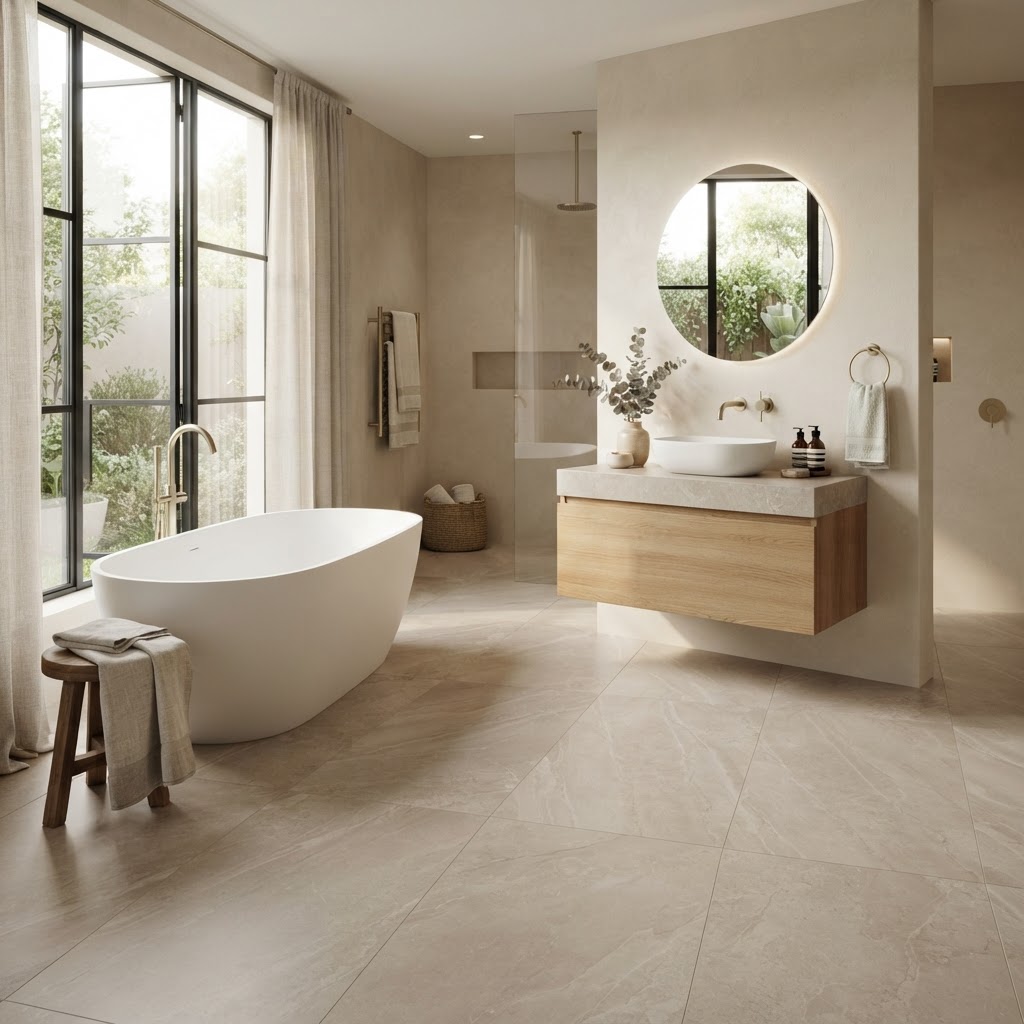
Grout-Free Stone-Look Flooring: Is It a Good Choice for Bathrooms and Kitchens in Aldie and Northern Virginia Homes?
Is grout-free stone-look flooring a good choice for bathrooms and kitchens?
Grout-free stone-look flooring can be a good choice for bathrooms and kitchens when the product is a quality rigid-core or waterproof panel or tile system, the subfloor is flat and dry, the installation follows the manufacturer's instructions precisely and the homeowner understands the trade-offs. It offers a seamless, easy-to-clean look with no grout lines to stain or maintain, comfort underfoot and quick installation. But it is not the same as porcelain tile or natural stone. It cannot match their hardness or lifespan in wet areas, it is not appropriate for every shower or wet zone, it relies on the flooring system's edges and perimeter details to remain truly water-resistant and it cannot be repaired the way tile can. For Aldie, South Riding, Brambleton, Ashburn, Leesburg, Middleburg and Chantilly homeowners, it works best as one option among several, chosen after an honest comparison. Floors and Beyond VA, a family-owned Northern Virginia flooring and remodeling contractor serving Fairfax, Loudoun, Prince William and Arlington counties since 1987, installs grout-free resilient products as well as tile and stone with in-house crews and no subcontractors, so we can recommend what actually fits your bathroom or kitchen.
The newest product formats in flooring increasingly try to deliver the look of stone and tile without the maintenance of grout. Grout is the part of tile floors that many homeowners dislike: it stains, darkens, cracks and requires cleaning and sealing. Products that emulate large stone slabs or tiles with tight, nearly invisible seams, using vinyl or composite construction, have emerged to meet this demand. They promise a clean, monolithic stone look with a floating or glue-down installation and waterproof performance. Whether they live up to the promise depends on the specifics. This guide explains what grout-free stone-look flooring is, how it compares with real tile and stone, where it works and does not, what installation and maintenance really involve and how to decide. For related reading, see our vinyl flooring and tile and stone pages.
What "grout-free stone-look flooring" actually is
The term describes a family of products, not a single material. Most are resilient or rigid-core floors, such as luxury vinyl tile or plank with a stone-inspired print and texture, designed to be installed without grout. Edges may be tightly fitted with a micro-bevel or a barely visible seam, locked together in a click system or adhered. Some formats are large rectangles meant to look like slabs. Some imitate stone, concrete, slate, marble or travertine.
Key features typically include:
A protective wear layer over a printed stone image, with surface texture matched to the pattern for realism.
A rigid or semi-rigid core that resists dents, handles minor subfloor variation and stays dimensionally stable.
A water-resistant plank or tile body, so the product itself is not harmed by moisture.
Tight, minimal seams, sometimes with sealed or glued joints, giving a continuous appearance.
Installation systems that may be floating, glue-down or a combination, depending on the product.
Because these floors are not ceramic, they are not true tile, and they behave differently from porcelain or natural stone.
The appeal: why homeowners like grout-free floors
No grout to maintain. Grout lines collect dirt, stain, mildew and crack over time. Eliminating them reduces cleaning work.
A seamless look. Large expanses of continuous stone-look surface feel calm, modern and spa-like, especially in bathrooms.
Comfort and warmth. Resilient materials are softer and warmer underfoot than porcelain or stone. Many products include attached underlayment that improves comfort and reduces noise.
Water resistance of the plank. The material itself resists moisture, which makes it attractive for kitchens and bathrooms.
Faster installation. Floating or simple adhered installations can be completed more quickly than tile, which requires setting, curing and grouting.
Lighter weight. Resilient products add little weight, which can matter in upper floors and older structures.
Wide design range. Convincing stone, slate, concrete and marble looks are available in many tones and scales.
For many bathrooms and kitchens in Northern Virginia homes, these benefits are real.
The trade-offs: what you give up
It is not as hard as porcelain or stone. Resilient floors can dent from heavy point loads, scratch under abrasive grit and be punctured by sharp objects. Porcelain is far harder and more scratch-resistant.
Water resistance is not waterproofing of the whole system. The plank may resist water, but moisture can still enter at edges, perimeters, penetrations and seams, and collect beneath the floor. Without proper sealing and installation, water can lead to mold or subfloor damage. A true shower or wet-area floor needs a waterproofing assembly, which grout-free planks alone do not provide. Our article on whether vinyl flooring is waterproof explains this distinction.
It cannot be refinished or easily repaired. Damaged tiles or planks must be replaced, and floating floors may require disassembly to reach a damaged piece. Porcelain tiles can be replaced individually but require careful removal.
It may not match the longevity of tile. Porcelain and natural stone can last for generations. Resilient floors have shorter lifespans.
It is not appropriate for every location. Heated floors, high-heat areas near ranges or fireplaces and direct sun exposure can affect some resilient products. Manufacturer instructions must be followed.
It can look like imitation up close. Even good products are printed, so the depth, translucency and variation of natural stone are absent. Embossed texture and quality printing help, but a natural stone slab looks different in light.
Subfloor flatness requirements are strict. Large, rigid products need very flat substrates, and defects telegraph through.
Resale perception. Some buyers value real tile and stone in bathrooms and kitchens, while others are satisfied with high-quality resilient alternatives. Quality and condition matter.
Bathrooms: where to be careful
Bathrooms are the most demanding location. They combine splashing, humidity, standing water, steam and cleaning chemicals.
Floor areas away from the shower and tub. Grout-free resilient floors can work well in powder rooms, secondary bathrooms and the dry zones of primary baths, provided installation details are correct: tight, sealed perimeters; proper transitions at doorways; carefully sealed penetrations at the toilet flange and plumbing; and good ventilation.
Shower floors and wet zones. These require a waterproof assembly, typically a membrane under tile with a sloped base. Grout-free resilient planks are not designed for shower pans, and most manufacturers do not warrant them for direct, continuous water exposure. Porcelain or natural stone tile over a proper waterproofing system remains the standard. Our bathroom remodeling and primary suite remodeling services handle waterproofing and tile correctly, and our accessibility services plan safe, slip-resistant, curbless wet areas.
Slip resistance. Wet floors become slippery. Surface texture helps, but wet-area performance varies. Choose products and finishes intended for bathrooms and avoid overly smooth surfaces.
Subfloor and moisture. Check for existing leaks or damage before installing. Any floor installed over a compromised subfloor will fail.
Kitchens: a better fit
Kitchens are in many ways easier on grout-free flooring than bathrooms. Spills, dropped items and heavy use are the main challenges, and resilient floors handle them reasonably well. A quality rigid-core product with a thick wear layer resists scratches and stains, and cushioning reduces fatigue for people standing at counters. Seamless surfaces make cleaning easy.
Considerations include:
Heat. Floors near ovens, dishwashers and direct sunlight should be installed per manufacturer guidance, and heavy appliances should be protected from indentation with proper methods.
Appliances and cabinets. Floating floors need expansion room, and installers must plan how floors meet cabinets and appliances. Heavy built-in cabinets are typically installed first, with the floor running to the toe-kick. Our kitchen remodeling services coordinate this.
Dents. Dropped heavy objects and sharp furniture legs can dent resilient floors. Use felt pads and care.
Repairs. Plan for the possibility that a section may need replacement. Keep a few extra planks or tiles.
Open layouts. In open kitchens that flow to living areas, a stone-look floor may need a thoughtful relationship with adjoining wood floors.
Comparing grout-free stone-look with porcelain and natural stone
Porcelain tile. Extremely durable, hard, scratch-resistant, stain-resistant and moisture-proof. Requires grout, which can be minimized with large-format, rectified tiles and tight joints, and which can be made low-maintenance with epoxy or stain-resistant grouts. Cold and hard underfoot unless heated. A permanent, long-lived choice.
Natural stone. Beautiful, unique, long-lasting and valuable. Requires sealing, careful maintenance and skilled installation. Softer stones can scratch and etch. Cold and hard.
Grout-free resilient stone-look. Warm, quiet, comfortable, low maintenance and quick to install. Less durable, not repairable like tile, not suitable for wet zones like showers and shorter-lived.
Neither is universally better. The right answer depends on the room, the household and your priorities. For a primary bathroom, many homeowners choose porcelain or stone for the shower and a warm, comfortable floor in the dry areas. For a busy family kitchen, a resilient stone-look can be practical. For an entry or mudroom, porcelain tile's toughness is hard to beat.
If you are weighing hardwood or luxury vinyl plank as alternatives, our hardwood versus LVP comparison and our article on kitchen versus living room flooring in Northern Virginia help frame the decision.
Installation and maintenance realities
Installation
Grout-free products are not no-prep products. Their performance depends on the foundation and details.
Subfloor. Must be flat, clean, dry and sound. Large formats magnify imperfections. Leveling may be needed. Over concrete, moisture testing is essential. Our flooring installation guide explains our approach.
Acclimation and conditions. Materials should be at room temperature and installed in normal living conditions, per the manufacturer.
Layout. Planning where seams fall, how pieces meet doorways and cabinets and how to avoid awkward cuts is key.
Perimeter and penetrations. Expansion gaps must be left and covered by trim or baseboard. In wet rooms, perimeters and penetrations should be sealed as the manufacturer directs.
Transitions. Doorways and thresholds need properly designed transitions.
Following the manufacturer. Warranties often depend on adherence to specific procedures. We follow each product's instructions.
Maintenance
Daily care is simple: sweep or vacuum, mop with approved cleaners and wipe spills promptly. Avoid abrasive pads and harsh chemicals, steam cleaners unless approved and standing water. Use entry mats to keep grit from scratching the surface, and felt pads under furniture. Our floor care page provides guidance.
When to choose tile instead
Choose real tile or stone when the area is a shower or wet zone, when you want the longest possible lifespan and maximum hardness, when you want radiant heat with high efficiency, when you are renovating a historic home where authentic materials suit the architecture or when you want the unique character of natural stone. Our tile and stone page describes what we install.
When grout-free resilient flooring is a good fit
Choose it when you want a warm, comfortable, low-maintenance floor, when the area is a kitchen, laundry room, secondary bathroom or entry with controlled moisture, when you value a seamless look and fast installation, when the subfloor can be made flat and sound and when you understand and accept the trade-offs. Our laundry room remodeling, basement finishing and home office design pages describe spaces where resilient stone-look products often fit well.
What drives the scope of a stone-look flooring project
We do not publish costs in articles, but the factors that shape any estimate are clear. The product and its quality tier. Square footage and layout. Subfloor flatness and preparation. Moisture testing and mitigation. Waterproofing, if tile or stone is used in wet zones. Removal of existing flooring. Transitions, trim and molding. Furniture and fixture handling, including toilets and appliances. And the company, including its crews, licensing, bonding and insurance.
At Floors and Beyond VA, we provide an honest, all-inclusive estimate, and what we quote is what you pay. Our estimates include old flooring removal, new materials, professional installation, furniture moving, transitions, molding and full cleanup. Our article on flooring cost factors in Northern Virginia explains why estimates differ.
Grout-free flooring in Aldie and Northern Virginia homes
In Aldie and across Loudoun County, many bathrooms and kitchens are in homes built in recent decades, with slab or basement construction and moisture considerations that vary by site. Finished basements near Aldie, South Riding and Ashburn often include bathrooms, bars and laundry areas where a grout-free surface looks appealing, but where moisture testing and proper preparation decide whether any flooring will last. In older farmhouses and village homes around Aldie and Middleburg, floors may be uneven, which can be a challenge for rigid, large-format products and calls for leveling before installation.
Whatever product you are considering, the right approach starts with the subfloor and the room. During a free in-home consultation, we inspect the structure, test for moisture where appropriate, take precise laser measurements and show you samples of grout-free resilient flooring alongside porcelain and stone tile, so you can compare the look and feel in your own light and understand what each option really demands.
Common mistakes with grout-free flooring
The first mistake is assuming it is waterproof as a system.
The second is using it in a shower or continuous wet zone.
The third is skipping subfloor preparation.
The fourth is ignoring perimeter sealing in bathrooms.
The fifth is ignoring heat and sun exposure guidance.
The sixth is expecting it to match porcelain's hardness.
The seventh is overlooking transitions to adjoining floors.
The eighth is buying too little material and being unable to match later.
The ninth is choosing a smooth, slippery surface for wet areas.
The tenth is skipping professional installation and voiding the warranty.
Frequently asked questions
Is grout-free flooring waterproof? The product may resist water, but the whole system depends on installation, sealing and the subfloor.
Can I use grout-free flooring in a shower? Generally no. Showers require a waterproof assembly, typically tile over a membrane.
Is it better than tile? It is warmer and lower maintenance, but less durable and not repairable like tile.
Does it look like real stone? Good products look convincing, but up close they are printed and textured, not natural stone.
How long does it last? Resilient floors have shorter lifespans than porcelain or stone. Lifespan depends on quality, wear layer and care.
Can it be installed over my existing floor? Sometimes, depending on the product and the condition of the surface. We assess during your consultation.
Is Floors and Beyond VA licensed and insured? Yes. We are fully licensed, bonded and insured for every project, and our in-house crews work with no subcontractors.
Do you serve my area? Yes. We serve Aldie, South Riding, Brambleton, Ashburn, Leesburg, Middleburg, Chantilly, Gainesville, Haymarket, Fairfax, McLean, Vienna, Reston, Herndon and Arlington, along with Fairfax, Loudoun, Prince William and Arlington counties.
Ready to choose the right bathroom or kitchen floor?
The best floor for a wet or busy room is the one that matches the conditions. Floors and Beyond VA brings nearly forty years of Northern Virginia experience, in-house crews with no subcontractors and a free in-home consultation with samples and precise laser measurements at no charge.
Request your free Aldie flooring estimate: https://floorsandbeyondva.com/Contact
You can also call (703) 906-5698.




