
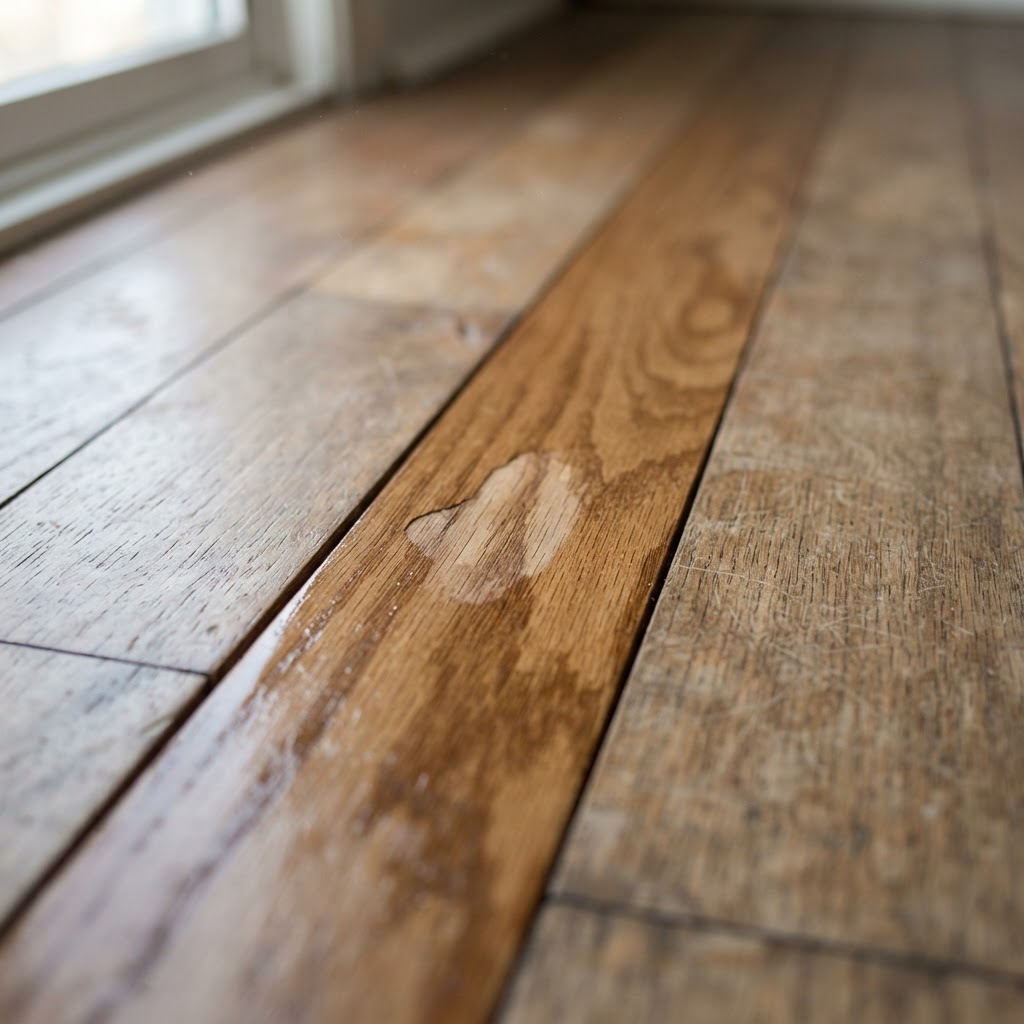
A chip in a hardwood floor usually comes from something heavy or sharp: a dropped pan, a moved appliance or a high heel. The damage can be a small flake in the finish or a piece missing from the wood itself. How you repair a chipped hardwood floor depends on how deep it is, where it is and what kind of finish the floor has. This guide explains how to assess a chip, which repairs work and when a board needs to be replaced. Floors and Beyond VA is a family-owned flooring company that has served Northern Virginia since 1987, and our own crews handle the work from the first visit to the final cleanup.
Assess the Damage
Look closely and run a fingernail across the chip. A chip that only flakes the finish shows lighter wood or a whitish area and is shallow. A chip that has removed wood leaves a visible hole or missing edge. Check whether neighboring boards are cracked or loose, since the chip may be a sign of a larger problem.
Small Chips in the Finish
Clean the area, then use a touch-up marker, a wax filler stick or a bit of matching stain and finish. The aim is to fill and seal the chip so it does not catch dirt. Test your color in a hidden area, and choose a slightly lighter tone, since darker repairs are more obvious.
Chips in the Wood
For a small missing piece, a color-matched wood filler or epoxy filler is pressed into the chip, leveled, allowed to cure and then sealed with finish. Hard wax fillers are quick and useful for small repairs. Larger chips may need a filler built up in layers. The filled area should be sanded flush with fine paper only if the floor's finish can be touched up afterward.
Chipped Edges and Bevels
Boards with beveled edges can chip along the bevel. The repair is similar, but color matching takes more care because the bevel is visible. If several edges are chipped in one area, a section repair may look better than many patches.
When to Replace a Board
If a chip is large, if the board is cracked or if the damage runs across the grain, replacing the board is cleaner. A professional cuts out the board, installs a new one that matches the species and width and finishes it to blend. This also works when the original wood has aged and needs staining to match.
When the Chip Signals Something Else
Chips near an entry may be from grit and heavy use. Chips in a kitchen can come from dropped items. Repeated chipping in one place may mean the board is brittle from dryness or the subfloor is soft. A visit can tell the difference.
Prevention
Use felt pads under furniture, put mats at doors, move heavy items with care and avoid high heels with exposed metal. Keep the finish in good condition, since a worn finish chips more easily. If the whole floor looks tired, a refinish may be the better plan than repeated repairs.
In Northern Virginia Homes
Chips are common in busy Northern Virginia kitchens and entries, where dropped pans, moving boxes and dirt tracked from outside all take a toll. Floors in rentals and in homes being sold are often repaired before showings. If you plan to sell or list a home, a clean repair of chips and dents helps floors present well, and a refinish can lift the whole house. Ask your contractor whether a repair, a refinish or both will give the best result for the time you have.
Frequently Asked Questions
Can I fix a chip in my hardwood floor myself?
Small chips, yes, with filler and touch-up. Larger chips and board replacement are better left to a professional.
What filler works best?
Color-matched wood filler, hard wax or epoxy, depending on the size of the chip.
Will the repair be invisible?
Small repairs can be nearly invisible with good color matching. Larger ones may show.
Do chips get worse?
They can, since dirt collects and edges can lift. Repair them early.
When should I refinish instead?
When damage is widespread or the finish is worn throughout.
Ready When You are
If you have chips you are not sure how to repair, send photos or schedule a visit and we will tell you whether it is a patch, a board or a refinish. Floors and Beyond VA serves Fairfax, Loudoun, Prince William and Arlington counties, Alexandria and the Washington, DC area. Schedule an in-home estimate at floorsandbeyondva.com/Contact or call (703) 906-5698.
LINKS TO ADD (anchor text -> URL) - "floor restoration" -> /floor-restoration - "hardwood flooring" -> /hardwood-flooring - "hardwood floor repair for scratches" -> /blog/how-to-repair-scratches-in-hardwood-floors - "dent in hardwood floor repair" -> /blog/dent-in-hardwood-floor-repair-northern-virginia - "hardwood floor repair contractor" -> /blog/hardwood-floor-repair-contractor-northern-virginia - "contact Floors and Beyond VA" -> /contact - "Paired NoVA Guide entry: "How do I repair a chipped hardwood floor?"" -> /nova-guide/how-do-i-repair-a-chipped-hardwood-floor

