
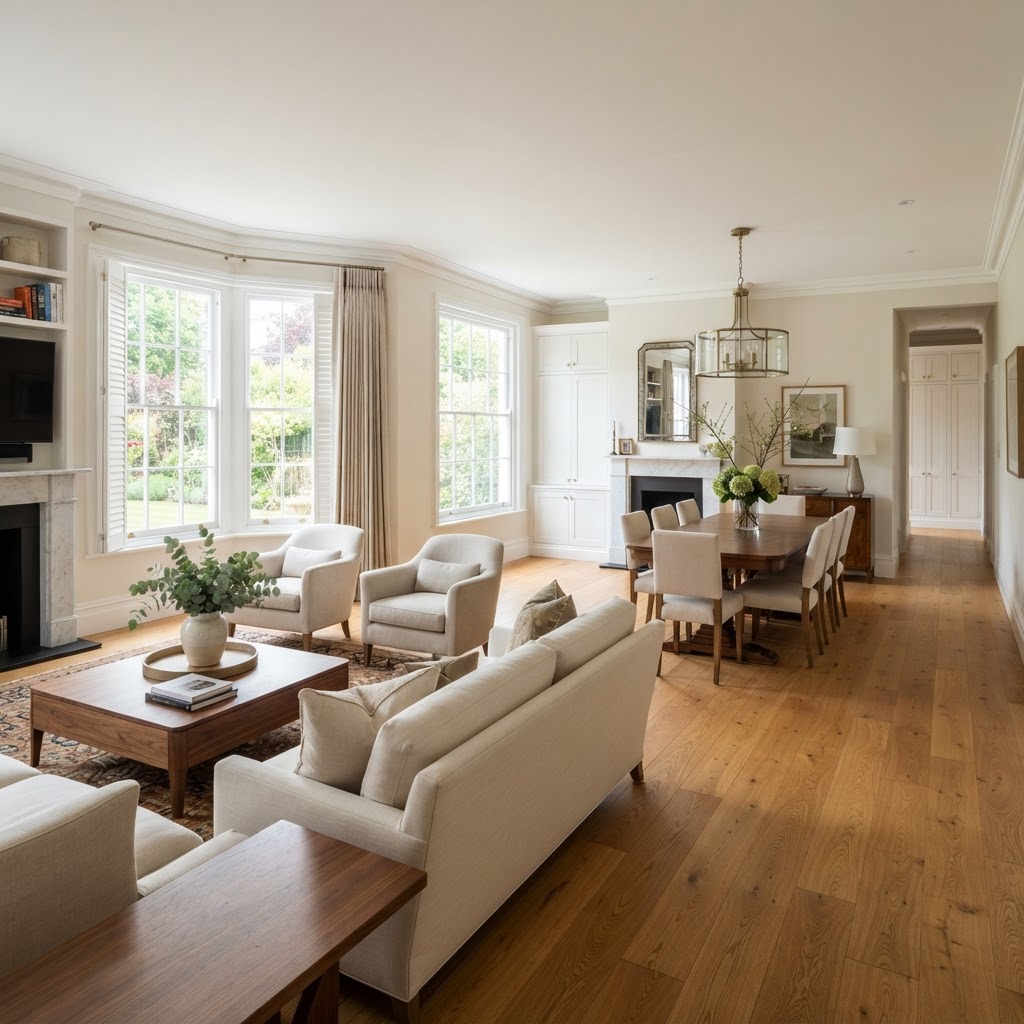
Before installing hardwood in McLean, decide between solid and engineered construction, choose a species, plank width and finish that suit your home's architecture, understand how your subfloor and indoor humidity affect installation, and learn what drives the scope of a project so estimates can be compared fairly. Solid hardwood is the traditional choice for above-grade rooms and can be refinished many times, while engineered hardwood offers added stability and can be used in more locations. Wider planks, matte finishes and natural tones dominate current McLean projects, but traditional narrow strips and rich stains remain popular in classic homes. Installation quality matters as much as the wood itself. Floors and Beyond VA, a family-owned Northern Virginia flooring and remodeling contractor serving Fairfax, Loudoun, Prince William and Arlington counties since 1987, installs, repairs and refinishes hardwood with in-house crews and no subcontractors, and our refinish-first philosophy means we check whether your existing floors can be saved before recommending replacement.
Hardwood flooring is closely tied to the character of McLean homes. Mid-century houses in neighborhoods such as Franklin Park and Hamilton often have original oak that has lasted for generations. Colonials from the 1980s and 1990s frequently have builder-grade hardwood in foyers and living areas that is ready for an update. New construction and major renovations favor wide-plank floors and open plans. This guide explains solid versus engineered hardwood, popular finishes, plank widths, maintenance and the factors that influence installation pricing, without quoting any numbers. For products, visit our wood flooring page.
Why hardwood suits McLean homes
Several qualities explain hardwood's staying power here.
Longevity. A well-installed solid hardwood floor can last for generations. Its thick wear layer allows multiple sandings and refinishing, so the surface can be renewed rather than replaced.
Appeal. Hardwood is widely seen as a hallmark of quality. Buyers in McLean's competitive market tend to respond positively to well-maintained wood floors, although we never promise a specific effect on sale price.
Versatility. It complements traditional millwork and contemporary design alike, and stains and finishes can be adapted to nearly any palette.
Indoor environment. Hard surfaces do not trap dust and allergens the way some soft materials can, and they clean easily.
Warmth and character. Grain patterns, natural color variation and the subtle movement of wood create a depth that synthetic products try to imitate.
Solid versus engineered hardwood
The first decision is construction.
Solid hardwood is milled from a single piece of wood, typically three-quarters of an inch thick. It can be sanded and refinished several times, which is why original floors in older McLean homes often look beautiful after restoration. It is best for above-grade rooms with controlled moisture. Because solid wood expands and contracts with humidity, it requires proper acclimation, installation over a suitable wood subfloor and appropriate expansion gaps.
Engineered hardwood has a real wood top layer bonded to a layered core. Cross-layered construction makes it more stable when humidity changes, which allows installation over concrete slabs, in many basements with proper moisture control and over radiant heat when the manufacturer approves. The thickness of the top wear layer determines how many times it can be refinished. Engineered planks can be nailed, glued or floated depending on the product and subfloor. For more on the engineered side of the category, see our article on engineered wide-plank flooring in Northern Virginia.
In practice, solid hardwood is a strong choice for main-level living areas in houses with wood subfloors, while engineered is ideal for slabs, basements, heated floors and very wide planks.
Species, cuts and character
Red oak is the traditional American floor, with warm, slightly pinkish tones and a pronounced grain. White oak has become the contemporary favorite, with a neutral to golden-brown color that takes both natural and gray-leaning finishes beautifully. Hickory is very hard and shows strong color variation. Maple is smooth and pale with subtle grain. Walnut is rich, dark and slightly softer. Ash is light with bold grain, and cherry deepens in color with age.
Hardness affects dent resistance, but finish quality and installation matter just as much, and all hardwoods can dent. Choose species by appearance and use rather than hardness alone.
Plain-sawn boards show cathedral grain patterns and are the most common. Rift-sawn and quarter-sawn boards show straighter, more uniform grain and are more dimensionally stable. They suit modern and refined interiors but require more material, because more of the log is set aside to achieve the cut.
Plank widths: from traditional strips to wide planks
Plank width shapes a room's feeling.
Narrow strips, two and a quarter inches wide, are the traditional width in older McLean homes. They suit historic character and create a fine, linear texture.
Mid-width planks, three to five inches, are a versatile compromise and the most common in transitional homes.
Wide planks, five to ten inches and beyond, create a spacious, contemporary look that shows more of the wood's character. They are particularly popular in new McLean builds and open-plan renovations. Wide planks show more movement with humidity, so engineered construction is often recommended for them, and installation must be carefully managed.
Consider room size and architecture. A narrow-strip floor in a large open room can look busy, while very wide planks in a small, traditional room can feel out of scale. If you are adding to an existing floor, matching width is important for a seamless look.
Finishes and sheen: what you see and feel
Finish determines appearance, durability and maintenance.
Oil-based polyurethane is durable and adds an amber warmth that deepens over time. Water-based polyurethane dries clear, quickly and with lower odor, preserving the wood's natural color and suiting lighter palettes. Hardwax oils penetrate and protect the wood, giving a natural, low-sheen look and allowing easy spot repair. Conversion varnish and other commercial-grade finishes offer exceptional durability but demand experienced application.
Sheen ranges from matte to high gloss. Matte and satin finishes are popular because they hide scratches and dust, and they look modern and natural. Higher sheens show more wear and are less common today.
Stain color can range from natural to espresso. In McLean, natural and light-to-mid tones are currently popular, along with warm neutral browns. Deep, rich stains remain popular in traditional and formal spaces. Test stains on your actual floor in your home's light, because color shifts with sunlight, wall color and lamps.
Texture options include smooth, wire-brushed, hand-scraped and distressed. Textured surfaces hide wear well and create character, while smooth finishes feel refined.
Patterns like herringbone, chevron and borders add formality and are well suited to foyers, dining rooms and studies.
Installation: what makes or breaks a hardwood floor
A floor is only as good as its installation.
Subfloor. It must be flat, clean, dry and sound. Squeaks, high and low spots and loose areas should be corrected beforehand. In older homes, subfloors can be uneven and may need leveling.
Moisture. Wood absorbs and releases moisture, so testing the subfloor and the wood is essential. Basements, slabs and crawl spaces demand special attention. Excess moisture is the leading cause of cupping, buckling and gaps.
Acclimation. Wood should adjust to your home's environment before installation. The time required depends on the product and conditions.
Method. Solid hardwood is generally nailed or stapled to a wood subfloor. Engineered products may be nailed, glued or floated. The right method depends on the product and the substrate.
Layout. A good installer plans the direction of boards, the starting line, the room-to-room flow and the final rows so the floor looks deliberate. In large open McLean plans, layout is especially important.
Transitions and stairs. Where hardwood meets tile, carpet or another floor, transitions should be neat and level. Stair treads, risers and nosings demand precision.
Dust and disruption. Sanding and finishing create dust and odors. Professional dust containment and careful scheduling reduce the burden.
Our flooring installation guide explains our preparation and protection process.
Refinishing what you already have
Many McLean homeowners do not need new floors. If your home has original or older hardwood, even floors that look worn, dull, stained or outdated, refinishing can transform them.
Refinishing involves sanding the existing finish and a thin layer of wood, repairing damaged boards, addressing gaps and applying new stain and finish. It preserves original wood, often denser and more stable than modern lumber, generates less waste and usually has a smaller scope than replacement. A color change is possible, so a floor with a dated orange tone can become a modern neutral.
Replacement is appropriate when boards are too thin, water damage is widespread, rot or pests are present or the layout must change. Often a combination works: repair damaged areas with matching boards and refinish the whole floor for uniformity.
Our guides on whether hardwood can be saved and whether refinishing is worth it can help, and our historic home restoration page covers older properties.
Maintenance: keeping hardwood beautiful
Hardwood is durable but benefits from sensible care. Sweep or vacuum regularly with a soft-bristle attachment to remove grit. Clean with products recommended for your finish, avoiding excessive water and steam. Wipe spills promptly. Use felt pads under furniture and keep pet nails trimmed. Place mats at entrances to catch grit, moisture and de-icing salts. Use rugs in high-traffic areas, choosing breathable backing. Control sunlight to limit fading. Maintain stable indoor humidity, ideally within the range the manufacturer recommends.
Over time, a screen-and-recoat can refresh the finish without full sanding if the surface has not been worn through. Our floor care page provides further guidance.
Benefits and honest limitations
The benefits of hardwood are longevity, beauty, repairability, broad appeal and compatibility with many design styles. The limitations are sensitivity to water, susceptibility to scratches and dents, seasonal movement and the need for care. Hardwood is less suited to bathrooms and laundry rooms, requires caution in kitchens and is generally not recommended in solid form below grade. Condominiums and townhomes may have association restrictions on hard flooring or require sound-rated underlayment.
Being honest about these limits is part of good advice. In some rooms, tile or luxury vinyl plank performs better, and a thoughtful floor plan uses each material where it excels.
Installation cost factors
We do not publish prices in articles, and nothing here gives numbers, but you should know what drives the pricing of a hardwood project.
The type of wood, including species, grade, and whether it is solid or engineered, shapes the material scope. Plank width and pattern influence both material and labor, since wide planks, herringbone and borders require more skill. The amount of floor, including closets, stairs and transitions, determines quantities. Subfloor condition affects preparation, since leveling, repairs and moisture mitigation add work. Removal of existing flooring and disposal add steps. Installation method differs by product and substrate. Stain and finish choices influence the finishing scope, with multiple coats and custom colors adding time. Trim, baseboards and transitions are part of the finishing details. Access and logistics, such as multi-level homes, HOA rules and long carries, can affect scheduling. And refinishing versus replacing changes the project entirely.
Floors and Beyond VA provides an honest, all-inclusive estimate, and what we quote is what you pay.
How McLean's housing stock shapes hardwood choices
Hardwood decisions in McLean are rarely made in a vacuum. The area's housing stock spans mid-century ranchers and split-levels in neighborhoods near Old Dominion Drive and Chain Bridge Road, 1980s and 1990s colonials in communities such as Franklin Park and Chesterbrook, and substantial new builds that replaced older homes on larger lots. Each of these brings different expectations.
In an older home, the existing floor may already be solid oak that has served for fifty years or more. Before assuming it needs replacing, it is worth having it evaluated, because original oak is often thick enough to be sanded and refinished several more times, and the character it has developed cannot be purchased new. In a colonial from the 1980s or 1990s, the floors may be a narrow-strip oak with a worn builder-grade finish, in which case refinishing with a new stain color can transform the home dramatically without any replacement. In a new build or a major renovation, wide-plank engineered or solid hardwood is often specified from the start, and the question becomes one of species, finish and installation method rather than of salvage.
Understanding where your home sits among these categories helps clarify your goals. A homeowner with sound original oak is deciding whether to preserve. A homeowner with a poor-quality floor is deciding whether to replace. A homeowner building from scratch is deciding what to specify. The best advice differs in each case, which is why an in-home evaluation by a crew that handles installation, refinishing and repair is so valuable.
Seasonal movement and Northern Virginia's climate
Northern Virginia's climate has humid summers and dry, heated winters, and wood responds to both. Hardwood absorbs moisture from the air and releases it, expanding and contracting slightly across its width in the process. In a well-installed floor, this movement is accommodated by expansion gaps at the perimeter, hidden beneath baseboards and trim, and by appropriate plank widths and fastening. In a poorly installed or poorly acclimated floor, the same movement can cause visible gaps between boards in winter, cupping in humid conditions or buckling in extreme cases.
This is the main reason acclimation and moisture testing matter. Wood delivered to a home should be allowed to adjust to the indoor environment before installation, and the subfloor and the wood should both be measured so that they fall within acceptable ranges. Homeowners can also help by keeping indoor humidity reasonably stable throughout the year, since dramatic swings are harder on any wood product. A modest seasonal gap in winter is normal for solid hardwood and typically closes again in summer. Persistent, wide gaps or boards that lift are signals to have a professional take a look.
Rugs, furniture and everyday protection
Finish quality matters, but so does daily protection. Felt pads under furniture legs prevent scratches from chairs and tables, and replacing hard plastic or metal glides with felt or soft rubber is one of the least expensive ways to extend the life of a finish. Rugs at entries and in front of sinks catch grit and moisture before they reach the floor. A rug pad should be breathable and non-staining, because some rubber-backed pads can discolor finishes over time. Pets with trimmed nails cause far less wear, and wiping up spills promptly keeps moisture from working into seams.
These small habits protect your investment as effectively as any product choice and cost very little. Combined with periodic professional maintenance, they allow a quality hardwood floor to look beautiful for decades.
Common mistakes to avoid
The most common mistake is replacing hardwood that could be refinished.
Another is choosing solid hardwood for a below-grade or high-moisture location.
A third is skipping moisture testing and acclimation.
A fourth is choosing a stain from a small sample.
A fifth is ignoring humidity control.
A sixth is mismatching new boards with old.
A seventh is underestimating the dust and disruption of sanding.
Finally, many homeowners select an installer on price alone. Hardwood installation is skilled work, and craftsmanship shows for decades.
How Floors and Beyond VA installs hardwood in McLean
We begin with a free in-home consultation. We bring samples, take precise laser measurements on every room at no charge, examine your existing floors and subfloor and discuss your goals. If you have existing hardwood, we tell you honestly whether it can be refinished. We provide a clear, all-inclusive estimate and explain the process. Our in-house crews, with no subcontractors, handle installation, sanding and finishing, protect your home and clean up. We are fully licensed, bonded and insured.
We serve McLean and nearby communities including Salona Village, Langley, Chesterbrook, Franklin Park, Hamilton, Dunn Loring, Vienna, Great Falls and Tysons, as well as Fairfax, Loudoun, Prince William and Arlington counties.
Frequently asked questions
Is solid or engineered hardwood better?
Neither is universally better. Solid can be refinished many times, while engineered offers stability and flexibility.
What plank width should I choose?
It depends on room size and style. Wider planks suit open, contemporary spaces, and narrower strips suit traditional homes.
Can I change the color of my existing hardwood?
Often yes, by sanding and applying a new stain.
How long does hardwood last?
With care, generations, especially solid hardwood that can be refinished.
Is hardwood good in a kitchen?
It can be, with proper care, but water-resistant options may be more forgiving.
How do I protect hardwood from scratches?
Use felt pads, mats, regular cleaning and trimmed pet nails.
Does Floors and Beyond VA use subcontractors?
No. Our in-house crews handle the work.
Do you serve my McLean neighborhood?
We serve McLean and neighboring Northern Virginia communities.
Ready for hardwood flooring in McLean?
Whether you are installing new hardwood or restoring old floors, the right plan begins with an honest look at your home. Floors and Beyond VA offers nearly forty years of Northern Virginia experience, in-house crews with no subcontractors, a refinish-first approach and all-inclusive estimates.
Request your free hardwood flooring estimate in McLean: https://floorsandbeyondva.com/Contact
You can also call (703) 906-5698, or send us a message through our contact page.




