
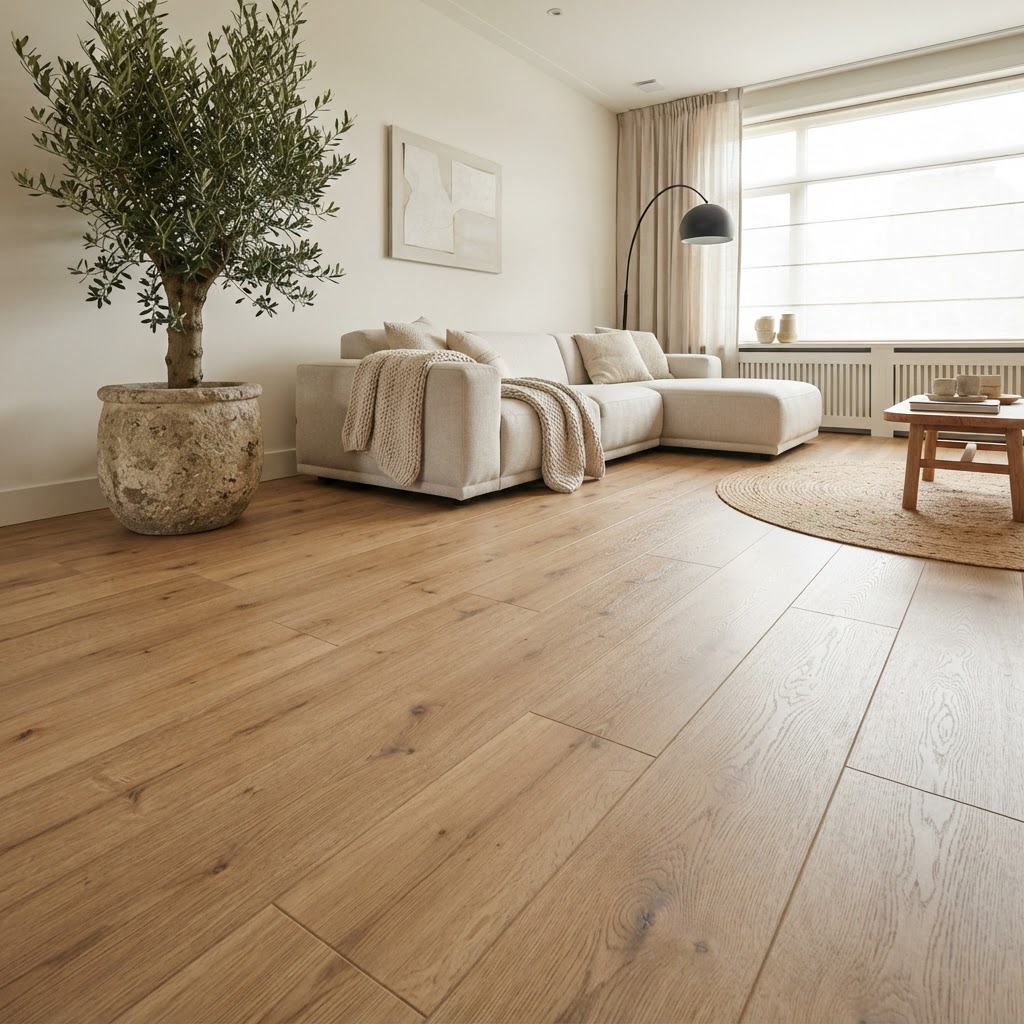
The short answer: choose luxury vinyl plank by matching the wear layer and core to how your household lives, then pick a color and edge profile that suits the room's light and architecture. Medium, textured wood tones suit busy family spaces. Lighter tones suit small or dim rooms. A square or micro-bevel edge reads modern, while a deeper bevel gives traditional definition.
Floors and Beyond VA, a family-owned Northern Virginia flooring and remodeling contractor serving homeowners since 1987, brings samples to your home so you can compare styles in your own light before you decide.
Luxury vinyl plank, or LVP, has become one of the most requested floors across Northern Virginia. It suits Tysons condominiums, Fairfax ramblers, Ashburn new-construction homes, Woodbridge basements and rental properties across the region. But the range of choices can overwhelm. This guide walks through construction, then focuses on the visual decisions: species look, color, texture, plank size and edge profile. It also compares LVP with hardwood and tile for common uses such as basements, kitchens and rentals, and it shares maintenance advice that protects your investment.
Start with the structure, then choose the style
A floor that looks gorgeous but wears out quickly is a poor value. Before you fall in love with a color, check the bones of the product.
The wear layer is the clear top coating, measured in mils. A thicker wear layer resists scratches and scuffs longer, which matters in homes with pets, children or heavy foot traffic. The core determines stability and how well the floor tolerates minor subfloor imperfections. Rigid cores are stiff and stable, while flexible cores are thinner and generally need a very smooth subfloor. An attached underlayment can add comfort and quiet.
Once those basics are right, style is where you can be creative. For a deeper look at the layers, read our guide to how luxury vinyl plank flooring is built.
Species looks: what the print is imitating
LVP prints often imitate popular woods. Knowing the real thing helps you choose.
- Oak looks. Oak is the classic. Its open grain and flexible tones suit nearly every style, from traditional to modern. Oak prints in natural, honey and greige tones are among the most popular in Northern Virginia.
- Hickory looks. Hickory has dramatic contrast, with pale and dark streaks in the same board. It suits rustic and farmhouse settings and hides wear well.
- Walnut looks. Rich brown walnut prints bring warmth and sophistication, popular in contemporary and mid-century-inspired rooms.
- Maple and ash looks. These lighter, finer-grained prints create a clean, airy feel, especially in small rooms and Scandinavian-inspired designs.
- Reclaimed and weathered looks. Distressed prints suit casual, lived-in homes and farmhouses.
- Stone and tile looks. Many LVP lines also include stone and concrete patterns, useful in entries, kitchens and bathrooms.
If you already have real wood somewhere in the house, our hardwood flooring and floor restoration pages explain what can be matched or saved.
Color: matching floor to light, walls and furniture
Color is where homeowners often change their minds after installation. A sample held in a showroom can look different in your home.
North-facing rooms receive cooler, softer light, and warm-toned floors can balance them. South-facing rooms get strong light that intensifies color, and very pale floors can feel washed out while very dark floors can feel heavy. Rooms with warm wall colors and cabinetry often pair well with neutral or cool floors to avoid an overly orange look. Rooms with cool gray walls may look better with warmer woods.
Consider how the color hides daily life. Medium tones with natural variation conceal dust, crumbs and small scratches better than very pale or very dark colors. Floors with visible grain pattern are more forgiving than perfectly uniform ones.
We encourage you to leave samples in place for a day or two, in morning light, afternoon light and under lamps. Because we have no showroom, we bring the choices to your home so you see them where they will live.
Gray, natural and warm tones in today's homes
For a long time, cool gray floors were a favorite. Tastes have been shifting toward natural and warm mid-tones, which feel more timeless and coordinate easily with changing decor. Gray still has a place, especially in contemporary condominiums, but many homeowners find warmer greige and natural oak tones more flexible. If you are choosing for resale, versatile neutrals are usually the safer path.
Plank size: narrow, standard and wide
Plank width and length change the character of a room.
Narrow planks echo traditional hardwood strips and suit older homes. Standard widths suit most settings. Wider planks feel modern and spacious and work well in open plans, though in very small rooms they may feel out of scale. Longer planks reduce the number of seams and give a calmer look.
Mixed-width patterns are less common in vinyl but available in some lines. Whatever you choose, layout matters. Our crews plan starting lines and cuts so that planks at room edges look balanced, not sliced into slivers.
Surface texture: smooth, embossed and wire-brushed
Surface texture affects both look and function. Embossed-in-register textures follow the printed grain, so what you see matches what you feel. This creates a convincing wood effect. Smooth surfaces are easy to clean but can look flat and show scuffs more. Wire-brushed and hand-scraped textures add depth and hide small scratches, though they may collect a little more dust in the grooves.
For households with pets, textured surfaces often provide both a better look and better grip. For kitchens and entries, consider traction as well as appearance.
Gloss level: matte, satin and gloss
Most quality LVP is matte or low-sheen. Lower sheen hides scratches and fingerprints and looks more like natural wood. Higher gloss highlights every flaw and can feel artificial. We generally recommend a low-sheen finish for homes with active families and pets.
Edge profiles: square, beveled and more
The edge profile is the shape of the plank's edge where it meets the next one. It has a surprisingly large effect on the look.
- Square edge. Planks meet flush, creating a smooth, continuous surface. This looks clean and modern and is easy to maintain. Seams are less noticeable.
- Micro-bevel. A very small slope at the edge creates subtle definition between planks without collecting much dirt. It is a common compromise.
- Beveled edge. A deeper bevel emphasizes each plank, resembling traditional prefinished hardwood. It adds visual texture but can collect dust and crumbs more readily.
- Painted bevel. The bevel is colored to match or contrast with the surface, adding a distinctive touch.
- Pressed or embossed edge. The edge texture follows the grain for a realistic look.
If you are matching an existing hardwood floor with beveled edges, a beveled LVP edge may look more natural. If you want a seamless contemporary look, choose square or micro-bevel.
Comparing LVP with hardwood
Hardwood is real, can be sanded and refinished, and adds warmth and value. It also scratches and dents, reacts to humidity and should not be installed in places with frequent moisture. LVP resists surface water and is more affordable to maintain, though it cannot be refinished.
Our advice is to use each where it fits. Keep and restore real hardwood where you have it, and use LVP in basements, laundry rooms, mudrooms and rentals where durability and water resistance matter. If you are unsure, bring your questions to your free consultation.
Comparing LVP with tile
Tile is the champion of permanence and heat resistance. It is also hard and cold, and grout requires care. LVP is warmer and quieter, with no grout lines in most wood-look products. In kitchens, both can work. In a bathroom shower or other wet zone, tile remains the standard. In a guest bath or powder room, waterproof LVP can be a practical option.
Basements, kitchens and rentals
- Basements. Rigid-core LVP is a leading choice. It resists surface moisture and installs over concrete when properly prepared. The slab and walls must be assessed first, and active leaks should be handled by a licensed professional. See our basement finishing work.
- Kitchens. LVP handles spills and drops better than many hardwoods. Choose a durable wear layer and a texture with some grip. We coordinate flooring with kitchen remodeling projects.
- Rentals. Property owners value LVP for its durability, quick installation and easy repair. Planks can often be replaced individually if damaged. Consistency across units helps manage maintenance.
Maintenance that protects long-term value
Sweep or vacuum with a soft attachment to remove grit. Damp mop with a cleaner approved by the manufacturer, and avoid soaking. Wipe spills promptly. Place mats at entrances and felt pads under furniture. Avoid dragging heavy items. Use caution with rubber-backed mats, since some can discolor vinyl over time. Keep indoor humidity and temperature reasonable, and keep direct sunlight from fading the floor through unprotected windows.
Following the manufacturer's care instructions also helps preserve warranty coverage.
Putting a design together room by room
A good floor starts with a clear design intention. In a living room with large windows and neutral walls, a natural oak look with gentle variation feels calm and timeless. In a family room with heavy use, a slightly darker, more textured plank forgives crumbs and pet hair. In a kitchen with bold cabinets, a quiet floor lets the cabinets lead. In a hallway that connects several rooms, a single consistent plank ties the house together.
Think about how rooms relate. When two spaces share a sightline, using the same plank in both avoids a jarring break. When a room is separate, such as a basement or laundry room, you have more freedom to change tone or pattern. We often sketch the flow of the house with homeowners so they can see where transitions would fall and decide whether they want them.
Mixing planks and avoiding the repeat look
Quality planks are printed from many different images so that the pattern does not repeat too often. When installing, our crews mix planks from several cartons and avoid placing similar boards side by side. This yields a natural look. A floor installed straight from one carton can show visible repetition, especially in wide-open spaces.
Lighting and finish choices that change the look
Lighting transforms a floor. Warm bulbs deepen woody tones. Cool bulbs make grays and whites feel crisp. Large windows bring shifting daylight. Recessed lights can create glare on glossier surfaces. We encourage homeowners to look at samples at different times of day and under the lights they will actually use.
Sheen deserves attention. Even within low-gloss options there are subtle differences. A true matte finish looks the most like unfinished or oiled wood. A satin finish brightens the room slightly and may be easier to wipe clean. We hold samples side by side so you can feel the difference.
Transitions, trims and the finished look
The edges of a floor make a big impression. A well-chosen transition piece between vinyl and tile, or between vinyl and carpet, should be low, safe and visually calm. Baseboards and shoe molding cover the expansion gap and give the room a finished look. Quarter-round is a common choice, and some designs call for taller baseboards. Stair noses and thresholds at exterior doors need to be matched in color and durability. We include these details in our estimates.
Living with your new plank for years
A floor is a long relationship. In the first weeks, give it gentle treatment while it settles into your home. Over the following seasons, you will learn how it responds to light and use. Plan to rearrange furniture occasionally so wear spreads evenly. Use rugs where they make sense, and avoid rubber-backed mats that are not approved for vinyl. If a plank is ever damaged, tell us. Many luxury vinyl floors allow individual planks to be replaced, and keeping a few spare planks from your installation makes future repairs easier.
Matching trim, stair parts and accessories
When you choose a plank, ask how trim and accessories will match. Stair noses, reducers, T-moldings and end caps come in matched colors for many product lines. Baseboards can be painted or stained to coordinate. For homes with hardwood stairs, a deliberate contrast or a careful match can both look good. We lay out these decisions with you so the finished project feels cohesive.
What drives the scope of an LVP project
The scope depends on the size and layout, the subfloor, the product chosen, the removal of existing flooring, the number of transitions and the furniture to be moved. Stairs and tight spaces add labor. Preparation is often the most significant variable.
We take precise laser measurements at no charge and provide a written, all-inclusive estimate covering old flooring removal, new materials, installation, furniture moving, transitions, molding and cleanup. What we quote is what you pay. Our pricing and policy page explains how estimates work, and our installation guide walks through the process step by step.
Why Northern Virginia homeowners choose Floors and Beyond VA
- Family-owned since 1987. We understand the region's homes and climate.
- In-house crews. Our own employees handle every project.
- Free in-home consultation with samples. See styles in your own light.
- Precise laser measurements at no charge. Accuracy supports a clean layout.
- Honest, all-inclusive estimates. No surprises.
- Professional installation. Careful preparation and tidy finish work.
- Fully licensed, bonded and insured. You can hire with confidence.
- Remodeling experience. We coordinate flooring with kitchens, baths, basements and whole-house projects.
Floors and Beyond VA helps you choose a floor that looks right and lasts.
Common mistakes when choosing LVP
- Choosing by a small chip. View a large sample in your own room.
- Ignoring the wear layer. Appearance is not everything.
- Picking a high-gloss finish. It shows every mark.
- Overlooking the edge profile. It changes the look of the whole floor.
- Forgetting the subfloor. A wonderful plank over an uneven surface will disappoint.
- Not planning transitions. Meeting points with other floors should be deliberate.
- Skipping care instructions. Maintenance affects both appearance and warranty.
Frequently asked questions
What is the most popular LVP color?
Natural and warm oak tones remain popular, with greige and light neutrals close behind.
Does LVP scratch?
Any floor can scratch. A thicker wear layer and textured surface resist it better.
Can LVP be installed over tile?
Sometimes, if the tile is flat and the grout lines are addressed. We inspect first.
Is it good for allergies?
Hard surfaces are easy to keep free of dust, though cleaning habits matter.
How does wear layer thickness affect my choice?
It is a major factor. Our luxury vinyl plank guide explains how the wear layer, core and backing work together.
Related pages
Our vinyl flooring page lists the products we install, and our overview of where we work around Tysons, Fairfax, Vienna, Reston and McLean explains how we plan projects in the region. For the material comparison, read luxury vinyl plank versus laminate.
Ready to choose your luxury vinyl plank?
Free in-home consultation
Let us bring samples to your home and help you decide. You get an honest, all-inclusive estimate covering removal, materials, installation, transitions, molding and cleanup.
Contact Floors and Beyond VAFloors and Beyond VA
Family-owned flooring and remodeling since 1987, serving Northern Virginia
Phone: (703) 906-5698
Email: hello@floorsandbeyondva.com
Web: floorsandbeyondva.com




