
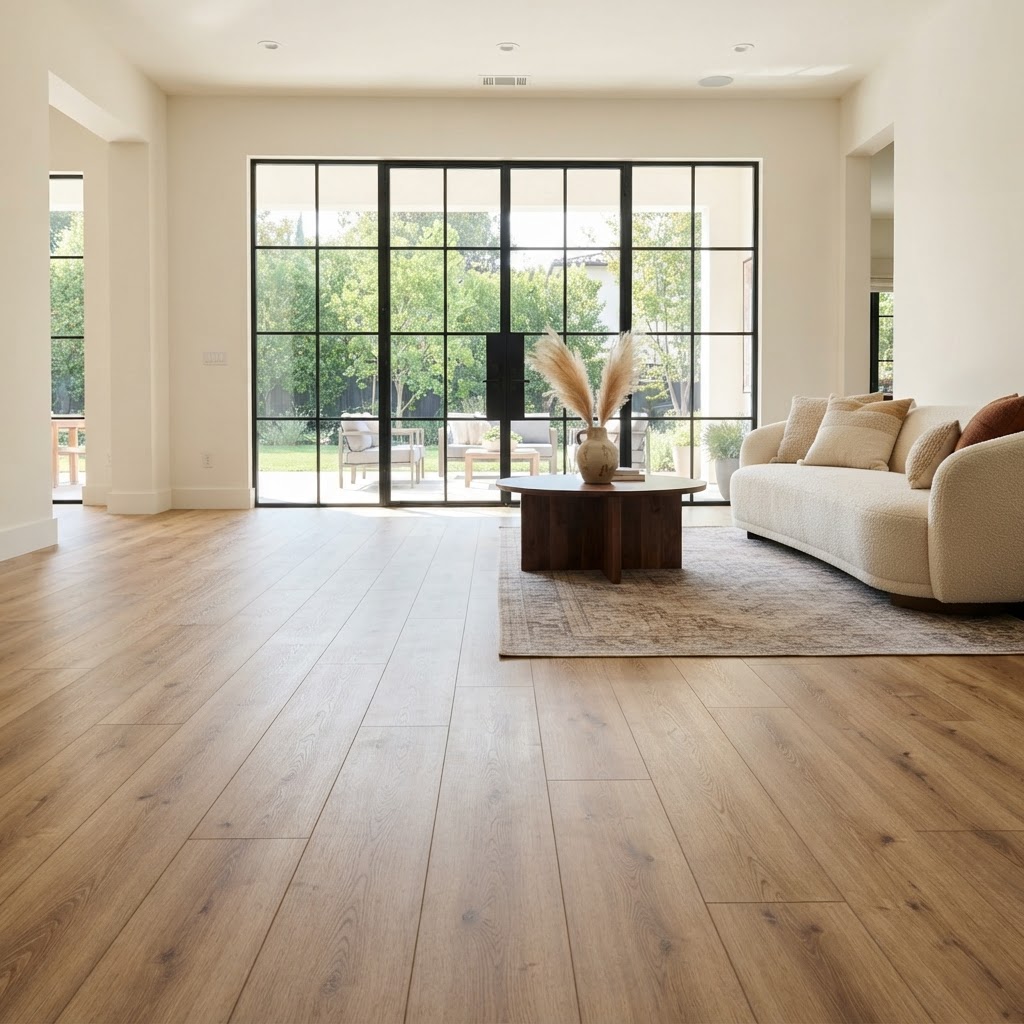
Luxury vinyl tile plank flooring, often shortened to LVT or LVP, is a layered, water-resistant resilient floor made to look like hardwood, stone or ceramic tile, sold in long planks or square and rectangular tiles. It is built from a protective wear layer, a printed design layer and a rigid or flexible core, and it is one of the most practical choices for busy Northern Virginia homes. Floors and Beyond VA, a family-owned flooring and remodeling contractor serving the region since 1987, installs luxury vinyl with in-house crews and brings samples to your home so you can judge them in your own light.
The short answer: LVT and LVP describe the same family of flooring. LVT usually means tile-shaped pieces, LVP usually means plank-shaped pieces. What really matters is the wear layer thickness, the core type, the installation method and the warranty, not the letters on the box.
The name causes confusion because the industry uses several overlapping terms. Some companies say LVT for tile-shaped pieces and LVP for plank-shaped pieces. Others use the terms interchangeably. In practice, the construction is similar, and what matters to you is how the product is built, how thick the wear layer is, how it is installed and whether it suits the room. This guide explains each of those points, compares luxury vinyl with hardwood and ceramic tile, and gives room-by-room advice for homes from Tysons to Leesburg to Woodbridge.
How luxury vinyl is built
Understanding the layers helps you read a product sheet without being fooled by marketing language.
The wear layer. This is the clear top coating that takes the abuse. It resists scratches, scuffs and stains. Its thickness is measured in mils, a mil being one-thousandth of an inch, and it is the single most important number for durability. A thicker wear layer generally lasts longer in a busy household. Many products add a ceramic or urethane finish on top for extra resistance.
The design layer. A high-definition print gives the floor its look. Good products photograph real wood or stone and print it with convincing grain, knots, veining and variation. Better products repeat patterns less often, so the floor does not look stamped.
The core. This is the body of the plank, and it comes in a few main types. Flexible cores are thinner and bendier and are often glued down or installed as a loose-lay product. Rigid cores are stiffer and stable, and they make click-together floating floors that tolerate minor subfloor irregularities better. Some rigid cores use a stone-plastic composite and some use a wood-plastic composite. Both are designed to resist moisture on the surface.
The backing. Many products have an attached underlayment pad that adds cushioning and some sound dampening. Others have a plain backing and expect a separate underlayment where one is needed.
Read the product specifications for the wear layer, the core type, the installation method and the warranty terms. A beautiful sample is not enough.
The main construction types
- Rigid core click planks. These are the most popular for residential use. They float over the subfloor with edges that lock together, and the core is stiff enough to bridge small imperfections. They suit many basements, kitchens and living areas, provided the subfloor is flat and sound.
- Glue-down luxury vinyl. These planks or tiles are adhered directly to the subfloor. They are common in commercial settings and in homes where a very stable, quiet and low-profile floor is wanted. Glue-down installation demands meticulous subfloor preparation.
- Loose-lay luxury vinyl. These planks rely on a high-friction backing and perimeter adhesive or adhesive strips to stay put. They are sometimes used where a floor may need to be lifted later.
- Peel-and-stick vinyl tile. These are lighter-duty products with self-adhesive backing. They are fine for a quick update but generally are not the same quality as heavier luxury products.
We help homeowners sort through these categories in person, because the right type depends on the subfloor, the room and the household. Our vinyl flooring service page shows the product families we install.
How luxury vinyl compares with hardwood
Hardwood is a natural material with real depth, warmth and the ability to be sanded and refinished many times. It also reacts to humidity and can scratch, dent and cup. In Northern Virginia, where indoor humidity swings from damp summers to dry winters, solid hardwood moves with the seasons. Small seasonal gaps are normal, and we explain what to expect.
Luxury vinyl does not expand and contract with humidity in the same way, and it tolerates surface water well. It will not be refinished, but it also does not need to be. When it wears out, it is replaced. For homeowners who want the look of wood without the upkeep, vinyl is attractive. For homeowners who want the real thing and enjoy caring for it, hardwood still has no equal.
Our refinish-first approach means that if you already have good hardwood under old carpet, we will often suggest restoring it before covering it up. If you want a wood look in a basement, kitchen or rental property where real hardwood is a poor fit, luxury vinyl is frequently the right answer. Floor restoration and refinishing is worth a conversation before you cover anything.
How luxury vinyl compares with ceramic and porcelain tile
Ceramic and porcelain tile are among the most durable and water-resistant surfaces available. They resist heat, moisture and scratches. They are also hard, cold underfoot and unforgiving to dropped dishes. Grout lines require cleaning and sealing in some cases, and a cracked tile needs replacement.
Luxury vinyl tile can mimic stone and ceramic with convincing surface texture and no grout to maintain in many products, while remaining warmer and more forgiving underfoot. It does not match the heat resistance and permanence of porcelain. In a kitchen with a cooktop wall or a bathroom with a heavy-use shower, many homeowners still prefer real tile. In a mudroom, laundry room or finished basement, luxury vinyl is a very strong competitor.
Durability and maintenance side by side
Hardwood asks for moderate care: sweep, damp mop with appropriate cleaners, protect from standing water, manage humidity and refresh the finish periodically. Ceramic and porcelain tile ask for sweeping, mopping and occasional grout care. Luxury vinyl asks for sweeping or vacuuming with a soft head, damp mopping with a product recommended by the manufacturer and protection from sharp or heavy furniture feet. Avoid harsh abrasives and steam cleaners unless the manufacturer approves them.
Across all three, the best maintenance is prevention: mats at entries, felt pads under furniture and prompt attention to spills.
Room-by-room recommendations for Northern Virginia homes
- Entry and mudroom. Water, salt, grit and boots land here. Luxury vinyl with a thick wear layer or porcelain tile both work. Choose a textured surface for traction.
- Kitchen. Luxury vinyl plank gives a warm look and handles spills. If you cook heavily or want the permanence of tile, porcelain is a strong choice. We coordinate with kitchen remodeling projects so the floor and cabinets are planned together.
- Living and dining areas. A wood-look plank brings warmth and continuity in open plans. In homes with hardwood already, matching or contrasting the new floor deliberately avoids an awkward half-match.
- Bedrooms. Many people prefer carpet or a softer surface. Luxury vinyl with attached cushion can work well in bedrooms for allergy-sensitive households.
- Bathrooms. Waterproof luxury vinyl can be an option for guest baths and powder rooms. For showers and wet zones, tile is the traditional answer. Our bathroom remodeling work often combines both.
- Basements. This is where luxury vinyl shines. Rigid-core planks resist surface moisture and install over properly prepared concrete. Moisture from below must still be understood and managed. Our basement finishing work addresses the floor in the context of the whole room.
- Laundry rooms. Water resistance and easy cleaning make vinyl a natural fit.
- Stairs. Special stair products and installation techniques exist, and safety matters. We evaluate the structure first.
Design guidance for Northern Virginia homes
Northern Virginia homes range from mid-century ramblers in Vienna to townhomes in Reston, new construction in Ashburn, historic houses in Leesburg and condominiums in Tysons and Arlington. A floor should suit its home.
In older houses, a medium-toned, softly textured wood look often feels at home. In contemporary condominiums with large windows, a lighter, wider plank can brighten the space. In family homes with pets, a floor with grain variation and a matte finish hides small scratches better than a smooth, glossy one. Dark floors show dust and footprints in strong light. Very pale floors can look washed out in strong sun.
We bring samples to your home, because the same plank can look different under morning light, evening lamps and the color of your walls. We have no showroom, so we do our best work in your living room.
Budget thinking without the sticker shock
We do not publish price figures in articles because every project is different, and a number in a blog post is no substitute for an estimate on your house. Instead, here is how to think about cost.
The material is only part of the cost. Preparation of the subfloor, removal of old flooring, furniture moving, transitions, molding and cleanup all contribute. Complex layouts with many doorways, angles and stairs take more labor than a simple rectangle. A thicker wear layer and a more realistic design typically cost more up front and may last longer.
The best way to control your budget is to get a written, all-inclusive estimate. Ours covers removal of old flooring, new materials, installation, furniture moving, transitions, molding and cleanup. What we quote is what you pay. Our pricing and policy page explains how estimates work.
Installation expectations and timeline
A professional installation follows a logical sequence. First comes the consultation, with a look at your floors and subfloors, precise laser measurements and samples. Next comes the written estimate. After you approve it, we schedule delivery of materials so they can acclimate if the manufacturer requires it. On installation day, our crew moves furniture, removes old flooring, prepares the subfloor, installs the new floor, adds transitions and molding, and cleans up.
We do not promise specific durations in an article because they depend on the size and condition of the space. We explain the schedule during your consultation and tell you if any step, such as acclimation or subfloor repair, will affect timing. Our flooring installation guide walks through the full process.
When professional installation is worth it
Many homeowners can install a simple click floor in a small room. Professional installation pays off in situations like these.
- Large or complex layouts. Open plans with many doorways, angles and built-ins require careful planning so the pattern lines up across the space.
- Uneven or damaged subfloors. Preparation is the heart of a good result. A professional can identify and correct problems that a hobbyist might miss.
- Glue-down installations. Adhesive work demands precision and experience.
- Stairs. Safety and fit matter, and the cuts are intricate.
- Basements with moisture questions. A professional can assess conditions and recommend suitable materials and preparation.
- Condominiums and townhomes. Associations often require insured contractors and specific procedures, and logistics are easier with a professional.
- Tight timelines. An experienced crew works efficiently and cleans up.
A representative Northern Virginia example
Here is a representative scenario, not an account of any particular customer. A family in a Fairfax split-level had worn carpet on the lower level and a tired kitchen floor on the main level. They wanted something that looked like wood, tolerated the dog and handled spills. After a walk-through, the recommendation was a rigid-core plank with a heavier wear layer for the main level and a matching tone downstairs, with a tile accent at the back door. The continuous look made the house feel larger, and the plan solved each room's actual problem instead of treating the whole home as one decision.
Questions to bring to your consultation
Make a short list before we visit. Which rooms bother you most? Who and what crosses the floor every day? Are there moisture concerns in any room? Do you plan to sell soon or stay for a long time? Are there association rules to confirm? A clear picture of your priorities helps us suggest the right product and the right level of investment.
What drives the scope of a luxury vinyl project
The scope depends on the area, the layout, the subfloor condition, the product type and wear layer, the removal of existing floors, the number of transitions, the amount of furniture to move and whether stairs are included. A large, simple room goes quickly. A small room with many cuts, such as a bathroom around a vanity and toilet, may take more careful work than its size suggests.
Why Northern Virginia homeowners choose Floors and Beyond VA
- Family-owned since 1987. We know the region's homes, from historic to brand new.
- In-house crews only. Our own employees do the work, so standards stay consistent.
- Free in-home consultation with samples. You judge options in your own light.
- Precise laser measurements at no charge. Accurate planning prevents waste.
- Honest, all-inclusive estimates. What we quote is what you pay.
- Professional installation. Careful preparation, clean cuts and tidy finish work.
- Fully licensed, bonded and insured. Your home and investment are protected.
- A wider remodeling perspective. Because we also handle kitchen, bathroom and basement projects, we can plan flooring alongside the rest of your renovation.
When you choose Floors and Beyond VA, you get a contractor who tells you the truth about which product suits which room.
Common pitfalls to watch for
- Judging by a small sample. Look at a larger piece in your own lighting.
- Ignoring wear layer and core type. Cheap products can look good on day one and fail early.
- Skipping subfloor preparation. Bumps and dips show through.
- Forgetting the expansion gap. Floating floors need room to move.
- Ignoring moisture from below. Surface water resistance does not solve a wet slab.
- Using the wrong cleaners. Harsh products can dull or damage the surface.
- Dragging furniture. Use pads and lift heavy pieces.
- Buying without checking warranty terms. Installation and care requirements may be conditions of coverage.
Frequently asked questions
Is luxury vinyl really waterproof?
Many products resist surface water very well, but no flooring fixes a leak or a damp slab. Address the source of water first with the right licensed professional.
Can luxury vinyl go over my existing floor?
Sometimes, if the existing surface is flat, sound and clean. We inspect before recommending.
Will it look cheap?
Quality products look convincing, and good installation matters. We show you samples side by side so you can judge.
Is it good for pets?
Often yes, because a durable wear layer resists scratches and accidents.
Does it increase home value?
Buyers often respond to clean, modern floors. We give honest advice on what will matter in your market.
Does vinyl need to acclimate?
Often yes, per the manufacturer. Our installation guide explains how acclimation and subfloor preparation fit into the schedule.
Learn more
Our vinyl flooring service page describes the products we install, and our guide to LVP, LVT and sheet vinyl explains the differences between the three. If you are weighing materials, read luxury vinyl plank versus laminate and our overview of where we work around Tysons, Fairfax, Vienna, Reston and McLean.
Ready to choose your luxury vinyl floor?
Free in-home consultation
Let us bring samples to your home and show you what will work. You get an honest, all-inclusive estimate covering removal, materials, installation, transitions, molding and cleanup.
Contact Floors and Beyond VAFloors and Beyond VA
Family-owned flooring and remodeling since 1987, serving Northern Virginia
Phone: (703) 906-5698
Email: hello@floorsandbeyondva.com
Web: floorsandbeyondva.com




