
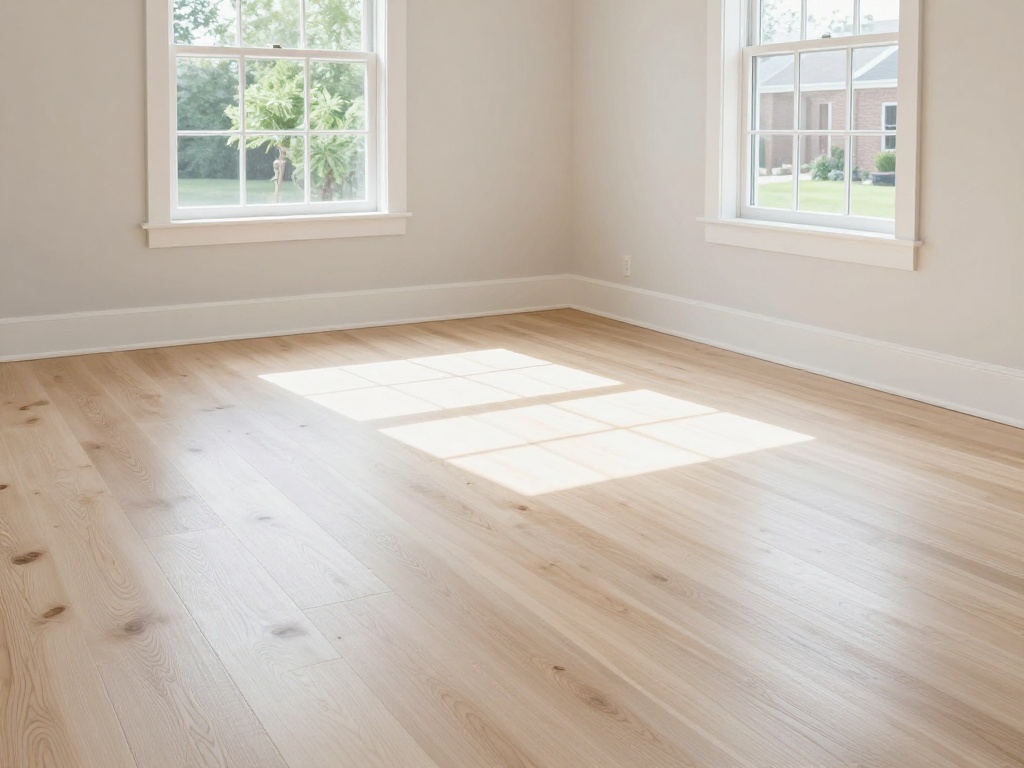
What Is the Healthiest Flooring to Have in Your Home?
The healthiest flooring options are those that emit the fewest volatile organic compounds (VOCs) and are easy to clean without harboring allergens. Solid hardwood finished with low-VOC or water-based finishes is among the healthiest — no synthetic core, easy to clean. Porcelain tile is inert, emits no VOCs, and is the easiest floor surface to clean and disinfect. Cork has natural antimicrobial properties and low VOC emissions. FloorScore-certified LVP meets strict indoor air quality standards and is appropriate for Northern Virginia's concrete slab homes. Carpet has the most nuanced profile — it traps allergens, preventing them from becoming airborne, but requires disciplined maintenance to perform that function without accumulating problematic levels of trapped contaminants.
Indoor air quality (IAQ) is increasingly understood as a significant health factor — the EPA has estimated that indoor air can be two to five times more polluted than outdoor air, with flooring being one of several contributors. The flooring contribution comes primarily from two sources: VOC off-gassing from synthetic materials, adhesives, and finishes during and after installation; and the floor's ability to trap, release, or harbor biological contaminants including dust mites, mold, pet dander, and pollen.
In Northern Virginia, the IAQ context has regional specificity. The region's high summer humidity (frequently 70–90% RH outdoors from June through September) creates mold risk in below-grade spaces and in any flooring installed over poorly managed moisture. The area's red clay soil and high pollen counts (among the highest in the country for oak, grass, and ragweed) mean that outdoor allergens tracked indoors are a consistent presence. And the concrete slab construction common in post-2000 NoVA homes means that adhesive off-gassing — relevant for glue-down products — is a specification consideration.
Flooring Ranked by Indoor Air Quality Health Profile
Every major flooring type ranked by VOC emissions, cleanability, allergen behavior, and Northern Virginia-specific considerations.
Solid Hardwood with Low-VOC Finish
Solid hardwood has no synthetic core — it is wood throughout. Its IAQ profile is determined almost entirely by the finish applied at the factory or in the field. Water-based polyurethane finishes have significantly lower VOC content than oil-based finishes; factory-finished hardwood typically off-gasses less than site-finished hardwood because the factory application allows controlled curing before the floor enters the home.
Hardwood is easy to clean with dry and damp mopping, does not trap allergens in the way carpet does, and does not harbor mold under normal conditions. Its limitation in Northern Virginia: it requires a wood joist subfloor (or moisture testing on concrete), and it responds to the region's summer humidity with seasonal expansion. In pre-war and post-war Northern Virginia homes where hardwood is already present, refinishing with low-VOC water-based finish is the lowest-impact IAQ option — the wood itself is inert after decades of off-gassing.
Porcelain and Ceramic Tile
Porcelain and ceramic tile are inert — they emit no VOCs, contain no organic material that can harbor mold, and are impervious to moisture. Tile is the easiest flooring surface to clean and disinfect, which is why it is the universal specification for healthcare and food-service environments. It does not trap allergens, does not off-gas, and does not respond to humidity.
In Northern Virginia, tile's IAQ advantages are most relevant in bathrooms, kitchens, laundry rooms, and entry halls — the spaces with the most moisture, food traffic, and tracked-in outdoor allergens. The IAQ consideration for tile is the grout: unsealed grout can harbor mold in consistently wet areas (bathroom floors and shower surrounds). Epoxy grout or properly sealed Portland cement grout eliminates this risk.
Cork Flooring
Cork has natural antimicrobial properties from suberin, the waxy substance in its cell walls, which inhibits the growth of mold, mildew, and bacteria. It is hypoallergenic, does not off-gas significantly, and provides the additional benefit of being the most joint-friendly rigid flooring available. Cork flooring certified by FloorScore meets IAQ standards for VOC emissions.
The Northern Virginia limitation: cork is not waterproof and is not appropriate for concrete slab installations without careful moisture vapor management. It performs best in above-grade wood joist subfloor rooms — bedrooms and living areas in pre-war and post-war NoVA homes are the correct application.
FloorScore-Certified LVP
LVP's IAQ profile varies significantly by product quality and certification. FloorScore-certified and GREENGUARD Gold-certified LVP has been independently tested and confirmed to meet strict VOC emission limits. Budget LVP without certification may contain elevated levels of phthalate plasticizers or other compounds that off-gas into indoor air — this is the segment of the LVP market where IAQ concerns are legitimate.
Certified LVP is the most practical specification for Northern Virginia's concrete slab housing stock — its waterproof core is appropriate for slabs, it is easy to clean, and when certified, its IAQ profile is acceptable for most households. Off-gassing of new LVP peaks in the first 72 hours after installation and dissipates rapidly with ventilation. Running windows open and ventilation fans during and for three days after installation is the most effective mitigation for any residual off-gassing.
Carpet — The Most Misunderstood IAQ Story
Carpet is commonly assumed to be the worst flooring choice for indoor air quality and allergy sufferers — but the evidence is more complex. Carpet does trap allergens, dust mites, pet dander, pollen, and particulates. But this trapping function also prevents those particles from becoming airborne, where they are inhaled. Hard floor surfaces that cannot trap particles allow them to be disturbed by foot traffic and air movement, becoming suspended in the breathing zone.
The distinction is maintenance-dependent. Carpet that is vacuumed with HEPA filtration twice weekly and professionally deep-cleaned annually traps and removes allergens effectively. Carpet that is not maintained regularly becomes a reservoir — trapped allergens accumulate until disturbance releases them. The practical answer for Northern Virginia allergy sufferers: hard floors with regular wet mopping, or carpet with disciplined HEPA vacuuming and annual professional cleaning. The floor itself is less important than the maintenance regime.
The Northern Virginia humidity context adds one important caveat: carpet installed in below-grade or poorly ventilated spaces where summer humidity exceeds 60% RH is a mold risk. Carpet is not appropriate for Northern Virginia basements or below-grade rooms without robust dehumidification.
Most flooring and allergy guides state simply that carpet is bad for allergy sufferers and hard floors are better. The research does not consistently support this. A widely cited Swedish study found that the rise in allergies in Sweden correlated with the decline in carpet use — suggesting that hard floors, which release trapped particles into the air more readily, may expose allergy sufferers to more airborne allergens than carpet does.
The honest guidance: for households with allergy sufferers, the most important variables are cleaning frequency and method (HEPA vacuuming for carpet, wet mopping for hard floors), humidity control (mold prevention in any flooring), and filtration (HVAC HEPA filtration removes airborne allergens regardless of floor type). The floor type itself is a secondary factor when cleaning and humidity are properly managed.
IAQ Certifications — What to Look For
The certifications that confirm a flooring product has been independently tested for VOC emissions — the most important specifications for indoor air quality.
The most widely recognized IAQ certification for hard surface flooring — LVP, laminate, engineered hardwood, cork, and resilient products. Tests for VOC emissions against California Section 01350 standards. The primary certification Floors and Beyond recommends for any LVP or laminate product specified in Northern Virginia homes.
Meets stricter chemical emission standards than standard GREENGUARD certification — specifically formulated for environments with sensitive populations (schools, healthcare). Products certified to GREENGUARD Gold are appropriate for households with young children, elderly family members, or chemically sensitive individuals.
Sets formaldehyde emission limits for composite wood products — relevant for engineered hardwood, laminate, and any product with an HDF or plywood core. CARB Phase 2 compliance is a minimum threshold; FloorScore or GREENGUARD Gold confirmation is preferable for households with IAQ concerns.
Tests carpet and cushion (pad) for VOC emissions. The "Plus" designation meets stricter limits than standard Green Label. For households with IAQ concerns, specifying CRI Green Label Plus carpet installed over CRI Green Label Plus pad minimizes the chemical contribution of the soft surface installation.
| Flooring | VOC Emissions | Allergen Behavior | Mold Risk | NoVA Slab OK? |
|---|---|---|---|---|
| Solid Hardwood (low-VOC finish) | Very low | Does not trap; easy to clean | Low | No (wood joist only) |
| Porcelain Tile | None — inert | Does not trap; easiest to clean | Low (seal grout) | Yes |
| Cork (FloorScore certified) | Very low | Antimicrobial; does not trap | Low | No (moisture risk) |
| LVP (FloorScore/GREENGUARD Gold) | Low (certified) | Does not trap; easy to clean | Low | Yes |
| LVP (uncertified budget) | Variable — may be elevated | Does not trap | Low | Yes |
| Carpet (HEPA vacuumed, maintained) | Low (CRI Green Label Plus) | Traps allergens — reduces airborne | Low (above grade, dry) | Yes |
| Carpet (poorly maintained) | Low | Allergen reservoir — releases on disturbance | Moderate-high (humid) | Yes |
| Laminate (CARB Phase 2) | Low-moderate | Does not trap | Low | No (moisture risk on slab) |
Floors and Beyond specifies FloorScore and GREENGUARD Gold certified products throughout Northern Virginia — free shop-at-home consultation in Fairfax, Loudoun, Prince William, and Arlington.
Schedule a Free ConsultationFrequently Asked Questions
What is the healthiest flooring to have in your home?
The healthiest flooring options are solid hardwood with low-VOC finish (no synthetic core, easy to clean), porcelain tile (inert, emits no VOCs, easiest to disinfect), cork (natural antimicrobial properties), and FloorScore or GREENGUARD Gold-certified LVP (independently tested for VOC emissions). Carpet has the most nuanced profile — it traps allergens, preventing them from becoming airborne, but requires disciplined HEPA vacuuming and annual professional cleaning to function as an allergen management tool rather than an allergen reservoir.
Is LVP flooring safe and non-toxic?
FloorScore-certified and GREENGUARD Gold-certified LVP has been independently tested and confirmed to meet strict VOC emission limits — these products are appropriate for households with children, allergy sufferers, and chemically sensitive individuals. Uncertified budget LVP quality varies. Off-gassing of new LVP peaks in the first 72 hours after installation and dissipates rapidly with ventilation — open windows and run ventilation fans during and for three days after installation.
Is carpet bad for indoor air quality?
Carpet's IAQ relationship is more nuanced than commonly assumed. Carpet traps allergens and particles, preventing them from becoming airborne — which can reduce inhaled allergen exposure compared to hard floors where particles are disturbed by foot traffic. The key variable is maintenance: HEPA-vacuumed carpet twice weekly plus annual professional deep cleaning traps and removes allergens effectively. Poorly maintained carpet accumulates allergens until disturbance releases them. For below-grade Northern Virginia spaces where summer humidity exceeds 60%, carpet is not appropriate — mold risk is the primary concern.
// Free Consultation · Northern Virginia
Specify the Healthiest Floor for Your Northern Virginia Home.
Floors and Beyond recommends FloorScore and GREENGUARD Gold certified products and advises on the full IAQ picture — subfloor moisture, adhesive selection, ventilation, and finish specification. Free shop-at-home consultations throughout Fairfax, Loudoun, Prince William, and Arlington. Since 1987.
Schedule a Free Consultation



