
Refinishing a hardwood floor is one of the few home projects that can change the entire feel of a house in a matter of days. The boards stay the same, the layout stays the same, but a new color can make a dark room feel brighter, an older home feel current, or a modern home feel warmer. It is also one of the decisions homeowners worry about most, because the color goes on every square foot of the floor and it is not something you want to redo next year.
Most of the anxiety comes from the same experience. You pick a color from a small sample chip or a photo online, and it looks perfect. Then you see it on your actual floor and it reads redder, darker, grayer, or more yellow than you expected. That gap between the sample and the result is not bad luck. It happens because the color of a refinished floor depends on several things working together: the species of wood, the age of the wood, how it is sanded, the stain, the finish, and the light in your home.
This guide walks through each of those factors so you can choose a hardwood floor refinishing color with confidence, and explains how we test colors on your own floor before anything is committed.
Start With the Wood You Have
The single biggest influence on your final color is the wood species under your feet. Stain does not paint over wood. It soaks into it, and every species absorbs stain differently and carries its own natural undertone.
Red oak is the most common hardwood in Northern Virginia homes, especially those built from the 1940s through the 1990s across Fairfax, Arlington, Vienna, Springfield, and Burke. Red oak has an open, porous grain that takes stain readily and evenly. Its natural undertone is warm, with pink and red tones that show through lighter stains. That is why a gray stain on red oak can turn out looking slightly purple or muddy, and why a natural finish on red oak often looks more pink than people expect. Red oak is very forgiving with medium and darker browns, and it handles most traditional colors beautifully.
White oak has become the favorite for new installations and higher-end homes in places like McLean, Great Falls, and the newer luxury communities in Loudoun County. White oak has a tighter grain and a cooler, more olive or tan undertone. It takes modern colors such as natural, light brown, and gray far better than red oak does, and it is the species behind most of the light, Scandinavian-style floors you see in design magazines. If your heart is set on a cool, neutral floor, white oak makes that much easier.
Heart pine and other pine floors show up in older homes in Alexandria, Old Town Manassas, Leesburg, and Waterford. Pine is soft and has an uneven density, which means it can absorb stain in a blotchy way if it is not handled carefully. Pine also ambers naturally over time, deepening to a rich orange-gold. Many owners of historic homes choose to keep pine close to its natural color, or use a conditioner and a carefully tested stain to avoid blotching.
Maple is dense and closed grained. It is notoriously difficult to stain evenly and tends to look blotchy with darker stains. Maple floors usually look best with a clear finish or a very light tint.
Engineered hardwood can be any of these species on top, but the thickness of the wear layer matters. A thin wear layer may limit how aggressively the floor can be sanded, and that affects how evenly a new color can be applied.
If you are not sure what species you have, a flooring professional can usually identify it by looking at the grain on a sanded board. Knowing your species narrows your color choices before you ever look at a sample.
Account for Age and Previous Finishes
Wood changes color as it ages. Oak darkens and warms. Pine ambers. Cherry deepens dramatically. Once a floor is sanded down to bare wood, much of the surface patina is removed, but older wood will still often read slightly warmer than brand new wood of the same species.
The previous finish matters too. Many older floors in Northern Virginia were finished with oil-based polyurethane, which yellows and ambers over the years. When that finish is sanded off, homeowners are often surprised by how much lighter and less yellow their floor really is. If you have been looking at a deep amber floor for twenty years, the bare wood underneath may open up color options you did not think you had.
Understand How the Finish Changes the Color
The protective finish that goes over the stain has its own effect on color, and it is easy to overlook.
Oil-based polyurethane adds a warm, amber tone that deepens over time. It makes oak look richer and more golden, and it makes gray stains look warmer than they would otherwise.
Water-based finishes are generally clearer and stay closer to the true stain color. They are the usual choice when a homeowner wants a light, natural, or gray floor to stay that way and not drift toward yellow. Some water-based products are tinted slightly to mimic the warmth of oil if that is the look you want.
Hardwax oils and penetrating oil finishes soak into the wood and give a softer, more matte, natural look. Their color effect varies by product.
Sheen matters as well. A matte or satin sheen makes color look softer and hides wear and dust well, which is why matte and satin are the most popular sheens in Northern Virginia homes today. A semi-gloss or gloss sheen reflects more light, which can make a color look lighter in some spots and darker in others depending on the angle.
When you look at a sample, make sure it was finished with the same type of finish and sheen you plan to use. A stain sample without a finish coat will not match the final floor.
Look at the Light in Your Home
Light changes color, and the light in your home is different from the light in a showroom or on your phone screen.
North-facing rooms get cooler, bluer light. Floors in these rooms can look a bit grayer and darker than you expect. Warm stains help keep a north-facing room from feeling cold.
South and west-facing rooms get warm, strong light, especially in the afternoon. Floors in these rooms can look lighter and more golden, and strong sun can make a very dark floor show every speck of dust.
Artificial lighting makes a difference too. Warm-white bulbs push floors toward yellow and orange. Cool-white or daylight bulbs push them toward gray and blue. If most of your time in a room is in the evening, look at your samples under your own lighting at night as well as during the day.
Big windows, open floor plans, and two-story family rooms common in Ashburn, Brambleton, and South Riding homes flood floors with light, which tends to make colors read lighter overall. Older homes with smaller windows and more enclosed rooms in Arlington and Falls Church often benefit from lighter colors that bounce light around.
Think About the Whole Room, Not Just the Floor
The floor is the largest surface in most rooms, and it works with everything around it. Before you choose, take stock of what is staying.
Cabinets and trim. If you have white cabinets and trim, almost any floor color will work, but medium and warm browns create a classic contrast. If you have wood cabinets, you will want the floor either clearly lighter or clearly darker than the cabinets, rather than close enough to look like a mismatch.
Walls and furniture. Cool gray walls pair well with natural, light brown, or cool brown floors. Warm beige and greige walls pair well with warmer browns. Furniture that is staying should be considered, especially large pieces such as a dining table or a sectional.
Adjacent floors. If your hardwood meets tile, stone, or another wood floor, the refinished color should look intentional next to it.
Stairs and railings. If your stair treads and handrails are wood, decide early whether they will be refinished to match the floor. In many Northern Virginia colonials and split-levels, the stairs are the centerpiece of the entry, and a mismatch is noticeable.
Practical Considerations: Dirt, Pets, and Daily Life
Color is not only about looks. It also affects how much the floor shows everyday life.
Very dark floors, such as ebony and espresso tones, look dramatic but show dust, pet hair, footprints, and fine scratches more than any other color. In a busy household with dogs and kids, a very dark floor can feel like it needs constant cleaning.
Very light floors, such as natural white oak or whitewashed tones, hide dust and light scratches well but can show dark dirt, tracked-in mud, and spills.
Medium browns are the most forgiving. They hide dust, hair, light scratches, and dirt better than either extreme. This is why medium tones remain the most popular choice for family homes across Fairfax, Loudoun, and Prince William counties.
Gray floors were very popular in the last decade and still suit some modern homes, but warmer, more natural tones have become the dominant direction. If you are refinishing with an eye toward resale in the next several years, a natural or medium warm tone is the safest choice for broad appeal.
Popular Refinishing Colors in Northern Virginia Right Now
Trends shift, but these are the colors we see homeowners choose most often today.
Natural or clear. The wood's own color with a clear finish. On white oak, this gives a light, fresh, modern look. On red oak, it gives a warm, slightly pink, classic look.
Light to medium warm browns. Soft, natural-looking browns that warm up a space without darkening it. These work across almost every home style.
Classic medium browns. Traditional, versatile, and forgiving. Popular in colonials and traditional homes in Burke, Springfield, Centreville, and Chantilly.
Rich dark browns. Dramatic and elegant in formal dining and living rooms, with the caveat that they show dust and wear more.
Soft gray-browns and greige. A middle ground for homeowners who want a contemporary feel without a cold gray. Best on white oak.
How We Test Colors on Your Floor
The only reliable way to choose a hardwood floor refinishing color is to see it on your own floor, in your own light. That is how Floors and Beyond VA handles every color decision.
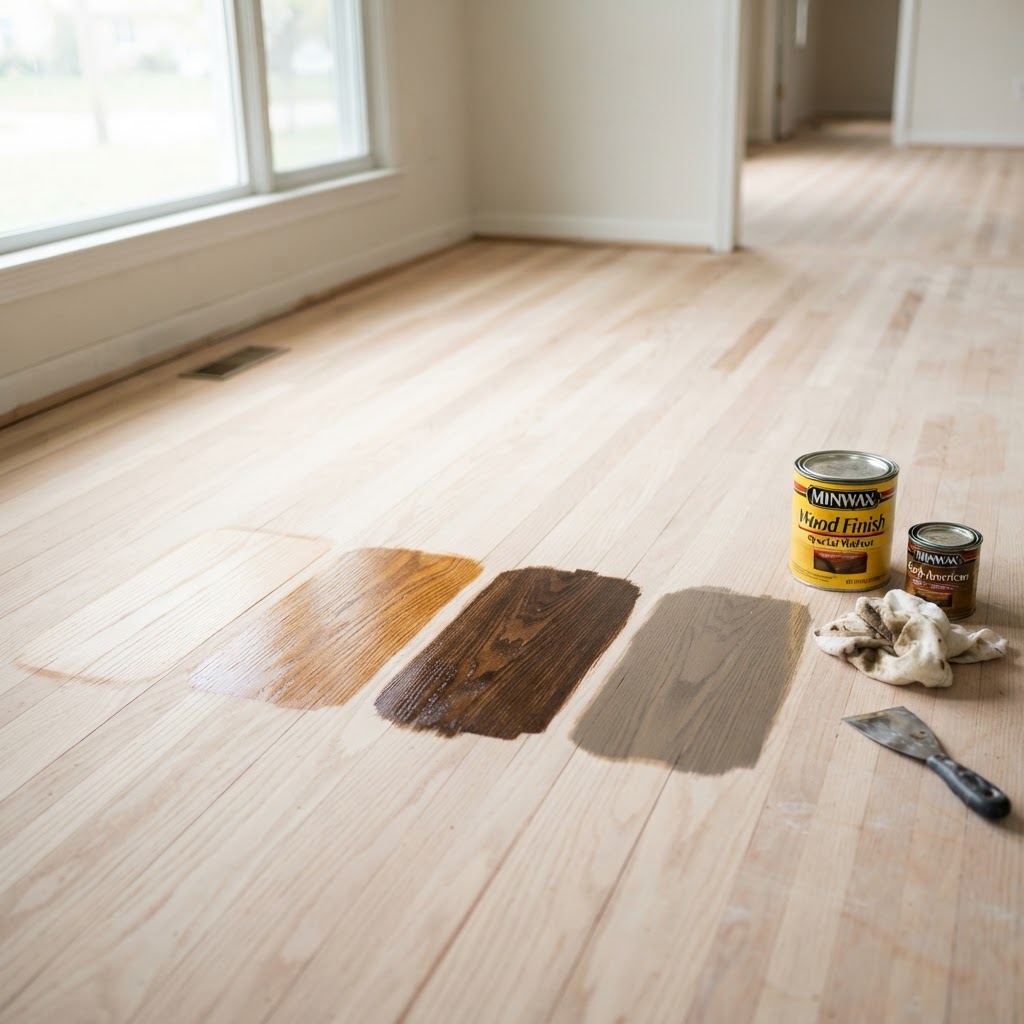
After the floor is sanded to bare wood, we apply several sample colors directly to the floor, usually in a visible area of the main room. Each sample is prepared the way the final floor will be, so you are seeing a realistic result. We typically suggest a handful of options based on your species, your goals, and the room.
Then we ask you to look at the samples at different times of day and under your own lighting. Walk past them in the morning and again in the evening. Stand back from them as well as up close, because a floor is seen from across the room far more often than from a foot away. Some homeowners like to place a cabinet door, a throw pillow, or a paint chip next to the samples to see how everything works together.
It is also worth remembering that a small sample often looks darker and more intense across a large floor. Many people choose one shade lighter than their first instinct, and they are usually glad they did.
Once you have chosen, we stain and finish the floor with the same products used for your sample, so what you approved is what you get.
Common Color Mistakes to Avoid
After decades of refinishing floors across Northern Virginia, we see the same handful of mistakes come up again and again. Avoiding them is half the battle.
Choosing from a photo or screen. Phone and computer screens shift colors, and photos are edited and lit to look their best. A color that looks warm and natural online can read orange or gray in person. Use photos for inspiration, then confirm on your floor.
Ignoring the species. Asking for a white oak look on a red oak floor is the most common source of disappointment. Red oak's pink undertone will always be part of the result. A good refinisher can get you close to a modern neutral on red oak, but it will not look exactly like the white oak in a magazine, and it is better to know that before you start.
Going too dark in a busy house. Dark floors are beautiful on the day they are finished. In a home with a large dog, young kids, and a back door to the yard, they can be frustrating within a week. If you love a dark floor, consider a rich medium-dark brown rather than an ebony tone.
Forgetting the stairs and adjoining rooms. A new color in the living room can make an unrefinished hallway or staircase look tired and mismatched. Plan the color across every connected space at once.
Chasing a trend you do not actually like. Gray floors were everywhere a decade ago, and many homeowners who chose them now wish they had picked something warmer. Choose the color you will be happy living with, not just the one that is popular this year.
Deciding in one viewing. Colors look different in morning and evening light. Give yourself at least a day with the samples before you decide.
Blending Refinished Floors With New Hardwood
Many refinishing projects in Northern Virginia also involve some new hardwood, such as when a wall is removed, a kitchen is opened up, or carpeted rooms are converted to wood. The color decision has to account for both the old and new boards.
New wood and old wood of the same species will not take stain identically at first, because the old wood has aged. Sanding both to bare wood at the same time and staining them together brings them much closer. Weaving the new boards into the old rather than butting them along a straight line also helps the transition disappear. Medium tones tend to blend old and new wood more successfully than very light natural finishes, which can show the age difference more.
When to Keep It Natural
Not every floor needs a stain. If you have beautiful white oak, a natural finish can be stunning and timeless. If you have historic heart pine, the natural amber color is part of the home's character, and many owners of older homes in Alexandria and Leesburg choose to preserve it. If you plan to sell and want the broadest appeal, natural and light warm tones are a strong choice. And a natural floor is easier to touch up and blend later than a heavily stained one.
Let Floors and Beyond VA Help You Choose
Choosing a hardwood floor refinishing color should feel exciting, not stressful. Floors and Beyond VA has been refinishing hardwood across Northern Virginia since 1987, and our in-house crews have worked with every species and style of home in the region. We help you understand what your wood will do, show you real samples on your real floor, and finish the job with the exact color and finish you approved.
If you are planning to refinish your floors and want help choosing the right color, book a free in-home estimate with Floors and Beyond VA at floorsandbeyondva.com/Contact. We will look at your floors, your light, and your home, and help you find a color you will love for years.

