Floors and Beyond · Northern Virginia
Gray Hardwood
Floors.
What Nobody
Tells You First.
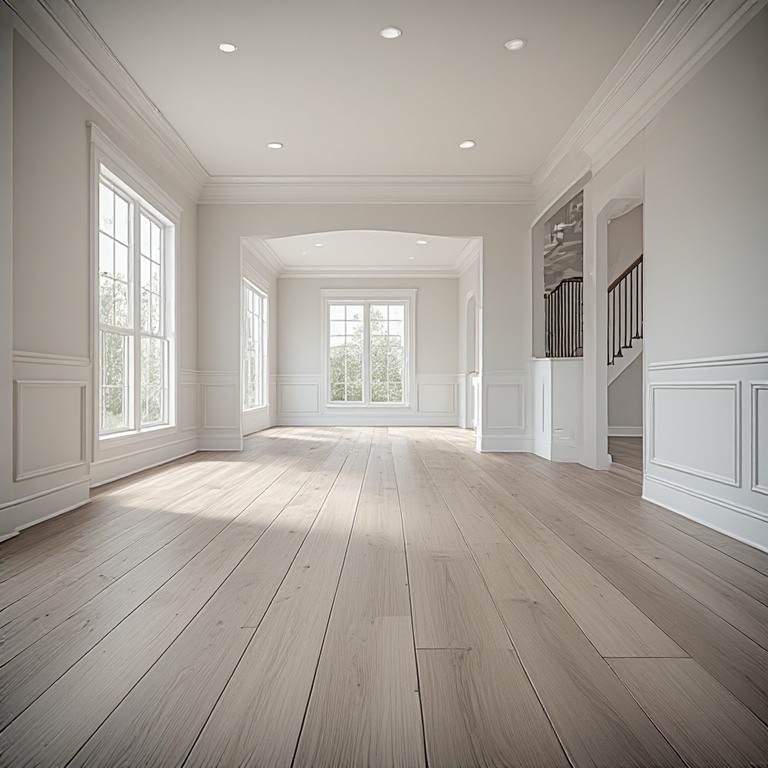
Gray hardwood is one of the most searched flooring decisions in Northern Virginia. It's also one of the most misunderstood — especially in a region where red oak dominates and sunlight varies dramatically by county.
Here's the thing about gray hardwood floors that most flooring content won't tell you: the most common wood species in Northern Virginia homes actively resists going gray. Red oak — the narrow-strip flooring in most Fairfax County colonials, most Loudoun County homes built before 2005, and much of Prince William and Arlington County's housing stock — has warm pink and orange undertones embedded in its grain. Gray stain applied over red oak without understanding this interaction doesn't produce gray floors. It produces floors with a greenish or purplish cast that was nobody's intention. Floors and Beyond has spent nearly 40 years navigating this conversation across Northern Virginia. This guide gives you the full picture before you commit.
The Gray Hardwood Problem Nobody Mentions
Gray hardwood floors look the way they do in showrooms and design magazines because those floors are almost universally photographed on white oak, European oak, or ash — species with naturally cool, neutral undertones that take gray stain cleanly. The gray stain goes on, the wood accepts it, and the result looks like the Pinterest image that started the conversation.
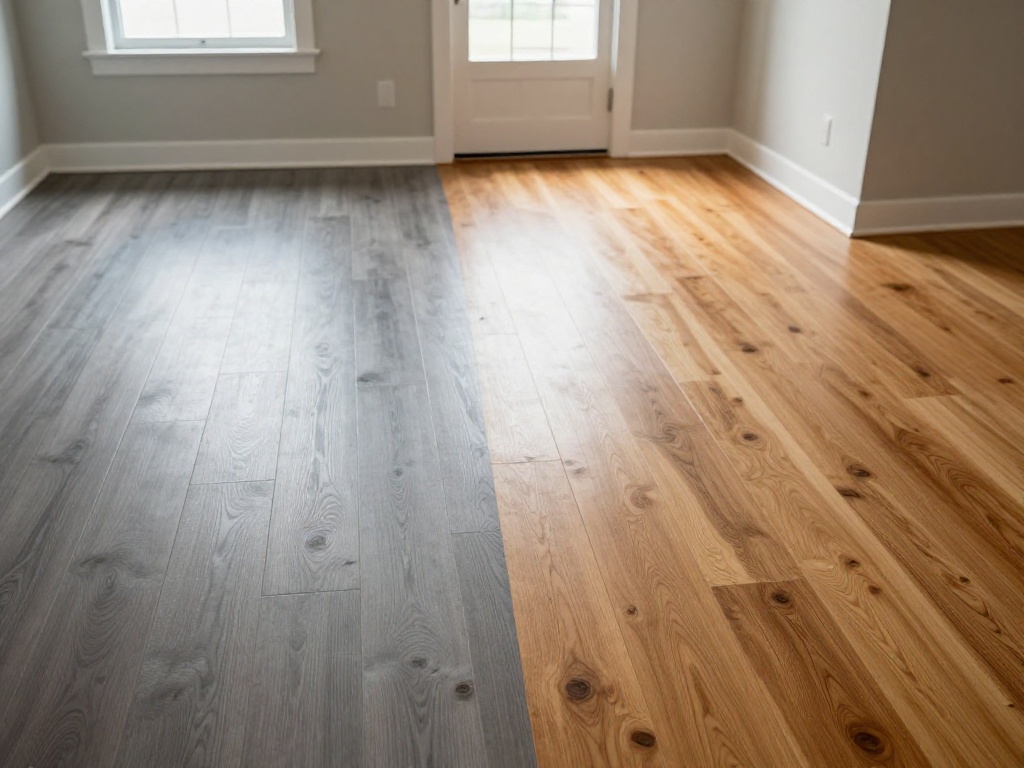
Red oak behaves differently. The warm, slightly pink and orange undertones in red oak's grain don't disappear under gray stain — they interact with it. The gray pigment mixes visually with the wood's natural warmth, and the result is frequently a floor with a muted lavender, olive, or brownish-gray cast rather than the clean cool gray the homeowner wanted. This is not a product defect. It is a material science interaction that a skilled contractor knows to anticipate — and that most flooring salespeople at big box stores never mention.
⚠ The Red Oak Reality — Northern Virginia's Most Common Hardwood
"Most of the hardwood floors we encounter in Fairfax County colonials, older Loudoun County homes, and Prince William County properties built before the mid-2000s are red oak. When a homeowner in these communities wants gray floors, the first conversation is always about species — because gray on red oak without the right preparation and stain selection will produce a color that surprises them. We show samples on their specific floor before committing to anything."
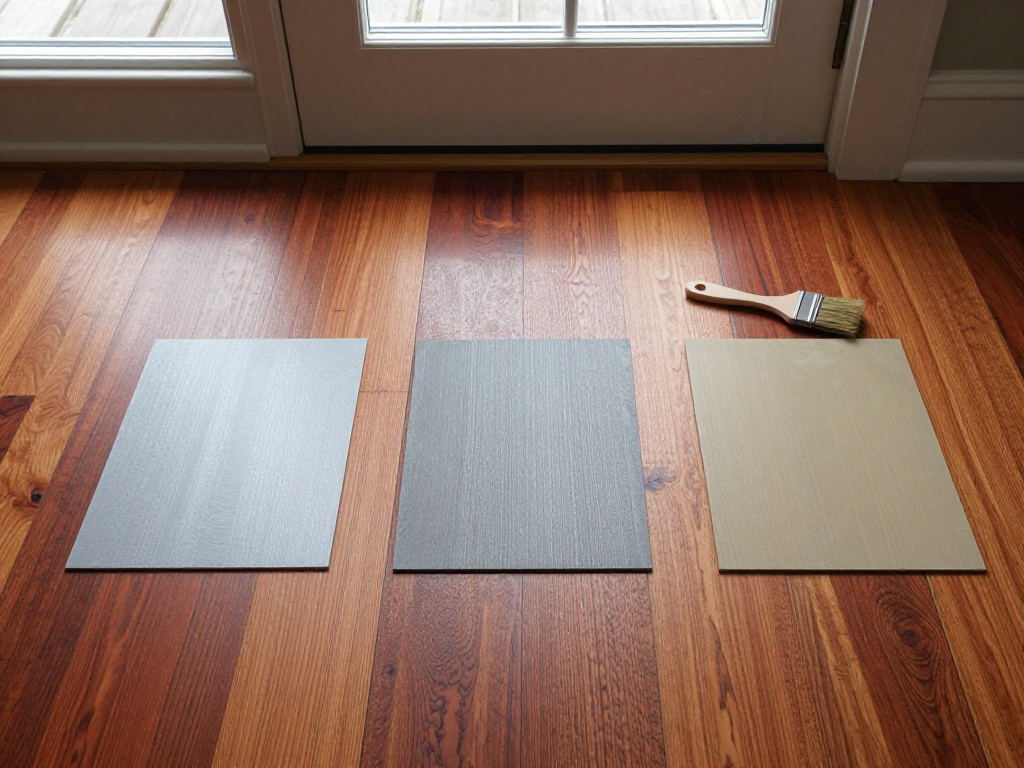
The solution is not to avoid gray on red oak — it's to understand the process that makes it work. A light wood conditioner that neutralizes some of the pink undertone, followed by a specifically formulated gray stain designed for warm-toned species, followed by a water-based finish that doesn't add amber warmth, can produce beautiful gray results on red oak. It requires more steps and more expertise than gray on white oak. The result is achievable — but it demands honesty about what's involved.
The Three Categories of Gray — Which One Are You Actually After?
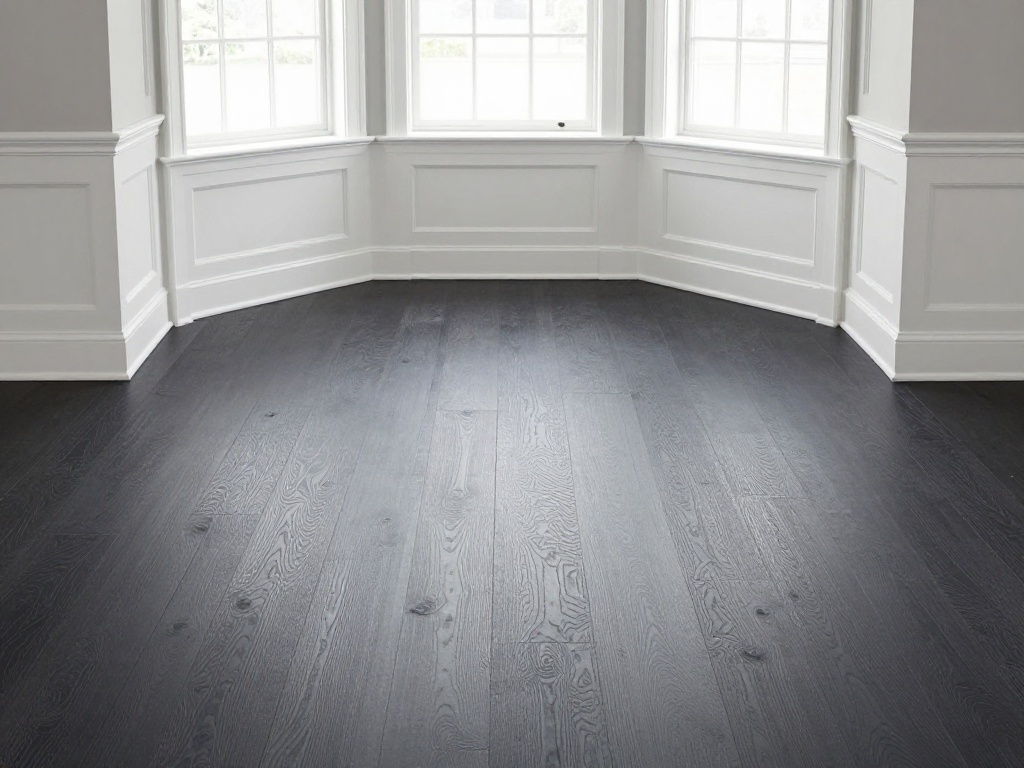
Gray hardwood is not one color. The spectrum from cool silver-gray to warm greige to deep charcoal involves entirely different stain formulations, different wood preparations, and different end results in different lighting conditions. Before specifying anything, Floors and Beyond establishes which of these three categories the homeowner actually wants.
Which Wood Species Takes Gray Best
Species selection is the most consequential decision in a gray hardwood project. Here is the honest assessment of every species Floors and Beyond works with in Northern Virginia homes.
How Light Conditions in Northern Virginia Affect Gray Hardwood
Gray hardwood doesn't look the same in every room or every county. The direction of your windows, the position of your home relative to the sun, and the specific micro-environment of each Northern Virginia community all affect how gray reads in your space. Floors and Beyond accounts for this in every gray hardwood consultation.
Loudoun's new construction in Ashburn, Brambleton, and Sterling frequently features south and west-facing open plans with substantial natural light. Warm afternoon light reads yellow-orange, which amplifies any warmth in a gray stain. Cool gray in a south-facing Loudoun great room can shift toward olive or gold in afternoon light. Greige or warm gray is the specification that remains consistent throughout the day. Floors and Beyond brings stain samples to Loudoun consultations specifically to assess afternoon light behavior.
Fairfax County's mature colonial and split-level housing stock has more varied light conditions than any other county in the region. North-facing formal rooms in 1970s and 80s colonials read gray beautifully in cool tones. South-facing family rooms in the same home need warmer gray to hold consistently. The compartmentalized floor plan means each room should be assessed independently. Gray in the dining room may behave completely differently from gray in the adjacent living room if their window orientations differ.
Arlington's urban density, tree canopy, and north-facing orientations common in its historic residential neighborhoods create cooler, more diffuse light conditions than the suburbs. Cool gray hardwood in an Arlington colonial or cape cod with mature trees outside the windows looks exactly like the design magazine photos — the light doesn't fight the stain tone. For Arlington homeowners, cool gray is a more viable specification than in Loudoun or Prince William County's sunnier new construction environments.
Prince William County's wide housing range — from Manassas's historic stock to Woodbridge's 1980s subdivisions to Gainesville's newer construction — means the species conversation is more important here than in any other county. Historic homes in Manassas and Occoquan with heart pine or old-growth oak require the most careful gray stain approach. Newer construction in Gainesville and Haymarket with white oak or engineered hardwood gives the most latitude. Prince William consultations always start with species identification before discussing gray categories.
The Questions Every Northern Virginia Homeowner Actually Has About Gray Hardwood
Will gray hardwood show dirt and dust more than other colors?
Yes — more than dark floors, less than very light floors. Gray sits in the middle of the visibility spectrum for dust and everyday debris. Pet hair shows more on gray than on medium brown tones. The trade-off most homeowners find acceptable: gray shows less of the dramatic scratches that show more on dark floors.
Will gray hardwood go out of style?
The coolest, most fashion-forward gray tones have the shortest design life — they peak and pass like any fashion trend. Greige and warm gray, which are closer to the natural tone range of the wood, have significantly longer design lives because they're not as precisely tied to a moment. If longevity matters, choose warm gray over cool gray.
Does gray hardwood work with warm-toned cabinets and countertops?
Warm gray and greige hardwood works well with warm wood cabinetry and warm countertop tones — the floor echoes the warmth at a lower saturation. Cool gray with warm cabinets creates a contrast that can work deliberately but requires careful planning. Floors and Beyond brings stain samples to your home specifically so you can see the floor color against your actual cabinets before committing.
Can I change my existing hardwood to gray without replacing the floor?
Yes — if your existing hardwood has sufficient material remaining for a full sand. A refinish removes the existing finish and stain down to bare wood, then applies new gray stain and finish. This is exactly the service that makes gray hardwood accessible to most Northern Virginia homeowners with existing wood floors. The red oak conversation happens at the assessment — if the species is challenging, Floors and Beyond addresses it then.
Finishes That Hold Gray — and Those That Undo It
The finish applied over gray stain is as important as the stain itself. The wrong finish choice can shift the color significantly — introducing warmth that was never part of the plan.
✓ Holds Gray Tone
Water-based finish dries clear without adding warmth. It's the correct finish specification for gray hardwood in Northern Virginia homes because it preserves the stain color as applied. Floors and Beyond specifies water-based poly on every gray hardwood project as a baseline requirement.
✗ Introduces Warmth
Oil-based finish dries with an amber tone that shifts the floor's color significantly toward yellow-brown. On gray stain, this produces a warmer floor than specified — often dramatically so. Oil-based poly should never be applied over gray stain unless the warmth shift is intentional and has been previewed by the homeowner.
✓ Holds Gray Tone
Penetrating oil finishes with no amber tone preserve gray stain color well and produce the most natural underfoot feel. Less protective than polyurethane but repairable by spot application. Popular with homeowners who want the gray tone without the plastic-film look of polyurethane sheen.
✗ Introduces Warmth
High gloss amplifies the reflective quality of whatever warmth exists in the stain, making any residual warmth significantly more visible. Satin or matte finishes are the appropriate sheen specification for gray hardwood — they hold the color more faithfully and show scratches less dramatically in the process.
The Specification That Makes Gray Work
"The gray hardwood projects that look exactly like the homeowner envisioned — without surprises — are the ones where we brought samples, tested on the actual floor, chose a stain formulation matched to the species, and specified water-based finish with a matte or satin sheen. Skip any of those steps and the result is likely to disappoint."
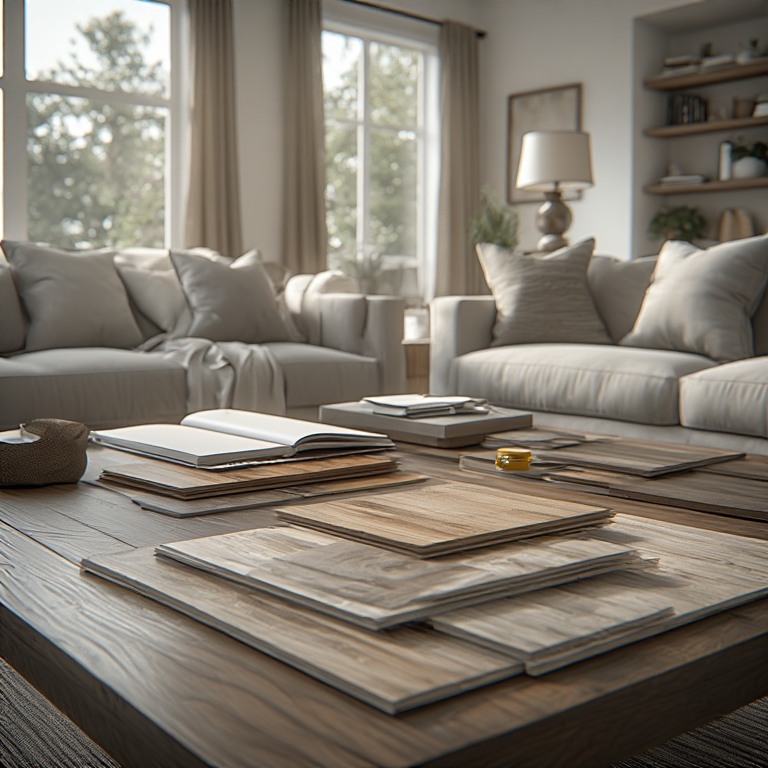
Floors and Beyond brings gray stain samples to your home and tests them on your specific floor before any commitment. Serving Fairfax, Loudoun, Prince William, and Arlington since 1987.
Book a Free ConsultationFrequently Asked Questions
Can I get gray hardwood floors if I have red oak?
Yes — with the right approach. Red oak's warm undertones require a neutralizing wood conditioner before stain application and a gray stain formulation specifically designed for warm-toned species. Greige and warm gray are the most reliable outcomes on red oak. Cool gray is achievable but requires additional preparation steps and should always be previewed on your specific boards before committing. Floors and Beyond has done hundreds of gray refinishes on red oak floors across Northern Virginia. The results are beautiful when the process is correct.
How long does a gray hardwood refinish last?
A properly done gray refinish — correct stain, water-based poly finish, appropriate sheen — lasts as long as any other refinish: typically 7 to 10 years before the finish shows significant wear in high-traffic areas, and potentially longer with consistent maintenance. Gray stain does not fade or shift in color under normal conditions. The floor ages the same way any refinished hardwood does — the finish wears, not the color.
Is gray hardwood harder to maintain than other colors?
Maintenance requirements are identical to any other hardwood — pH-neutral cleaner, dry microfiber, no steam, no wet mopping. Gray hardwood does show certain types of everyday debris more visibly than medium brown tones, but requires no additional maintenance steps as a result. The cleaning routine doesn't change; what changes is the frequency at which you notice debris on a gray surface compared to a brown one.
What does gray hardwood cost compared to standard refinishing?
Gray hardwood refinishing typically costs modestly more than a standard refinish due to the additional preparation steps on species with warm undertones and the premium of water-based finish over oil-based. Floors and Beyond provides transparent estimates at consultation — the cost difference is meaningful but not prohibitive. The sample testing process, which is included in the consultation, prevents expensive mistakes and is part of what you're investing in when working with an experienced contractor.
Free In-Home Consultation · Northern Virginia
See Gray on Your
Actual Floor Before
You Commit to Anything.
Floors and Beyond brings samples, tests them on your specific boards, and gives you an honest assessment of what's achievable. Serving Fairfax, Loudoun, Prince William, and Arlington since 1987.
Book a Free Consultation