
5 Floor Patterns
Trending in 2026 for
Northern Virginia (And One
That's Overdue
for a Comeback.)
What we're actually installing across the region right now — grounded in the specific homes, neighborhoods, and counties of Northern Virginia. Not Pinterest. Not Manhattan. Here.
Most "trending floors" content is Pinterest with a dateline. It lists patterns happening in West Elm showrooms and New York lofts without a single thought for the 2,400 square foot colonial in Fairfax Station or the three-story townhome in Ashburn or the 1940s brick cape cod in Arlington. Floors and Beyond has been installing across these specific homes for nearly 40 years. What follows is what we're actually seeing — and installing — in Loudoun, Fairfax, Prince William, and Arlington Counties in 2026. Some of it aligns with national trends. Some of it doesn't. All of it is grounded here.
Before the patterns: a note on why pattern matters beyond aesthetics. The direction, scale, and layout of a floor doesn't just look different — it changes how a room reads spatially. A pattern that makes a room feel 20% larger is doing real work. Understanding that function is what lets you choose a pattern that serves your home, not just one that photographs well at a showroom.
The 5 Patterns Trending in Northern Virginia in 2026
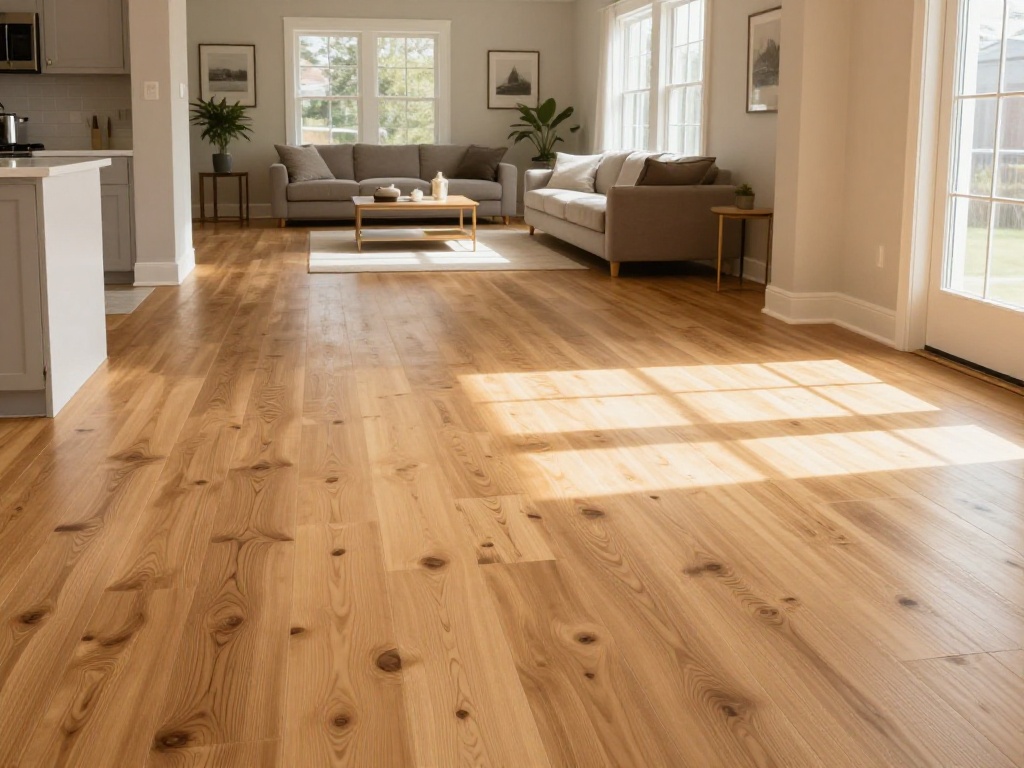
"The floor that gets out of the way so everything else can breathe."
Wide planks — 6 to 9 inches, sometimes wider — laid in a simple straight pattern with warm natural tones (honey oak, warm ash, light walnut) are the single most common flooring specification Floors and Beyond encounters in 2026 Northern Virginia installations. The reason is functional: open-concept floor plans with high ceilings, large windows, and complex furniture arrangements need a floor that anchors the space without competing with everything in it. Wide straight-lay does that better than any other pattern.
The shift from the narrow 2-1/4 inch strip hardwood that defined Northern Virginia homes in the 1980s and 90s to today's wide plank is the most dramatic change in the region's flooring character. The new homes going up in Broadlands, One Loudoun, and Brambleton are almost universally wide-plank. The Fairfax colonials being renovated are moving in the same direction. The pattern itself is simple; the impact is significant.
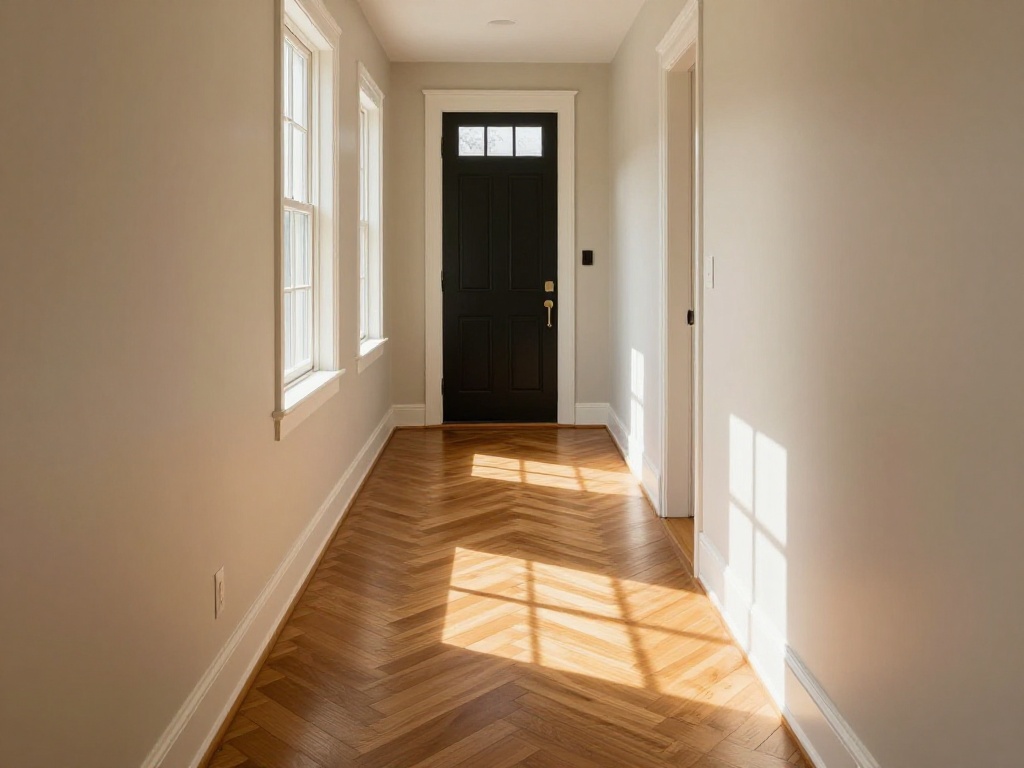
"The pattern that earns its installation premium every single time."
Herringbone — rectangular pieces laid at 90-degree angles to each other in a V-pattern — has existed for centuries. What's changed in 2026 is that LVP now makes it accessible at a fraction of the cost and installation complexity of traditional hardwood herringbone. Floors and Beyond is installing LVP herringbone in Fairfax County entryways and kitchen areas at a pace we've never seen before. The pattern rewards the spaces that get the most visual attention.
In Arlington County's smaller-footprint urban homes and condos, herringbone LVP in a kitchen or bathroom makes a powerful design statement in a modest square footage. In Fairfax colonials, herringbone in the entry hall creates a moment of arrival that straight-lay simply cannot produce. The pattern widens narrow spaces visually — a direct functional benefit for Northern Virginia's common colonial floor plan, where the front entry hall is often the first tight space a visitor encounters.
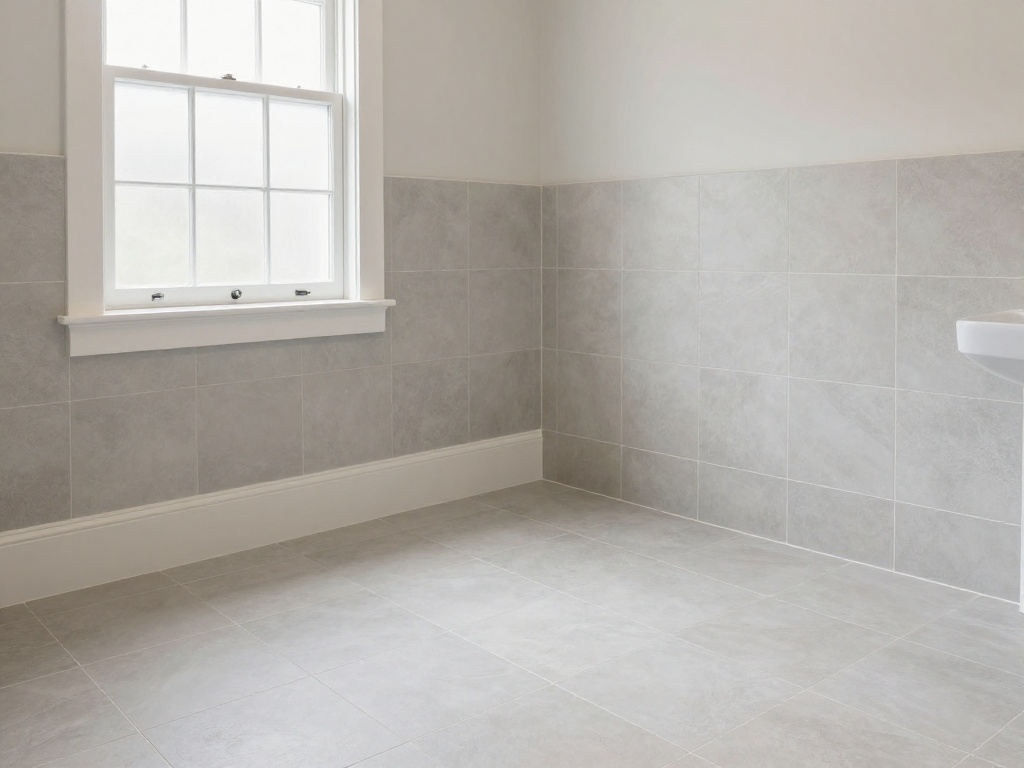
"Fewer lines, more space. The simplest visual trick in tile."
The shift from 12x12 to 24x24 and even 36x36 format tile — with grout lines narrowed to 1/16 inch — is the defining tile trend across Loudoun, Fairfax, Prince William, and Arlington Counties in 2026. The functional reason is straightforward: fewer grout lines means a visually quieter floor, which means a room that reads as larger. In Northern Virginia's bathrooms — which in colonials and townhomes tend to be modest in square footage — this matters enormously.
Large-format tile also reads as more contemporary and more premium than the same material in smaller format. It's not a more expensive material — it's a more expensive installation, because large-format tile requires a significantly flatter subfloor and more precise laying technique. Floors and Beyond has seen the demand for 24x24 and larger tile triple in Fairfax and Loudoun County bathroom renovations since 2023. In Arlington County's condo renovations, 24x48 rectangular large-format is the spec that's defining the most sought-after finishes.
"The pattern that demands the room — and earns it."
Chevron is frequently confused with herringbone by homeowners who haven't seen both installed — but the difference is immediately apparent in person. In herringbone, the pieces are rectangular and meet at 90-degree angles. In chevron, the pieces are cut at an angle (typically 45 degrees) so the pattern forms a continuous V at the meeting point. The result is more graphic, more directional, and more demanding of attention than herringbone. It draws the eye toward the apex of the V.
Chevron requires more precise cutting and more skilled installation than herringbone, which keeps it at a higher price point and in higher-end applications. In Arlington County — where renovation budgets in the Clarendon, Ballston, and Virginia Square corridors support premium specifications — chevron LVP and chevron hardwood are the pattern specification Floors and Beyond sees most in design-conscious clients. In Fairfax County, chevron is appearing in primary bedroom renovations and home office floors where the room is used for video presence and the floor is effectively part of the professional backdrop.
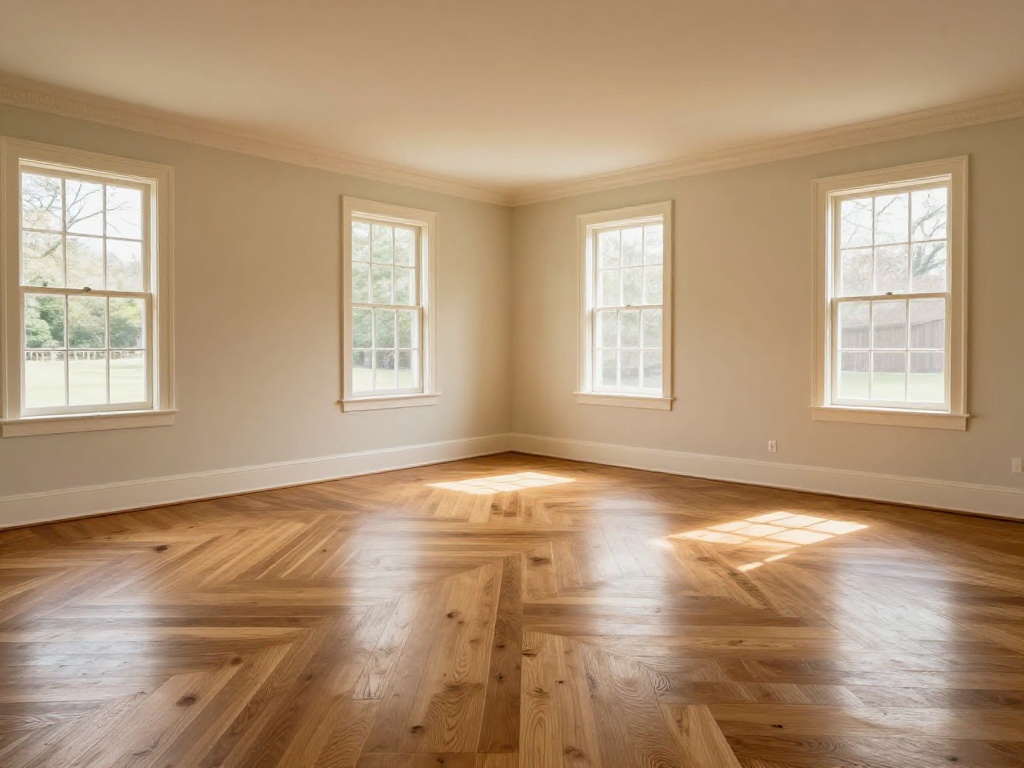
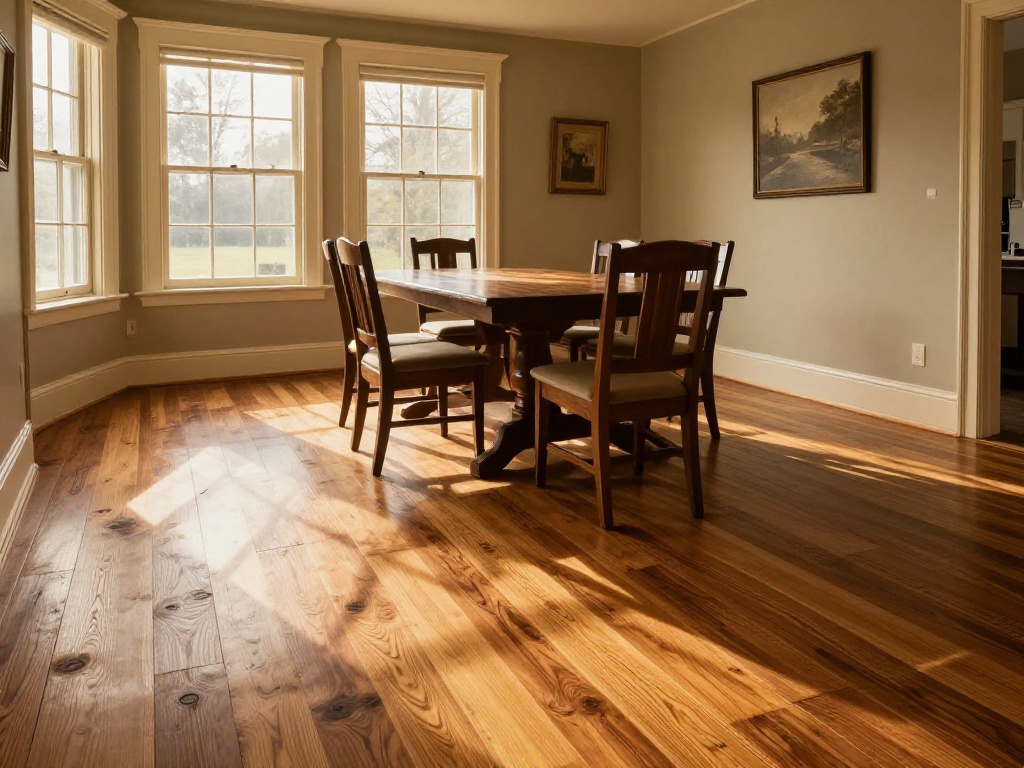
"The pattern that makes a new floor look like it's always been there."
Mixed-width plank — alternating wide and narrow planks in a deliberate but organic-feeling pattern — is the flooring specification that most effectively references historic hardwood without requiring it. Original pre-twentieth century floors were often mixed-width because lumber was milled from whatever width the tree produced, not standardized to a single dimension. The result was a floor with organic rhythm and visual depth that uniform-width modern floors don't naturally replicate.
In Prince William County — where Manassas, Occoquan, and Haymarket contain some of the oldest homes in Northern Virginia — mixed-width plank hardwood or LVP is appearing both as a complement to genuinely historic spaces and as a character-building specification for newer homes that want to feel more established. In Fairfax County, mixed-width is finding its way into Craftsman-style and transitional renovations where homeowners are deliberately moving away from the uniform feel of their original builder floor. Floors and Beyond has specified mixed-width in both engineered hardwood and LVP — the latter particularly in basement and below-grade applications where the aesthetic character of the pattern is wanted without the moisture risk of real wood.
The Comeback: Diagonal Installation
"The single most effective pattern for making a room feel larger — and almost nobody is doing it."
Diagonal installation is exactly what it sounds like: standard flooring planks installed at a 45-degree angle to the walls instead of parallel or perpendicular to them. It was a common specification in Northern Virginia homes built in the 1970s and early 1980s — you'll find it in older Reston townhomes, Fairfax County split-levels, and some of the earlier Prince William County colonials. Then it fell out of fashion in the 1990s and largely disappeared from the specification conversation for three decades.
Its absence from 2026 trend lists is a missed opportunity — because no other pattern more effectively expands the perceived size of a room. When the floor runs diagonally, the eye doesn't stop at the walls the way it does with a pattern parallel or perpendicular to them. The diagonal line pulls the eye toward the corners, which are the widest points of a square room, making the room feel measurably larger. This is a genuine spatial benefit, not a visual trick.
For Northern Virginia's Fairfax County colonials — which tend to have defined rooms rather than open plans, compartmentalized by walls rather than furniture — diagonal installation in a dining room or formal living room creates a spatial expansiveness that straight lay simply doesn't deliver. In Arlington County's smaller urban homes, diagonal tile in a bathroom can make a 60 square foot room read as 80. Floors and Beyond is one of the few contractors in the region actively recommending diagonal installation to clients — because we believe it's the most underutilized pattern in Northern Virginia's flooring vocabulary, and we think 2026 is the year it starts coming back.
Pattern by County: What Floors and Beyond Recommends
Loudoun's new construction boom — Ashburn, Brambleton, One Loudoun, Sterling — means most of the county's flooring conversations are happening in brand-new homes. Wide plank SPC LVP in warm natural tones is the dominant specification. Large format porcelain in primary baths and kitchens is the standard upgrade. Herringbone is appearing in powder rooms and entry foyers as a moment of character in otherwise clean-lined new builds.
Fairfax's mature colonial housing stock is where pattern decisions have the most architectural consequence. Herringbone in entry halls adds the visual character that straight-lay cannot deliver in a compartmentalized colonial floor plan. Wide plank on main levels is replacing the original narrow-strip oak in renovation after renovation. Diagonal installation in formal dining and living rooms is a signature recommendation from Floors and Beyond for Fairfax colonials that need spatial expansion without structural changes.
Arlington's urban density, smaller home footprints, and design-conscious renovation market drives the most pattern-forward specifications in the region. Chevron LVP and herringbone hardwood are the premium specifications in Clarendon and Virginia Square renovations. Large format tile makes small Arlington bathrooms feel significantly larger. Diagonal tile installation — whether in bathrooms, kitchens, or entry areas — is the pattern recommendation Floors and Beyond makes most frequently for Arlington homes where square footage is limited and every visual tool matters.
Prince William's architectural range — from Manassas's pre-Civil War historic stock to Woodbridge and Montclair's 1980s–2000s subdivisions to newer construction in Gainesville and Haymarket — means pattern recommendations vary significantly by neighborhood. In historic Manassas and Occoquan, mixed-width plank is the specification that best honors the character of older structures. In 1980s–90s subdivisions, wide plank and diagonal installation modernize and expand compartmentalized floor plans. In newer construction, the Loudoun County playbook applies.
From the Field
"The pattern conversation we have with homeowners in Northern Virginia almost always starts with 'I just want something classic.' What that means varies enormously by county, by home style, and by room. A classic pattern in a Manassas historic home looks completely different from a classic pattern in an Ashburn new build. Understanding the specific architecture is where the right pattern choice begins."
Not sure which pattern makes sense for your specific home and county? Floors and Beyond consults at no charge — and brings samples to your home.
Book a Free ConsultationFrequently Asked Questions
Does floor pattern choice affect installation cost significantly?
Yes — but the range varies by pattern. Wide plank straight lay costs no more than narrow plank straight lay in labor. Herringbone adds a moderate premium due to additional cuts and more complex layout. Chevron adds a more significant premium because the angle cuts must be precise across every single piece. Diagonal installation adds a moderate premium for the perimeter cuts and the increased waste factor. Floors and Beyond discusses the labor and material implications of every pattern during consultation so homeowners can compare against their design priorities before committing.
Can LVP do herringbone and chevron patterns?
Yes — and this is one of the most significant shifts in the 2026 flooring market. LVP herringbone specifically is being installed at significant volume by Floors and Beyond across Northern Virginia because it delivers the visual character of hardwood herringbone at a substantially lower material and installation cost. The key is selecting LVP specifically designed for herringbone or chevron installation — the planks are shorter, the locking system accommodates the 90-degree joins, and the material thickness supports the additional cut faces. Not all LVP products are appropriate for angular installation. Floors and Beyond specifies the right product for each pattern.
Is diagonal installation practical for a full main level?
Yes — and Floors and Beyond has done exactly this in Fairfax County colonials. The installation cost is moderately higher than straight lay due to perimeter cuts and waste, but not dramatically so. The spatial result — particularly in homes with defined rooms where the diagonal effect works independently in each room — is significant. The most important specification consideration for diagonal installation is consistent direction throughout the main level. If different rooms run at different diagonal angles, the result is confusing rather than expansive. One continuous diagonal across the entire main level reads as intentional and architecturally confident.
What pattern works best in a small Northern Virginia bathroom?
Large format tile with minimal grout lines for the floor if the room is 60 square feet or more. Diagonal tile installation in smaller bathrooms (under 60 square feet) — the 45-degree angle makes the room feel measurably larger. Herringbone tile is also effective in small bathrooms and has the added advantage of adding visual character at a scale that reads well in tight spaces. Floors and Beyond brings tile samples in multiple formats and discusses layout options during bathroom consultation so you can see the difference before the tile is ordered.
// Free Design Consultation · Northern Virginia
Find the Right Pattern
for Your Home and County.
Floors and Beyond brings samples to your home and walks you through pattern options specific to your floor plan, your county, and your home's architecture. Serving Loudoun, Fairfax, Prince William, and Arlington since 1987.
Book a Free Consultation



