
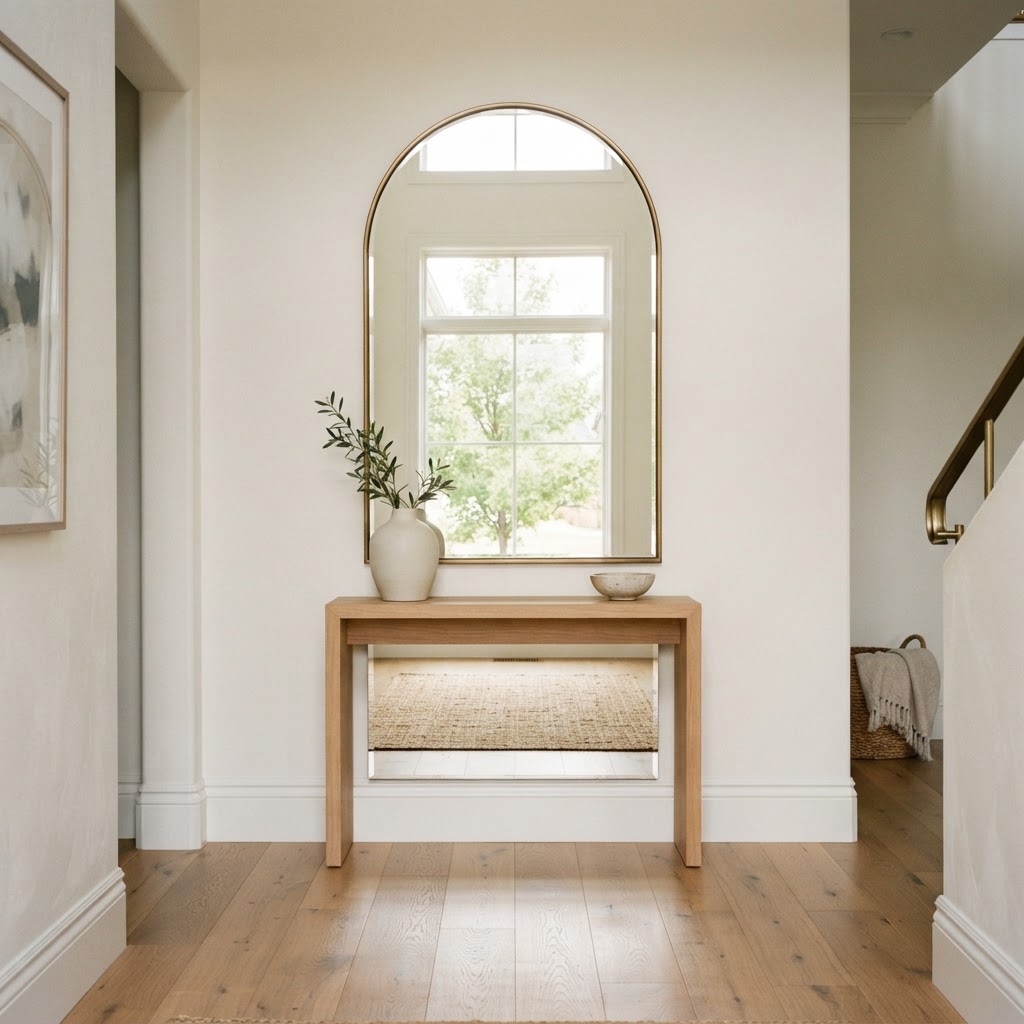
The short answer: choose a mirror by matching its size, frame finish and placement to the room and the flooring. Warm wood or brass frames flatter hardwood, slim black or metal frames suit modern luxury vinyl plank, simple frames keep tile rooms clean, and large mirrors on the wall opposite a window bounce light across any floor. Whether you are buying a mirror for your own home or choosing one to stage a home for sale, the goal is to make the room feel larger, brighter and more complete. If you are planning new floors and want to see how a finish looks with your mirrors and fixtures, contact Floors and Beyond VA for a free in-home consultation and an all-inclusive estimate.
Floors and Beyond VA, a family-owned Northern Virginia flooring and remodeling contractor serving homeowners since 1987, offers free in-home consultations where we show floor samples in your own lighting and can suggest the kinds of mirror finishes that pair well with each floor.
People searching for a mirror for sale or to sell are often renovating, redecorating or preparing a house for the market. All three moments are also when a floor gets noticed. A new floor changes how every other element looks, including mirrors. This guide explains sizes, styles and frame finishes, placement tips for rooms with hardwood, luxury vinyl plank, carpet and tile, buying versus installing, and safety and mounting guidance. We are flooring specialists and do not sell mirrors, so we focus on how to choose and place them, not on specific stores.
Why mirrors and floors affect each other
A mirror reflects what is in front of it, and in many rooms the floor makes up a large part of that view. A large mirror leaned against a wall will show a slice of floor and ceiling. A mirror above a console will reflect part of the room. The color, sheen and pattern of your floor therefore influence what the mirror shows.
Mirrors also bounce light. A floor that looks dark in a corner can brighten when a mirror reflects a window. A glossy floor can double glare. A matte floor takes reflections softly. Thinking about mirrors and floors together helps you avoid surprises.
Sizes and shapes
- Full-length mirrors. Tall mirrors, leaned or mounted, suit bedrooms, dressing areas and entries. They make narrow spaces feel wider and add depth. A leaning mirror should be secured against tipping.
- Wall mirrors above furniture. Over a console, mantel, dresser or sofa, a mirror should be proportional to the furniture below it, usually somewhat narrower than the piece.
- Round and oval mirrors. Soft shapes balance rooms full of straight lines. They work well over vanities and in entries.
- Arched and window-style mirrors. These add architecture. They suit traditional and farmhouse interiors.
- Grouped mirrors. A cluster of small mirrors creates an artistic effect. Spacing and alignment matter.
- Oversized mirrors. In large living rooms or open plans, a very large mirror makes a statement and amplifies light.
As a rule, scale the mirror to the wall space and the furniture. Too small looks timid. Too large can overwhelm.
Frame styles and finishes
- Natural wood. Oak, walnut and other wood frames harmonize with hardwood floors and warm palettes. They add warmth to modern rooms with luxury vinyl plank in wood tones.
- Painted and white frames. Crisp and cottage-like, these brighten rooms and pair with light floors and painted base boards.
- Black and dark metal. Slim black frames feel modern and sharp. They contrast nicely with light oak, gray vinyl and porcelain tile.
- Brass and gold. Warm metals add glamour and pair beautifully with natural wood and warm-toned tile.
- Silver and chrome. Cool metals suit contemporary spaces with gray or white floors.
- Frameless. A clean, bevel-edged mirror suits bathrooms, gyms and minimalist rooms.
- Ornate and antique. Carved frames, gilded details and vintage pieces suit traditional rooms and historic houses.
Match undertones. A warm gold frame near a cool gray floor can clash. A cool silver frame near warm honey oak may feel disconnected. Repeating one finish elsewhere in the room, such as a lamp or cabinet hardware, ties things together.
Pairing mirrors with each floor type
Hardwood
Warm frames, including wood and brass, echo the grain and color. A full-length mirror leaning against a wall on hardwood needs felt pads or a stand to avoid scratching. Dark hardwood benefits from a lighter or metallic frame for contrast.
Luxury vinyl plank
Wood-look planks pair well with black or natural frames. Gray plank suits silver, black or white frames. Remember that leaning heavy mirrors on vinyl can mark or dent the surface, so use protective pads.
Carpet
Carpeted rooms are softer and absorb sound. Mirrors add brightness and a sense of space. Floor mirrors should be stabilized because carpet can make them lean unpredictably.
Tile
In bathrooms, entries and kitchens, frameless or simply framed mirrors keep the look clean. Large mirrors in bathrooms reflect tile patterns and brighten the room. Choose moisture-resistant frames in humid areas.
Placement tips
- Opposite a window. A mirror across from a window bounces daylight deeper into the room. This is especially valuable in rooms with dark floors or limited natural light.
- Perpendicular to a window. A mirror on the side wall catches light without direct glare.
- Above a console in the entry. It gives a last glance as you leave and makes the entrance feel welcoming.
- Behind a lamp or sconce. The reflection doubles the glow.
- In a hallway. A mirror at the end opens the space.
- Avoid mirrors reflecting clutter. A mirror doubles whatever is in front of it. Check what it will show.
- Mind the height. Hang mirrors with the center near eye level, adjusted for the room. In dining rooms, consider seated viewing height.
- Think about the floor reflection. In a room with glossy tile, a low mirror may reflect floor glare. A matte floor offers a softer reflection.
Staging a home for sale
If you are preparing to sell, mirrors are staging tools. They make rooms feel larger and lighter, which is especially useful in small bedrooms, narrow halls and dim basements. Keep styles simple and neutral so buyers focus on the home. Use mirrors to highlight windows and architectural features. Remove excess so rooms feel open.
Updated floors are one of the strongest staging upgrades, and clean base boards and fresh paint complete the picture. Because Floors and Beyond VA handles both flooring and finishing details, we can help sellers decide which updates will make the greatest difference. We give honest advice, not pressure.
Buying versus installing
Many mirrors are simply hung or leaned. Others, such as large wall-mounted mirrors, glass panels in gyms or bathroom mirrors, require careful installation.
Buy and hang yourself if the mirror is lightweight, has hanging hardware and the wall structure is suitable. Use appropriate anchors rated for the weight.
Hire a professional for heavy, oversized or glued-in mirrors, for mirrors above stairs, for mirrors in wet areas and for anything that must be secured to meet safety expectations. Professional installation reduces risk.
Floors and Beyond VA focuses on flooring and remodeling. We do not sell mirrors, and we do not claim to install every type of mirror. If you need a specialist, we are glad to discuss what is possible within our remodeling work and to help you find the right professional.
Where to look for mirrors
We do not name or endorse particular retailers. Mirrors are available through furniture showrooms, home goods stores, antique and consignment shops, local artisans and online sellers. When shopping, compare size, frame material, glass quality, weight, hanging hardware and return policies. For used or antique mirrors, inspect for cracks, silvering damage and sturdy frames. Ask about the weight and the mounting method.
Safety and mounting guidance
- Use proper anchors. Studs and rated anchors support weight. Drywall alone cannot hold a heavy mirror.
- Secure leaning mirrors. Use anti-tip straps or brackets, especially with children or pets.
- Mind the glass. Safety backing can reduce shards if glass breaks.
- Avoid placing mirrors above heat sources. Heat can damage the silvering and frame.
- Watch out for moisture. In bathrooms, choose mirrors designed for humidity.
- Protect floors. Use felt pads under the frame. Place heavy mirrors carefully.
- Never mount over stairs without a professional assessment. Falls and breakage are serious risks.
- Check weight limits. Know what your wall can bear.
Protecting your new floor when moving mirrors
Moving a large mirror across a new floor is a common source of scratches. Lift, do not drag. Use furniture sliders or blankets. Place felt pads under the frame. If you are installing a heavy mirror, protect the floor with a cover. Wait for any new floor finish to cure before moving heavy items. If we have refinished your hardwood, we give specific guidance on how long to wait.
Mirrors in entries, hallways and small rooms
Entries are where first impressions form. A mirror over a console gives visitors a place to check their appearance and makes the space feel larger. In a narrow hallway, a mirror on one wall can double the sense of width. In a small bedroom, a full-length mirror makes the room feel more open. In every case, think about what the mirror will reflect and how the floor looks in that reflection.
Mirrors and natural light across seasons
A mirror that sparkles in summer may look dull in winter light. Position mirrors to catch light from windows during the hours you use the room. If a room has little natural light, mirrors can help by bouncing the light that exists. Pair them with warm lamps and a floor finish that does not absorb too much light.
Moving and storing mirrors during a floor project
During flooring work, mirrors need to be moved out of the way. Wrap them in blankets, store them upright and secure them against tipping. Do not lean mirrors on freshly finished floors. If you are selling, ask your agent about the timing of staging so mirrors return after the floor is fully cured and clean.
Staging principles that help buyers imagine living there
Buyers walk through quickly, so first impressions matter. Clean floors, neutral colors, good lighting and a few well-chosen accessories help them picture themselves in the home. Mirrors should be clean, straight and positioned where they add light. Avoid clutter and personal items. If floors look worn or dated, updating them is often among the most effective improvements before listing. We give honest advice about which rooms matter most, so you do not spend money where it will not be noticed.
Mirrors for different budgets and tastes
Mirrors range from simple frameless panels to elaborate antiques. You do not need to spend heavily to get a good result. A simple, well-proportioned mirror in the right place does more than an expensive piece hung badly. If you love a vintage mirror, enjoy it. If you want a clean, modern look, keep the frame slim and the finish consistent with other metals in the room.
Mirrors in kitchens, living rooms and dining rooms
In a kitchen, a mirror is less common but can work beside a breakfast nook or on a wall opposite a window, adding light to a floor of tile or vinyl. In a living room, a large mirror over a sofa or mantel brings depth. In a dining room, a mirror behind a buffet reflects candlelight and enhances a hardwood floor. Keep mirrors away from direct reflection of harsh lighting and out of the line of kitchen splatter.
A note on cleaning
Clean mirrors with a soft cloth and a mild glass cleaner applied to the cloth, not sprayed onto the mirror edges, where liquid can damage the backing. Keep cleaner off floors, since some products leave films or damage finishes. Wipe up drips right away.
Final thoughts on mirrors and floors
A mirror and a floor are a pair. When one is chosen with care, the other benefits. Test finishes, check what the mirror will show and handle heavy pieces safely. A little planning turns a simple purchase into a design win, and it protects the floor you just invested in.
What drives the scope of a floor update for staging or redecorating
The scope depends on which rooms you update, the type of flooring, the condition of existing floors, the removal of old flooring, transitions, furniture moving and trim. If you are staging for sale, timing and finish quality matter. A written estimate helps you plan.
We take precise laser measurements at no charge and prepare a written, all-inclusive estimate covering old flooring removal, new materials, installation, furniture moving, transitions, molding and cleanup. What we quote is what you pay. Our pricing and policy page explains the details.
Why Northern Virginia homeowners choose Floors and Beyond VA
- Family-owned since 1987. We know local homes and local buyers.
- In-house crews only. Our employees do the work.
- Free in-home consultation with samples. See floors in your lighting.
- Design-minded advice. We help you think about how floors work with the rest of the room.
- Precise laser measurements at no charge. Accurate planning.
- Honest, all-inclusive estimates. No surprises.
- Fully licensed, bonded and insured. You are protected.
- Full-service finishing. We handle trim and details so the floor looks complete.
Floors and Beyond VA helps your floors set the stage for everything else.
Common mistakes when choosing mirrors
- Choosing by size alone. Proportion matters.
- Ignoring undertones. Frames and floors should relate.
- Hanging without anchors. Heavy mirrors can fall.
- Leaning without securing. Tipping is dangerous.
- Reflecting clutter. Check the view.
- Dragging across a new floor. Protect the surface.
- Skipping safety in wet areas. Use moisture-rated mirrors.
Frequently asked questions
Do you sell mirrors?
No. We are a flooring and remodeling contractor. We can advise on how mirrors and floors work together.
Can you install a mirror?
Our focus is flooring and remodeling. Ask us during your consultation and we will tell you honestly what we can do and when a specialist is better.
What mirror is best for a small room?
A larger mirror opposite a window can make a small room feel bigger.
Will a mirror damage my floor?
Not if you use felt pads and handle it carefully.
Do mirrors help sell a house?
They can make rooms look larger and brighter, a plus for staging.
How does lighting affect mirrors and floors?
Our guide to how lighting changes the way your floors look explains color temperature, glare and raking light.
Related resources
Our flooring installation guide explains the installation process, our base boards guide covers the trim details that finish a room, and our overview of flooring installation in Tysons shows how we work in the region.
Ready to update your floors?
Free in-home consultation
Let us visit your home, bring samples and talk through how your floors will work with the rest of the room. You get an honest, all-inclusive estimate covering removal, materials, installation, transitions, molding and cleanup.
Contact Floors and Beyond VAFloors and Beyond VA
Family-owned flooring and remodeling since 1987, serving Northern Virginia
Phone: (703) 906-5698
Web: floorsandbeyondva.com




