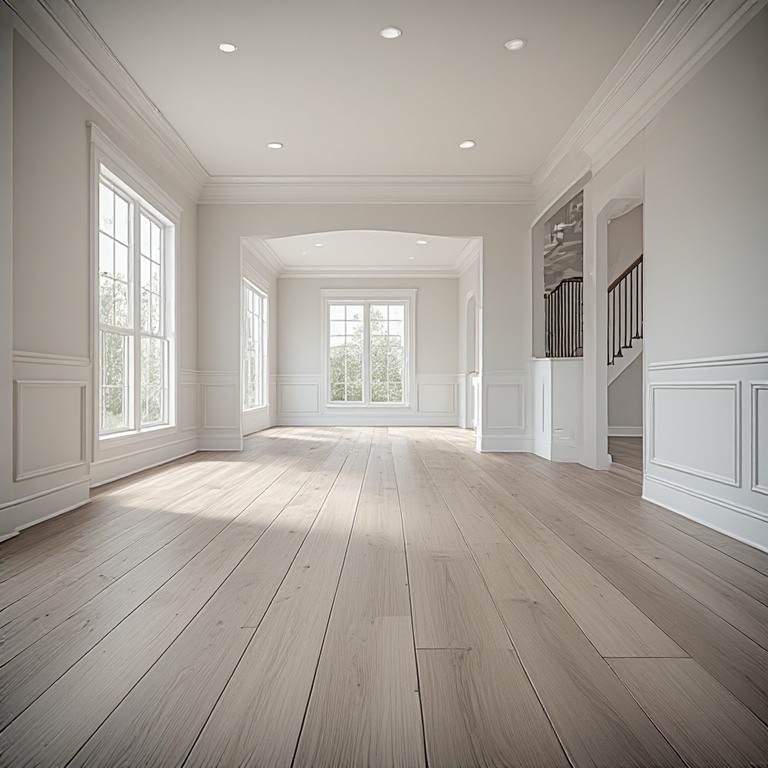

Best Flooring Before Selling · Northern Virginia
Best Flooring Before Selling a Home in Northern Virginia
The right flooring choice before selling a Northern Virginia home depends on the subfloor, the neighborhood, and the buyer expectation. The wrong choice can erase value. The right choice compounds it.
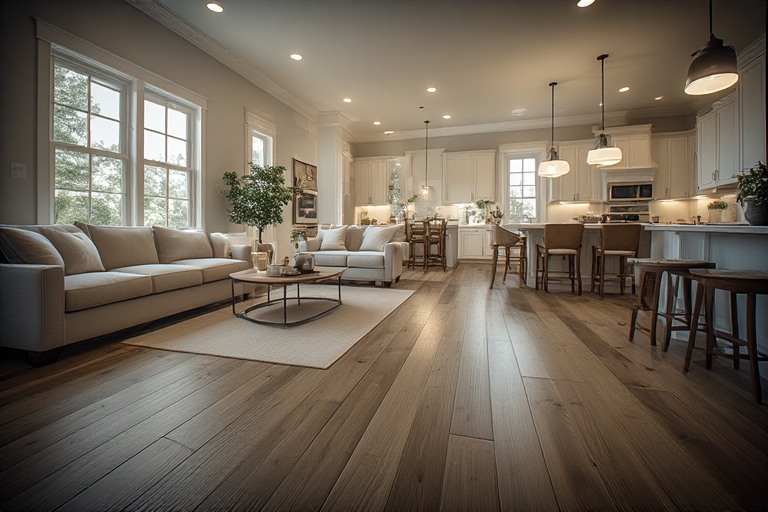
The best flooring before selling a Northern Virginia home is solid 3/4" white oak on wood joist subfloors (pre-war Del Ray, Old Town Alexandria, Clarendon; post-war Burke, Springfield, Fairfax). The highest-value move is often restoring original hardwood hidden under carpet, rather than installing new flooring. On concrete slabs (post-2000 Ashburn, Woodbridge, Herndon, Sterling), engineered hardwood with a wear veneer of 3mm or greater is the value upgrade over SPC LVP, particularly in primary living areas. Hardwood in primary living areas plus carpet in bedrooms (nylon or triexta with 8-lb density pad) is the balanced value choice. In-house crews, no subcontractors, since 1987.
The Subfloor Determines the Strategy
The best flooring before selling a Northern Virginia home is subfloor-dependent. Floors and Beyond VA uses a subfloor-first framework on every pre-sale assessment. The conversation starts with what is under the existing floor, not with a product ranking. Pre-war homes on wood joist subfloors (Del Ray, Lyon Village, Waverly Hills, Rosemont, Old Town Alexandria, Seminary Hill, Clarendon) almost always have original solid 3/4" oak already in place — sometimes hidden under carpet, sheet vinyl, or laminate. Post-war homes on plywood subfloors (Burke, Springfield, Fairfax) also typically have original solid oak. Post-2000 homes on concrete slabs (Ashburn, Woodbridge, Herndon, Sterling) have engineered hardwood or SPC LVP as the original flooring.
The pre-sale strategy follows the subfloor. On wood joist subfloors, the highest-value move is often restoration rather than installation — pull up the carpet, assess the original hardwood, and refinish what is already there. On concrete slabs, the highest-value move is typically upgrading SPC LVP to engineered hardwood with a thick wear veneer in primary living areas.
The honest answer is that the best pre-sale flooring is the right product for the subfloor in question, executed with the right discipline. The wrong product on the wrong subfloor is a recipe for value erosion, regardless of how highly that product ranks in a generic "best of" list.
The Pre-War Discovery
The most valuable pre-sale flooring move in a pre-war Northern Virginia home is often the discovery that original hardwood is still under the carpet. Many Del Ray, Lyon Village, Waverly Hills, Rosemont, Old Town Alexandria, Seminary Hill, and Clarendon homes were carpeted in the 1970s, sheet-vinyled in the 1980s, or laminated over in the 2000s. Beneath those layers, the original solid 3/4" hardwood is frequently intact — sometimes with pet stains and water damage that a professional sanding sequence can address.
Floors and Beyond VA has pulled up dozens of floors in Alexandria and Arlington to find material that no one in the household knew existed. When this happens, the homeowner is often looking at the difference between a full restoration (which is a fraction of the cost of new hardwood installation) and a full replacement. The original material is denser and more dimensionally stable than almost any replacement product available today — slower-growth trees produced tighter grain and superior cell structure.
The pre-war discovery is the highest-value pre-sale move in Northern Virginia. The homeowner gets the resale value of original hardwood without paying for new hardwood installation. The restoration also preserves the historical character that gives pre-war neighborhoods their value. Buyers in Del Ray and Old Town Alexandria recognize the difference between original hardwood and new hardwood, and they reward it.
The Post-War Refinish
Post-war homes in Burke, Springfield, and Fairfax typically have 3/4" solid oak under existing carpet — but the carpet has often been there for decades, and the floor beneath may have stains, pet damage, or adhesive residue that requires more than a simple sand-and-refinish. In some cases, board replacement is necessary. In rare cases, the existing floor is too damaged to restore and a full replacement is required.
The post-war pre-sale refinish still contributes to resale value, even when board replacement is necessary. A solid 3/4" white oak floor in a 1970s Springfield ranch signals quality and updates the home's perceived age. The same home with builder-grade carpet from the 1990s reads as dated, regardless of how well the rest of the home has been maintained. The hardwood conversion updates the home in a way that buyers and appraisers recognize.
Floors and Beyond VA specifies white oak as the first-choice species for post-war replacement, because white oak's tighter grain handles the Virginia humidity swing better than red oak. Wire-brushed or matte finishes are also specified for post-war installations, because the texture hides scratches, dents, and seasonal movement — extending the visible lifespan of the floor by years.
The Post-2000 Upgrade
Post-2000 homes in Ashburn, Woodbridge, Herndon, and Sterling sit on concrete slabs, which do not accept solid hardwood without significant floor build-up. The pre-sale flooring strategy in these homes typically means upgrading SPC LVP to engineered hardwood in primary living areas, or replacing worn LVP with new SPC LVP specified to a 20-mil wear layer.
The resale value contribution is smaller in post-2000 neighborhoods because the buyer expectation is different. A buyer in Ashburn expects LVP or engineered hardwood, because that is what the neighborhood was built with. Replacing bedroom carpet with engineered hardwood is an upgrade that buyers recognize, but the contribution is smaller than the pre-war or post-war contribution on wood joist subfloors.
The honest answer for post-2000 slab homes is that engineered hardwood with a thick wear layer is the value upgrade over LVP, but the upgrade is most valuable in primary living areas rather than bedrooms. Bedroom carpet remains a reasonable choice in post-2000 homes, particularly with the right pad and face weight specifications.
The Bedroom Question
The bedroom question — should carpet be replaced with hardwood before selling — is more nuanced. Bedrooms are lower-traffic areas, and carpet remains a reasonable choice for sound absorption, warmth, and comfort underfoot. The resale value contribution of bedroom hardwood is real but smaller than the contribution of hardwood in primary living areas.
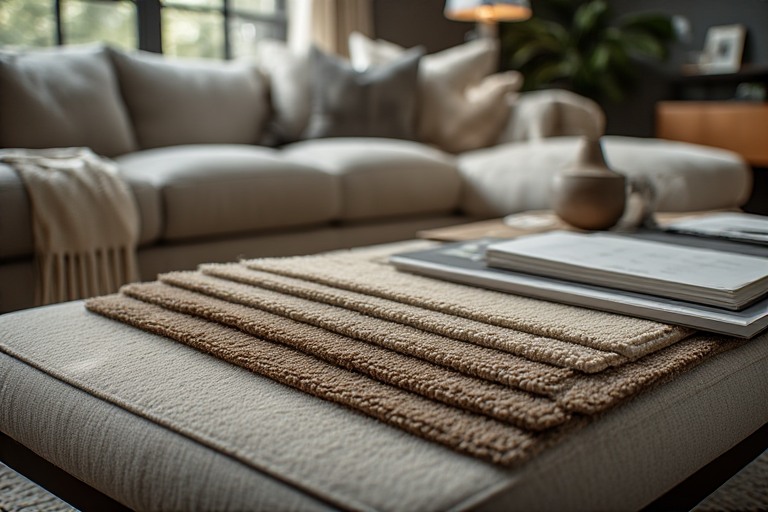
Floors and Beyond VA recommends hardwood in primary living areas (living room, family room, dining room, hallways) and carpet in bedrooms for many NoVA homes. The combination provides the resale value contribution where it matters most, while preserving the comfort and sound absorption that carpet provides in bedrooms. The bedroom carpet specification is nylon or triexta fiber with an 8-lb density pad and 40 oz/yd² face weight minimum.
When a homeowner is replacing carpet with hardwood throughout the home — including bedrooms — the resale value contribution increases, but so does the installation cost. The decision depends on the neighborhood, the home's price point, and the buyer expectation. A pre-war Del Ray bungalow with hardwood throughout sells differently than the same home with carpet in bedrooms. A post-2000 Ashburn townhouse with engineered hardwood in primary living areas and carpet in bedrooms is the expected baseline.
The Appraiser's View
Appraisers in Fairfax, Loudoun, Prince William, and Arlington Counties treat hardwood floors as a quality indicator that contributes to a home's appraised value. The contribution is not a fixed dollar amount — it depends on the neighborhood, the home's price point, and the condition of the floor — but the direction is consistent. Hardwood adds value. Carpet is a neutral in bedrooms and a slight negative in primary living areas.
The appraiser's view is shaped by what buyers in the neighborhood expect. In pre-war neighborhoods, buyers expect original hardwood and reward it. In post-war neighborhoods, buyers expect either hardwood or recently updated flooring. In post-2000 neighborhoods, buyers expect LVP or engineered hardwood and do not discount for LVP.
The lifetime cost calculation — factoring in refinish cycles and resale contribution — typically favors hardwood by a significant margin on wood joist subfloors. Solid 3/4" white oak can be refinished three to four times over a 30+ year lifespan, with each refinish bringing the floor back to like-new condition. Carpet must be replaced every 10 to 15 years. The lifetime cost of carpet, factoring in replacement cycles, is higher than the lifetime cost of hardwood on a wood joist subfloor, even before considering the resale value contribution.
Why In-House Crews
Floors and Beyond VA does not use subcontractors. Every pre-sale flooring project, every restoration, every installation is performed by an in-house employee supervised on-site. This structure matters because pre-sale work is high-stakes — the homeowner is investing in resale value, and a careless installation can erase the value contribution.
An in-house crew answers to the company that sold the job. The company answers to the homeowner. There is no third party to blame when something goes wrong. Floors and Beyond, who leads the field assessments, has roughly forty years of experience on Virginia job sites. That experience is what allows the company to walk into a Del Ray bungalow with 1970s carpet and know, within minutes, whether the original hardwood beneath is restorable.
Frequently Asked Questions
What is the best flooring to install before selling a home in Northern Virginia?
On a wood joist subfloor — pre-war Del Ray, Old Town Alexandria, Clarendon, or post-war Burke, Springfield, Fairfax — solid 3/4" white oak. The highest-value move is often restoring original hardwood hidden under carpet rather than installing new. On a concrete slab — post-2000 Ashburn, Woodbridge, Herndon, Sterling — engineered hardwood with a wear veneer of 3mm or greater is the value upgrade over SPC LVP.
Should I install hardwood or LVP before selling my home?
It depends on the subfloor. On a wood joist subfloor, hardwood. On a concrete slab, engineered hardwood with a thick wear veneer is the value upgrade over LVP. LVP is the acceptable baseline in post-2000 slab neighborhoods, not a value penalty — buyers expect it and do not discount for it.
Should I replace bedroom carpet before selling?
Not necessarily. Bedrooms are lower-traffic areas, and carpet remains a reasonable choice for sound absorption and comfort. Hardwood in primary living areas plus carpet in bedrooms (nylon or triexta with 8-lb density pad) is the balanced value choice. The bedroom carpet specification matters more than the bedroom flooring type.
How long before selling should I replace flooring?
Flooring should be installed or restored as close to listing as practical — typically 30 to 90 days before going on market. This ensures the floor is in optimal condition for showings and avoids the wear and tear of daily life on a newly finished surface. Floors and Beyond VA coordinates timing with the homeowner's listing schedule.
Floors and Beyond VA — Service Area
Floors and Beyond VA performs pre-sale flooring projects across Northern Virginia, including the cities and communities of Ashburn, Woodbridge, Herndon, Sterling, Leesburg, Reston, Springfield, Burke, Fairfax, Alexandria, and Arlington.
Fairfax County · Loudoun County · Prince William County · Arlington County
Schedule a pre-sale flooring consultation directly with Floors and Beyond VA — in-house crews, no subcontractors, no pricing on the website.