
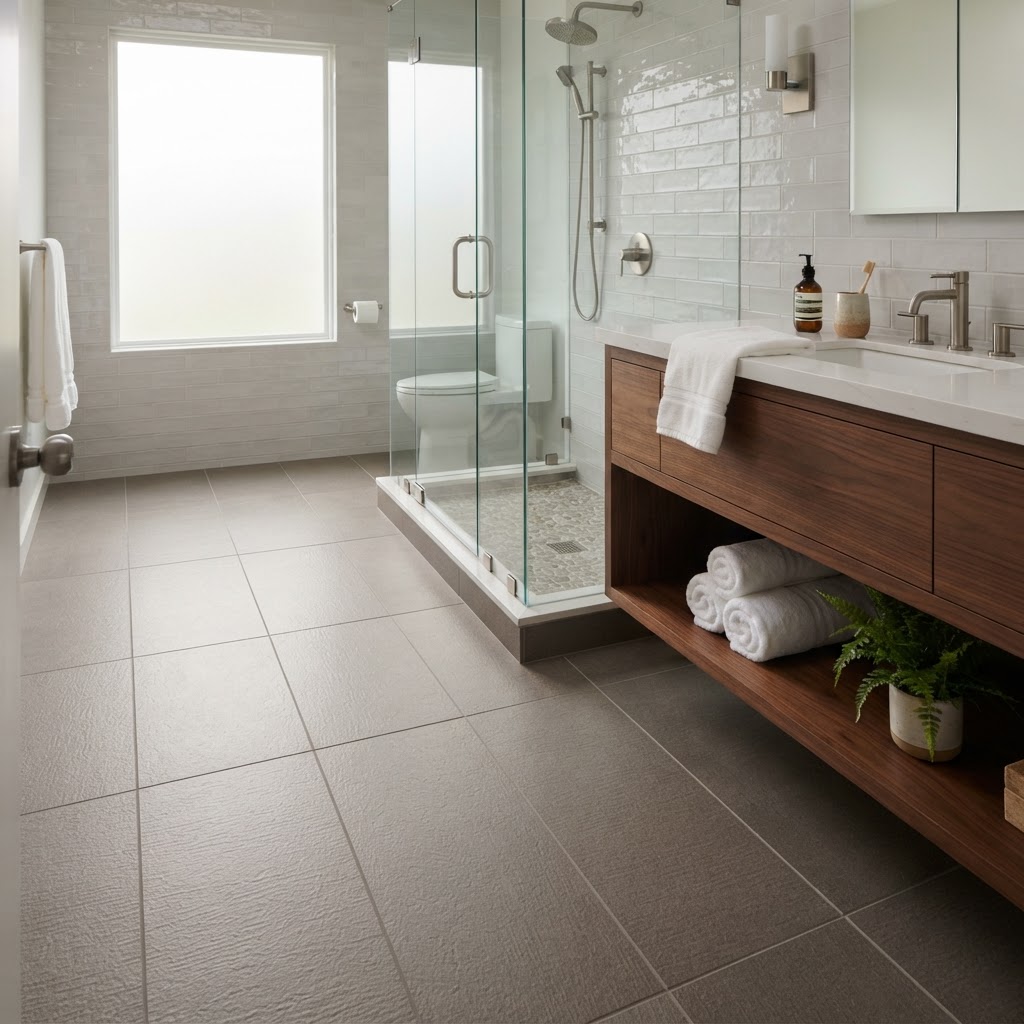
The short answer: ceramic bathroom tile is non-slip when it has a tested wet-traction rating from the manufacturer, a textured or matte surface and a size and grout layout that add grip. It works best on shower floors, the area just outside the tub or shower, entryways and full bathroom floors.
Floors and Beyond VA, a family-owned Northern Virginia flooring and remodeling contractor serving homeowners since 1987, offers free in-home consultations where you can handle samples, check the surface in your own light and get a site-specific recommendation.
Safety and style have historically felt like opposing choices, but modern ceramic and porcelain bring them together. Matte glazes, structured surfaces and fine textures offer real traction while looking at home in an elegant bathroom. This guide explains how to read coefficient of friction information, where each type of tile belongs in a bathroom, the trade-offs between safety and style and how to maintain traction over time.
Coefficient of friction in plain language
Coefficient of friction, or COF, describes how much resistance a surface offers to sliding. Higher numbers indicate more grip. For tile, the relevant measurement is often the dynamic coefficient of friction, or DCOF, tested under wet conditions. Manufacturers publish a value for many floor tiles, and industry standards recommend minimum values for different environments.
We do not state specific values here, because standards are updated and local requirements vary. Ask the manufacturer for the tested wet value for the exact tile you are considering, and share it with us. We will help you compare it with your use case. Remember that a rating describes a tile's surface as tested. Installation, grout, cleaning and wear all influence real-world traction.
Surface treatments that add grip
- Matte glazes. A matte finish typically has more friction than a high-gloss glaze, and it also reduces glare.
- Structured or textured surfaces. Slight relief in the surface creates mechanical grip. Many porcelain tiles with a stone or slate look have natural-feeling texture.
- Fine abrasive additives. Some glazes include tiny particles that increase traction.
- Honed finishes. Used on natural stone and some porcelain, honing reduces slickness compared with polishing.
- Applied treatments. Some products can be applied after installation to improve traction. Their effectiveness and lifespan vary, so we recommend discussing them before relying on them.
Where to use non-slip tile in a bathroom
- Shower floors. The highest priority. Choose a tile with strong wet traction, ideally in a small format that adds grout lines. Mosaics are a classic solution. A properly sloped shower pan that drains well supports safety.
- Outside the shower or tub. Wet feet land here. Textured tile with good grip is wise, and it should be easy to clean.
- Full-bathroom floors. Matte or textured tile throughout keeps traction consistent and avoids awkward transitions between slick and grippy zones.
- Entryways and mudrooms. Wet shoes make these areas slippery. Non-slip ceramic or porcelain is a smart choice.
- Powder rooms. Lower risk, but a guest bathroom still benefits from a surface that is safe and easy to clean.
- Wall tile. Walls do not need slip resistance. Use glossy or decorative tile there for style, and save the texture for the floor.
Ceramic versus porcelain for bathrooms
Both are made from clay and fired. Porcelain is generally denser and absorbs less water, making it very durable. Ceramic is typically slightly softer and easier to cut, and it comes in a rich array of colors and glazes. For bathroom floors, check that the ceramic you choose is rated for floor use and wet areas. When both are suitable, porcelain often has the edge for showers and heavy-use floors, while ceramic remains an excellent choice for walls and lower-traffic floors.
We discuss both in your consultation and help you decide based on your bathroom and the way you use it. Our tile and stone page covers the materials we install, and our guide to what makes a tile truly slip-resistant explains how ratings work.
Trade-offs between safety and style
More texture usually means more grip, but it can also mean more cleaning. A highly structured surface collects soap residue and mildew more readily than a smooth one. A very glossy tile looks luminous but is risky when wet. A polished stone looks luxurious but demands care.
The goal is a balanced choice. Many homeowners find that a matte, softly textured tile gives them the calm look they want and sufficient traction. Others choose a more aggressive texture in the shower and a gentler one on the rest of the floor. We help you find that balance.
Tile size, pattern and grout for grip
Smaller tiles bring more grout lines, which add traction. Mosaics are the classic shower-floor choice. Medium tiles balance grip and ease of cleaning on the main floor. Large tiles look sleek, require fewer grout lines and need a textured surface to compensate for reduced incidental grip.
Grout color and width influence the look and the maintenance. Mid-tone grout hides soap scum. Epoxy grout resists stains. Narrow lines look refined, and wider lines add traction. We discuss sealing and cleaning.
Design ideas that look good and stay safe
Think about the overall palette. A soft, warm gray ceramic floor with a pale wall tile can feel like a spa. A warm beige textured tile pairs well with wood vanities. Deep green or blue matte tiles can add personality. Patterned tiles, such as encaustic looks in matte porcelain, create visual interest without sacrificing grip.
Use contrast thoughtfully. A pattern that is too busy can disguise changes in level, which is a safety consideration. Edges, steps and thresholds should be clearly visible.
A representative scenario, not an account of any particular customer: a household in a Vienna home with an older bathroom wanted something safer for an aging parent. A matte ceramic floor in a warm neutral, small-format shower mosaic and coordinating wall tile gave the room a refreshed look while improving traction. Details such as a clear threshold and good lighting made the room feel secure.
Maintenance to preserve traction
Regular cleaning keeps the texture working. Use cleaners approved by the tile and grout manufacturers. Avoid products that leave a slippery film. Rinse and dry the floor. Remove soap scum and mineral deposits promptly. Clean grout and reseal as directed.
Replace worn bath mats and use mats with non-slip backing. Keep floors free of clutter. If you notice that the tile feels slick even after cleaning, tell us. There may be options for improving traction. Our floor care page lists the cleaning and sealing products we recommend.
Moisture, waterproofing and substrate
Slip resistance matters, but so does what is underneath. A bathroom needs proper waterproofing, correct slope and a stable substrate. Failure beneath the tile leads to cracked grout, loose tiles and water damage. Our crews prepare the substrate carefully and explain the process. If you suspect an active leak or hidden water damage, begin with a licensed plumber and, if needed, a water-mitigation professional before flooring work.
Budgeting without numbers
We do not publish prices in articles. The cost depends on material, tile size, pattern, labor, waterproofing, demolition and repair needs. Specialty tiles and intricate mosaics generally cost more to buy and to install. Simpler layouts in standard formats are typically more economical.
The best way to understand cost is to look at your actual bathroom. Our free in-home consultation includes precise laser measurements and a written, all-inclusive estimate. What we quote is what you pay. Our pricing and policy page explains how estimates work.
Coordinating with a bathroom remodel
If you are considering a larger bathroom update, flooring should be planned with it. Floors and Beyond VA offers bathroom remodeling and can coordinate tile with vanities, fixtures, lighting and layout changes. For condominium owners, our condominium remodeling experience helps with building requirements and logistics.
Choosing the right zone for each tile
Not every part of a bathroom needs the same surface. A thoughtful plan assigns tile based on need. The shower floor gets the strongest traction. The shower walls get easy-to-clean tile, often glossy for brightness. The bathroom floor gets a matte or textured tile with moderate traction. The tub surround gets a durable tile that tolerates splashes. Accent walls and niches can carry decorative tile that does not need grip.
Using different tiles in different zones keeps the room both safe and beautiful. It also keeps the budget under control, since the most specialized tile is only used where it is needed.
Color, finish and light in small bathrooms
Small bathrooms benefit from light, reflective wall tile and calmer floors. A floor in a mid-tone with soft texture hides water spots and dust while grounding the room. Bright whites on walls bounce light. Very dark floors in a small bathroom can feel heavy and show lint. Very white floors show every drop and footprint. Mid-tone neutrals tend to be forgiving.
What to expect during installation
A professional installation begins with protecting the area and removing the old floor and fixtures as needed. The crew inspects and prepares the substrate, checks slopes and installs waterproofing in wet zones. Tile is laid according to the planned layout, with spacers for consistent grout lines. After the setting material cures, grout is applied and cleaned. Sealing follows where required. Fixtures are reinstalled, and transitions and trim finish the job.
We explain the process and the care instructions afterward, so you know how to protect your new floor. Our flooring installation guide walks through the standard sequence.
Older bathrooms in Northern Virginia homes
Many homes in Vienna, Falls Church, Fairfax and Arlington have bathrooms with decades-old tile and layouts. Original tile can be charming, and in some historic homes it is worth preserving. In other homes, it is slick, cracked or hiding water damage. When we inspect an older bathroom, we assess the tile, the grout, the substrate and the plumbing access. We recommend preserving what can be saved and replacing what cannot.
Older floors can be uneven, with slopes that drain toward walls instead of drains. Correcting slope is part of a quality renovation. Older homes may also have asbestos or lead concerns in certain materials. If you suspect hazardous materials, consult appropriate licensed professionals before demolition. We follow safe practices and recommend testing when appropriate.
Condominium bathrooms and building rules
Condominium bathrooms present their own considerations. Waterproofing and sound transmission matter, and many buildings have rules about work hours, materials and insurance. We recommend contacting your association early and obtaining written requirements. We can provide documentation that boards often request.
Pairing floors with fixtures and vanities
The tile should relate to the vanity, the tub and the faucet finishes. Warm woods pair well with creamy ceramics. Black fixtures stand out against light tile. Brushed metals work with many palettes. Bringing sample tiles to the actual room, next to the vanity top and paint color, is the best way to judge. We bring those samples to you.
Cleaning products and routines that protect grip
Choose cleaners that suit your tile and grout. Neutral cleaners are generally gentle and effective. Avoid products that leave a waxy or oily film. After cleaning, rinse and dry the surface when possible. A squeegee in the shower helps reduce water spots and soap film. Regular attention prevents buildup that can reduce traction and encourage mildew.
Textured tiles may need a soft brush to reach the grooves. A periodic deep clean, following manufacturer guidance, restores the surface. If a tile still feels slippery after proper cleaning, tell us. We can discuss treatments or replacement.
Aging in place and accessible design
Many Northern Virginia homeowners are planning bathrooms that will serve them for decades. A curbless or low-curb shower, wide doorways, ample lighting, grab bars installed by qualified professionals and slip-resistant floors all support independence. We do not state specific accessibility requirements here. Verify current standards with the local building authority and a qualified accessibility consultant. We can coordinate flooring with these features as part of a larger bathroom remodel.
Frequently chosen combinations
Homeowners often combine a matte porcelain floor, a small-format mosaic shower floor and a glossy ceramic wall tile. Others choose wood-look ceramic or porcelain plank on the floor with white subway tile on the walls. Some choose a single tile across floor and walls for a seamless look, using a textured version on the floor and a smoother version on the walls. Each combination balances safety, style and cleaning.
One more consideration: visitors and aging relatives
Guests and relatives who visit your home may be less familiar with the bathroom and more vulnerable to slips. Choosing traction and good lighting protects them as well as you. It is a small act of hospitality that pays off for years.
What drives the scope of a bathroom tile project
The scope depends on the bathroom size, tile type and size, pattern, substrate condition, waterproofing needs, removal of existing floors and fixtures, number of cuts and transitions and the complexity of the shower. A simple floor in a small powder room is quite different from a full bath with a custom shower.
We take precise laser measurements at no charge and provide a written, all-inclusive estimate covering removal, materials, installation, waterproofing, transitions, trim and cleanup.
Why Northern Virginia homeowners choose Floors and Beyond VA
- Family-owned since 1987. We know local homes.
- In-house crews only. Skilled employees install your tile.
- Free in-home consultation with samples. Touch and see before you decide.
- Site-specific recommendations. We tailor advice to your bathroom.
- Precise laser measurements at no charge. Accurate planning.
- Honest, all-inclusive estimates. Transparent pricing with no surprises.
- Fully licensed, bonded and insured. Your home is protected.
- Installation process you can follow. We explain each step.
Floors and Beyond VA helps you find non-slip tile that you will be glad to see every day.
Common mistakes when choosing non-slip ceramic tile
- Assuming "non-slip" is a guarantee. Ask for documentation.
- Choosing gloss for the floor. Save gloss for the walls.
- Forgetting maintenance. Texture needs cleaning.
- Ignoring slope and drainage. Standing water is a hazard.
- Using large tiles in the shower floor. Choose smaller formats.
- Neglecting lighting and visibility. Safety is more than tile.
- Skipping professional installation for wet zones. Waterproofing errors are costly.
Frequently asked questions
Can ceramic tile be slip-resistant?
Yes, with a matte or textured surface and documented wet traction.
Is porcelain better for showers?
Often, thanks to its density, though suitable ceramics can work.
Are mosaics safer?
Their grout lines add grip, which is why they are popular on shower floors.
Can I add traction to existing tile?
There are treatments, and their durability varies. We can advise.
Are there building codes for bathroom floors?
Requirements differ by project and jurisdiction. Verify with the local building authority.
Related resources
Our tile and stone page explains the materials we install, our bathroom remodeling page covers full-room projects, and our overview of where we work around Tysons, Fairfax, Vienna, Reston and McLean shows how we work across the region.
Ready to choose non-slip tile?
Free in-home consultation
Let us bring samples to your home and recommend a safe, attractive floor. You get an honest, all-inclusive estimate covering removal, materials, installation, waterproofing and cleanup.
Contact Floors and Beyond VAFloors and Beyond VA
Family-owned flooring and remodeling since 1987, serving Northern Virginia
Phone: (703) 906-5698
Email: hello@floorsandbeyondva.com
Web: floorsandbeyondva.com




