
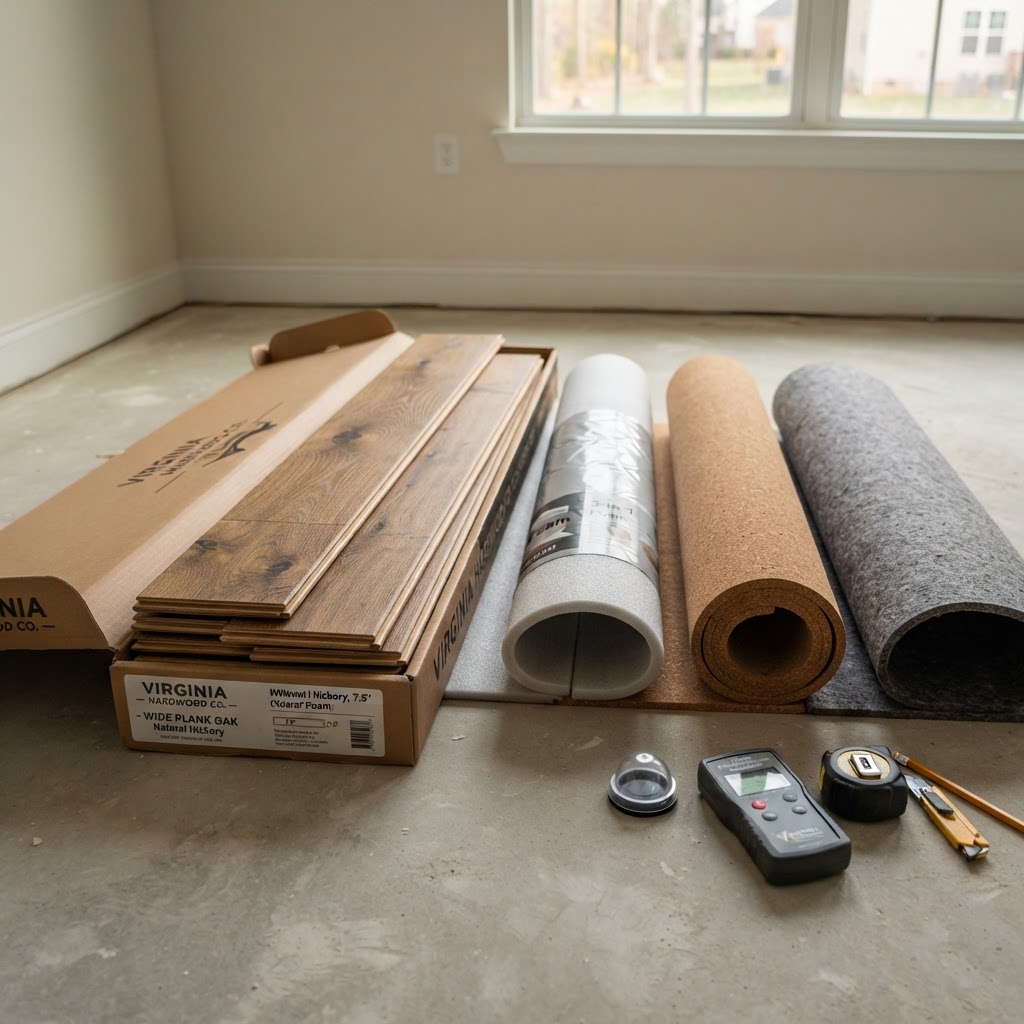
It depends on how the floor is installed and what is underneath it. A floating engineered floor almost always needs underlayment, a glue-down floor generally does not use a cushioning pad and a nail-down floor over wood usually uses a paper layer. Over a concrete slab, choose a product with a rated vapor barrier after testing the slab for moisture. In a condo, choose cork, rubber or dense felt that meets your building's sound ratings. Floors and Beyond VA is a family-owned flooring company that has served Northern Virginia since 1987, and our crews choose underlayment by subfloor, building rules and manufacturer instructions.
Common mistakes
Doubling up on pads, skipping the moisture barrier on a slab, using a soft pad under glue-down flooring and ignoring the association's rules are the most common errors. Always follow the flooring manufacturer's instructions, since the warranty often depends on them.
Frequently asked questions
Does engineered hardwood always need underlayment?
Floating installations do. Glue-down and nail-down use different systems.
What is best for sound in a condo?
Cork, rubber or dense felt, chosen to meet the building's IIC and STC requirements.
When to call a professional
If you are not sure what your floor needs, an in-person look settles it. Schedule an in-home estimate with Floors and Beyond VA, or call (703) 906-5698.
Read the full guide: What Underlayment Do I Need for Engineered Hardwood?
Learn about our hardwood flooring service.

