
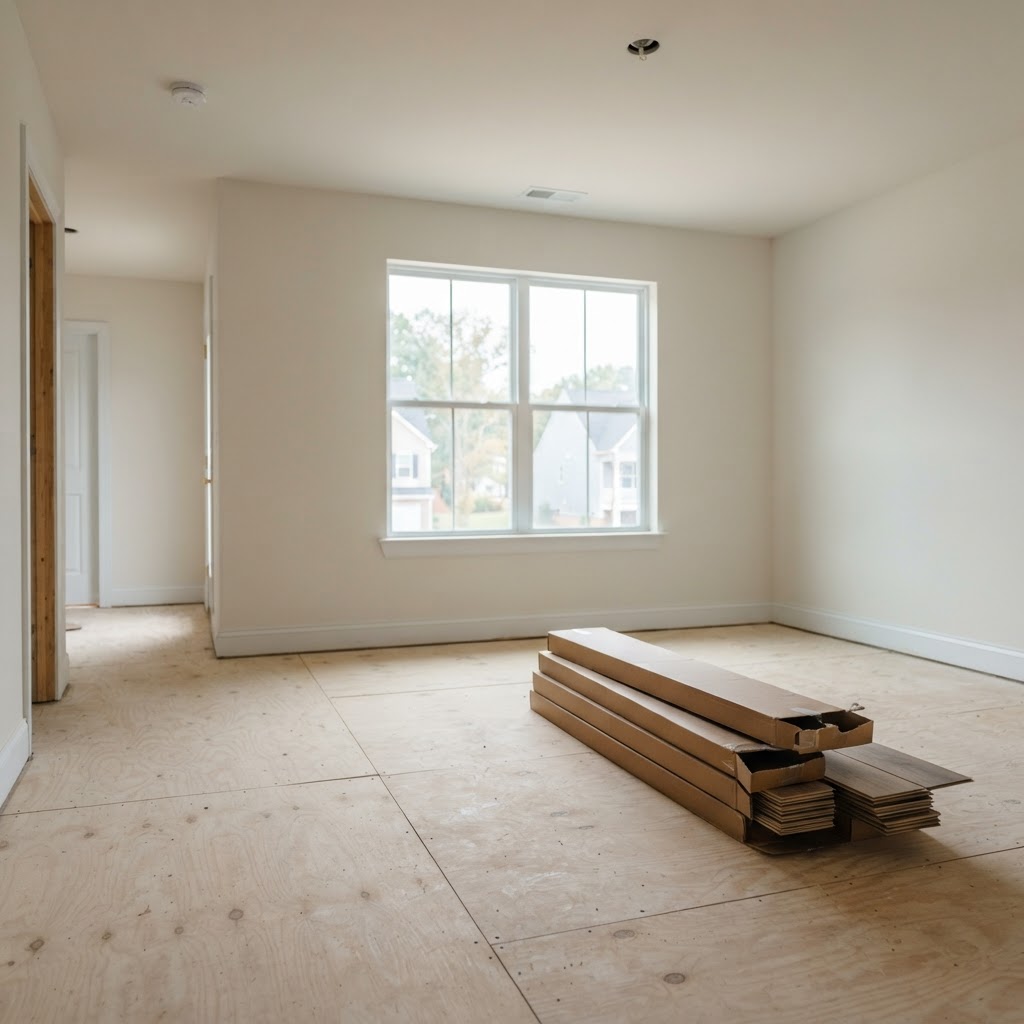
Acclimation means letting flooring sit in the home so it can adjust to the room's temperature and humidity before installation. The general advice is easy to find. What is harder to find is how it applies to a house in Ashburn, where many homes are newer, finished basements sit on concrete and a house may only have been conditioned for a few weeks when the flooring arrives. This guide explains how long flooring should acclimate in Ashburn, VA homes, what has to be true in the house first and how the answer differs for laminate, luxury vinyl plank, engineered hardwood and solid hardwood.
Floors and Beyond VA is a family-owned flooring company that has served Northern Virginia since 1987, and our own crews handle the work from the first visit to the final cleanup.
The Manufacturer Sets the Number
There is no single number. Laminate is often given about 48 hours, luxury vinyl plank is often 48 hours at room temperature and hardwood can be several days or longer, depending on the product and how far the home's humidity is from the boards' moisture level. Engineered products have their own instructions. The installation guide in the box decides, and the warranty usually depends on following it.
Why New Construction Changes Things
Many Ashburn homes are recent builds. Drywall, joint compound, paint, concrete and framing lumber all release moisture as they dry, and a house that has just been closed in can be humid for weeks. Flooring delivered into that air takes on the moisture, then shrinks later when the house dries out, which is how gaps and cupping start. Before flooring is stored in the house, the heating and cooling should be running at living conditions, and painting and drywall work should be finished and dry.
Conditions to Confirm Before Acclimating
The house should be at its normal living temperature, commonly in the range of the high 60s to the low 70s degrees Fahrenheit, with relative humidity in the range the manufacturer states, often between about 35 and 55. A simple hygrometer tells you. Windows should be closed, and the HVAC should have run for long enough to stabilize the space.
Basements and Slabs
Finished basements in Ashburn townhomes and single-family homes usually sit on concrete. Slabs in newer homes can still be curing and releasing moisture. Acclimating flooring does not fix a wet slab, so the concrete is tested for moisture separately, and the flooring or underlayment is chosen to suit the readings. Our guide to hardwood flooring covers the options over concrete.
How to Store the Flooring
Keep boxes flat, off the floor on spacers if the manufacturer advises and away from exterior walls, vents and direct sun. Open the boxes or loosen the packaging if the instructions say to. Keep the planks in the room where they will be installed, or in a room under the same conditions. Do not stack heavy items on them.
How Product Type Changes the Plan
Laminate and luxury vinyl plank are more stable than wood, but they still need to reach room temperature. Rigid core vinyl in a cold garage or a hot truck should be brought to temperature first. Engineered and solid hardwood need the most care, and the installer may check moisture content in the wood and subfloor with a meter. A wood subfloor should be within a few points of the flooring's moisture level.
When Acclimation Is Not Enough
If the HVAC is not running, the slab is damp or the house is still drying, waiting longer is better than rushing. Installing too early is a common cause of callbacks. If you are building or finishing a basement, tell your installer the dates of drywall, paint and HVAC start so the schedule reflects them.
Frequently Asked Questions
How long should laminate acclimate in a new Ashburn home?
Often about 48 hours once the house is at living conditions, but follow the manufacturer.
Does LVP need to acclimate?
Most makers ask for it, usually for a day or two at room temperature.
Can I acclimate flooring in the garage?
No. A garage has different temperature and humidity from the living space.
Does acclimation matter over a basement slab?
Yes, but the slab also has to be tested for moisture.
What if the house is still being painted?
Wait until the work is finished and dry, and the HVAC has stabilized the air.
Ready When You Are
If you are installing floors in a new Ashburn home or finishing a basement, we can check the conditions, test the slab and put the schedule in writing. Floors and Beyond VA serves Fairfax, Loudoun, Prince William and Arlington counties, Alexandria and the Washington, DC area. Schedule an in-home estimate at contact Floors and Beyond VA or call (703) 906-5698.
Read more about our flooring company in Ashburn, VA, or see how long flooring should acclimate.

