
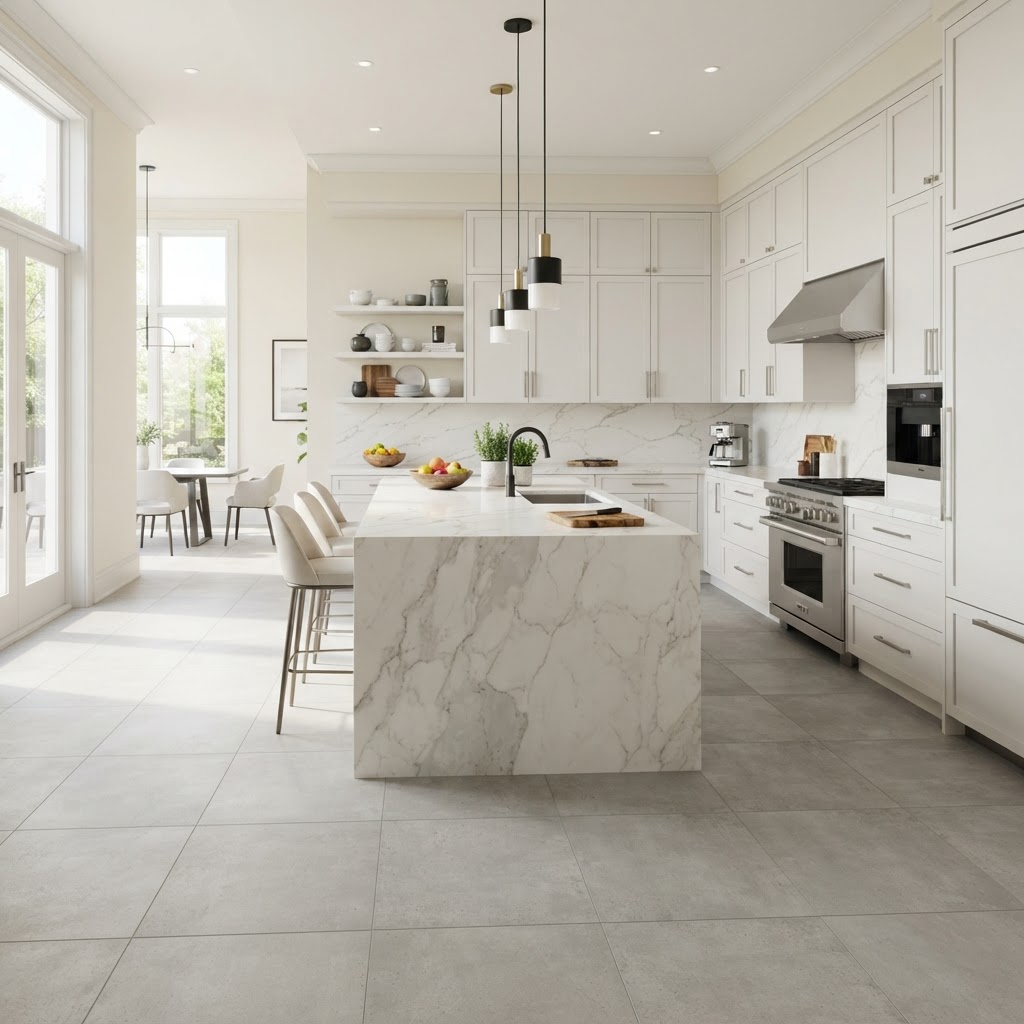
Porcelain tile is the best all-around choice for Arlington kitchens, bathrooms and entryways because it is dense, highly water-resistant, durable and available in finishes with good slip resistance, while ceramic tile is a good, workable option for walls, backsplashes and lighter-duty floors. For bathroom and entry floors, choose a textured or matte finish with a suitable slip-resistance rating, smaller tiles or tight grout patterns for added traction, and a grout color and sealing plan that fits how much maintenance you want. Installation quality matters as much as the tile: a flat substrate, proper waterproofing in wet areas and correct setting materials decide whether tile lasts decades or cracks within a few years. Floors and Beyond VA, a family-owned Northern Virginia flooring and remodeling contractor serving Fairfax, Loudoun, Prince William and Arlington counties since 1987, installs tile with in-house crews and no subcontractors, so the person preparing your substrate is part of the same team that sets your tile.
Tile has a long history in Arlington homes. The county's 1920s through 1950s housing stock often included ceramic tile in bathrooms and kitchens, much of it still handsome decades later, while renovations today use porcelain in sizes and finishes that earlier generations could not have imagined. This guide compares porcelain and ceramic, explains slip resistance and grout maintenance, and covers the installation considerations that determine whether a tile floor performs. We discuss the factors that affect project pricing without quoting any numbers. Visit our tile and stone page to explore materials, and see our bathroom remodeling and kitchen remodeling pages for full renovations.
Porcelain versus ceramic tile
Both porcelain and ceramic are made from clay fired in a kiln, but they differ in composition and performance.
Porcelain tile is made from finer clays fired at higher temperatures, producing a denser, harder tile with very low water absorption. It is highly resistant to moisture, stains and wear, and it holds up to heavy traffic. Through-body porcelain carries color throughout the thickness of the tile, so chips are less obvious. Porcelain is available in a huge range of looks, including wood-look planks, stone and marble patterns, concrete finishes and decorative patterns. It is also suitable for many exterior applications, depending on the product.
Ceramic tile is made from coarser clays and fired at lower temperatures. It is somewhat softer and more porous than porcelain, though glazed ceramic is still water-resistant on its surface. Ceramic is easier to cut, which can be an advantage for intricate wall work, and it comes in many colors and decorative styles. It is a sound choice for walls, backsplashes and low-to-moderate-traffic floors, such as a powder room, but it may not be the best option for heavy-use entries or exposed areas.
In practice, for floors in kitchens, bathrooms and entries, porcelain is generally the safer investment, while ceramic remains a strong choice for walls and decorative applications. Your installer can confirm the rating of a specific product, because quality varies among manufacturers.
Slip resistance: choosing a safe surface
Tile can be slippery when wet, and entryways and bathrooms are exactly where water is present. Choosing the right surface is a safety decision.
Slip resistance depends on the tile's surface texture, finish, size and the grout lines. Glossy, polished tiles are the most slippery when wet and are generally best kept for walls and dry areas. Matte and textured surfaces provide more traction. Some tiles have a stated coefficient of friction or slip-resistance rating, and manufacturers may publish this information. Test standards and ratings vary, so ask your supplier what the rating means and whether it is appropriate for wet residential areas.
Tile size also plays a role. Smaller tiles mean more grout lines, which add grip. This is why mosaic tiles are traditionally used on shower floors: the grout lines help prevent slipping, and the small pieces conform to the slope toward the drain. Large-format tiles look sleek and reduce grout lines but may be more slippery, so choose a textured finish if you want large tiles in a wet area.
For entryways, consider the combination of water, snow, ice melt and grit. A textured porcelain tile with a darker or mid-tone color hides tracked-in dirt and offers solid traction. For bathrooms, think about bare feet, wet conditions and the needs of children and older adults. For kitchens, spills of water and oil make traction important too.
Safety is also a matter of aging in place. If you are planning for the long term, our accessibility page discusses safer surfaces and thresholds.
Grout: the part that needs maintenance
Grout fills the joints between tiles, and it is often the most maintenance-sensitive part of a tile floor.
Cement-based grout is the traditional choice. It is porous and usually requires sealing to resist stains and moisture. Over time, it can stain or darken, particularly in light colors, kitchens and wet areas. Sanded grout is used for wider joints and unsanded for narrow ones.
Epoxy grout is highly resistant to stains and moisture and does not generally need sealing. It can be more challenging to install and is often used in commercial settings and in areas where stain resistance is a priority, such as kitchens and showers.
Pre-mixed and specialty grouts offer convenience and added performance, and manufacturers vary.
Grout color matters. Light grout looks clean and fresh but shows dirt. Dark grout hides stains but may contrast sharply with light tile. A mid-tone grout close to the color of the tile is the most forgiving. For wood-look porcelain planks, a grout matched to the plank color gives a seamless appearance.
Joint width affects both appearance and maintenance. Narrow joints are easier to keep clean but require flat, accurately sized tiles. Wider joints are more forgiving of irregularities but show more grout.
Maintenance includes sealing cement-based grout as recommended, cleaning with pH-appropriate cleaners, and promptly addressing mildew in wet areas. A well-chosen grout and a bit of care keep tile looking good for years. Our floor care page offers further guidance.
Best tile choices by room
Kitchens
Kitchens require a floor that tolerates spills, dropped items and heavy traffic. Porcelain is an excellent choice, with a matte or lightly textured finish for traction and a grout that resists stains. Wood-look porcelain is popular for homeowners who want the warmth of wood without its sensitivity to water. Because tile is hard, standing for long periods can be tiring, and dropped dishes are more likely to break. Rugs or mats at key work areas help. Radiant heating beneath tile can add comfort in winter.
For open-plan homes common in Arlington renovations, think about how the kitchen tile meets adjoining hardwood or vinyl. Transitions should be level and neat, and the colors should coordinate. Our guide on kitchen versus living room flooring is a useful reference.
Bathrooms
Bathrooms demand the most from tile. Floors need slip resistance and waterproofing, shower floors need proper slope and drainage, and walls need waterproof backing. Porcelain is the standard for floors, with small-format or textured tiles in showers. Ceramic is fine for walls. Heated floors, which can be installed beneath tile, make bathrooms more comfortable in winter.
The most important part of a bathroom tile installation is what you cannot see: the waterproofing membrane, substrate preparation and slope. Failures in bathrooms are almost always caused by moisture getting where it should not. Older Arlington bathrooms with original tile may hide deteriorated waterproofing, and a renovation is an opportunity to correct it. See our bathroom remodeling page and our guide to bathroom remodeling ideas in Northern Virginia.
Entryways and mudrooms
Entries take rain, snow, mud, salt and grit, and tile is one of the best answers. Porcelain with a textured finish handles traffic and cleans easily. Mid-tone colors hide dirt. Consider a recessed mat area to catch debris. In Arlington townhomes and rowhouses with small entries, a durable tile at the door extends the life of adjoining floors.
Laundry rooms
Water leaks and spills are always possible, and tile resists them. A porcelain floor with sealed or epoxy grout is a practical choice. Anti-vibration platforms and a slightly sloped or well-prepared substrate can help in laundry rooms.
Other spaces
Sunrooms, screened porches and patios may use exterior-rated porcelain. Basements may use tile over a prepared slab, though cold and hardness should be considered. Our outdoor flooring page covers exterior options.
Installation considerations that decide whether tile lasts
Tile is unforgiving of poor preparation. These factors matter.
Substrate flatness. Tile, especially large-format, requires a very flat substrate. Dips and humps cause lippage (uneven edges) and can lead to cracking. Leveling compounds and underlayment corrections are common in older homes.
Structural stiffness. Floors that flex under load will crack tile and grout. Joist spacing, subfloor thickness and deflection should be evaluated, especially in older houses. Additional underlayment or reinforcement may be needed.
Moisture and waterproofing. Wet areas need waterproof membranes. Concrete slabs need moisture testing. The right system depends on the location.
Setting materials. The mortar or thin-set must match the tile and substrate. Large-format and heavy tiles need appropriate setting methods to ensure full coverage and adhesion.
Layout. A good installer plans the layout so that cuts at walls are balanced, patterns align and focal points look intentional. In older Arlington homes where walls are not square, layout skill is especially important.
Movement joints. Large areas of tile need movement joints to allow for expansion and contraction. Ignoring them can lead to cracking.
Transitions. Where tile meets other floors, thresholds should be neat and safe.
Cure time. Mortar and grout need time to cure before heavy use. Rushing the process shortens the floor's life.
Heated floors. If installing radiant heat, wiring or tubing must be planned before the tile goes down.
Our guide on installing flooring over existing tile covers a related question that comes up often in renovations. And our flooring installation guide explains how we prepare and protect your home.
Comparing tile to other options
Tile is not always the answer. Hardwood offers warmth and refinishing, luxury vinyl plank provides softness and water resistance with simpler installation, and carpet offers comfort. Tile's strengths are water resistance, durability and the ability to withstand heavy abuse. Its weaknesses are hardness, coldness and the need for careful installation. For many Arlington homes, a combination is ideal: tile in bathrooms and entries, hardwood or LVP in living areas, and carpet in bedrooms.
What affects the scope of a tile project
We do not publish prices in articles, but we can explain what shapes the scope of a tile project. The tile itself, including material, size, finish and pattern, influences the material scope. Layout complexity, such as diagonal patterns, herringbone, borders and mosaics, increases labor. Substrate preparation, including leveling, reinforcement, backer board and waterproofing, can be significant, especially in older homes. Demolition and removal of existing flooring, tile or mortar beds add steps. Grout selection, such as epoxy, affects materials and labor. Heated floors add components. Showers and wet areas require waterproofing and slope work. Trim, thresholds and transitions finish the project. And access and logistics, including condominium rules and stairs, influence scheduling.
Floors and Beyond VA provides an honest, all-inclusive estimate, and what we quote is what you pay.
Tile in Arlington's older bathrooms and kitchens
Arlington's mid-century homes often hide surprises behind their original tile. A small bathroom from the 1940s may have a mortar bed that has held up well, or it may have deteriorated waterproofing and a soft subfloor around the tub or toilet. When we remove old tile, we look for water staining, soft wood and cracked mortar, and we correct what we find before new tile goes down. This is also a good moment to rethink the layout: replacing a tub with a curbless shower, adding heated floors or choosing a larger tile to reduce grout lines all depend on decisions made at the subfloor stage.
In kitchens, original linoleum or older tile may sit over multiple layers of flooring. Removing everything and starting with a clean, flat substrate usually produces the best result, especially if you plan on large-format porcelain, which demands flatness. Where the kitchen meets a hardwood dining room, a carefully chosen transition and a tile color that complements the wood make the two spaces feel intentional.
Common mistakes to avoid
The most common mistake is choosing a glossy tile for a wet floor, creating a slip hazard.
Another is underestimating substrate preparation. A flat, stiff, dry substrate is non-negotiable.
A third is skipping waterproofing in showers and wet areas.
A fourth is choosing light grout in a high-traffic or stain-prone area without a plan for sealing and care.
A fifth is using large-format tile on an uneven floor without correcting it.
A sixth is forgetting movement joints.
A seventh is not planning transitions to adjoining floors.
An eighth is ignoring how cold tile feels in winter. Radiant heat can help.
Finally, many homeowners hire an installer based on price alone. Tile work is skilled, and the quality of installation shows for decades.
How Floors and Beyond VA installs tile in Arlington
We begin with a free in-home consultation. We bring samples, take precise laser measurements at no charge, evaluate your substrate and discuss how each space is used. We recommend tile that suits each room, including slip resistance and grout choices, and we explain the preparation your floor needs. We provide a clear, all-inclusive estimate. Our in-house crews, with no subcontractors, handle demolition, preparation, setting, grouting and cleanup. We are fully licensed, bonded and insured.
We serve Arlington neighborhoods including Clarendon, Ballston, Courthouse, Rosslyn, Crystal City, Pentagon City, Shirlington, Lyon Park, Cherrydale, Westover and Aurora Highlands, as well as Fairfax, Loudoun and Prince William counties.
Frequently asked questions
Is porcelain or ceramic better for floors?
Porcelain is generally denser and more durable, making it the better choice for most floors.
What tile is least slippery?
Matte, textured finishes and smaller tiles with more grout lines provide better traction.
Do I need to seal grout?
Cement-based grout typically needs sealing. Epoxy grout generally does not.
Is tile cold?
It can be. Radiant floor heating beneath tile addresses this.
Can tile go in a kitchen?
Yes. Porcelain is an excellent kitchen floor.
Can I tile over my existing floor?
Sometimes, depending on the condition and structure. We assess during consultation.
How long does tile last?
Properly installed, it can last for decades.
Does Floors and Beyond VA use subcontractors?
No. Our in-house crews handle the work.
Do you serve my Arlington neighborhood?
We serve Arlington County and neighboring Northern Virginia communities.
Ready for tile flooring in your Arlington home?
Tile rewards careful planning and skilled installation. Floors and Beyond VA offers nearly forty years of Northern Virginia experience, in-house crews with no subcontractors, free in-home consultations with samples, and all-inclusive estimates.
Request your free tile flooring estimate in Arlington: https://floorsandbeyondva.com/Contact
You can also call (703) 906-5698, or send us a message through our contact page.
Our flooring company in Arlington, VA can show you tile options that suit kitchens, baths, and entryways.




