
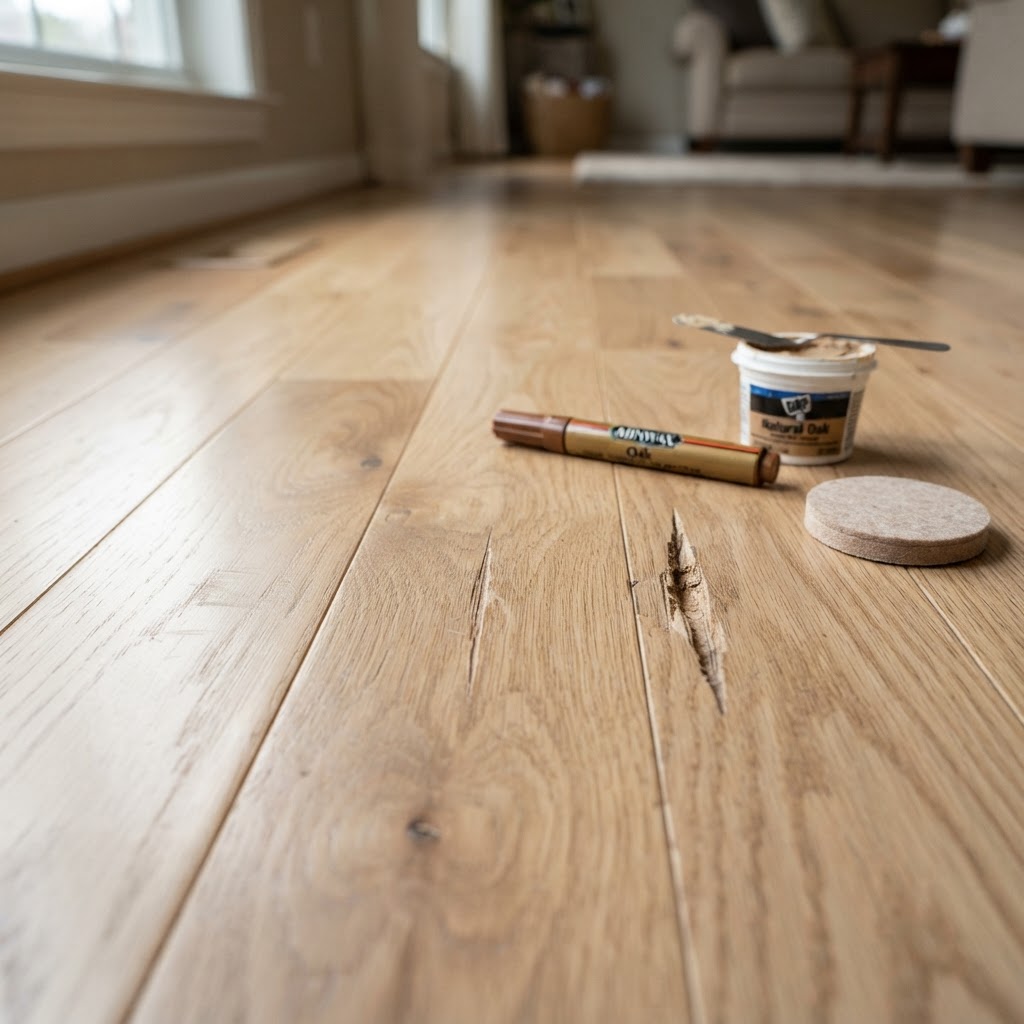
Match the repair to the depth of the scratch. Put a drop of water on it: if the wood stays light, only the finish is scratched, and a polish, touch-up marker or a screen and recoat can fix it. If the wood darkens, the scratch is in the wood and needs filler, a sanded section or a replaced board. If scratches are everywhere or the finish is dull, refinishing the whole floor is usually the better choice. Floors and Beyond VA is a family-owned flooring company that has served Northern Virginia since 1987, and we favor refinishing before replacing.
What to avoid
Do not use steel wool on a finished floor, do not use oils such as olive oil and do not sand a small spot yourself on a polyurethane floor, since it often leaves a visible patch. Tell your refinisher if you used wax or a polish.
Preventing new scratches
Use felt pads, keep pet nails trimmed, put mats at entries and lift furniture instead of dragging it.
Frequently asked questions
Can scratches be repaired without sanding?
Fine surface scratches usually can. Deep ones need filler or sanding.
Can engineered hardwood be repaired the same way?
Surface scratches yes. Deep scratches depend on the thickness of the top layer.
When to call a professional
If you are not sure what your floor needs, an in-person look settles it. Schedule an in-home estimate with Floors and Beyond VA, or call (703) 906-5698.
Read the full guide: How to Repair Scratches in Hardwood Floors.
Learn about our floor restoration service.

