
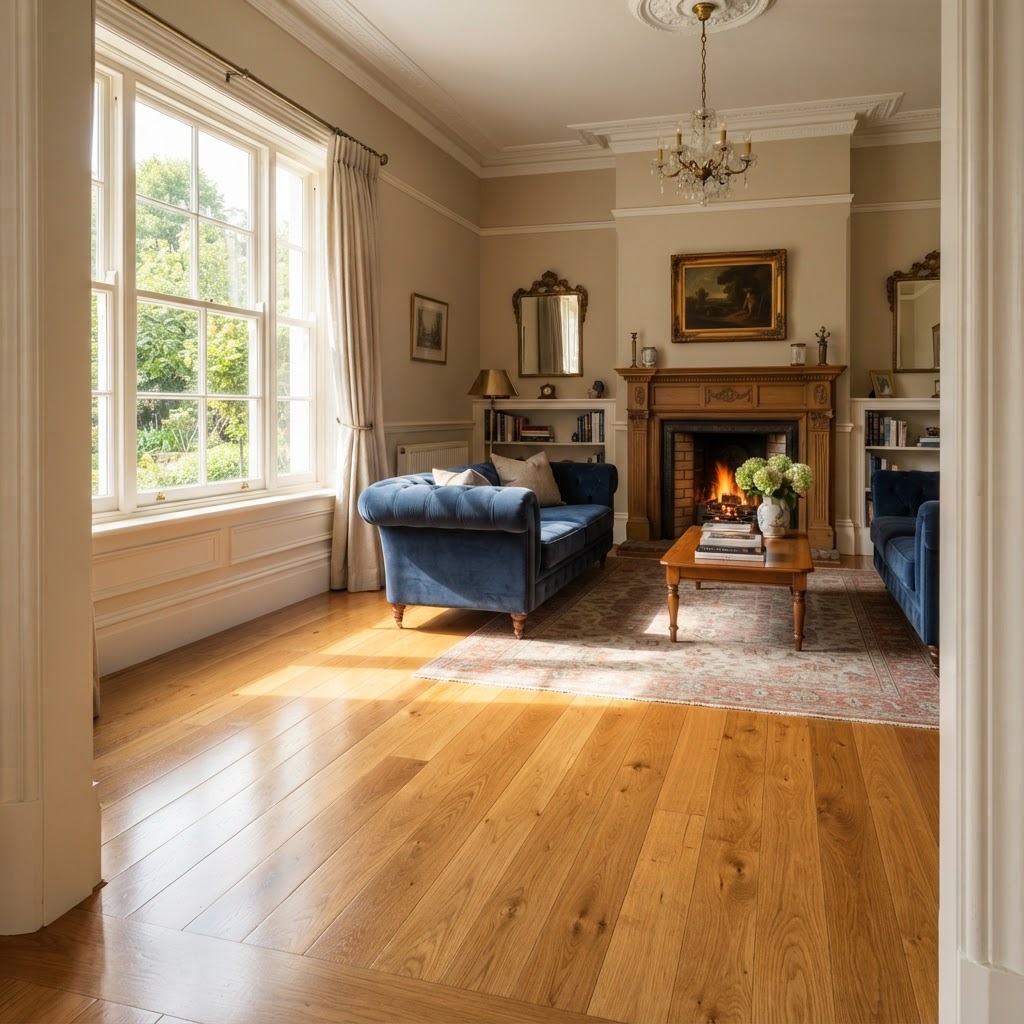
Repair your floors when the damage is localized and the floor underneath is structurally sound, such as scratches, a few damaged boards, minor gaps or a worn finish that can be sanded and refinished. Replace your floors when damage is widespread, when water has caused cupping, buckling or mold, when boards are loose across large areas, when the wear layer is gone or when the subfloor beneath is failing. For hardwood, the answer leans toward repair and refinishing far more often than most homeowners expect. For carpet, vinyl and laminate, which cannot be restored the same way, replacement becomes appropriate sooner. Floors and Beyond VA, a family-owned Northern Virginia flooring and remodeling contractor serving Fairfax, Loudoun, Prince William and Arlington counties since 1987, follows a refinish-first philosophy, so we assess whether your existing floors can be saved before recommending replacement, and we tell you honestly when they cannot.
Flooring replacement in Arlington, VA is a decision many homeowners face, whether because floors have worn down, a leak has damaged them, an older home needs updating or a sale is coming. Replacement is the most expensive and disruptive choice, and it is not always necessary. This guide helps you recognize the signs of wear, water damage, loose boards and other problems, and understand when repair is enough and when replacement is worthwhile. For related reading, see our guides on flooring replacement decisions, repairing flooring damage and whether hardwood floors can be saved.
The basic decision: is the floor still sound?
A useful way to think is to separate the surface from the structure. Surface problems, such as scratches, dullness, fading and shallow stains, affect appearance but not the floor's integrity. Structural problems, such as rot, widespread moisture damage, loose or failing subfloor and worn-through material, affect the floor's ability to serve.
Surface problems are usually repairable. Structural problems often lead to replacement. The challenge is telling them apart, which is why a professional assessment is valuable. Floors that look terrible may be structurally excellent, while floors that look acceptable may be hiding serious problems.
Also consider the type of floor. Solid hardwood can be refinished multiple times. Engineered hardwood can be refinished depending on the thickness of its top layer. Luxury vinyl plank, laminate and carpet cannot be restored the way real hardwood can; they can sometimes be spot-repaired, but widespread wear usually means replacement. Tile can often have individual tiles or grout replaced, but widespread cracking suggests structural issues.
Signs that repair or refinishing may be enough
Several situations suggest that your floors can be saved.
Surface scratches and dullness. Wear from foot traffic, pets and furniture dulls the finish. Light scratches and a worn finish can usually be fixed by sanding and refinishing, or in some cases by a screen-and-recoat that refreshes the finish without full sanding.
Shallow stains and discoloration. Many stains from pets, spills or sunlight sit in the finish or the top layer of wood and can be sanded out.
A few damaged boards. Isolated damage from dropped objects, water spots or insect issues can often be repaired by replacing individual boards with matching ones, then refinishing for uniformity.
Minor gaps. Seasonal gaps between boards are normal in solid hardwood and typically close with humidity changes. Persistent gaps can sometimes be addressed with fillers or board replacement.
Squeaks. Squeaks often come from movement between boards and the subfloor. They can frequently be reduced by fastening from above or below.
Outdated color. A floor in good condition that simply has a color you dislike can often be refinished in a new stain.
Isolated carpet damage. A burn, stain or small tear can sometimes be patched, though matching and appearance vary.
Loose individual vinyl planks or tiles. Often replaceable if spare material is available.
In older Arlington homes, original oak floors from the 1920s through the 1950s are often good candidates for restoration. They were milled from dense lumber, they are thick, and they can typically withstand several rounds of refinishing. Our wood flooring and historic home restoration pages explain our approach.
Signs that replacement is the better choice
Other situations point toward replacement.
Widespread water damage. Hardwood that has cupped, crowned or buckled across large areas after a flood or long-term leak is often beyond repair, especially if moisture has penetrated deeply. Staining, black spots and musty odors suggest mold. Prompt professional drying can sometimes save floors, but extended exposure usually cannot be reversed.
Rot or structural damage. Soft spots, sagging and evidence of rot indicate that the subfloor or framing may be compromised. The cause must be corrected, and the floor above often needs replacement.
Boards worn too thin. Hardwood that has been sanded many times may have little wear layer left. Sanding further risks exposing nails or tongues. A professional can assess remaining thickness.
Widespread loose boards or flooring. If large areas are loose, detached or moving, the underlying fastening or subfloor may have failed. Individual repairs may not be practical.
Delamination or peeling. Engineered wood, laminate and vinyl can delaminate when exposed to moisture or heat. Peeling layers cannot be reattached reliably.
Heavy pet damage. Deep, widespread urine stains and odors that have soaked through finish, wood and subfloor can be impossible to fully remove. Replacement of both the flooring and affected subfloor may be necessary.
Widespread cracked tile or failing grout. Cracks across many tiles often indicate a structural or substrate problem that must be corrected, requiring removal of the tile and repair of the base.
Worn-out carpet. Matted, stained, odorous or backing-exposed carpet, especially at stair edges, is usually best replaced.
Failed installation. Floors that were installed poorly, such as laminate without expansion gaps or tile without adequate substrate, may not be repairable.
Asbestos-containing old flooring. Some older resilient tiles and adhesives contained asbestos. They should be tested before disturbance and removed or encapsulated by qualified professionals.
Changing needs. Sometimes the floor is repairable but no longer suits your needs. You might want a water-resistant floor for a basement, a quieter surface for a bedroom, or a style that matches a remodel. Replacement is a legitimate choice for reasons beyond damage.
Understanding water damage
Water is the most common cause of serious floor failure, and the response in the first hours and days matters.
If a leak or flood occurs, stop the source of water first. Remove standing water, dry the area thoroughly with fans and dehumidifiers and contact a professional if the wetting is significant. Hardwood can sometimes recover if dried quickly, though cupping may develop and may or may not subside as it dries. Do not sand or refinish until the wood has reached a stable moisture level, because sanding wet wood causes new problems.
Signs of water damage include cupping (edges higher than centers), crowning (centers higher than edges), buckling (boards lifting off the subfloor), staining, black marks that suggest mold, soft or spongy areas and musty smells. Water trapped below the floor, in crawl spaces or basements, can be hidden. Plumbing leaks, appliance failures, window leaks and high humidity are common sources.
In Arlington's humid summers and storm seasons, moisture problems are a recurring risk, particularly in basements, bathrooms, kitchens and ground-level units. Insurance may cover some water damage, depending on the cause and your policy. Ask your insurer, and document damage with photos.
Our guide on flooring damage from water, scratches and buckling provides further detail.
Loose boards, squeaks and gaps
Loose or noisy floors are common in older homes.
A few squeaks are normal and usually repairable. Loose boards that shift underfoot, however, may indicate failing fasteners, a deteriorated subfloor or joist problems. A professional can inspect from above and, if accessible, from below, in a basement or crawl space.
Gaps are often seasonal. In winter, indoor heating dries the air and wood shrinks, opening gaps; in humid summers they close. Large, persistent gaps may reflect excessive drying, poor installation or movement. Humidity control can help prevent them.
In floating floors, such as laminate and click-lock vinyl or engineered wood, gaps between planks can signal that the floor has shifted, that the subfloor is uneven or that expansion has been restricted. Re-engaging planks may help, but widespread separation often suggests the installation needs attention.
Repair versus replace: thinking about value
The decision is not only technical but also financial and practical. We do not publish prices in articles, but we can describe how to think about value.
Repair and refinishing generally have a smaller scope than replacement, involve less disruption, produce less waste and preserve original materials. They are the sensible first consideration when the floor is sound.
Replacement is the right choice when repair would be a short-term fix, when the underlying problem will recur, or when you want a different floor altogether. Spending on repeated repairs to a failing floor can add up, and sometimes the most economical choice over time is a proper replacement.
Think about how long you plan to stay in the home, how the floor looks in the context of the rest of the house, and what buyers in your market may expect if you plan to sell. Your real estate agent can advise on local expectations, and we do not promise any specific effect on sale price.
How a professional assessment works
An assessment is the best way to resolve uncertainty. At Floors and Beyond VA, a free in-home consultation includes the following.
We examine the floor's surface and look for wear, scratches, stains, cupping, gaps and loose areas. We check moisture levels where appropriate. We evaluate the remaining thickness of hardwood where possible. We inspect the subfloor from accessible areas. We look for signs of past repairs. We ask about the floor's history, including leaks, pets and prior refinishing. We discuss your goals, timeline and plans. Then we explain your options: repair, refinish, partial replacement or full replacement, with honest recommendations. Our professionals use precise laser measurements on every room at no charge, and we bring samples if replacement is under consideration.
Because we follow a refinish-first philosophy, we will tell you if your floor can be saved, even when replacement would be a larger project for us.
Replacement considerations if you decide to replace
If replacement is the right choice, a few planning steps improve the outcome.
Choose a floor suited to the room and conditions. If water caused the damage, consider water-resistant options. Address the cause of damage before installing new flooring. Inspect and repair the subfloor. Plan transitions to adjoining rooms. Consider how the new floor interacts with stairs, cabinets and doors. Coordinate with other renovation work. In condominiums, check association rules on flooring type, sound requirements and work hours. Our flooring installation guide explains our preparation and installation process, and our wood flooring page discusses material choices.
What drives the scope of a repair or replacement project
The scope depends on several factors. The extent and cause of damage determine whether repair is practical. The floor type influences options. The condition of the subfloor affects preparation. Moisture mitigation may be needed. Removal and disposal of old flooring add steps. The size of the area and layout shape quantities. Matching existing flooring can complicate partial repairs. Finish and stain choices affect refinishing. Transitions and trim finish the work. And access and logistics, such as condominium rules, influence scheduling.
Floors and Beyond VA provides an honest, all-inclusive estimate, and what we quote is what you pay.
A quick self-check before you call anyone
You can learn a surprising amount in ten minutes. Walk the floor in socks and note any spots that feel soft, bouncy or noisy. Look along the floor at a low angle in daylight, which reveals cupping, crowning and uneven areas that are invisible from above. Check near sinks, dishwashers, refrigerators with ice makers, exterior doors and windows for dark staining or lifted edges. Lift a corner of a register cover or a closet carpet edge to see what lies beneath. Smell for mustiness, especially in basements and closets. And think about the floor's history: has it flooded, has a pet had accidents, has it been sanded before?
Take photos of anything concerning. They help the professional understand the pattern of damage, and they are useful if an insurance claim is involved. None of this replaces an expert inspection, but it helps you describe what you see and tells you how urgent the situation is.
Common mistakes to avoid
The most common mistake is replacing hardwood that could have been refinished.
Another is sanding or refinishing before moisture has been resolved.
A third is ignoring the cause of damage and installing new flooring over an active leak.
A fourth is delaying water response, allowing damage to spread.
A fifth is choosing repair to save money when the problem will recur.
A sixth is assuming a floor that looks fine is fine, when hidden damage may exist.
A seventh is overlooking possible asbestos in old resilient flooring.
An eighth is covering damaged floors with new flooring without addressing underlying issues.
Finally, many homeowners skip the professional assessment. A knowledgeable opinion can save significant trouble.
How Floors and Beyond VA helps Arlington homeowners decide
We begin with a free in-home consultation, assess your floors honestly and explain whether repair, refinishing or replacement makes sense. We provide a clear, all-inclusive estimate and, if replacement is needed, bring samples and help you choose. Our in-house crews, with no subcontractors, handle the work. We are fully licensed, bonded and insured.
We serve Arlington neighborhoods including Clarendon, Ballston, Courthouse, Rosslyn, Crystal City, Pentagon City, Shirlington, Lyon Park, Cherrydale, Westover and Aurora Highlands, as well as Fairfax, Loudoun and Prince William counties.
Frequently asked questions
Can scratched hardwood be fixed?
Often yes, by sanding and refinishing or a screen-and-recoat.
Can water-damaged hardwood be saved?
Sometimes, if dried quickly. Widespread cupping, buckling or mold usually means replacement.
How many times can hardwood be refinished?
It depends on thickness and previous sanding. We assess remaining wear layer.
Can I repair a few damaged boards?
Yes, individual boards can often be replaced and blended.
Why do my floors squeak?
Movement between boards and the subfloor is a common cause, and it is often repairable.
When should I replace carpet?
When it is matted, stained, odorous or worn through, especially at stair edges.
Should I replace flooring before selling?
It depends on condition. We cannot promise a specific return, and your agent can advise on the market.
Does Floors and Beyond VA offer assessments?
Yes. We offer a free in-home consultation.
Does Floors and Beyond VA use subcontractors?
No. Our in-house crews handle the work.
Do you serve my Arlington neighborhood?
We serve Arlington County and neighboring Northern Virginia communities.
Ready to find out whether your Arlington floors need repair or replacement?
An honest assessment is the best first step. Floors and Beyond VA offers nearly forty years of Northern Virginia experience, in-house crews with no subcontractors, a refinish-first approach and all-inclusive estimates.
Request your free flooring assessment in Arlington: https://floorsandbeyondva.com/Contact
You can also call (703) 906-5698, or send us a message through our contact page.
When repair and replacement are this close, our flooring company in Arlington, VA can price both honestly.




