
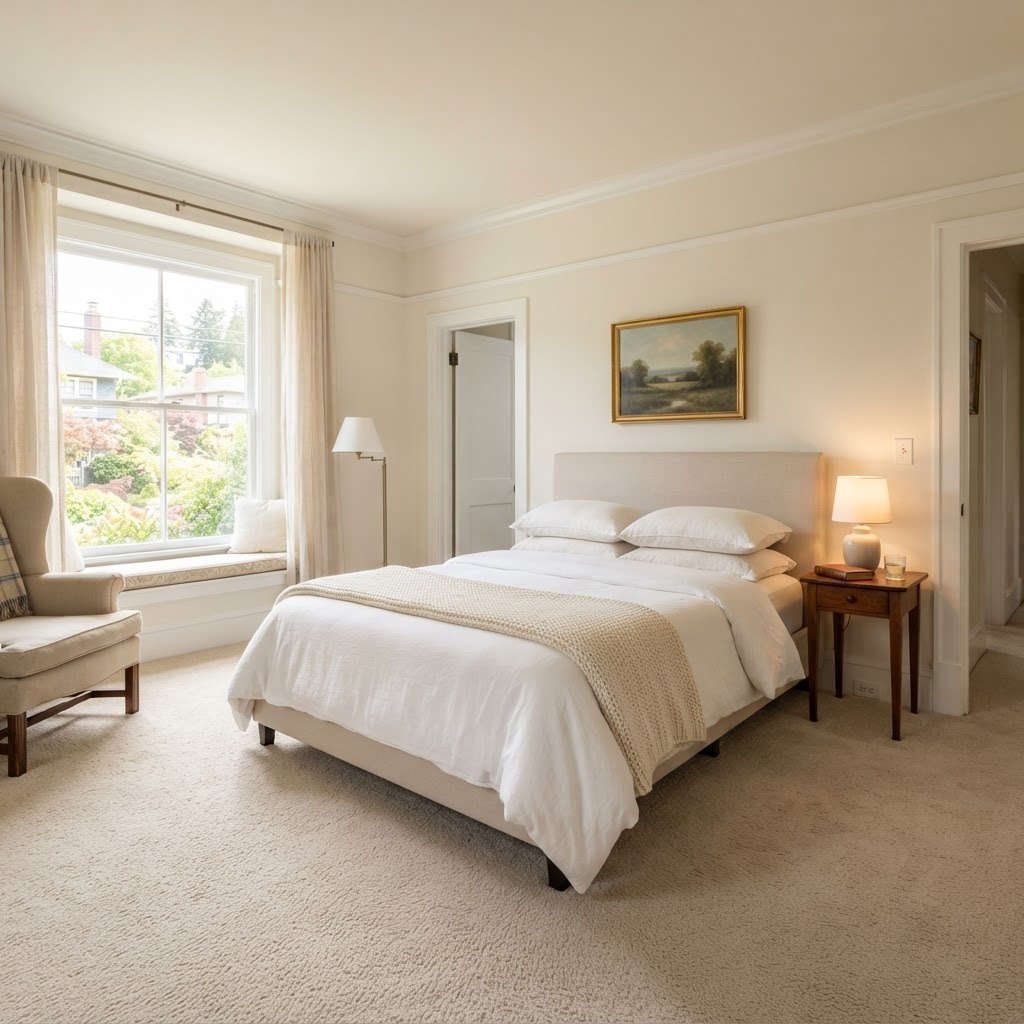
Carpet makes the most sense in Arlington bedrooms, on stairs, in home theaters and finished basements, and in condominiums or multi-story homes where sound reduction matters. It is the warmest, softest and quietest flooring you can choose, and the right fiber, density and padding determine how well it performs. Carpet is a poorer fit for kitchens, bathrooms and entries, where moisture and heavy soil favor tile or luxury vinyl plank. The cost of carpet installation depends on the carpet grade, padding, room layout, stairs, removal of the old carpet, and the preparation your subfloor needs, which is why complete written estimates matter more than headline numbers. Floors and Beyond VA, a family-owned Northern Virginia flooring and remodeling contractor serving Fairfax, Loudoun, Prince William and Arlington counties since 1987, installs carpet with in-house crews and no subcontractors, takes precise laser measurements on every room at no charge, and includes furniture moving, old flooring removal, transitions, molding and cleanup in an all-inclusive estimate.
Carpet installation in Arlington, VA is shaped by the county's housing. Many residents live in condominiums and apartments where neighbors share floors and ceilings. Others own older colonials and Cape Cods where bedrooms are above living spaces, or finished basements where warmth matters in winter. In all of these situations, carpet's comfort and sound absorption are real advantages. This guide covers carpet fibers, padding, comfort, noise reduction, the best rooms for carpet, and the factors that affect replacement and installation, without quoting prices. Visit our carpet page and read our guide to the complete carpet installation process.
Carpet fibers: choosing what the carpet is made of
The fiber affects feel, durability, stain performance and maintenance.
Nylon is widely regarded as the most resilient synthetic fiber. It resists crushing and matting, which makes it a strong choice for stairs, hallways and family rooms. Modern nylon carpets are typically treated for stain resistance, and some are solution-dyed for added color and stain performance.
Triexta is a newer synthetic known for inherent stain resistance and a soft hand. It performs well in homes with children and pets and is often positioned at a moderate level.
Polyester offers vibrant color and softness at a generally lower price level, but it tends to be less resilient than nylon in heavy traffic, making it better for bedrooms and low-traffic areas.
Olefin (polypropylene) resists moisture and stains and is often used in loop constructions and basements, though it can crush more readily.
Wool is a natural fiber valued for its luxurious feel, natural resilience and appearance. It sits at the premium end and requires careful cleaning. Our luxury carpet page offers more.
No fiber is perfect for every situation. The best choice balances your priorities for softness, durability, stain performance, appearance and budget. For more on durability, see our guide to the most durable carpet types.
Construction and style
How the carpet is made influences its look and feel as much as the fiber. Cut pile styles such as plush, textured and frieze offer softness, with textured and frieze styles hiding footprints better. Loop pile styles, including level loop and Berber, are flatter and resist showing traffic marks. Patterned and cut-and-loop styles add visual interest and camouflage wear.
For bedrooms, soft cut pile is popular. For stairs and hallways, dense, tightly twisted or loop constructions tend to hold up well. For basements, loop or textured styles in moisture-tolerant fibers are common. Seeing real samples is the best way to choose, which is why we bring samples to your home.
Padding: the part you don't see
Carpet padding sits between the carpet and the subfloor, and it has a large effect on comfort, sound and longevity. The best carpet on poor padding feels hard, wears faster and may void warranties.
Pads come in several materials, including rebond foam, polyurethane foam, fiber and rubber. Thickness and density matter: a pad that is too thick or too soft can let the carpet flex and wear prematurely, while one that is too thin feels hard and offers less sound absorption. The right pad depends on the carpet, the room and the manufacturer's specifications. On stairs, firmer pads are typically better. In condominiums, associations may specify pad type or thickness for sound control.
Moisture is another consideration. In basements, pads designed to resist moisture and mildew, along with proper subfloor preparation, help prevent problems. Our guide on basement carpet and mold prevention explains the building science.
Ask your installer what pad they recommend and why. If you have to choose between spending more on carpet or on padding, upgrading the pad is often the wiser investment.
Comfort: warmth, softness and safety
Carpet is the most comfortable flooring for bare feet. It is warm in winter, which matters in older Arlington homes with drafty floors or basements that run cool. It cushions falls, which benefits children, older adults and people with joint concerns. It provides traction, making it safer than slick surfaces on stairs. And it feels inviting in bedrooms and family rooms.
Some people with allergies worry about carpet. Modern carpets, regular vacuuming with a good filter, and periodic professional cleaning can keep carpet healthy, and some people find that carpet traps dust and allergens rather than letting them circulate. Individual sensitivities vary, and if allergies are a concern, discuss it with your health provider and your installer.
Noise reduction: why carpet matters in Arlington
Sound is a serious consideration in Arlington, where many residents share walls, floors and ceilings. Carpet and quality padding are the most effective common flooring combination for reducing impact noise, like footsteps and dropped objects, and for absorbing airborne sound within a room, reducing echo.
In a condominium, this can be the difference between peaceful coexistence and neighbor complaints. Many associations require or prefer carpet, and some restrict hard flooring or require sound-rated underlayment. In a single-family home, carpet in upstairs bedrooms reduces noise traveling to the floor below. In a home theater or media room, carpet and padding help absorb sound and improve acoustics. Our home theater carpet page covers this.
If you are replacing carpet in a condo, check your association's rules about padding, approved hours and documentation before ordering materials. We help owners gather what they need.
The best rooms for carpet
Bedrooms. Carpet's softness and warmth make it ideal here, and it reduces noise between floors.
Stairs. Carpet provides traction and cushioning, and it dampens stair noise. Dense constructions and firm padding help it last.
Family rooms and living rooms. Carpet works well in homes that prioritize comfort. Choose resilient fibers and forgiving textures if traffic is heavy.
Home theaters and media rooms. Acoustic benefits are significant.
Finished basements. Carpet adds warmth, but moisture control and subfloor preparation are essential. In basements prone to moisture, other materials may be safer.
Home offices. Carpet reduces echo for video calls, and low, dense loops work well under rolling chairs.
Nurseries and children's rooms. Softness and cushioning are valuable.
Rooms where carpet is a poor choice
Carpet is not suited to bathrooms, laundry rooms, entryways that receive rain and snow, kitchens or any area with frequent moisture or heavy soil. Hard, water-resistant surfaces such as tile or luxury vinyl plank are better there. Our tile and stone and vinyl flooring pages show alternatives.
If you have original hardwood under old carpet, as is common in older Arlington homes, consider uncovering and refinishing it. Our refinish-first approach means we check before replacing carpet with more carpet.
The installation process
Carpet installation proceeds in a series of steps.
First, we measure each room with laser accuracy and plan the layout, considering roll width, seams, pile direction and pattern. Our guide on how much flooring you need explains why quantities differ from square footage.
On installation day, furniture is moved, old carpet and pad are removed, tack strips are checked and replaced if needed, and the subfloor is inspected and cleaned. New pad is installed, and the carpet is cut, seamed, stretched with a power stretcher and secured to the tack strips. Transitions, molding and edges are finished, furniture is returned and the area is cleaned.
The key to a long-lasting installation is proper stretching, careful seaming and attention to details like stairs and thresholds. Poor stretching leads to ripples and wear. Our in-house crews handle the work, and we are fully licensed, bonded and insured.
Factors that affect replacement and installation costs
We do not publish prices in articles, but we can explain what shapes the cost of carpet replacement and installation in Arlington.
The carpet grade, including fiber, density, weight and construction, shapes the material scope. Padding type and thickness matter. Room sizes and layout, including closets and hallways, determine quantities, and roll width affects waste. Stairs require more labor than flat rooms. Removal and disposal of old carpet and pad add steps. Furniture moving takes time. Subfloor condition, such as squeaks, unevenness or moisture, may require preparation. Transitions and molding finish the work. Access constraints, such as condominium elevators, limited parking and working-hour restrictions, influence logistics. And pattern matching can require extra material.
Floors and Beyond VA provides an honest, all-inclusive estimate, and what we quote is what you pay. Our estimates include old flooring removal, new materials, professional installation, furniture moving, transitions, molding and cleanup. To understand why quotes differ among companies, see our guide to professional carpet installation cost factors.
Carpet in Arlington's different housing types
Arlington's housing mix means carpet decisions look different from one address to the next.
In a high-rise or mid-rise condominium near Rosslyn, Courthouse or Pentagon City, carpet is often the easiest flooring to get approved because it controls impact noise. The priorities become padding that meets the association's requirements, a fiber that stands up to the building's heavy use of hallways and entries within the unit, and logistics: elevator reservations, approved work hours and proof of insurance. A knowledgeable installer coordinates these details so approval is smooth.
In a townhouse or rowhouse, stairs are usually the defining feature. Carpet on stairs needs dense construction, firm padding and careful fitting at landings and turns, and the stair carpet often needs to coordinate with the bedrooms above. Replacing it all together gives a consistent look and lets the installer plan seams where they will be least visible.
In a single-family colonial or Cape Cod, carpet is often in upstairs bedrooms while hardwood occupies the main level. A common discovery is original hardwood hiding beneath old bedroom carpet. Before replacing carpet with new carpet, it is worth lifting a corner to look, because refinishing those floors may be an attractive alternative or an excellent plan for some rooms while keeping carpet in others.
In a finished basement, moisture and warmth dominate the decision. A moisture test, a suitable pad and a synthetic fiber help carpet last, and a home theater or playroom often benefits from carpet's sound absorption.
Caring for new carpet
Good habits extend carpet life and keep it looking fresh. Vacuum regularly, using a vacuum with strong suction and a clean filter, and go slowly over traffic lanes. Place walk-off mats at exterior doors to keep grit from grinding into the fibers. Blot spills promptly, working from the outside of the stain inward, and avoid scrubbing, which can distort the pile. Rotate furniture occasionally to even out wear, and use furniture cups to limit dents. Schedule professional cleaning according to the carpet manufacturer's recommendations, since many warranties require it. Keep a small remnant for future repairs. Our floor care page offers more guidance.
Questions to ask before you commit to carpet
A few questions sharpen the decision. Which rooms get the most foot traffic, and does the carpet in those rooms have the density and resilience to cope? Will the pad suit both the carpet and your building's rules? Is the subfloor sound, dry and flat? Are there pets or allergy concerns that favor a particular fiber or a particular cleaning schedule? Do you plan to stay long enough to justify a more resilient product? And what does the written estimate include, from removal to transitions? Having answers ready makes the consultation more productive and the result more satisfying.
How to read carpet warranties and labels
Carpet comes with several kinds of coverage, and the labels can be confusing. Manufacturers often provide warranties for stain resistance, soil resistance, texture retention and manufacturing defects, each with its own conditions and exclusions. Most require that the carpet be installed over an appropriate pad, cleaned according to the manufacturer's guidelines and maintained reasonably. Some limit coverage in certain environments. Keep your paperwork, record the product name and color, and ask your installer to walk you through what is and is not covered. Remember that a manufacturer's warranty covers the product, while the contractor's workmanship warranty covers the installation, and both matter.
Common mistakes to avoid
The most common mistake is choosing carpet without considering padding.
Another is using plush in a heavy-traffic area and being disappointed by footprints and wear.
A third is carpeting a moisture-prone basement without testing and preparation.
A fourth is ignoring condominium rules for padding, hours and documentation.
A fifth is covering hardwood that could have been refinished.
A sixth is choosing a color from a small sample. View large samples in your light.
A seventh is comparing quotes without checking what's included.
Finally, many homeowners delay replacing worn stair carpet, which can become a safety issue.
How Floors and Beyond VA helps Arlington homeowners
We begin with a free in-home consultation. We bring samples to your home, take precise laser measurements at no charge, assess your subfloor and discuss your household's needs. We help you choose fiber, construction and padding appropriate for each room, and we provide a clear, all-inclusive estimate. Our in-house crews, with no subcontractors, install your carpet, move furniture, remove old flooring and clean up. We are fully licensed, bonded and insured, and we can provide documentation your condominium association requires.
We serve Arlington neighborhoods including Clarendon, Ballston, Courthouse, Rosslyn, Crystal City, Pentagon City, Shirlington, Lyon Park, Cherrydale, Westover and Virginia Square, as well as Fairfax, Loudoun and Prince William counties.
Frequently asked questions
What is the best carpet for stairs?
Dense, resilient constructions in fibers like nylon, with firm padding, tend to hold up well.
What is the quietest flooring for a condo?
Carpet with quality padding is the most effective common option for reducing impact noise.
Does padding really matter?
Yes. It affects comfort, sound and longevity.
Can carpet go in a basement?
Yes, after moisture testing and proper preparation, using suitable fibers and padding.
Do you remove the old carpet?
Yes. Old flooring removal is included in our all-inclusive estimate.
Do you move furniture?
Yes. Furniture moving is included.
Do you charge for measurements?
No. Laser measurements are at no charge.
Does Floors and Beyond VA use subcontractors?
No. Our in-house crews handle the work.
Do you serve my Arlington neighborhood?
We serve Arlington County and neighboring Northern Virginia communities.
Ready for carpet installation in Arlington?
The right carpet makes a home quieter, warmer and more comfortable. Floors and Beyond VA offers nearly forty years of Northern Virginia experience, in-house crews with no subcontractors, free in-home consultations with samples, and all-inclusive estimates.
Request your free carpet estimate in Arlington: https://floorsandbeyondva.com/Contact
You can also call (703) 906-5698, or send us a message through our contact page.
For carpet selected and installed in your home, our Arlington, VA flooring company brings samples to you.




