
Which Flooring
Is Long Lasting?
The Honest
Durability Ranking
for NoVA Homes.
Flooring stays in your home for a decade or more — the durability question is the most important one to answer before specifying. Here is the honest ranking, the lifespan numbers, and the distinction that makes hardwood the real longevity winner.
Which Flooring Is Long Lasting?
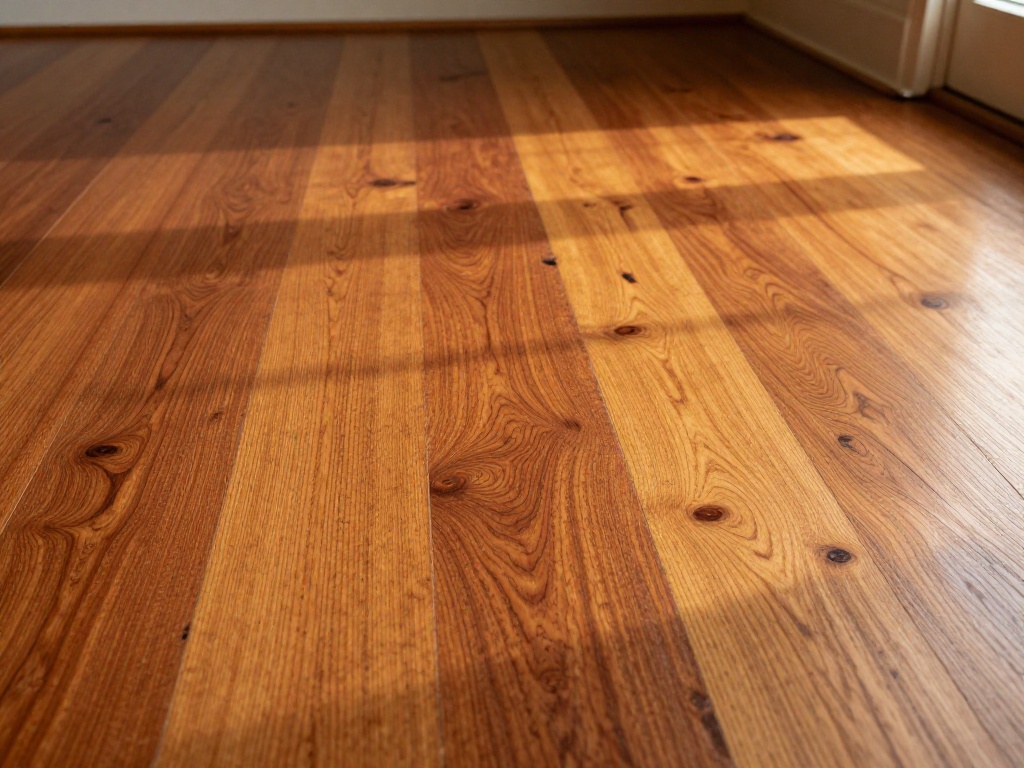
The longest-lasting flooring is solid hardwood — it can be sanded and refinished repeatedly and last 100 years or more. The original red and white oak hardwood in pre-war Northern Virginia homes is real-world proof. Porcelain tile is effectively permanent when correctly installed on a stable substrate. SPC LVP lasts 20–30 years with a 20-mil or thicker wear layer. Quality carpet with 8-lb density pad lasts 10–15 years. Laminate lasts 10–20 years but cannot be refinished. The key distinction: hardwood's surface can be renewed repeatedly; every other flooring type must be replaced when its surface wears out.
The durability question has two components that most flooring guides conflate: surface durability (how well the floor resists scratches, dents, and wear during daily use) and total lifespan (how long the floor remains serviceable before it must be replaced). These are related but not identical. LVP can have excellent surface durability — a 20-mil wear layer resists scratches and abrasion very well — but its total lifespan is capped by that wear layer. When the wear layer is exhausted, the plank is replaced. Hardwood may scratch more easily than LVP, but it can be sanded back to a fresh surface seven to ten times over a century.
In Northern Virginia, this distinction has practical real-world evidence. The pre-war homes of Del Ray, Lyon Village, Waverly Hills, Rosemont, and Old Town Alexandria contain original strip oak hardwood installed between 1900 and 1950. Floors and Beyond refinishes this floor regularly — restoring 75- to 125-year-old wood to like-new condition. No LVP installed in 2005 will be serviceable in 2105. Hardwood installed in 1925 already is.
Flooring Ranked by Longevity
Every major flooring type ranked by how long it remains serviceable in Northern Virginia homes — with the key durability variables for each.
Solid Hardwood
Solid hardwood is the only residential flooring product with a surface that can be renewed by sanding and refinishing. Each refinish removes approximately 1/32 inch of wood and restores the floor's surface to factory-fresh condition. A standard 3/4-inch solid hardwood floor contains approximately 7 to 10 refinishable cycles before the wood becomes too thin to sand further without risking the tongue-and-groove structure.
At a refinishing interval of 7–10 years per cycle, 10 refinish cycles represents 70–100 years of additional surface life after installation — which is why original hardwood installed in 1925 can still be refinished in 2025. The wood itself does not degrade under normal conditions; only the surface finish wears, and that can be renewed.
Porcelain and Ceramic Tile
Porcelain tile is inert — it does not wear in the way organic or vinyl materials do. A porcelain tile installed correctly on a stable, non-deflecting substrate will not degrade from foot traffic, moisture, or UV exposure. The tile itself is effectively permanent; the grout and adhesive are the limiting factors and can be regrouted or repaired without replacing the tile.
In Northern Virginia, tile longevity is almost entirely installation-dependent. Tile installed on a wood joist subfloor without a decoupling membrane will crack within years as the subfloor deflects under load and seasonal movement. Tile installed over a correctly prepared concrete slab or over Schluter Ditra on a wood joist subfloor will not crack from normal use — and the tile itself will outlast every other flooring material in the home.
Engineered Hardwood
Engineered hardwood has a real wood veneer over a plywood or HDF cross-ply core. The veneer thickness — typically 2mm to 6mm — determines how many times the floor can be refinished. A thin 2mm veneer allows one or two light refinishes; a thick 6mm veneer allows three to four full refinishes. With a thick veneer and a 10-year refinishing interval, engineered hardwood can provide 30–60 years of serviceable life — significantly longer than LVP, shorter than solid hardwood.
The engineering advantage over solid hardwood in Northern Virginia: engineered hardwood is more dimensionally stable in humidity — its cross-ply core resists the seasonal expansion and contraction that solid hardwood undergoes, making it better suited for concrete slab installation (after moisture testing) and open-plan spaces where wider planks would gap more noticeably in solid form.
SPC LVP (20-mil+ Wear Layer)
SPC LVP with a 20-mil or thicker wear layer provides 20–30 years of serviceable life under normal Northern Virginia residential conditions — families, pets, shoes worn indoors, regular foot traffic. The wear layer is the only variable that determines LVP longevity: a 6-mil wear layer may last 3–5 years in primary living areas; a 20-mil wear layer lasts 20+ years; a 28-mil or 40-mil commercial-grade wear layer extends further.
The LVP lifespan ceiling: when the wear layer is exhausted, the plank is replaced. Unlike hardwood, LVP cannot be sanded and refinished — there is no wood beneath the wear layer to sand to. This is the fundamental longevity distinction between hardwood and LVP: hardwood's value compounds over time through refinishing; LVP's value depreciates to zero at the end of its wear layer life.
Quality Carpet (Nylon / Triexta, 8-lb Pad)
Quality nylon or triexta carpet with an 8-lb density pad lasts 10–15 years in normal residential conditions before fiber matting, traffic lane wear, and permanent compression reduce its appearance below acceptable levels. The fiber type is the primary longevity variable — nylon and triexta outperform polyester significantly in long-term appearance retention and stain resistance. The pad density is the secondary variable — a cheap pad compresses permanently under traffic, causing the carpet above it to mat and wear unevenly regardless of carpet quality.
Laminate
Laminate has an HDF core with a photographic print layer under a clear aluminum oxide wear layer — similar in surface structure to LVP but with a moisture-vulnerable HDF core instead of a waterproof SPC core. In appropriate above-grade wood joist subfloor applications kept dry, laminate can last 10–20 years. Its limitations in Northern Virginia: it should not be installed on concrete slabs (moisture absorption through the HDF core), and it cannot be refinished when the surface wears. Laminate is the least appropriate specification for Northern Virginia's concrete slab housing stock.
The Refinishability Advantage — Why Hardwood Wins on Longevity
The single factor that separates hardwood from every other flooring type in a longevity comparison — and how it plays out across a century in Northern Virginia homes.
The refinishability distinction is the central longevity argument for hardwood. Every other flooring type — LVP, laminate, carpet, tile — either cannot be renewed at the surface level (LVP, laminate, carpet) or is effectively permanent without surface wear (tile). Hardwood is uniquely renewable: when its surface finish wears, it can be sanded back to bare wood and recoated, resetting the surface to factory-fresh condition without replacing the material.
The pre-war neighborhoods of Northern Virginia — Del Ray, Lyon Village, Waverly Hills, Rosemont, Old Town Alexandria, Clarendon, Seminary Hill — contain some of the most compelling real-world evidence for hardwood's longevity. Original strip oak floors installed in 1910, 1925, and 1940 are still in place, still refinishable, and still the most desirable feature of these homes when they sell.
Floors and Beyond regularly refinishes floors in this housing stock. A floor installed 80–100 years ago that has been properly maintained and periodically refinished still has 1/2 inch or more of solid wood above the tongue — enough for two to four more refinish cycles and another 20–40 years of serviceable life. No product installed today will match that longevity.
Flooring Lifespan Comparison — Full Table
| Flooring | Typical Lifespan | Refinishable? | Key Durability Variable | NoVA Slab OK? |
|---|---|---|---|---|
| Solid Hardwood | 100+ years | Yes — 7–10 times | Humidity management; refinishing interval | No (wood joist only) |
| Porcelain Tile | Indefinite | N/A — inert | Substrate prep; decoupling membrane on wood joist | Yes |
| Engineered Hardwood | 30–80 years | Yes — 1–4 times (veneer-dependent) | Veneer thickness; moisture test on concrete | After moisture test |
| SPC LVP (20-mil+) | 20–30 years | No — replace when worn | Wear layer thickness (20-mil minimum) | Yes |
| SPC LVP (6-mil budget) | 3–7 years | No | Wear layer is insufficient for primary living areas | Yes |
| Carpet (nylon/triexta, 8-lb pad) | 10–15 years | No — replace when worn | Fiber type; pad density; maintenance | Yes |
| Laminate (AC4+) | 10–20 years | No | Moisture protection; above-grade only | No (moisture risk) |
Floors and Beyond assesses original hardwood for refinishability before recommending replacement — free shop-at-home consultation throughout Fairfax, Loudoun, Prince William, and Arlington.
Schedule a Free ConsultationFrequently Asked Questions
Which flooring is long lasting?
Solid hardwood is the longest-lasting residential flooring — refinishable 7–10 times, lasting 100+ years. Porcelain tile is effectively permanent on a correctly prepared substrate. SPC LVP with a 20-mil wear layer lasts 20–30 years. Quality carpet lasts 10–15 years. Laminate lasts 10–20 years but cannot be refinished. The key distinction: hardwood is the only residential flooring with a renewable surface — every other type must be replaced when it wears out.
How long does LVP flooring last?
SPC LVP lasts approximately 20–30 years with a 20-mil or thicker wear layer under normal residential conditions. The lifespan is directly determined by wear layer thickness — a 6-mil budget wear layer may show surface wear within 3–5 years; a 20-mil wear layer provides durable life for primary living areas; 28-mil or 40-mil commercial-grade extends further. Unlike hardwood, LVP cannot be refinished — the plank is replaced when the wear layer is exhausted. In Northern Virginia's active family households, the 20-mil minimum specification is the most important single durability variable.
Does hardwood flooring really last 100 years?
Yes — with correct installation on an appropriate subfloor, humidity management, and periodic refinishing every 7–10 years. The original strip oak hardwood in pre-war Northern Virginia homes in Del Ray, Lyon Village, Waverly Hills, and Old Town Alexandria was installed between 1900 and 1950 and is still refinishable today. Floors and Beyond regularly refinishes this original hardwood, restoring its surface to like-new condition. A 3/4-inch solid hardwood floor can typically be refinished 7–10 times before the wood is too thin to sand further.
// Free Consultation · Northern Virginia
Refinish First. Replace Only When Necessary.
Floors and Beyond assesses original hardwood for refinishability before recommending replacement — and specifies the right durable product for every room and subfloor when replacement is the correct choice. In-house crews throughout Fairfax, Loudoun, Prince William, and Arlington. Since 1987.
Schedule a Free Consultation



