
Durable Flooring for Kids and Pets · Northern Virginia
What Is the Most Durable Flooring for a Home With Kids and Pets?
Durability for a Northern Virginia home with kids and pets is not a single number on a manufacturer's spec sheet. It is the combination of product, finish, subfloor compatibility, and climate performance — and the right answer in Del Ray is not always the right answer in Ashburn.
The most durable flooring for a Northern Virginia home with kids and pets is solid 3/4" white oak with a wire-brushed or matte finish on a wood joist subfloor (pre-war Del Ray, Old Town Alexandria, Clarendon; post-war Burke, Springfield, Fairfax). White oak's tighter grain resists scratches and dents, and the floor can be refinished three to four times over a 30+ year lifespan. On concrete slabs (post-2000 Ashburn, Woodbridge, Herndon, Sterling), SPC LVP with a minimum 20-mil wear layer is the most durable option because solid hardwood is not eligible on a slab and the waterproof core handles pet accidents without permanent damage. Porcelain tile with DCOF 0.42+ for wet areas. In-house crews, no subcontractors, since 1987.
What "Durable" Means in Northern Virginia
Durable in Northern Virginia means something specific. It means the floor survives kids running through the house in cleats. It means the floor survives a Labradoodle tracking red clay soil in from a Loudoun backyard after rain. It means the floor survives the summer humidity above 70 percent that swells every wood product in the home. It means the floor survives the spring pollen from oak and grass and ragweed that settles on every surface and requires frequent cleaning. Durability in NoVA is not a lab test rating — it is field performance under Virginia conditions.
The honest answer to "what is the most durable flooring for a home with kids and pets" is subfloor-dependent. On a wood joist subfloor, solid white oak is the most durable long-term choice. On a concrete slab, SPC LVP is the most durable practical choice. The subfloor determines what is even eligible, and the family pattern determines which eligible product is the right call.
Floors and Beyond VA has been answering this question in Northern Virginia since 1987. The discipline is subfloor-first, climate-aware, and product-agnostic until the assessment is complete. The recommendation follows the home, not the inventory.
The Subfloor Determines Eligibility
Before product selection, the subfloor determines what is even eligible. Floors and Beyond VA uses a subfloor-first framework on every durability assessment. There are three subfloor patterns across Northern Virginia.
Pre-war homes in Del Ray, Lyon Village, Waverly Hills, Rosemont, Old Town Alexandria, Seminary Hill, and Clarendon sit on wood joist with diagonal plank — the strongest subfloor for hardwood. This subfloor accepts solid 3/4" white oak, which is the most durable product on this subfloor because it can be refinished multiple times.
Post-war homes in Burke, Springfield, and Fairfax sit on plywood or OSB over wood joists — also accepting solid 3/4" hardwood, plus engineered hardwood or LVP. Hardwood remains the most durable long-term choice on this subfloor for homes with kids and pets, because the floor can be brought back to like-new condition multiple times.
Post-2000 homes in Ashburn, Woodbridge, Herndon, and Sterling sit on concrete slabs. Solid hardwood is not eligible on a slab without significant floor build-up. The practical options are SPC LVP (with a 20-mil wear layer and a waterproof core) or engineered hardwood (with a thick wear veneer). SPC LVP is the most durable choice on a slab for homes with kids and pets, because the waterproof core handles spills and pet accidents without permanent damage.
Solid White Oak on Wood Joist Subfloors
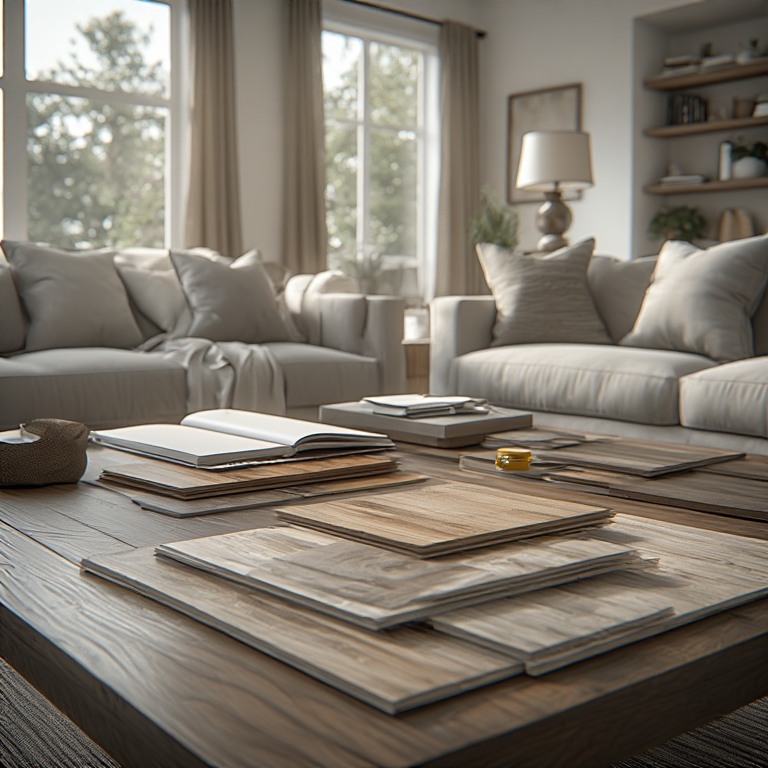
On a wood joist subfloor, solid 3/4" white oak is the most durable flooring for a home with kids and pets. The case is three-fold. First, white oak has a tighter grain than red oak, which means the floor shows fewer scratches and dents under family traffic. Tighter grain also means less moisture absorption, which means less seasonal movement in a Virginia climate.
Second, white oak can be refinished three to four times over its lifespan. A floor that takes a beating in a busy Burke or Springfield family room can be sanded back to fresh wood and brought back to like-new condition multiple times over 30+ years. LVP cannot match this — when LVP wears, it must be replaced entirely. The lifetime cost calculation, even before considering resale value, typically favors hardwood by a significant margin on wood joist subfloors.
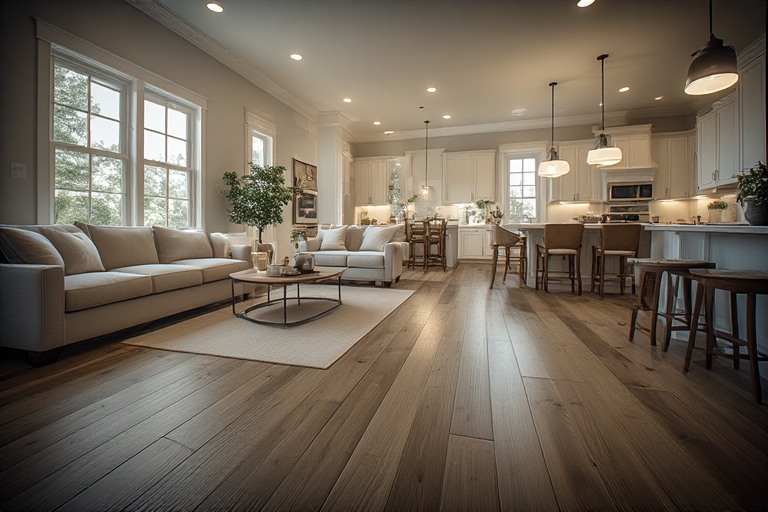
Third, the finish matters as much as the species. Floors and Beyond VA specifies wire-brushed or matte finishes for homes with kids and pets. Wire-brushing removes the softer springwood from the surface, leaving the harder summerwood standing in slight relief. That texture diffuses light, hides scratches, masks dents, and makes seasonal movement nearly invisible. High-gloss finishes, by contrast, show every scratch from every pet claw and every dropped toy — they are not appropriate for a home with kids and pets.
SPC LVP on Concrete Slabs
On a concrete slab — which describes nearly every post-2000 home in Ashburn, Woodbridge, Herndon, and Sterling — SPC LVP is the most durable choice for homes with kids and pets. Solid hardwood is not eligible on a slab without significant floor build-up. Engineered hardwood can work but the wear veneer may only be refinishable once. SPC LVP, specified correctly, is waterproof, dimensionally stable, and handles the inevitable spills and pet accidents without permanent damage.
The Floors and Beyond VA specification for SPC LVP in homes with kids and pets is a minimum 20-mil wear layer and 5mm total thickness or greater. The 20-mil wear layer is the threshold that separates a floor which will last fifteen to twenty years under family traffic from a floor that will show wear within five. The waterproof core is essential — concrete transmits moisture vapor upward, and any product that absorbs that moisture will fail. SPC LVP does not absorb moisture.
The waterproof core also handles pet accidents without permanent damage. A pet accident on solid hardwood can soak into the wood fibers and leave a permanent stain, even after sanding. A pet accident on SPC LVP sits on the surface and can be cleaned without penetrating the floor. For homes with aging pets or house-training puppies, this is a real advantage.
Porcelain Tile for Wet Areas
For bathroom floors, mudroom floors, laundry rooms, and other wet areas in a home with kids and pets, porcelain tile is the most durable choice. The Floors and Beyond VA specification is porcelain over ceramic for primary wet areas (porcelain is denser and less porous), with a DCOF of 0.42 or greater for bathroom floors. DCOF 0.42 is the threshold for slip resistance on wet surfaces — anything below is a slip hazard in a Virginia bathroom, particularly with kids and pets running through.
On a wood joist subfloor — common in pre-war and post-war NoVA homes — tile installation requires a decoupling membrane (Schluter Ditra is the industry standard). The decoupling membrane prevents cracks in the tile from subfloor movement, which is essential in a wood joist home where the floor flexes slightly underfoot. Without a decoupling membrane, tile installed on a wood joist subfloor will crack within a few years of family traffic.
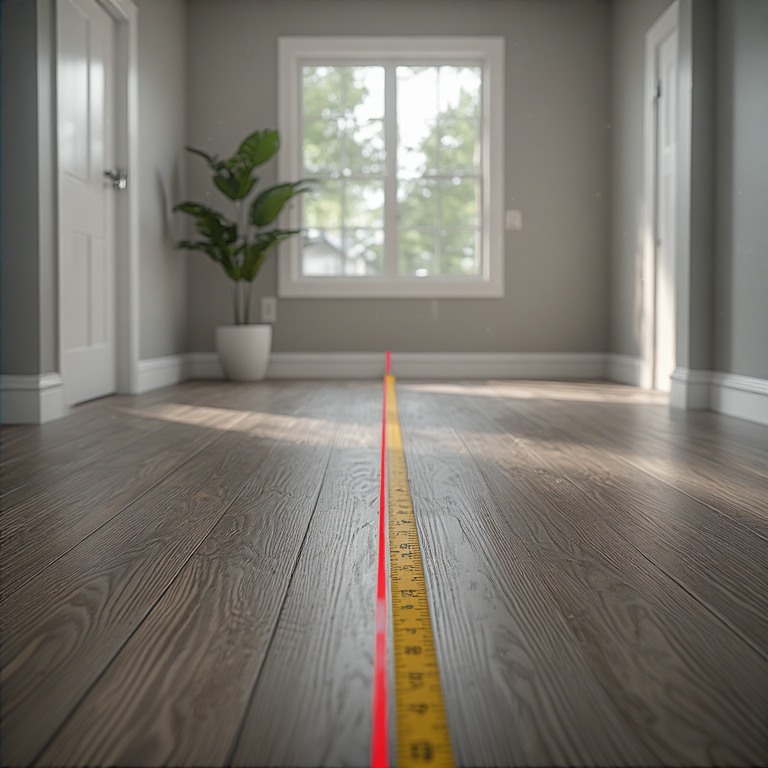
On a concrete slab — common in post-2000 NoVA homes — tile can be installed directly, but the slab must be tested for moisture vapor transmission first. High moisture transmission requires a moisture barrier beneath the tile. Floors and Beyond VA performs this test on every slab tile installation.
The Finish Matters as Much as the Species
For homes with kids and pets, the finish on a hardwood floor matters as much as the species. Wire-brushed or matte finishes hide scratches, dents, and seasonal movement. High-gloss finishes highlight every imperfection. Floors and Beyond VA specifies wire-brushed or matte finishes for almost every Northern Virginia family home installation, because the texture diffuses the visible reflections that would otherwise highlight wear.
Wire-brushing removes the softer springwood from the surface of the board, leaving the harder summerwood standing in slight relief. That texture diffuses light in multiple directions, which masks scratches and dents that would be visible on a smooth surface. The texture also hides the seasonal movement that every Virginia hardwood floor experiences — winter gaps and summer cupping are nearly invisible on a wire-brushed floor, where they would be glaring on a high-gloss floor.
The same logic applies to LVP finish selection. Matte and embossed-in-register finishes hide wear and movement better than smooth, glossy LVP surfaces. For a home with kids and pets, the texture is functional, not aesthetic — it extends the visible lifespan of the floor by years.
The Climate Factor
Northern Virginia's climate is rough on flooring in ways that other climates are not. Winter indoor humidity routinely drops below 30 percent, driving wood floors to shrink and open gaps. Summer humidity above 70 percent — sometimes 90 percent during July and August — causes the same floors to swell. Spring pollen from oak, grass, and ragweed settles on every surface. Red clay soil from Loudoun and Prince William backyards tracks in on shoes and pets.
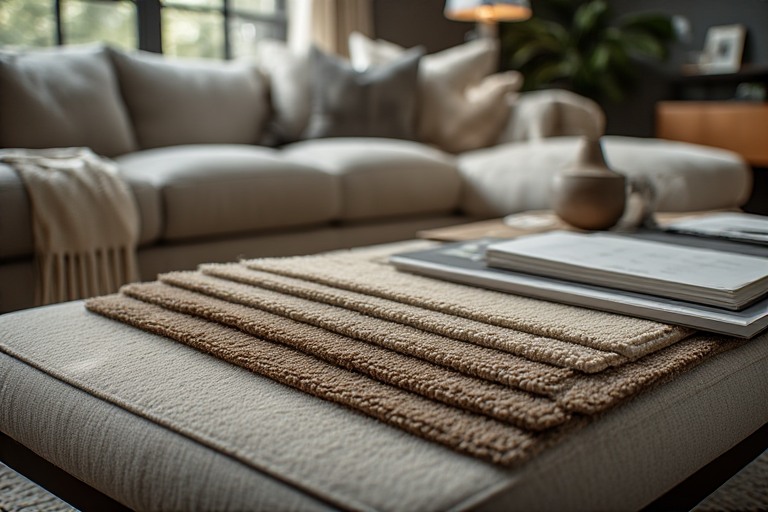
The product spec needs to account for all of these stresses. Hardwood with a wire-brushed matte finish handles the humidity swing and hides the soil and pollen. SPC LVP handles the spills and the humidity without absorbing moisture. Tile handles the wet areas. Carpet, properly specified, handles the bedrooms — but requires more frequent cleaning in NoVA than in drier climates.
Indoor air quality also matters for a home with kids. Hardwood, properly finished, is inert and does not off-gas. Tile is similarly inert. LVP can off-gas VOCs for weeks or months after installation — Floors and Beyond VA specifies low-VOC LVP products for homes with kids, particularly those with allergy concerns. Carpet traps dust, pollen, and pet dander, which can be a benefit (the carpet holds particles until they are vacuumed) or a problem (the particles are released into the air with each footstep).
Why In-House Crews
Floors and Beyond VA does not use subcontractors. Every installation — hardwood, LVP, tile, carpet — is performed by an in-house employee supervised on-site. This structure matters because homes with kids and pets require precision installation. A hardwood floor installed without proper acclimation will cup and gap within a year. An LVP floor installed without proper subfloor preparation will telegraph imperfections and fail at the seams. A tile floor installed without a decoupling membrane on a wood joist subfloor will crack.
An in-house crew answers to the company that sold the job. The company answers to the homeowner. There is no third party to blame when something goes wrong. Floors and Beyond, who leads the field assessments, has roughly forty years of experience on Virginia job sites. That experience is what allows the company to walk into a busy family home in Burke or Ashburn and know, within minutes, which product is the right call.
Frequently Asked Questions
What is the most durable flooring for a Northern Virginia home with kids and pets?
On a wood joist subfloor — pre-war Del Ray, Old Town Alexandria, Clarendon, or post-war Burke, Springfield, Fairfax — solid 3/4" white oak with a wire-brushed or matte finish. On a concrete slab — post-2000 Ashburn, Woodbridge, Herndon, Sterling — SPC LVP with a minimum 20-mil wear layer. Porcelain tile with DCOF 0.42+ for wet areas.
Is LVP or hardwood more durable for homes with pets?
It depends on the subfloor. On a wood joist subfloor, solid white oak is more durable long-term because it can be refinished. On a concrete slab, SPC LVP is the practical choice because solid hardwood is not eligible. The waterproof core of SPC LVP also handles pet accidents without permanent damage, which is a real advantage for homes with aging pets or puppies.
Why does Floors and Beyond VA prefer white oak over red oak for homes with kids?
White oak has a tighter grain than red oak, which means the floor shows fewer scratches and dents under family traffic. Tighter grain also means less moisture absorption, which means less seasonal movement in a Virginia climate. White oak also takes wire-brushed and matte finishes more gracefully, which masks wear over time.
What makes SPC LVP more durable than regular LVP for homes with kids and pets?
SPC (stone polymer composite) LVP has a rigid core made from limestone and PVC, which makes it dimensionally stable and waterproof. Regular LVP is more flexible and less dimensionally stable. The waterproof SPC core handles pet accidents and spills without permanent damage, and the dimensional stability prevents the floor from telegraphing subfloor imperfections or separating at the seams.
Floors and Beyond VA — Service Area
Floors and Beyond VA installs durable flooring across Northern Virginia, including the cities and communities of Ashburn, Woodbridge, Herndon, Sterling, Leesburg, Reston, Springfield, Burke, Fairfax, Alexandria, and Arlington.
Fairfax County · Loudoun County · Prince William County · Arlington County
Schedule a kids-and-pets flooring consultation directly with Floors and Beyond VA — in-house crews, no subcontractors, no pricing on the website.