
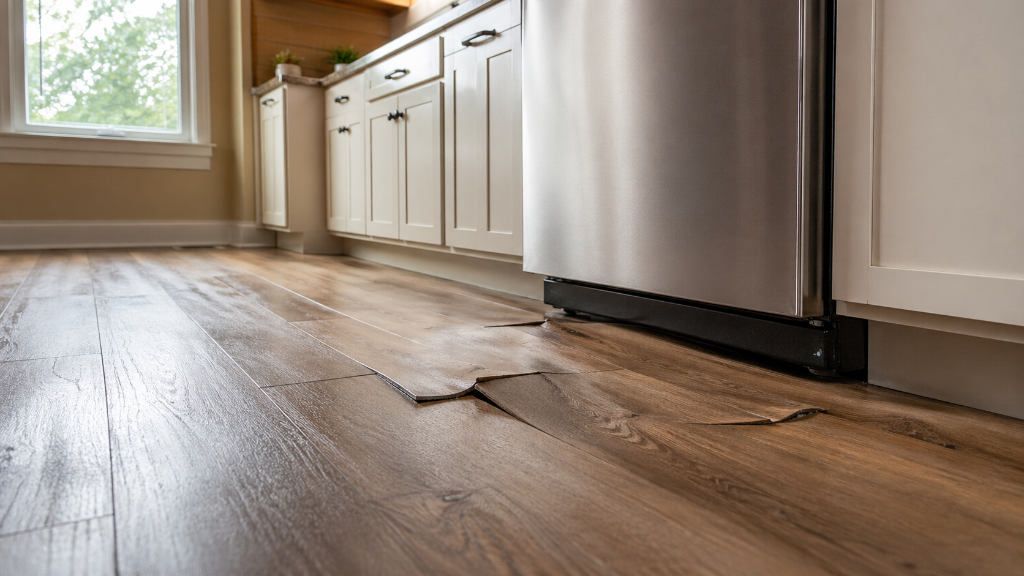
My Kitchen Floor
Was Damaged
By a Leak.
Now What?
Leaking dishwasher, burst pipe, refrigerator line — it doesn't take much water to do real damage. Here's exactly what to do next, from a contractor who's seen it all.
It's one of the most stressful calls we receive — a homeowner in Fairfax or Manassas who just discovered their kitchen floor has been sitting in water. Sometimes it's a slow dishwasher leak they didn't notice for weeks. Sometimes it's a burst supply line they found that morning. Either way, the question is the same: what do I do now, and how bad is it?
Water damage to a kitchen floor is more common in Northern Virginia than most homeowners realize — and the outcome depends almost entirely on how quickly and correctly you respond. The right steps taken in the right order can mean the difference between a straightforward floor replacement and a mold remediation project that takes weeks and costs far more than anyone planned.
This guide walks you through everything — from the moment you discover the problem to the day your new floor goes down.
Do This First: The Immediate Response
Before you call a flooring contractor, before you file an insurance claim, there are things that need to happen in the next few hours. Speed matters more here than almost anything else.
Find the water source and stop it immediately. Turn off the supply valve under the sink, behind the dishwasher, or at the main shutoff if necessary. Nothing else matters until the water stops flowing.
Towels, a wet/dry vacuum, or a mop — get the standing water up as fast as possible. Every hour that water sits on or in your floor extends the damage deeper into the material and subfloor beneath it.
Open windows, run fans, and if you have a dehumidifier, deploy it. Northern Virginia's humidity — especially in spring and summer — will slow the drying process considerably without active ventilation. The goal is to move moisture out of the space before it penetrates further.
Before you move anything or begin cleanup, photograph the damage from multiple angles. Date-stamped photos of the source, the affected floor area, and any visible subfloor damage are essential for insurance claims. Don't skip this step even if you're in a hurry.
Most homeowner insurance policies cover sudden and accidental water damage — a burst pipe or failed appliance connection. Slow leaks that built up over time are typically excluded. Call your insurer to open a claim before any permanent repairs begin. They may send an adjuster, and starting work before the claim is documented can create complications.
Once the immediate emergency is handled and your claim is open, bring in a flooring professional to assess the full extent of the damage — surface, subfloor, and adjacent areas. What looks like a contained problem on the surface is often more extensive underneath.
⚠ Don't Wait on Mold
Mold can begin developing in a wet subfloor within 24 to 48 hours, particularly in Northern Virginia's humid climate. If the leak was slow or went undetected for days, assume moisture has reached the subfloor and treat accordingly. Mold remediation after the fact costs significantly more than addressing it immediately.
Assessing the Damage: How Bad Is It Really?
Not all water damage is equal. The extent of what needs to be done — and what it will cost — depends on how long the water was present, what type of flooring you have, and whether the subfloor was compromised. Here's how to roughly categorize what you're dealing with.
Contractor's Note
"In Northern Virginia, slow dishwasher leaks are the most common culprit we see — and the most damaging, because they go undetected for so long. By the time the homeowner notices, the subfloor under the kitchen has been wet for weeks. Always check under and around appliances when you notice any floor discoloration or soft spots near the kitchen."
Your Flooring Options After Water Damage
Once the damage is assessed and the subfloor is confirmed dry and structurally sound, it's time to choose what goes back down. Water damage actually presents an opportunity to upgrade — and there are options that will handle a future leak far better than whatever was there before.
The strongest choice for a kitchen replacement after water damage. LVP is 100% waterproof — if a future leak occurs, the floor itself will not be damaged. A quality SPC-core LVP with a 12 mil or higher wear layer is durable, easy to clean, and available in a wide range of realistic wood and stone looks. It's the most common recommendation we make for kitchen floor replacements in Northern Virginia homes precisely because it eliminates future moisture risk at the floor level.
Completely waterproof and highly durable — tile is immune to water damage at the surface level. The grout lines require sealing and periodic maintenance to remain water-resistant, but a properly installed and sealed tile floor handles kitchen moisture as well as any material available. The tradeoff is hardness underfoot and the cold feel that LVP avoids. An excellent choice for homeowners who prefer tile aesthetics or have radiant heat beneath the floor.
More moisture-tolerant than solid hardwood due to its layered construction, but not waterproof. Engineered hardwood can handle typical kitchen humidity and the occasional spill, but a future appliance leak will cause damage. If aesthetics are the priority and budget allows, it's a viable option — but it does not eliminate the vulnerability that caused the original problem. We recommend it with that caveat clearly stated.
We do not recommend solid hardwood as a kitchen floor replacement after water damage. The same vulnerability that caused or worsened your original problem remains. Solid hardwood in a kitchen requires diligent moisture management that most households cannot consistently maintain. There are better options that look just as good and won't repeat the same outcome.
Laminate is wood-based at its core and will absorb moisture, swell, and delaminate when exposed to water — exactly the scenario you've already been through. Despite its surface appearance and lower cost, laminate is the wrong choice for a kitchen floor replacement after water damage. Avoid it entirely in this context.
The Part Most Homeowners Don't Think About: The Subfloor
The floor you see is only half the story. Beneath your kitchen flooring is a subfloor — typically plywood or OSB in Northern Virginia homes — and it is the part most vulnerable to serious water damage. If the subfloor has been compromised, installing new flooring over it is not a solution. It is a problem deferred.
A wet or damaged subfloor will continue to move, flex, and potentially harbor mold beneath your brand new floor. Within months, the new installation will show gaps, squeaks, soft spots, or worse. The right approach is to fully assess and address the subfloor before any new material goes down — and a reputable contractor will insist on this, not rush past it.
Signs a subfloor needs attention: soft or spongy areas when you walk across it, visible discoloration or staining when the old floor is removed, a musty odor that persists after surface drying, or visible delamination of plywood layers. Any of these warrant either partial subfloor replacement or full replacement of the affected section before reinstallation.
Navigating Insurance for Kitchen Floor Water Damage
What's Typically Covered vs. What Isn't
- Typically covered: Sudden and accidental damage — a dishwasher supply line that burst, a refrigerator ice maker line that failed, a pipe that froze and cracked. These are sudden events, and most standard homeowner policies in Virginia cover resulting damage.
- Typically not covered: Slow leaks that built up over time, gradual seepage, or damage resulting from lack of maintenance. If the adjuster determines the leak was ongoing and detectable, coverage may be denied.
- Document before you repair: Do not start permanent repairs before your adjuster has visited and documented the damage. Most insurers require this as a condition of the claim.
- Get itemized estimates: Your insurer will want a detailed estimate separating materials, labor, subfloor repair, and any mold remediation. We provide documentation-ready estimates that work with the claims process.
- Know your deductible: For smaller or moderate claims, it's worth calculating whether the repair cost exceeds your deductible meaningfully enough to make filing worthwhile versus paying out of pocket.
Frequently Asked Questions
How long does it take to replace a kitchen floor after water damage?
From initial assessment to completed installation, most kitchen floor replacements in Northern Virginia take one to two weeks when subfloor damage is moderate. More extensive subfloor work or mold remediation can extend the timeline. We'll give you a specific schedule during your assessment — and we work to minimize the time your kitchen is out of service.
Can water-damaged hardwood floors be saved?
Sometimes, if the damage was caught quickly and the floor was dried thoroughly before warping or cupping set in. Mild surface damage to hardwood can occasionally be addressed through refinishing once the floor is fully dry. However, if warping, cupping, or subfloor damage is present, replacement is the only reliable solution. We'll assess what's salvageable honestly — we won't push for replacement when repair is viable.
How do I know if my subfloor was damaged by water?
The most reliable signs are soft or spongy spots when walking across the affected area, squeaking that wasn't there before, visible discoloration when the surface floor is lifted, and persistent musty odor even after surface drying. A professional assessment will probe the subfloor for structural integrity and moisture content before any new installation begins.
Does homeowners insurance cover kitchen floor water damage in Virginia?
It depends on the source and nature of the leak. Sudden and accidental damage — a burst pipe or appliance failure — is typically covered under standard Virginia homeowner policies. Slow leaks or gradual damage discovered over time are usually excluded. Document everything, contact your insurer before beginning permanent repairs, and request an adjuster visit before authorizing any work.
What is the best flooring for a kitchen in Northern Virginia to prevent future water damage?
LVP with an SPC rigid core is our top recommendation for kitchen floors in Northern Virginia specifically because it is 100% waterproof at the plank level. A future appliance leak will not damage the floor itself. Porcelain tile is equally waterproof and an excellent alternative. Both eliminate the core vulnerability that makes kitchen floor water damage so costly to address.
How soon after a leak can new flooring be installed?
Not until the subfloor moisture content returns to an acceptable level — typically below 12% for most flooring installations. Depending on the extent of the saturation and the ventilation in your home, this can take anywhere from several days to several weeks. Installing over a wet subfloor is one of the most common causes of premature floor failure, and we will not do it. We'll measure moisture levels before any installation begins.
Dealing With Water Damage Right Now?
We serve Fairfax, Loudoun, Manassas, and Prince William Counties. Call us or schedule an assessment — we'll tell you exactly what you're dealing with and what it takes to fix it right.
Get a Free Assessment



