
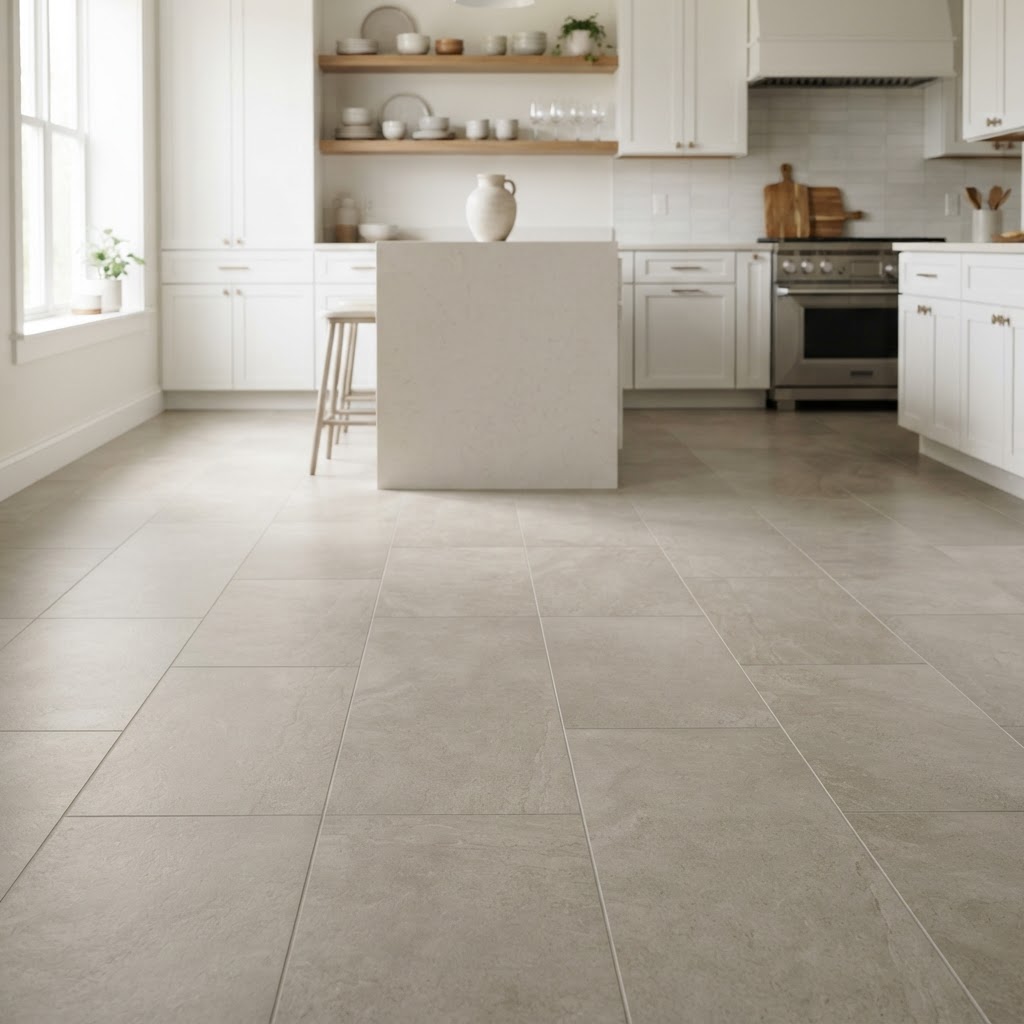
The short answer: porcelain is the best all-around tile for most kitchen floors, because it is dense, highly water-resistant and tough enough to survive dropped pans, spills and daily traffic. Ceramic and natural stone are strong alternatives when the style or budget calls for them.
Floors and Beyond VA, a family-owned Northern Virginia flooring and remodeling contractor serving homeowners since 1987, brings sample boards to your home so you can see tile beside your cabinets, counters and light before you commit.
A kitchen is the hardest-working room in the house. It handles water, grease, heat, heavy appliances, family traffic and the occasional crash. The floor sets the tone for everything else, and it can be a good investment when it is chosen with care. This guide compares porcelain, ceramic and natural stone, discusses durability and maintenance, covers style and grout decisions, offers budgeting tips and brings in local context from Prince William, Loudoun, Fairfax and Arlington counties.
Why tile suits kitchens
Tile resists water, stains and heat. A kitchen floor may see spilled juice, boiling water, a dropped hot pan and a leaking dishwasher in the same year. Tile shrugs most of that off. It does not warp like some wood floors can, and it is easy to clean. It also lasts for a very long time when installed over a stable substrate.
The trade-offs are real. Tile is hard underfoot and can be tiring if you stand for long periods. Dropped glasses will break. Grout lines require care. Cold in winter, tile can be softened with area rugs or radiant heating, a separate project that should be handled by qualified professionals.
Porcelain tile
Porcelain is made from fine clay fired at high temperature, producing a dense, hard surface with very low water absorption. This makes it suitable for kitchens, entries and even outdoor applications. Through-body porcelain carries color throughout the tile, so chips are less noticeable. Printed porcelain can imitate wood, stone, concrete and more with convincing realism.
For most Northern Virginia kitchens, porcelain is our first recommendation. It stands up to heavy traffic, tolerates temperature swings and offers an enormous range of looks. Porcelain is also less likely to stain, though grout still needs attention.
Ceramic tile
Ceramic tile is also fired clay, but it is generally less dense than porcelain. It remains a good option for many kitchens, especially on walls, backsplashes and lighter-duty floors. Glazed ceramics come in a wide array of colors and patterns, including handmade and artisan styles.
On kitchen floors, ceramic should be chosen with its rating for floor use in mind. Check that the product is intended for floors and suited to the traffic level. A glaze can chip, and in heavily used kitchens, a more durable porcelain may serve better.
Natural stone
Natural stone brings unique beauty. Slate, travertine, limestone, granite and marble each have a distinct character. Stone can be breathtaking in a kitchen, but it requires care. Many stones are porous and need sealing. Some are soft and can scratch or etch. Acidic substances such as vinegar, citrus and wine can mark certain stones.
If you love stone, we help you choose a variety and finish suited to kitchen life. Honed or textured finishes are typically more forgiving than polished ones. Sealing and maintenance are part of the commitment. Our tile and stone page covers the materials and methods we work with.
Comparing durability and maintenance
- Porcelain. Excellent durability, minimal maintenance beyond sweeping, mopping and occasional grout care.
- Ceramic. Good durability, more susceptible to chips on high-use floors, similar maintenance.
- Natural stone. Variable durability, higher maintenance, with sealing and careful cleaning.
Grout is the shared weak point. Cement-based grout is porous and can stain. Sealing helps. Epoxy grout resists stains more effectively but is more demanding to install. Dark or mid-tone grout hides spills better than white. We advise on grout as part of the design.
Style: size, shape, pattern and color
- Large-format tiles reduce grout lines and make a kitchen feel open and modern. They require a very flat substrate and skilled installation.
- Standard tiles offer flexibility and a classic look.
- Small tiles and mosaics suit accents and can be used in patterns, though they add many grout lines.
- Plank-shaped tiles imitate wood and bring warmth with the durability of porcelain. In an open plan, they allow a continuous look from kitchen to living area.
- Patterns such as herringbone, offset, stacked or basketweave change the character of the room. Offset patterns hide minor lippage, while stacked patterns require more precise tile and installation.
- Color matters in a space with strong light. Warm neutrals feel cozy. Cool grays feel contemporary. Dark floors show crumbs and dust. Light floors show stains. Medium tones with variation often hide daily life best.
Grout color and width
A narrow grout line gives a sleek look and works well with rectified tiles. A wider line suits handmade tiles and traditional designs. Matching grout color to the tile creates a continuous surface. A contrasting grout highlights the pattern.
We recommend mid-tone grout in most kitchens for practicality. We also discuss sealing and cleaning so you know how to keep it looking fresh.
Comfort: standing, dropping and temperature
Hard floors are tough on feet and dishes. If you cook for hours, consider anti-fatigue mats in the work zones. Area rugs near the sink and stove add comfort and catch spills. Some homeowners choose a more cushioned floor, such as luxury vinyl, for this reason. We help you weigh the benefits of tile against alternatives, and we do not push one surface where another would serve you better.
If cold floors bother you, radiant heating is an option to explore with qualified professionals. We can discuss how it fits into a larger remodel.
Local context: Northern Virginia kitchens
Kitchens across Northern Virginia vary widely. In Prince William County, townhomes and family houses in Woodbridge and Manassas often have open plans and slab foundations, where tile is a natural fit. In Loudoun County, newer homes in Ashburn and Sterling often have builder-grade kitchen floors ready for upgrade. In Fairfax County, older houses in Vienna, Fairfax and Falls Church may have kitchens that were renovated at different times, creating seams between old and new floors. In Arlington, compact kitchens in condominiums and older brick homes call for careful layout.
Climate matters too. Humid summers and dry winters stress some materials more than others. Tile is largely unaffected by humidity changes, one reason it is popular in this region. The substrate beneath it must be stable, and we check that thoroughly. Our overview of where we work around Tysons, Fairfax, Vienna, Reston and McLean covers the region.
Resale impact
Kitchens influence buyers' impressions more than almost any other room. A clean, durable, attractive floor supports a good first impression. Neutral, timeless tile in a well-executed layout tends to appeal broadly. Extremely bold choices may delight you and limit appeal to others. If you expect to sell within a few years, we help you choose with the market in mind. If you plan to stay, choose what you love.
Budgeting tips without quoting numbers
We do not publish prices in articles because they depend on the specific project. Instead, here are the cost drivers and ways to manage them.
Tile cost varies by material, size, finish and brand. Natural stone and handmade tile generally cost more than standard porcelain or ceramic. Labor depends on tile size and pattern, the flatness of the subfloor, the complexity of the layout and the number of cuts around cabinets, islands and appliances. Demolition of existing flooring, repairs to the substrate, leveling and waterproofing add to the scope.
To manage the budget, decide on priorities. Spend on the floor if you will see and use it every day. Consider using a premium tile in a focal area and a simpler tile elsewhere. Coordinate with other kitchen work to avoid rework, such as removing and replacing flooring around new cabinets.
The best way to understand cost is a written, all-inclusive estimate based on actual measurements, which is what we provide. Our pricing and policy page explains how estimates work.
Tile and the whole-kitchen plan
Many homeowners decide to renovate the floor and then realize the cabinets, counters or layout deserve attention. Because Floors and Beyond VA also does kitchen remodeling, we can coordinate the floor with the rest of the project. Sequence matters. Tile may go in before or after cabinets depending on the design, and appliances need to fit at finished floor height. A single team planning the whole kitchen avoids conflicts.
For larger transformations, our whole-house remodel and home addition work can bring a kitchen into a new layout, with flooring planned from the start.
Installation expectations
A professional tile installation includes removal of the old floor, inspection and preparation of the substrate, layout planning, setting the tile, grouting, sealing where needed and installing transitions. Curing times for mortar and grout must be respected. We explain the process and what to expect for kitchen access during the work.
Substrate matters. Tile needs a stiff, flat, stable base. Movement in the subfloor can crack tile and grout. We evaluate the structure and recommend reinforcement or underlayment when needed. Our flooring installation guide walks through the standard sequence.
Heat, grease and kitchen realities
Kitchens expose floors to unique stresses. Grease splatters near the range can make a smooth surface slick. Hot pans may be dropped. Heavy appliances sit for years in one place. A refrigerator or dishwasher leak can send water across the floor. Tile is well suited to these realities, but the design should anticipate them.
Choose a surface with enough texture to resist slipperiness near the sink and stove. Seal natural stone and grout. Use quality setting materials. Leave room for appliances, and make sure the floor height works with dishwasher and range openings. Planning for the real life of the kitchen avoids regrets.
Open kitchens and the transition to living areas
In many Northern Virginia homes, the kitchen opens to a family room or dining area. The floor choice affects the whole space. Some homeowners carry the tile through, creating a continuous, easy-care zone. Others change materials at a natural boundary, such as the edge of an island or a change in ceiling height. Either approach can work. The transition should be deliberate, safe and well finished.
If the adjoining room has hardwood, we pay special attention to height differences and color relationships. A wood-look porcelain plank can bridge the two worlds beautifully.
Backsplash, walls and cohesive design
A floor looks best when it relates to the rest of the kitchen. Consider the cabinet color, the counter material and the backsplash. A busy backsplash pairs well with a calmer floor. A quiet backsplash can handle a more patterned floor. Repeating one color or texture across surfaces ties the room together. We bring sample boards so you can see these relationships.
Care routines that keep tile looking new
Daily care for a kitchen tile floor is simple. Sweep or vacuum to remove grit. Mop with a neutral cleaner approved by the tile and grout manufacturers. Wipe spills promptly. Avoid acidic or abrasive cleaners on natural stone. Re-seal grout and stone as recommended. Place mats at the sink and stove for comfort and to protect the floor from splashes.
If you notice a loose tile, a hollow sound or a crack, let us know early. Small repairs are far easier than larger ones, and a loose tile can sometimes indicate a substrate issue that deserves attention. Our floor care page lists the products we recommend.
Planning for appliances and cabinets
Heavy appliances and cabinets need support. Tile should be installed with attention to where cabinets will sit and how appliances will slide in and out. Some designs run tile under the cabinets. Others stop at the cabinet kickplate. We discuss both approaches, because each has implications for future remodeling. Consider whether you may replace cabinets later and how the floor would be affected.
A note on lighting and finish in kitchens
Kitchen lighting is usually bright and layered, with under-cabinet fixtures, pendants and recessed lights. These reveal the surface of the floor. A highly polished tile shows reflections, smudges and unevenness. A matte or honed finish diffuses light and hides imperfections. Textured surfaces add warmth. Look at samples under the lighting you will actually use to avoid surprises.
What drives the scope of a kitchen tile project
The scope depends on the size and shape of the kitchen, the tile selected, the layout pattern, the condition and type of the subfloor, the removal of existing floors, the number of cuts around cabinets and appliances, the transitions to adjoining rooms and the furniture or appliances to move.
We take precise laser measurements at no charge and prepare a written, honest, all-inclusive estimate covering old flooring removal, new materials, installation, furniture moving, transitions, molding and cleanup. What we quote is what you pay.
Why Northern Virginia homeowners choose Floors and Beyond VA
- Family-owned since 1987. We know local kitchens and the homes around them.
- In-house crews only. Skilled tile setters on our own team.
- Free in-home consultation with sample boards. See tile beside your cabinets.
- Precise laser measurements at no charge. Accuracy helps layout.
- Honest, all-inclusive estimates. No surprises.
- Fully licensed, bonded and insured. Peace of mind.
- Remodeling perspective. We can plan flooring with cabinets, counters and layout changes.
- No showroom. We come to you.
Floors and Beyond VA helps you choose a kitchen floor that looks right and works hard.
Common mistakes with kitchen floor tile
- Choosing glossy tile. It can be slippery when wet.
- Skipping substrate preparation. Cracks often come from movement below.
- Using white grout without a plan. It stains.
- Picking a tile that is not rated for floors. Wall tile can break under foot traffic.
- Forgetting about transitions. Plan the meeting with adjoining floors.
- Neglecting appliance heights. Floor thickness affects how appliances fit.
- Ignoring comfort. Consider rugs, mats and alternative materials.
Frequently asked questions
Is porcelain better than ceramic for kitchens?
Often yes, thanks to its density and durability, though ceramic can work well.
Does tile add value?
Quality, well-installed tile generally appeals to buyers.
Can I tile over my existing floor?
Sometimes. We inspect the existing surface and substrate.
How do I clean grout?
Use products recommended by the grout manufacturer and seal as directed.
Is tile slippery?
It depends on the finish. Choose a matte or textured option. Read more in Anti-Slip Bathroom Tile: What Makes a Tile Truly Slip-Resistant.
Related resources
Our kitchen remodeling page describes how we handle kitchen projects, our tile and stone page covers materials and methods, and our guide to whether kitchen flooring comes before or after cabinets answers the sequencing question.
Ready to choose your kitchen floor?
Free in-home consultation
Let us bring sample boards to your home and help you decide. You get an honest, all-inclusive estimate covering removal, materials, installation, transitions, molding and cleanup.
Contact Floors and Beyond VAFloors and Beyond VA
Family-owned flooring and remodeling since 1987, serving Northern Virginia
Phone: (703) 906-5698
Email: hello@floorsandbeyondva.com
Web: floorsandbeyondva.com




