
Hardwood Flooring
in Arlington, VA:
What Each
Neighborhood
Actually Needs.
Lyon Village bungalows with original 1930s hardwood. Ballston high-rises on concrete with IIC acoustic requirements. Clarendon condos where HOA documents determine the underlayment spec. Arlington's housing is remarkably diverse — and each context requires a different flooring approach.
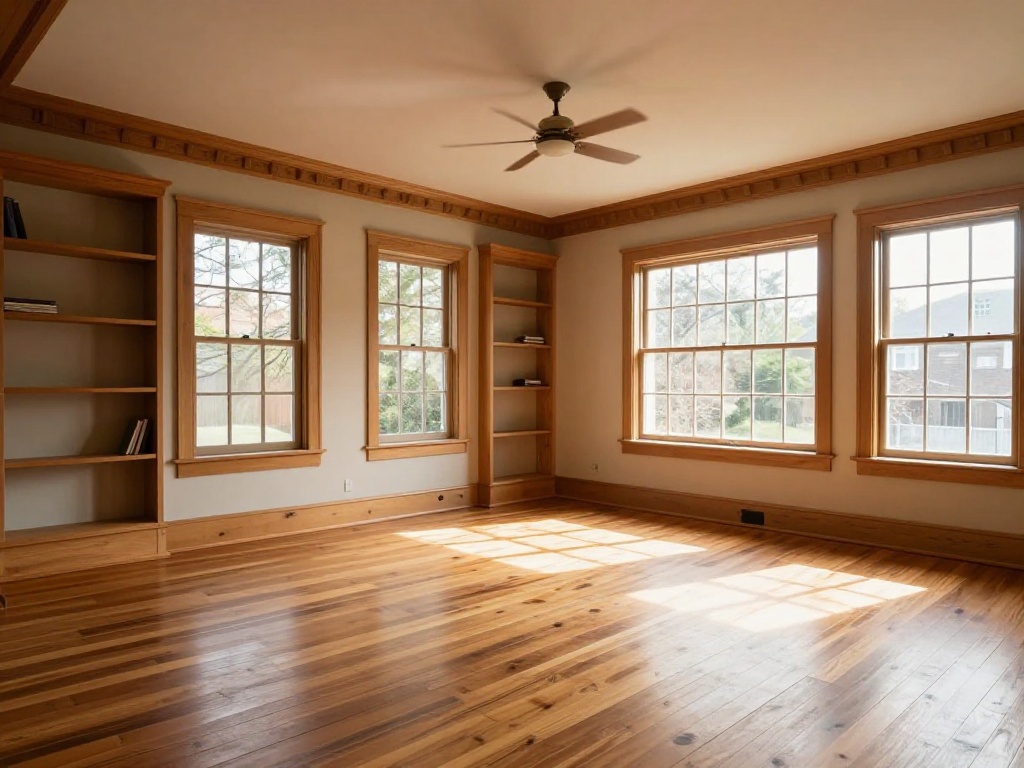
- Arlington's housing spans nearly a century of construction — pre-war Lyon Village bungalows with original hardwood, post-war suburban homes with mixed subfloors, and the dense condo corridor from Ballston to Crystal City, each requiring a different flooring specification.
- Lyon Village, Waverly Hills, Ashton Heights, and Cherrydale's pre-war homes frequently have original 2.25-inch strip oak floors that are thick, structurally sound, and excellent candidates for professional refinishing — restoring them is almost always the right choice over replacement.
- Arlington's condo corridor (Ballston, Clarendon, Courthouse, Crystal City) is on concrete — solid hardwood is not appropriate, and HOA acoustic requirements (typically IIC 50+) determine both the product and the underlayment specification.
- Floor restoration is a distinct service — "floor restoration arlington va" reflects a real market need among Arlington's older homeowners who want to bring original floors back to condition, and it's Floors and Beyond's first recommendation for any home where original hardwood is intact and restorable.
- Arlington's density creates noise sensitivity that exists even in single-family homes near the condo corridor — sound transmission between floors is a consideration not just for condo HOAs but for Arlington townhomes and attached homes throughout the county.
- Floors and Beyond serves all Arlington neighborhoods with in-house crews, free shop-at-home consultations, and floor restoration assessments at no charge.
Arlington, Virginia packs more housing diversity into 26 square miles than most Northern Virginia jurisdictions do in ten times the space. Lyon Village's 1930s craftsman bungalows sit two miles from Ballston's concrete high-rises. Cherrydale's post-war ranches border Clarendon's new condo towers. This density of housing types — each with different subfloor conditions, different acoustic contexts, and different flooring needs — is exactly why a generic "best flooring for Arlington" answer doesn't exist.
Floors and Beyond serves Arlington's full housing spectrum, from pre-war homes where the conversation always starts with a subfloor assessment and a look at what original floors might be worth restoring, to new condo installations where the first document reviewed is the HOA agreement to confirm the IIC acoustic rating the building requires. This guide covers all of it by neighborhood.
Lyon Village, Waverly Hills, and Ashton Heights: Arlington's Pre-War Bungalows
Arlington's pre-war neighborhoods contain some of Northern Virginia's most intact original hardwood floors — strip oak and occasionally heart pine in bungalows and colonial revivals built between the 1920s and early 1940s, on plank subfloors that support both refinishing and new nail-down hardwood installation exceptionally well.
Lyon Village's tree-lined streets contain one of Arlington's highest concentrations of pre-war craftsman and colonial revival homes — and their floors tell the story. The 2.25-inch strip oak floors installed in these homes between the 1920s and 1945 were milled from old-growth timber that is denser and more dimensionally stable than modern lumber. They've been lived on for 80–100 years, and in many homes they've been covered by carpet, vinyl, or area rugs rather than refinished — which means the wear layer beneath those coverings is often in better condition than the homeowners expect when they pull them back.
The plank subfloor construction common to Arlington's pre-war homes — diagonal planks over pier-and-beam or partial basement foundations — is ideal for nail-down hardwood installation. It provides excellent fastener holding and eliminates the moisture vapor emission issue that affects concrete slab installations. Floors and Beyond evaluates every Lyon Village and Waverly Hills project with a subfloor assessment and a careful look at the existing floor's refinishing viability before discussing any new product.
Cherrydale, Barcroft, and Post-War Arlington: Mixed Subfloor Conditions
Arlington's post-war single-family neighborhoods (1945–1970) present the most variable subfloor conditions of any Arlington housing type — some homes have plywood-over-joist subfloors that support nail-down hardwood, others have concrete slabs at grade level, and the distinction is not obvious from the exterior and must be assessed before any product is specified.
Arlington's post-war residential expansion produced a range of construction approaches — split-level colonials with mixed slab and joist subfloors, ranch-style homes on full slabs, and two-story colonials on crawl space or basement foundations. The flooring specification for these homes depends entirely on the subfloor condition in the specific room being floored: a plywood-over-joist subfloor in the same home's second level calls for nail-down hardwood, while the first floor on a concrete slab in the same home calls for engineered hardwood or SPC LVP after a moisture test.
The most common Floors and Beyond scenario in Arlington's post-war neighborhoods is a split-level home where the homeowner wants consistent flooring throughout but the subfloor conditions on different levels require different products or installation methods. Floors and Beyond resolves this with a whole-home subfloor assessment that maps the right product to each level before a single plank is ordered.
Clarendon, Courthouse, Ballston, and Crystal City: The Condo Corridor
Arlington's dense condo corridor along the Orange and Silver lines — from Ballston through Clarendon, Courthouse, and down to Crystal City and Pentagon City — is high-rise and mid-rise concrete construction where solid hardwood is never appropriate, HOA acoustic requirements are the primary specification constraint, and Floors and Beyond reviews the association documents before recommending any product.
Arlington's condo corridor is among the densest in Northern Virginia — high-rises and mid-rises built from the 1970s through the present on concrete construction throughout. Two facts govern every flooring project in this corridor: the concrete slab eliminates solid hardwood as an option, and the multi-unit construction creates sound transmission sensitivity that HOA agreements address through minimum IIC (Impact Insulation Class) ratings for any hard flooring installation.
Most Arlington condo buildings specify IIC 50 as the minimum. Some newer buildings in Ballston and Crystal City specify IIC 55 or higher. Floors and Beyond has completed installations in buildings across the corridor and treats HOA documentation review as the first step before product discussion — not the last step before installation. The specific IIC requirement affects not just which underlayment is specified but which LVP or engineered hardwood products are eligible, since the combined floor-plus-underlayment system must achieve the rating together, not independently.
Arlington Floor Restoration: When to Restore vs. Replace
Floor restoration in Arlington — sanding, repair, and refinishing of existing hardwood — is a distinct service that applies specifically to the county's pre-war and early post-war housing stock, and it's Floors and Beyond's first recommendation for any Arlington home where original hardwood survives in restorable condition.
The "floor restoration arlington va" search reflects a genuine and underserved market: Arlington homeowners who know their original floors are in there somewhere, have seen the results that professional restoration can achieve in homes like theirs, and want to know whether their specific floors qualify. The answer depends on three factors Floors and Beyond evaluates during every restoration consultation:
- Remaining wood thickness above the nail heads: Professional sanding removes approximately 1/32 inch of wood per sanding cycle. Most original Arlington strip oak floors (3/4 inch nominal thickness) have received fewer refinishing cycles than the wood can sustain — many have never been professionally refinished at all. Minimum 1/8 inch of wear layer above the nail head is required for safe sanding; most restorable Arlington floors have significantly more
- Structural integrity of the boards: Cupping (edges raised higher than center), gapping, and minor warping in pre-war Arlington floors are almost always humidity-related rather than structural failures. When the moisture cause is addressed, professional sanding and refinishing typically resolves these conditions without replacement. Actual rot, insect damage, or boards with mechanical failure require replacement of the affected boards before refinishing
- Previous refinishing history: A floor that has been refinished multiple times at an aggressive sanding depth may have less remaining wear layer than its age suggests. Floors and Beyond assesses the actual remaining thickness, not the assumed thickness based on age, before recommending a refinishing cycle
From Floors and Beyond
"The best floor in most pre-war Arlington homes is the one that's already there. Old-growth white or red oak milled in the 1920s or 1930s has density and grain characteristics that modern hardwood doesn't match. Restored correctly — with the right stain tone and a quality finish system — these floors are more beautiful than any new product at the same price point, and they're original to the home."
Arlington Subfloor Summary by Era and Neighborhood
The subfloor and acoustic context by Arlington housing era — the guide to the right product before the consultation begins.
| Era / Neighborhood | Subfloor | Correct Spec | Not Appropriate |
|---|---|---|---|
| 1920s–1945 (Lyon Village, Waverly Hills, Ashton Heights) | Plank subfloor, pier-and-beam or basement | Refinish original floors (first priority); nail-down hardwood where replacement needed | Glue-down on old-growth plank |
| 1945–1970 (Cherrydale, Barcroft, post-war ranches) | Mixed — plywood joist or concrete slab depending on foundation | Assess foundation first; nail-down hardwood (joist) or SPC LVP/engineered (slab) | Solid hardwood without subfloor assessment |
| 1970–2000 (Shirlington, Pentagon City, early condos) | Concrete slab (most units) | SPC LVP with acoustic underlayment; engineered hardwood; HOA review first | Solid hardwood; hard flooring without acoustic underlayment meeting IIC spec |
| 2000+ (Ballston, Clarendon, Crystal City, Pentagon City corridor) | Concrete slab — all levels | SPC LVP or engineered hardwood with IIC 50+ acoustic system; HOA documents reviewed before product selection | Solid hardwood; any hard flooring without confirmed IIC compliance |
Floors and Beyond serves all Arlington neighborhoods with free consultations — subfloor assessment, restoration evaluation, HOA review, and written estimate at no charge.
Schedule a Free Arlington ConsultationFrequently Asked Questions — Hardwood Flooring in Arlington, VA
What is the best flooring for Arlington, VA condos?
Arlington condos are built on concrete slabs — solid hardwood is not appropriate. The best flooring options are SPC LVP (20 mil or higher wear layer) or engineered hardwood, both installed with acoustic underlayment that meets the building's HOA IIC rating requirement — typically IIC 50 or higher. Before selecting any product, review your HOA or condo association documents for the specific IIC or STC rating required. Floors and Beyond reviews HOA documentation before every Arlington condo installation and specifies the underlayment product that meets the required acoustic rating.
Can I refinish the original hardwood floors in my Lyon Village or Waverly Hills home?
Likely yes. Lyon Village, Waverly Hills, Ashton Heights, and Cherrydale homes built before 1960 frequently have original 2.25-inch strip oak floors that are thick enough and structurally sound enough for professional sanding and refinishing. The key assessment criteria are remaining wood thickness above the nail heads (minimum 1/8 inch for safe sanding), the extent of any structural damage such as rot or severe cupping, and how many previous refinishing cycles the floor has already had. Floors and Beyond evaluates all three during the consultation and provides an honest assessment before any commitment.
Does Floors and Beyond install and refinish floors in Arlington, VA?
Yes. Floors and Beyond installs and refinishes hardwood, LVP, engineered hardwood, tile, and carpet across all Arlington neighborhoods — Lyon Village, Waverly Hills, Ashton Heights, Clarendon, Ballston, Courthouse, Crystal City, Pentagon City, Shirlington, and adjacent areas. All work is performed by in-house crews only; no subcontractors are used on any Arlington project. Free shop-at-home consultations are available throughout Arlington, including subfloor assessment, moisture testing where relevant, HOA documentation review, and written estimates at no charge.
// Free Consultation · Arlington, VA
The Right Floor
for Your Arlington
Home Starts Here.
Floors and Beyond evaluates your subfloor, assesses your original floors for restoration viability, reviews your HOA documents where needed, and specifies the right product for your specific context — in-house crews serving all of Arlington since 1987.
Schedule a Free Consultation



