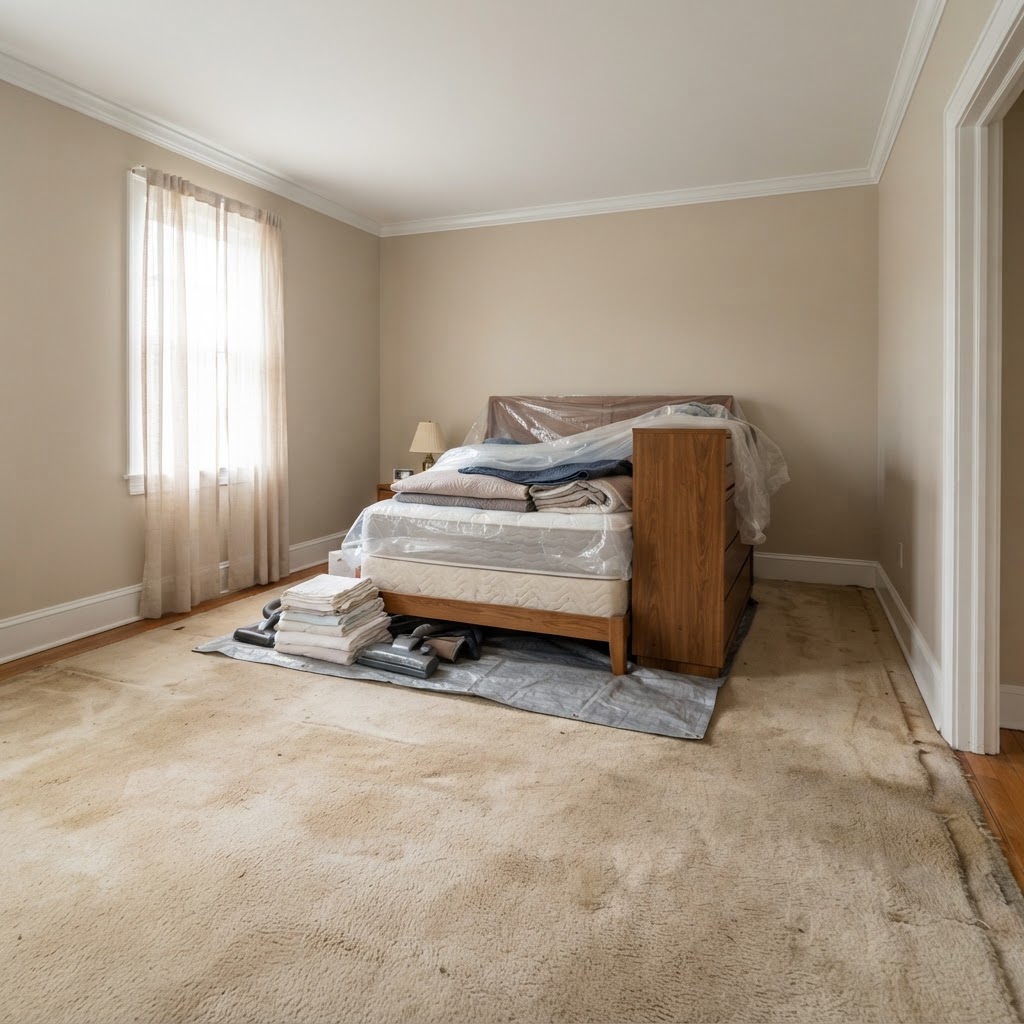
On installation day, the furniture sitting on the old carpet has to be moved so the old carpet and pad can come out and the new carpet can go in, and then, depending on your arrangement, it is moved back. Who does this, which items they will and will not move, and how fragile belongings are handled should all be confirmed with your installer before the appointment. At Floors and Beyond VA, a family-owned Northern Virginia flooring contractor serving Fairfax, Loudoun, Prince William and Arlington counties since 1987, furniture moving is included in our all-inclusive estimate, along with old flooring removal, new materials, professional installation, transitions, molding and cleanup. Even so, the smoothest installations happen when homeowners prepare: clearing closets, setting aside breakables, planning access, and knowing what to ask. This guide walks through the whole process so there are no surprises on installation day.
Carpet replacement is one of the most disruptive flooring projects in a house, because carpet covers whole rooms and everything in those rooms sits on it. Northern Virginia homes tend to be full: finished basements with media centers, bedrooms with heavy dressers and bookcases, home offices with filing cabinets, and closets stacked to the ceiling. It helps to understand how installers think about furniture, what typically happens to old carpet, and what you can do ahead of time to make the day go well. For the broader picture, visit our carpet page and our guides on preparing your home for new floors and the complete carpet installation process.
The sequence of a typical carpet installation day
Understanding the order of events makes it easier to see why furniture matters. A typical carpet replacement proceeds in stages.
First, the installer arrives, reviews the plan with you, and protects the work area as needed. Furniture in the rooms is moved out of the way. In some installations, items are moved to another room or to the garage, while in others they are shifted within the room as the installer works section by section.
Second, the old carpet is cut and rolled up, and the old padding is removed. The tack strips around the perimeter are inspected, and any that are damaged or worn are replaced. The subfloor is checked and cleaned. Staples and debris are removed.
Third, new padding is installed, and the new carpet is measured, cut, seamed, stretched and fastened. Transitions at doorways and edges are set. Edges are trimmed and tucked.
Fourth, furniture is returned to the room, and the installer does a final cleanup, removes debris, and walks the finished work with you.
Because the room must be empty or nearly empty for the carpet to be installed properly, furniture handling is a core part of the work, not an afterthought.
Who moves the furniture, and what is typically included
This is the most important question to ask, because practices differ from company to company. Some installers include furniture moving in their price, some charge for it separately, some move only certain items, and some expect the homeowner to clear the rooms entirely.
At Floors and Beyond VA, furniture moving is part of our all-inclusive estimate, along with old flooring removal, installation, transitions, molding and cleanup. What we quote is what you pay. Still, we encourage every homeowner, with any company, to confirm the details in advance: which items will be moved, which will not, whether there is a limit on weight or number, and whether things like electronics, glass-top tables, aquariums, pianos, safes, waterbeds and extremely heavy items are handled.
Specialty and fragile items are where arrangements most often differ. Installers may prefer that you handle the disconnection of televisions and computers, the removal of artwork and wall-mounted items, the emptying of display cabinets, and the packing of breakables. These items carry risk and, in many cases, installer liability policies do not cover them. A clear conversation before installation day prevents surprises.
Preparing the rooms: what you can do ahead of time
A little preparation goes a long way. Here is how to approach each area.
Clear the surfaces. Remove everything from the tops of dressers, nightstands, desks, shelves and entertainment centers. Items on surfaces can fall or break when furniture is moved. A good rule is that if it is not part of the furniture, take it off.
Empty drawers if they are heavy or fragile. Dressers and file cabinets full of contents are much heavier and more prone to damage when moved. Emptying them reduces risk and makes moving easier.
Pack breakables. Collectibles, glassware, framed photos, lamps, mirrors and electronics should be boxed or placed safely in a room that will not be carpeted. Taking valuable or sentimental pieces out of the way protects them and speeds the work.
Take down wall hangings that could be bumped. Mirrors, framed art and shelving near the floor can be damaged as furniture passes.
Disconnect electronics. Unplug and set aside computers, gaming systems, televisions and audio equipment. Take photos of cable arrangements so you can reconnect them. Many homeowners prefer to handle these personally.
Handle plants and decor. Large plants, vases and statues are best moved by you to a safe place.
Think about beds. Beds may need to be disassembled, especially large or heavy frames. Ask whether the installer will do this and whether they will reassemble.
Secure valuables and medications. Move jewelry, cash, important papers and medications out of work areas as a general precaution.
Closets: the part most homeowners forget
Closets deserve their own attention. If your closets are being carpeted, they need to be emptied, which means everything on the floor and often on the shelves must go. Hanging clothes, shoes, boxes, bins, hampers and storage systems all need a temporary home.
Walk-in closets are a bigger job. A large closet filled with clothing and shelving can take hours to empty and refill. Plan to move clothing onto a rack or into the bed of another room, and consider staging boxes in a room that is not being worked on. If a closet has built-in shelves, drawers or an island, discuss with your installer how they affect the carpet layout.
If closets are not being carpeted, you may not need to clear them, but confirm this with your installer, because sometimes the carpet in the room needs to extend to the closet threshold, and heavy items near the door can get in the way.
Old carpet and padding removal
Removing the old carpet is part of a proper installation, and it is typically included in a complete estimate. At Floors and Beyond VA, old flooring removal is included in our all-inclusive estimate. Confirm in any proposal that removal and disposal are covered, because they are sometimes listed separately.
When old carpet comes out, you may see things you did not expect. Older padding may crumble. The subfloor may show stains, squeaks or uneven areas. In older homes, you may find old adhesive, staples or tack strips in poor condition. These issues are normal, and a good installer will address minor ones as part of the job and tell you about anything that requires more attention.
If your home was built before the 1980s and you are removing old resilient flooring or adhesive underneath carpet, be aware that some older materials contained asbestos. Disturbing them can be hazardous, so suspect materials should be tested before removal. If you are unsure, tell your installer before work begins.
Pet odors and stains can soak into the padding and subfloor. If there is significant contamination, ask how it will be addressed, because new carpet over contaminated padding or subfloor may not solve the problem. Our guide on removing pet odors from carpet discusses the issue.
Access, parking and logistics
Installers need to get materials in and old materials out, so access matters. Think about the path from the driveway or street to the rooms being worked on. Rolls of carpet are long, heavy and awkward, and they must pass through doors, around corners, and up or down stairs.
Clear a path. Remove obstacles from entryways, hallways and stairs, including shoes, toys, rugs and decor. Make sure doors can open fully. If the work is in an upper-level or basement room, think about the route.
Parking can be an issue in townhome and condominium communities across Arlington, Alexandria, Reston and Fairfax. Reserve a space if necessary, and check whether the community has rules about where work vehicles may park. In multi-unit buildings, elevator reservations and loading dock access may be required. If your home is in a condominium, check your association's rules on work hours, elevators and parking before scheduling.
Plan for utilities and comfort. Make sure the installer can access outlets if needed, and consider the temperature, because doors may be open and the house can get cold in winter or hot in summer.
Pets, children and household routines
Installation day is disruptive for family members, and planning ahead protects everyone.
Pets should be kept safe and out of the way. Open doors, strange people and noise can frighten animals, and they can escape or get underfoot. Many families arrange for pets to stay with a friend, in a boarding facility, or in a closed room that is not being worked on. Keep in mind that pets should also stay off new carpet and freshly installed areas until instructed.
Children should be kept away from work areas for their safety. Tools, tack strips, knives and moving furniture present hazards. If possible, arrange for children to spend the day elsewhere, or set up a safe area in a room that is not being worked on.
If you work from home, plan accordingly. Noise and movement can make calls difficult, so you might choose a quieter room or schedule important meetings elsewhere.
Plan meals and bathroom access too. Think about whether you will be able to use your kitchen and bathrooms normally while work is in progress.
After installation: what to expect
When the carpet is installed and the furniture is returned, you will want to inspect the work with the installer. Walk through each room. Check the seams, the edges, the transitions at doorways and the corners. Look at the stairs, if applicable. Ask any questions about care, ventilation and cleaning.
New carpet can have a distinct new smell for a short time, which usually fades with ventilation. Opening windows and running fans can help. Vacuum lightly in the early days, because new carpet may shed loose fibers. Follow the manufacturer's instructions about when to clean and what products to use.
Furniture placement deserves thought. Heavy furniture can leave dents in carpet pile, so using furniture pads or cups under legs helps. You might also take the opportunity to shift furniture slightly to distribute wear.
Keep any remnants and information about the carpet, including the style and color name, in a safe place for future repairs or replacements.
What drives the scope of a carpet replacement, including furniture handling
The effort involved in preparing and moving furniture affects the scope of a carpet replacement. The amount and weight of furniture in the rooms matter. The number of rooms and closets being carpeted influence how much needs to be moved. Specialty items such as pianos, aquariums and large entertainment systems may require special handling. Access conditions, such as stairs, narrow doorways, elevators and parking, affect the logistics. Old carpet and pad removal and any subfloor repairs add steps. And the schedule, including whether the work is done in phases to keep part of the home usable, can change the plan.
Floors and Beyond VA provides an honest, all-inclusive estimate that covers furniture moving, old flooring removal, installation, transitions, molding and cleanup. What we quote is what you pay.
Common mistakes to avoid
The most common mistake is assuming the installer will pack and move everything. Installers generally move furniture, not personal belongings, so you should plan to clear surfaces, closets and valuables.
Another is forgetting to ask what is included. Furniture moving, removal and disposal are handled differently by different companies, and comparing proposals without checking can lead to surprises.
A third is leaving breakables out. Fragile items are best removed before the work starts.
A fourth is overlooking closets. Emptying a packed closet on installation morning creates stress and delays.
A fifth is blocking access. Clear paths for materials and equipment save time.
A sixth is ignoring pets and children. Their safety and comfort should be part of the plan.
A seventh is skipping the final walkthrough. Inspect the work with the installer while they are still on site, so any concerns can be addressed right away.
Finally, many homeowners schedule installation without allowing time to prepare. Give yourself at least a few days to clear and pack, especially if multiple rooms are involved.
Questions to ask your installer before installation day
A short conversation before the appointment can prevent most problems. Ask who will move the furniture and whether it is included. Ask which items they will not move, such as pianos, safes, aquariums, waterbeds and electronics. Ask whether they will disassemble and reassemble beds. Ask about removal and disposal of old carpet and pad. Ask how long the work will take and what time they will arrive. Ask what to do about pets and children. Ask about access, parking and any building requirements. Ask what happens if surprises are found under the old carpet. And ask what the final walkthrough involves.
At Floors and Beyond VA, we are glad to answer these questions during your free in-home consultation and again before installation.
How Floors and Beyond VA handles installation day
We begin with a free in-home consultation, where we measure your rooms with precise laser measurements, review your carpet choices and walk through the process, including furniture. Our estimate is all-inclusive. On installation day, our in-house crews, with no subcontractors, arrive prepared, protect your home, move furniture, remove old flooring, install your new carpet, set transitions and molding, and clean up before they leave. We are fully licensed, bonded and insured.
We serve Fairfax, Loudoun, Prince William and Arlington counties, including Alexandria, Reston, Vienna, McLean, Springfield, Burke, Centreville, Ashburn, Leesburg, Manassas and Woodbridge.
Frequently asked questions
Do I need to move my furniture before carpet installation?
You should clear surfaces, closets and valuables. At Floors and Beyond VA, furniture moving is included in our estimate.
What furniture won't be moved?
Practices vary. Ask about pianos, safes, aquariums, waterbeds and electronics.
Do installers remove the old carpet?
Yes. Old flooring removal is included in our all-inclusive estimate.
How long does carpet installation take?
It depends on the size of the project, the number of rooms and stairs, and the preparation needed.
Should I empty my closets?
Yes, if they are being carpeted.
What about pets?
Keep them safely away from the work area.
Can I stay home during installation?
Generally yes, but plan for noise and disruption.
Will there be a smell from new carpet?
New carpet may have a temporary odor, which usually fades with ventilation.
Does Floors and Beyond VA use subcontractors?
No. Our in-house crews handle the work.
Do you serve my area?
We serve Fairfax, Loudoun, Prince William and Arlington counties.
Ready to book an estimate and ask about preparation and furniture moving?
A well-prepared installation day is calm, efficient and predictable. Floors and Beyond VA offers nearly forty years of Northern Virginia experience, in-house crews with no subcontractors, free in-home consultations, and all-inclusive estimates that include furniture moving.
Book an estimate and ask about our preparation and furniture-moving process: https://floorsandbeyondva.com/Contact
You can also call (703) 906-5698 or send us a message through our contact page.