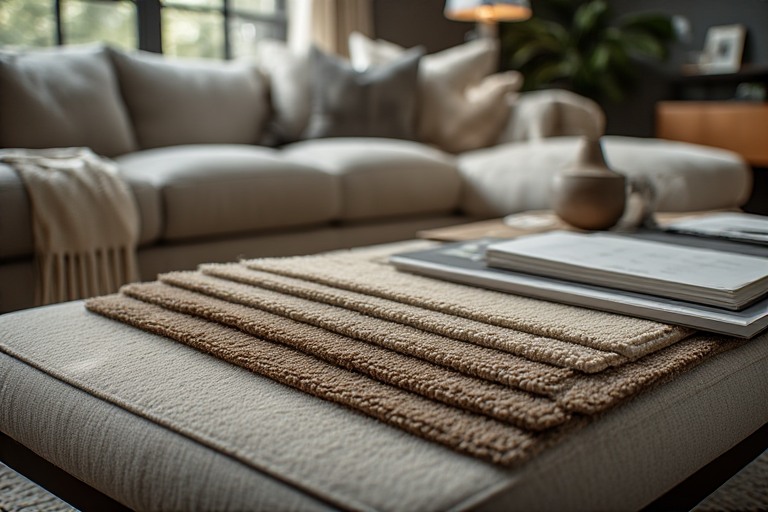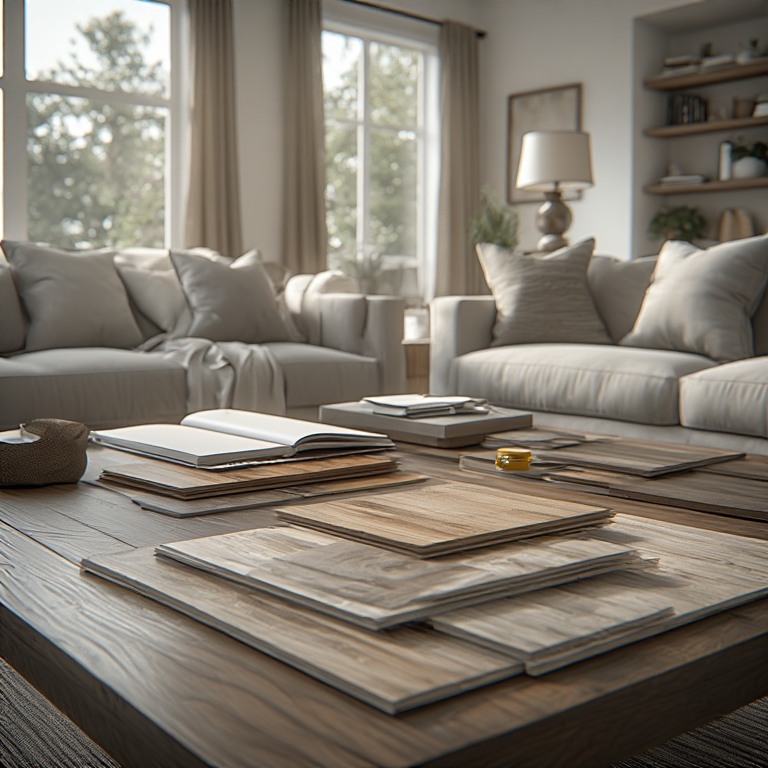
Choose cut pile when you want a soft, comfortable surface for bedrooms and low-to-moderate-traffic living areas, choose loop pile when you want a flatter, more textured, footprint-resistant surface for busy family spaces and basements, and choose patterned carpet when you want to hide wear and soil, define a room's style, or add visual interest to stairs and hallways. The construction, meaning how the yarn is formed into the surface, changes how a carpet feels underfoot, how light plays across it, how visible footprints and vacuum marks are, and how it suits stairs, bedrooms and heavy-traffic rooms. Floors and Beyond VA, a family-owned Northern Virginia flooring contractor serving Fairfax, Loudoun, Prince William and Arlington counties since 1987, believes construction is best judged with real samples in your own home, so our free in-home consultation brings samples to your rooms and lets you compare textures against your lighting, furniture and daily routines.
Carpet shopping is often framed in terms of color and fiber, but construction is just as influential. Two carpets in the same color and fiber can look and feel completely different depending on whether the yarn is cut or looped, tightly twisted or loosely tufted, and flat or patterned. This guide explains the major constructions in plain language, shows how each performs in real rooms, and gives practical examples to help you decide with confidence. It focuses on appearance, texture and suitability, rather than repeating our general durability guide. For durability, see our guide to the most durable carpet types, and to explore products, visit our carpet and luxury carpet pages.
What "pile" means
Pile refers to the visible surface of the carpet, the yarn that stands up from the backing. How that yarn is formed, either as cut tufts or as loops, defines the carpet's character.
In a cut pile carpet, the yarn loops are sliced at the top, leaving individual yarn ends standing up. In a loop pile carpet, the yarn loops are left intact, so the surface is made of continuous loops. In a cut-and-loop carpet, both are combined in the same piece to create texture or pattern. Patterned carpet can be made in several ways, including with cut and loop combinations, with multiple heights of loops, with printed designs, or with woven constructions.
Each of these yields a different feel, look and behavior. Understanding the differences helps you select a construction that supports how you live.
Cut pile: soft, versatile and varied
Cut pile is the most common residential carpet construction, and it comes in several distinct styles.
Plush (sometimes called velvet or saxony). Plush carpets have a smooth, dense surface with fibers cut at an even height, giving a luxurious, uniform appearance. They feel soft and elegant, and they are often chosen for formal living rooms and primary bedrooms. The tradeoff is that plush shows footprints, vacuum marks and shading easily, because the smooth surface reflects light differently when the fibers lean in different directions. In a high-traffic area, those marks can make plush appear worn even when it is clean.
Textured cut pile. Here, the yarns are twisted and heat-set so the tips curl or vary, creating a more casual, irregular surface. Texture scatters light, which hides footprints and vacuum tracks. Textured cut pile is among the most popular choices for bedrooms and family rooms, because it combines softness with forgiving appearance.
Frieze. Frieze carpets use very tightly twisted yarns that curl over, forming a nubby, informal surface. They are exceptionally good at hiding footprints and shading, and they are often chosen for busy households. Their casual look suits relaxed interiors and transitional styles. They can feel less soft underfoot than plush, but modern friezes can be quite comfortable.
Cable and other cut variations. Some cut pile styles use thicker yarns for a chunky, tailored look. These are less common but can add distinctive texture.
Where cut pile works best. Cut pile suits bedrooms, living rooms, family rooms and many stairs, depending on the density and twist. For stairs, choose a dense, tightly twisted construction rather than a lofty plush, because plush can show wear at the nosing. In bedrooms, plush and textured cuts offer comfort for bare feet.
Loop pile: flat, resilient and low-maintenance in appearance
Loop pile carpets keep the yarn looped, which creates a different surface.
Level loop. All loops are the same height, producing a flat, even surface with a firm, woven-like appearance. Level loops are known for resisting footprints and for a clean, low-profile look that suits stairs, basements and active rooms. They tend to feel firmer underfoot than cut pile.
Berber. Berber originally referred to a type of loop carpet with flecks of dark color against a lighter background, resembling the handwoven rugs of North African tribes. Today the term is used loosely for loop carpets with a flecked, textured look. Berber is popular for its casual, durable appearance and its ability to hide soil. Its loops can be more vulnerable to snagging if pets with claws catch them, so households with cats or large dogs should discuss this with their installer. A single snagged loop should never be pulled, because it can unravel the surrounding area; instead, it should be trimmed by a professional.
Multi-level loop. Loops of different heights create sculpted, textured patterns. This construction offers visual interest and does a good job of hiding footprints and wear.
Where loop pile works best. Loop pile suits basements, playrooms, home offices, stairs and hallways, especially where you want a durable-looking, footprint-resistant surface. Because it is flatter and firmer, it works well under rolling office chairs and in rooms with a lot of foot traffic. It is less plush, so it may be less appealing in a bedroom where softness matters most, though some loop styles are surprisingly soft.
Cut-and-loop and patterned carpets
Patterned carpet adds design to the surface and offers practical advantages.
Cut-and-loop patterns. By combining cut and loop yarns in the same carpet, manufacturers create sculpted designs such as geometric shapes, diamonds, trellis patterns, stripes and organic textures. The varied surface hides footprints and soil effectively. These carpets often have a refined, tailored look that suits traditional and transitional interiors.
Printed and woven patterns. Some patterned carpets are produced by printing a design onto the carpet or by weaving. They can include florals, geometrics, borders and more elaborate designs. These are often chosen for stairs, runners and decorative rooms.
Subtle patterns versus bold ones. A subtle tone-on-tone pattern hides wear while keeping a quiet look. A bold pattern makes a statement but dominates a room and may be harder to coordinate with furniture and change in the future. For resale, subtle patterns are safer.
Practical considerations. Patterns require matching at seams, which can increase the amount of carpet needed, as we explain in our guide to how much flooring you need. Patterns can also be harder to repair invisibly. But they excel at hiding stains, traffic lanes and pet marks, which makes them valuable in busy homes.
Where patterned carpet works best. Patterned carpet suits stairs, hallways, entries, family rooms and anywhere you want to camouflage wear. It also works as a design feature in dining rooms, studies and bedrooms.
How construction changes what you see
Because the surface is different, each construction reflects light differently, and that influences how soil and footprints appear.
Smooth cut pile, such as plush, creates a uniform surface that shows every change in fiber direction. When someone walks across it, the pile compresses and leans, leaving a visible trail. A vacuum leaves stripes. Light rakes across the surface and exaggerates shading. For that reason, plush looks its best in low-traffic rooms.
Textured and frieze cut pile scatter light with their uneven tips, so footprints and vacuum marks are far less noticeable.
Loop pile has a flat, stable surface that does not lean, so it rarely shows footprints in the way cut pile does. It can, however, show soil trapped between loops, and certain loops can pick up dirt in the valleys.
Patterned carpets break up the surface visually, so the eye focuses on the pattern rather than on soil.
In practical terms, if you hate seeing footprints and vacuum marks, you will be happiest with textured cut pile, frieze, loop or patterned constructions. If you love the look of plush and are willing to accept its marks, it can be a beautiful choice in the right room.
Choosing construction by room
Bedrooms. Bedrooms are low-traffic, soft-underfoot spaces. Plush and textured cut pile feel luxurious on bare feet. If you want a bit more forgiveness, choose a textured cut pile.
Living rooms and family rooms. These see more traffic and more activity. Textured cut pile, frieze or a subtle cut-and-loop pattern offers comfort with good resilience in appearance.
Stairs. Stairs need dense, resilient constructions that hold their shape over the nosing. Tightly twisted cut pile, level loop and patterned carpets are common choices. Ask to see your stair-appropriate options in person.
Hallways and entries. Choose the most forgiving constructions here: frieze, loop or pattern. These areas show soil first.
Basements. Loop pile or textured constructions work well in basements, where durability and ease of care matter. Moisture control and subfloor preparation are critical in below-grade spaces. See our guide on basement carpet and mold prevention.
Home offices. Loop pile is well suited to rolling chairs, as the firm surface lets chairs move more easily than a deep, soft plush.
Playrooms and kids' rooms. A forgiving texture, such as frieze or loop, in a color that hides spills, is a practical choice.
Home theaters. Dense carpet and a quality pad help absorb sound. Our home theater carpet page explores this.
Real samples and practical examples
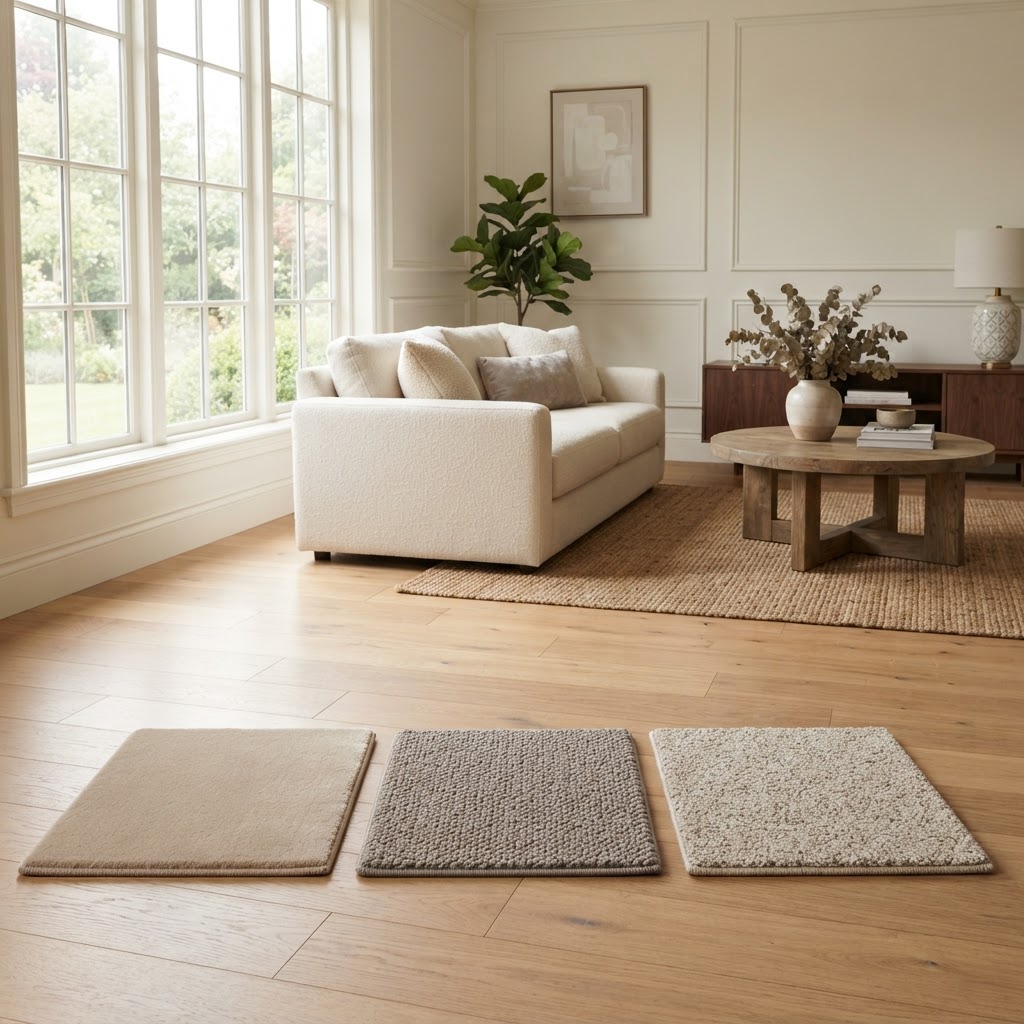
Photographs and online images do not do justice to carpet construction. The only way to understand how a carpet will look and feel is to see and touch a real sample, ideally a large one, in your own home.
Here are a few practical exercises we suggest during a selection appointment. Press your hand into each sample and lift it away, and see how quickly the pile recovers and how visible the handprint is. Run your fingers across the pile in two directions to see how the shading changes. Drag a shoe across it and see whether it leaves a mark. Place the samples on the floor in the room, next to your furniture and trim, and look at them in the morning light, afternoon light and under lamps in the evening. Stand at the doorway and view the sample from across the room, since you will see the carpet from a distance more than up close. Walk on the sample in bare feet and socks. Ask to see samples of different constructions in the same color so you can isolate the effect of texture.
Consider a few real-world scenarios. A family with two young children and a golden retriever in Ashburn might choose a textured, heathered frieze in the family room, a dense patterned carpet on the stairs, and a plush cut pile in the primary bedroom where traffic is lighter. An empty-nester couple in McLean might use a refined cut-and-loop pattern in the study and a luxurious plush in the bedroom. A basement renovation in Manassas might use a level loop in a warm gray for durability and easy care. A condominium owner in Arlington might choose a quiet, textured cut pile with a high-quality pad for sound control. Each of these combinations shows how construction can be matched to the room.
What drives the scope of a carpet project once you've chosen a construction
Construction can influence the project in several ways. We do not publish prices in articles, but we can explain the drivers. The construction and density of the carpet shape the material scope. Patterns can require additional material for matching. Loop and berber styles may call for particular seaming techniques. Stairs, closets and layout affect quantities and labor. Padding choice differs by construction and by room. Old flooring removal and subfloor preparation are part of the project. And the number of rooms determines overall scale.
Floors and Beyond VA provides an honest, all-inclusive estimate, and what we quote is what you pay.
Common mistakes to avoid
The most common mistake is choosing plush for a high-traffic area because it feels wonderful in the store, then being disappointed by footprints and vacuum marks.
Another is choosing a loop carpet in a home with cats or active dogs without discussing snagging.
A third is picking a bold pattern that dominates the room and becomes difficult to live with.
A fourth is ignoring the effect of lighting on texture. Strong side light exaggerates shading on cut pile.
A fifth is choosing from small samples. Texture and color are hard to judge in a few inches of carpet.
A sixth is forgetting padding. The right pad supports the carpet construction and affects feel and longevity.
A seventh is choosing based on photographs. Real samples tell the truth.
Finally, many homeowners use the same carpet throughout the house without considering how different rooms use it. Matching construction to the room often produces better results.
How Floors and Beyond VA helps you compare carpet styles in person
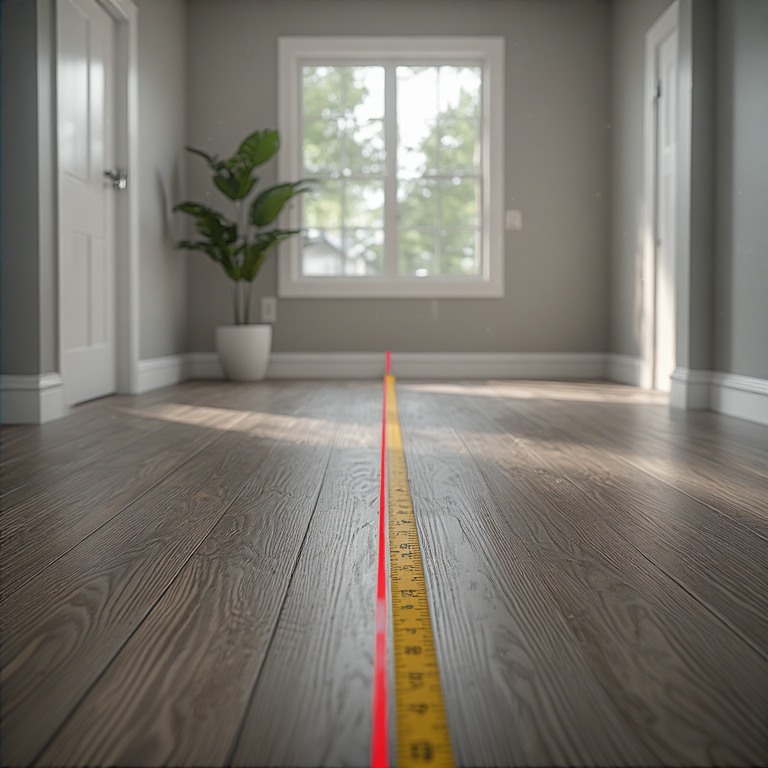
We begin with a free in-home consultation. We bring samples to your home, so you can see and feel the differences in construction and compare them in your own space. We take precise laser measurements at no charge, talk about your household and priorities, and help you narrow your options. We then provide a clear, all-inclusive estimate. Our in-house crews, with no subcontractors, handle the installation, and we are fully licensed, bonded and insured.
We serve Fairfax, Loudoun, Prince William and Arlington counties, including Alexandria, Reston, Vienna, McLean, Springfield, Burke, Centreville, Ashburn, Leesburg, Manassas and Woodbridge.
Frequently asked questions
What is the difference between cut pile and loop pile?
Cut pile has sliced yarn ends standing up, while loop pile has continuous uncut loops.
Which hides footprints best?
Textured cut pile, frieze, loop and patterned carpets hide footprints better than smooth plush.
Is Berber carpet good for pets?
It can be durable, but loops may snag on claws. Discuss your pets with your installer.
What is the best carpet for stairs?
Dense, resilient constructions such as tightly twisted cut pile, level loop or patterned carpet.
Does patterned carpet cost more?
Patterns may require extra material for matching, which can affect the scope.
Is plush carpet a bad choice?
Not at all, but it shows marks more and is best in lower-traffic rooms like bedrooms.
Can I see samples at home?
Yes. We bring samples during our free in-home consultation.
Does texture matter more than color?
Both matter. Texture changes how color and soil appear.
Does Floors and Beyond VA use subcontractors?
No. Our in-house crews handle the work.
Do you serve my area?
We serve Fairfax, Loudoun, Prince William and Arlington counties.
Ready to schedule a consultation to compare carpet styles in person?
The best way to choose a carpet construction is to see and feel it in your own home. Floors and Beyond VA offers nearly forty years of Northern Virginia experience, in-house crews with no subcontractors, free in-home consultations with samples, and all-inclusive estimates.
Schedule a consultation to compare carpet styles: https://floorsandbeyondva.com/Contact
You can also call (703) 906-5698, or send us a message through our contact page.