
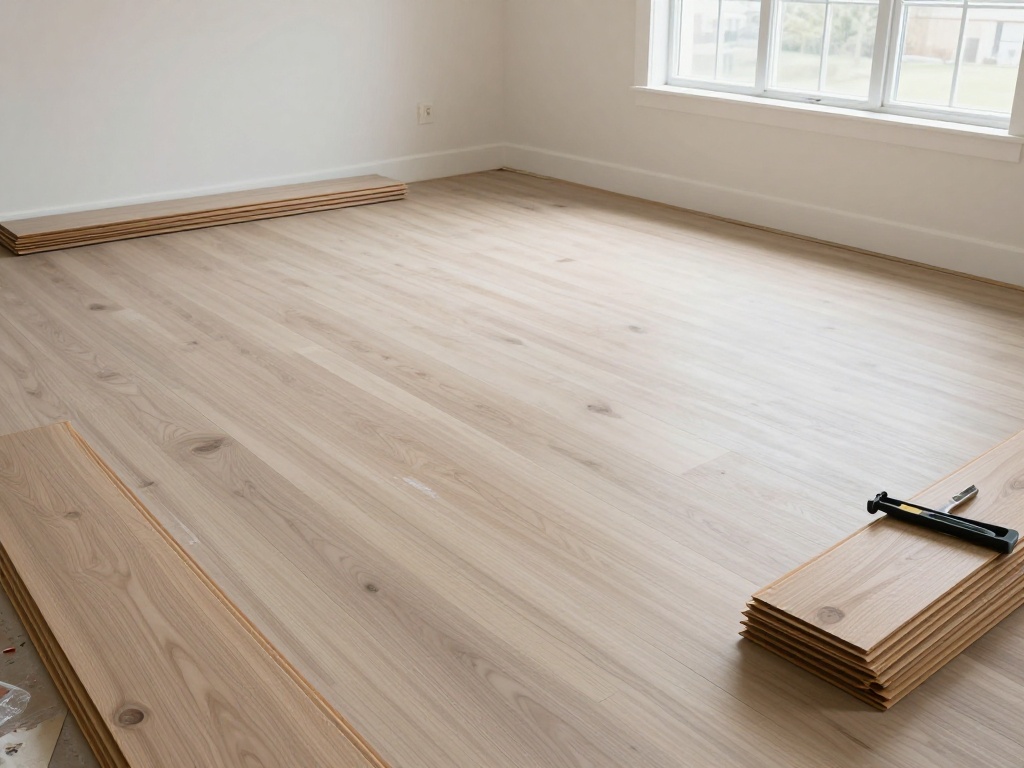
How Do You Prepare for a Flooring Installation?
Preparing for a flooring installation means clearing the rooms, planning for old-floor removal and furniture, and letting the pros handle the technical prep: cleaning and leveling the subfloor, moisture-testing the slab (critical in Northern Virginia’s concrete-slab homes), and acclimating the new flooring to the home’s humidity. The homeowner clears the space and confirms the plan; the installer prepares the surface. Good preparation is what determines whether a floor lasts for decades or fails within a couple of years.
Ask any experienced installer why floors fail early and you’ll hear the same answer: it’s almost never the product, and almost always the preparation. A beautiful hardwood, a premium SPC, a perfect tile — any of them will gap, cup, crack, or lift if it goes down over an unprepped subfloor, an untested slab, or without acclimating. Preparation is the unglamorous half of a flooring project that decides the other half.
Preparation splits into two parts: what you do as the homeowner, and what your installer does as the professional. The homeowner side is about clearing and planning; the professional side is about the subfloor, moisture, and acclimation. And in Northern Virginia specifically, a few local realities — concrete slabs in newer homes across Ashburn, Sterling, and Woodbridge, wide seasonal humidity swings, and pre-war subfloors in Old Town Alexandria and Del Ray — make certain prep steps non-negotiable. Floors and Beyond VA has handled that preparation on floors across the region for nearly 40 years.
What you should do before installation day
Clear the rooms
Remove breakables, electronics, and small furniture, and take items off low shelves and closet floors in the work area. The clearer the space, the faster and safer the install — and the less that can be damaged.
Confirm furniture & old floor
Settle in advance who moves the large furniture and whether the crew is removing and hauling away the old flooring. Knowing this before installation day avoids surprises and keeps the schedule on track.
Plan for pets, kids & access
Keep pets and children out of the work zone for safety and dust, and clear a path from the driveway to the rooms, plus a spot to park and unload. Installers move a lot of material in and out.
Flag known trouble spots
Tell your installer about squeaks, soft spots, past leaks, or damp areas. Those clues help the crew prep the subfloor correctly and head off problems before the new floor goes down.
What the pros prepare (and why it matters)
Subfloor inspection & cleaning
Once the old floor is up, the subfloor is inspected for damage, rot, and fasteners, then cleaned. Hidden issues almost always surface here — which is why removal is best left to the crew.
Leveling & flattening
Dips and high spots are ground down or filled so the subfloor is flat. Rigid floors telegraph every imperfection, and an unflat base causes hollow spots, gaps, and cracked tile.
Moisture testing
Concrete slabs are tested for moisture before anything goes down. A slab reading too high will fail adhesives and cause cupping, warping, or mold — the single most important step in a slab home.
Acclimation & layout
Wood and laminate are acclimated to the home’s conditions, and the layout, transitions, and trim are planned so the finished floor lines up, expands safely, and meets doorways cleanly.
Northern Virginia prep considerations by home type
| Home type | Typical subfloor | Prep focus |
|---|---|---|
| Post-2000 (Ashburn, Sterling, Woodbridge, Brambleton) | Concrete slab, first floor | Moisture-vapor testing before any adhered or wood floor |
| Post-war (Fairfax, Springfield, Burke) | Plywood / OSB on joists | Flatten, refasten to stop squeaks, check for damage |
| Pre-war (Old Town Alexandria, Del Ray) | Diagonal plank on joists | Check for original hardwood; add underlayment for tile |
| Basements (region-wide) | Below-grade slab | Moisture test and vapor strategy; waterproof-core products |
| Any home, hardwood or laminate | Any | Acclimate 48–72 hrs to indoor humidity before install |
The two prep steps people skip: acclimation and moisture testing
Acclimation is letting the new flooring sit inside your home for a period — commonly 48 to 72 hours — so it adjusts to the temperature and humidity it will live in. Wood, engineered, and laminate all expand and contract with moisture in the air, and Northern Virginia’s indoor humidity swings widely, from dry single-digit winters to summers running 70% relative humidity or higher. Install a floor that hasn’t acclimated and it can gap in winter or buckle in summer as it finally adjusts. Acclimation lets it reach equilibrium first.
Moisture testing is a different step with a different purpose: measuring how much moisture is in the subfloor, especially a concrete slab, before installing. It answers the question “is this surface dry enough to build on?” A slab that reads high will push moisture up into adhesives and flooring, causing cupping, delamination, or mold no matter how well the floor acclimated. In short: acclimation prepares the flooring; moisture testing clears the subfloor. A good installation needs both, in that combination, which is why Floors and Beyond VA treats them as separate, required steps rather than one.
“Homeowners fall in love with the floor and forget what’s under it. We’d rather spend the extra day testing a slab and letting wood acclimate than come back in a year to fix a floor that was rushed. Prep is the job.”
After nearly 40 years installing floors from Reston and Herndon to Manassas, Centreville, and Arlington, that’s owner Floors and Beyond’s consistent message: the preparation is the part that protects your investment. Floors and Beyond VA handles the subfloor prep, moisture testing, and acclimation as standard on every job — and tells homeowners exactly what to do on their side before installation day.
Planning a new floor? Start with proper prep.
Floors and Beyond VA inspects your subfloor, tests moisture, and manages acclimation so your new floor is installed to last — across Northern Virginia.
Frequently asked questions
How do I prepare my home for a flooring installation?
Clear the rooms of furniture, breakables, and electronics, create a clear path to the work area, decide in advance whether the installer removes the old flooring, plan for pets and kids to be out of the way, and point out any squeaks or damp areas. The technical prep — subfloor cleaning, leveling, moisture testing, and acclimation — is handled by the installer. Floors and Beyond VA walks homeowners through it beforehand.
Do I need to move my own furniture before flooring is installed?
It depends on what you arrange. Many homeowners move smaller items and breakables themselves, while crews can move larger furniture as part of the job — it just needs to be settled before installation day. Floors and Beyond VA confirms who moves what during scheduling, and its in-house crews can handle furniture when needed.
Do installers remove the old flooring?
Usually yes — professional installers remove and haul away the old flooring, though confirm it in the quote, since glued-down floors and old tile take more labor. Removal is also when hidden subfloor issues surface, so it’s best left to the crew. Floors and Beyond VA includes removal and haul-away and inspects the subfloor as it goes.
How long does new flooring need to acclimate before installation?
Most wood, engineered, and laminate flooring should acclimate in the home about 48 to 72 hours so it adjusts to indoor temperature and humidity. This matters in Northern Virginia because indoor humidity swings widely between dry winters and humid summers, and a floor installed without acclimating can gap or buckle. Acclimation time varies by product, so the manufacturer’s guidance is followed.
Do you test for moisture before installing flooring in Northern Virginia?
Yes — moisture testing is critical, especially on the concrete slabs common in post-2000 homes across Ashburn, Sterling, and Woodbridge. A slab reading too high causes adhesives to fail and floors to cup, warp, or trap mold, so it’s tested before anything is installed. Floors and Beyond VA confirms the subfloor is dry and flat before installation begins.
Flooring installation & prep across Northern Virginia
Floors and Beyond VA handles subfloor preparation, moisture testing, acclimation, and full flooring installation throughout Fairfax, Loudoun, Prince William, and Arlington counties — with in-house crews and no subcontractors.
Great floors start before the first plank.
Clear the room, and let Floors and Beyond VA handle the subfloor, moisture testing, and acclimation that make a new floor last.
Book Your Free Consultation



