
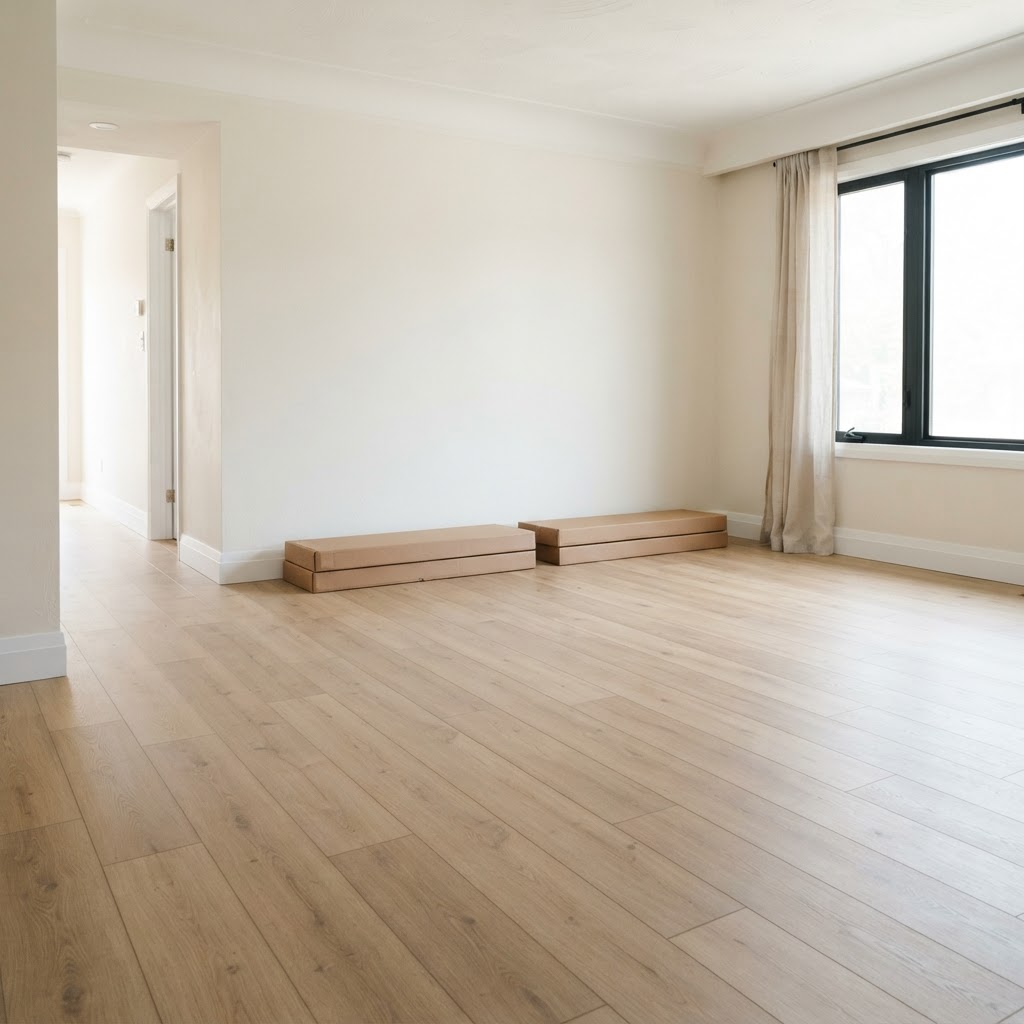
The short answer: usually yes. Most luxury vinyl plank, vinyl tile and sheet vinyl should sit in the room where it will be installed, at normal living temperature, before it goes down. The exact requirement comes from the manufacturer's instructions for your specific product.
Floors and Beyond VA, a family-owned Northern Virginia flooring and remodeling contractor serving homeowners since 1987, follows those instructions on every job and checks room conditions during a free in-home consultation.
Vinyl is more stable than wood, which leads some people to assume acclimation does not matter. That is a costly assumption. Vinyl expands and contracts with temperature, and the planks or tiles that arrive on your porch may have spent time in a cold warehouse, a hot truck or a damp loading dock. Installing them before they reach room temperature can lead to gaps, buckling or adhesive problems later. This guide explains the differences between types of vinyl, how acclimation works, how Northern Virginia conditions come into play and how to prepare.
The three main types of vinyl flooring
- Luxury vinyl plank (LVP). Long, narrow planks that imitate wood. Most are rigid-core click products that float over the subfloor, though glue-down versions exist.
- Luxury vinyl tile (LVT). Square or rectangular tiles that imitate stone or ceramic. They may be glued down or float depending on the product.
- Sheet vinyl. Wide rolls installed in a continuous sheet, often used in kitchens, baths and laundry rooms. It has few seams and good water resistance when installed correctly.
Each type reacts differently to temperature and handling, and each has its own preparation requirements. Our vinyl flooring service page shows the products we install.
Why acclimation matters for vinyl
Vinyl is a thermoplastic material. It grows slightly when warm and shrinks slightly when cold. If planks are installed while they are colder than the room, they will expand afterward and may push against each other or the walls. If installed while warmer, they may shrink and open gaps at the seams.
For glue-down products, temperature affects how the adhesive cures and bonds. A cold plank can interfere with adhesion. For floating floors, the locking joints can be stressed if the material changes size after installation.
Moisture also matters, particularly for products with wood-based components or for installation over concrete. Rigid cores resist surface moisture well, but the room and subfloor conditions still influence the result.
What acclimation looks like in practice
Acclimation means bringing the unopened cartons into the room where they will be installed and letting them rest at the temperature and humidity the floor will normally experience. Cartons are usually laid flat and kept away from vents, exterior doors and direct sun. The home's heating and cooling should be running as they would be after the project.
Manufacturers specify how long to wait and what temperature range is acceptable. These requirements vary by product, so we do not give a single time in an article. We read the specific instructions for the product we are installing and follow them. Some manufacturers have different requirements for glue-down and floating installations.
Temperature and humidity: the conditions that matter
Two environmental factors matter most: the temperature of the room and the humidity.
The room should be at a stable, normal living temperature before, during and after installation, as the manufacturer directs. Turning the heat way down in a vacant house or running it at extremes will cause trouble.
Humidity should also be in a normal range. Very dry or very humid conditions can affect adhesives, underlayments and the stability of the floor. We recommend using your heating and cooling system as usual and avoiding sudden changes.
If you have concerns about humidity in your home, a licensed heating and cooling professional is the right person for equipment questions. Floors and Beyond VA does not install humidifiers or dehumidifiers, but we are happy to explain how humidity affects flooring.
Northern Virginia conditions
Northern Virginia gives vinyl flooring a range of conditions. Hot, humid summers can raise indoor humidity, particularly in basements and homes with older cooling systems. Cold winters bring dry air and temperature swings, especially near exterior walls, windows and doors.
New construction in Ashburn, Sterling and other fast-growing areas may still be releasing moisture from concrete, drywall and paint. Older homes in Vienna, Falls Church and Fairfax may have crawl spaces that push humidity upward. Condominiums in Tysons and Arlington often have stable interiors but present delivery and storage challenges, since cartons may sit in hallways, storage lockers or loading areas before reaching the unit.
The takeaway is that acclimation should happen in the actual room, under the actual conditions the floor will experience.
How improper acclimation causes problems
- Gaps. If planks were installed warm and then cool, they can contract and open seams.
- Buckling or peaking. If planks were installed cold and then warmed, they can expand and push upward at the joints, especially if the expansion gap is too small.
- Adhesive failure. A cold floor or a cold subfloor can disrupt bonding in glue-down products, leading to lifted edges and loose spots.
- Misaligned locking joints. Stress on the click system can cause joints to separate.
- Warranty trouble. Many manufacturers require proper acclimation and installation conditions as part of warranty coverage.
None of these problems is mysterious. They flow from skipping a simple step.
Floating versus glue-down installations
Floating floors are not attached to the subfloor. They are held together by their locking edges and need an expansion gap around the perimeter. Acclimation matters because the floor will expand and contract as a unit, and the gap must accommodate it.
Glue-down floors are bonded to the subfloor. The adhesive limits movement, which makes subfloor and adhesive conditions critical. Acclimation helps ensure the planks or tiles are at the right temperature for proper bonding and consistent size.
Sheet vinyl may need to be unrolled and allowed to relax before it is cut and fitted. Rolls are often stored upright or loosely rolled, depending on instructions, to avoid permanent creases.
A simple pre-install checklist
- Read the manufacturer's installation instructions for your product, or ask us to.
- Confirm that the home's heating and cooling are working and set to normal living conditions.
- Choose the room where the floor will be installed as the storage spot.
- Keep the cartons closed and lay them flat, away from vents, exterior doors, windows and damp walls.
- Do not store cartons in a garage, unheated area or damp basement before installation.
- Allow the manufacturer's recommended acclimation period before opening.
- Check that the subfloor is clean, flat, dry and free of old adhesive or debris.
- If installing over concrete, make sure moisture conditions have been assessed.
- Plan for furniture removal and a clear working space.
- Confirm delivery logistics, particularly in condominiums.
During your free consultation, we walk through this list and identify anything that needs attention.
Setting up for acclimation: a diagram in words
Imagine the room you are about to renovate. The old flooring is gone or about to be removed, the furniture is out or cleared to one side, and the thermostat is set where it normally would be. In the middle of the room, the unopened cartons rest flat on the subfloor or on a clean covering, each box spaced so air can move around it. They are away from the vent, the door that opens to the garage and the window with afternoon sun. That is the basic arrangement. You do not need special equipment. You need time and normal conditions.
Edge cases: what if I am installing in a rental or a vacant home?
Vacant homes are tricky because owners often turn off the heat or air conditioning to save money. That creates the conditions that trouble vinyl. We recommend running the system normally for the acclimation period and during installation. For rental turnovers where time is short, plan material delivery early so the acclimation can overlap with other work.
What about sheet vinyl in a bathroom or laundry room?
Sheet vinyl comes in large rolls that should be handled carefully. Letting the roll relax in the room before cutting helps it lie flat. Because sheet vinyl is often fully adhered, subfloor condition and adhesive instructions matter. Bathrooms and laundry rooms also deserve attention to moisture sources, such as leaks around toilets and washers. Our bathroom remodeling work always addresses the subfloor and moisture before any new surface goes down.
Why the room matters more than the warehouse
Many homeowners assume that if vinyl is stored indoors, it is acclimated. That is not always true. A spare bedroom with the vents closed is not the same as a living room with the heat on. A basement that is cool and damp is not the same as a kitchen that is warm from cooking. The cartons should rest where the floor will be installed and under the conditions the floor will experience.
Handling cartons and planks the right way
Cartons should be carried flat and stored flat. Standing them on edge can warp planks. Avoid stacking heavy objects on top. Do not leave cartons in direct sun. Do not place them against a hot radiator, near a fireplace or beside a cold exterior door. If the manufacturer requires cartons to be opened for acclimation, they should be spaced so air reaches the planks. If not, leave them closed until the instructions say otherwise.
Sheet vinyl and tile specifics
Sheet vinyl is manufactured in rolls, and a roll stored tightly for a long time may carry a memory of its curl. Letting it relax in the room before cutting makes it easier to fit. Seams, patterns and edges need careful planning, and adhesives and substrates must be matched to the product. Vinyl tile, whether glue-down or peel-and-stick, benefits from room-temperature storage so that adhesive tack and tile size are consistent.
Why a professional check helps
A professional visit catches conditions a homeowner might not notice. We look at the thermostat settings, the airflow, the subfloor, the moisture readings and the schedule. We confirm that the cartons have been placed and stored properly. We compare the manufacturer's requirements with your home's reality and adjust the plan. That small step prevents expensive problems. Our crews do not begin installation until conditions meet the manufacturer's directions.
Timeline thinking without promising numbers
People often ask how long the whole process will take. The honest answer is that it depends on the product, the room and the preparation required. The sequence is predictable: consultation and measurement, estimate, product selection, delivery and acclimation, preparation, installation, finishing details and cleanup. Each step has its own timing. We explain the schedule at your consultation and tell you which steps are fixed by the manufacturer and which we can adjust.
If you are working with a tight deadline, such as a move-in date or a family event, tell us at the start. We plan deliveries early and coordinate with other contractors so that the floor is ready when you need it.
Planning around other projects
Painting, trim work and cabinet installation can all affect the timing of a floor. Painting before flooring avoids drips on a new surface. Cabinets are sometimes installed before the floor and sometimes after, depending on the design. Baseboards typically go in after the floor is down. Because Floors and Beyond VA also handles home remodeling, we can coordinate the sequence so that each trade follows the other cleanly.
Special situations: radiant heat, sunrooms and garages
Some spaces need extra thought. Floors over radiant heating systems have specific temperature limits and ramp-up instructions that manufacturers publish. Sunrooms with large glass areas can heat up the floor significantly in direct sun, which affects vinyl. Garages and unheated rooms subject floors to wide temperature swings that many vinyl products are not designed for. If your project includes any of these, tell us at the start. We review the product's limits and suggest alternatives when needed.
Rental turnovers and tight timelines
Property owners often need a fast turnaround between tenants. Acclimation can feel like an obstacle, but with planning it fits easily. Ordering materials early, delivering to the unit while the previous tenant is moving out, and keeping the unit at normal conditions lets the floor be ready when the space is empty. We can coordinate this schedule with you and with your property manager.
What drives the scope of a vinyl project
The scope depends on the area, layout, subfloor, product type, removal of old flooring, transitions, furniture and stairs. Acclimation can influence scheduling, since materials must arrive early. Subfloor preparation can add work.
We take precise laser measurements at no charge and provide a written, honest, all-inclusive estimate covering old flooring removal, new materials, installation, furniture moving, transitions, molding and cleanup. What we quote is what you pay. Our pricing and policy page explains how estimates work.
Why Northern Virginia homeowners choose Floors and Beyond VA
- Family-owned since 1987. We know the region and its housing stock.
- In-house crews only. Our employees install your floor.
- Manufacturer-guided process. We follow the instructions for the exact product we install.
- Free in-home consultation with samples. We verify room conditions and measure.
- Precise laser measurements at no charge. Accurate plans mean fewer surprises.
- Honest, all-inclusive estimates. No hidden items.
- Fully licensed, bonded and insured. You are protected.
- Scheduling that respects acclimation. We plan delivery early so the floor is ready when we are.
Floors and Beyond VA manages the details, so you can enjoy the result.
Common mistakes with vinyl acclimation
- Assuming vinyl needs none. Check the instructions.
- Storing cartons in the garage. Temperature extremes undermine the process.
- Turning the heat off in a vacant house. Keep conditions normal.
- Opening cartons too early. Follow the instructions about when to open.
- Skipping subfloor prep. Acclimation cannot fix an uneven or damp surface.
- Forgetting the expansion gap. Floating floors need room.
- Ignoring the warranty. Keep records of conditions and instructions.
Frequently asked questions
How long should vinyl acclimate?
It depends on the product. Follow the manufacturer's instructions for your specific floor.
Does glue-down vinyl need to acclimate?
Often yes, and temperature is especially important for adhesive performance.
Can I install right away if the boxes were stored indoors?
Only if the manufacturer allows it and the room conditions match. Indoors is not always the same as the room.
Do waterproof floors still need acclimation?
Waterproof surface does not mean temperature-proof. Dimensional change can still occur.
What if my product has no instructions?
Contact the manufacturer or ask us. We can help.
Does laminate also need acclimation?
Yes. Read our related guide on laminate flooring acclimation in Northern Virginia.
Related resources
Our flooring installation guide explains the installation process, our luxury vinyl plank guide covers how the layers and wear layer work, and our overview of where we work around Tysons, Fairfax, Vienna, Reston and McLean covers neighborhoods near Tysons.
Ready to plan your vinyl floor?
Free in-home consultation
Let us visit your home, verify room conditions and plan the installation. You get an honest, all-inclusive estimate covering removal, materials, installation, transitions, molding and cleanup.
Contact Floors and Beyond VAFloors and Beyond VA
Family-owned flooring and remodeling since 1987, serving Northern Virginia
Phone: (703) 906-5698
Email: hello@floorsandbeyondva.com
Web: floorsandbeyondva.com




