
Carpet Installation
in Northern Virginia:
The Room-by-Room
Guide to Where
Carpet Wins.
The shift to LVP and hardwood has overcorrected. Not every room in a Northern Virginia home is better with a hard floor — and the rooms where carpet genuinely wins are rooms most people use every day.
✓ Carpet Wins
Bedrooms · Stairs · Home offices · Kids' rooms · Basement rec rooms in dry conditions
✗ Hard Floors Win
Kitchens · Bathrooms · Laundry · Wet basements · Entry halls · Homes with heavy pet accidents
- Carpet is genuinely better than hardwood or LVP in specific rooms — not as a compromise, but as the right product for the actual functional requirements of bedrooms, stairs, home offices, and kids' rooms.
- The bedroom case for carpet is the strongest single argument for it: no hard floor replicates carpet's thermal comfort underfoot at 6 AM, its acoustic absorption of ambient noise, or its fall-safety margin for barefoot nighttime navigation — three things that directly affect daily quality of life.
- Stair carpet (wall-to-wall, not runners) provides better traction, better acoustics, and less knee impact than hard stair treads — and is the correct specification for households with young children, older adults, or pets using stairs constantly.
- Carpet is wrong for kitchens, bathrooms, laundry rooms, and any below-grade space with moisture vapor emission — and Floors and Beyond says so directly. The honest guide includes both sides of the comparison.
- Fiber type and pad specification matter more than brand — nylon at 40–50 oz face weight with an 8-pound density pad is the right specification for most active Northern Virginia households.
- Floors and Beyond installs carpet throughout Fairfax, Loudoun, Prince William, and Arlington with in-house crews and free shop-at-home consultations.
The flooring industry's shift toward luxury vinyl plank has been remarkable — and in many respects right. LVP is genuinely better than carpet for kitchens, bathrooms, entry halls, and any room where moisture exposure is a real condition. But the shift has produced a secondary effect that isn't discussed enough: homeowners replacing perfectly appropriate carpet in bedrooms, stairs, and home offices with hard floors because hard floors are "what's done now" — and then living with floors that are colder, louder, and less comfortable in the rooms they use most.
Floors and Beyond installs both carpet and hard flooring throughout Northern Virginia, which means the recommendation isn't driven by which product the company prefers to sell. This guide covers each room honestly: where carpet wins, where hard floors win, and why the answer is different by room rather than by trend.
Where Carpet Genuinely Wins — Room by Room
Carpet wins in rooms where thermal comfort, acoustic performance, fall safety, and soft underfoot surface directly affect daily quality of life — and loses in rooms where moisture exposure is a real condition. Here is the room-by-room honest answer.
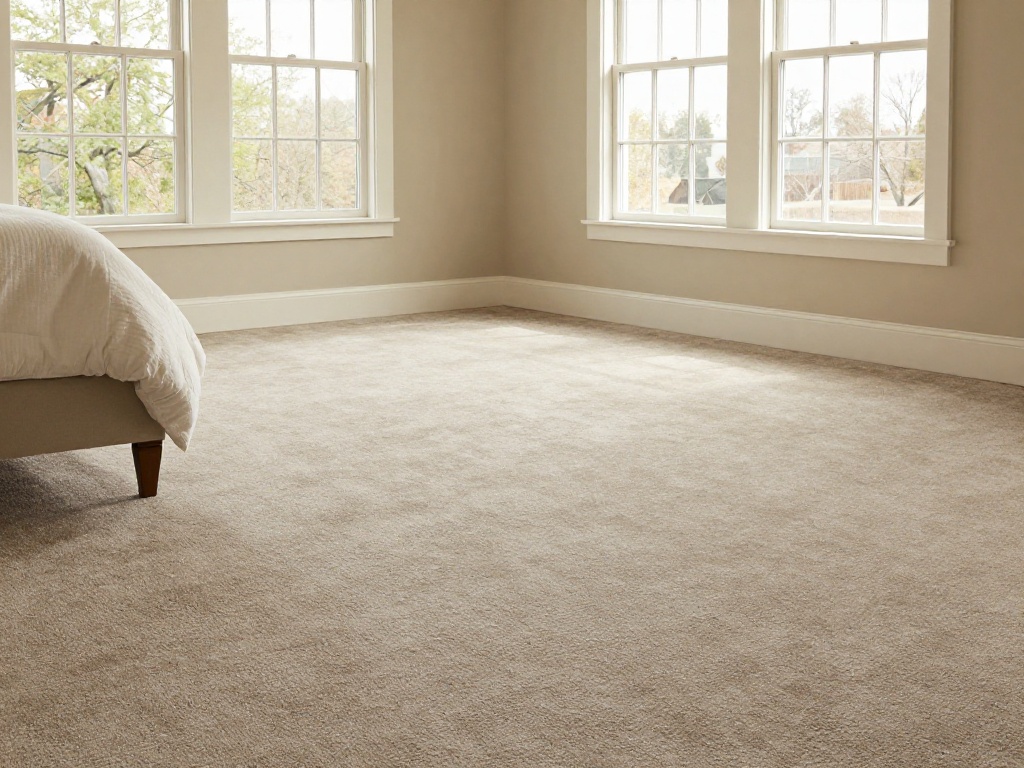
The bedroom is carpet's strongest case. You walk on this floor barefoot, in the dark, at 2 AM, and again at 6 AM before you've had coffee. The floor's temperature at those moments is the first physical sensation of your day. Carpet runs approximately 10–12°F warmer than hard flooring at room temperature — a difference you feel every morning without thinking about it, and one that's particularly noticeable in Northern Virginia's cold winters.
Acoustic performance is the second bedroom advantage. Carpet absorbs footstep impact and ambient room sound in a way that reduces sleep disturbance for partners with different schedules — a real daily-life benefit in NoVA households where long commutes and variable work hours mean people are getting up and going to bed at different times. Hard floors amplify every footstep and every midnight trip to the bathroom.
The fall safety case rounds out the bedroom argument for carpet. Bedrooms are where falls happen — disoriented, barefoot, in low light. A tumble onto carpet is dramatically softer than onto hardwood or LVP, and this factor becomes increasingly relevant for households with older adults or anyone managing balance issues. Carpet doesn't eliminate fall risk, but it meaningfully reduces the injury severity when falls occur.
Wall-to-wall stair carpet — the full tread and riser covered, not a runner with exposed edges — is the specification that genuinely addresses the safety concern on stairs. Hard stair treads (hardwood or LVP) have a coefficient of friction well below 0.42 — the threshold considered safe for stair surfaces under ADA slip resistance standards. Stair carpet brings that number well above 0.6, restoring the grip that makes stairs safer for everyone and particularly critical for young children and older adults.
The acoustic case for stair carpet is significant in NoVA's townhome-heavy housing stock. A Northern Virginia townhome with hard stair treads produces impact noise that travels throughout the home with every stair use — audible from the bottom floor, audible in adjacent bedrooms. Carpet absorbs that impact at the source. In townhomes with young children or early risers, this is a genuine quality-of-life difference, not a minor preference.
The knee-impact case is the third stair argument. Hard stair treads provide no energy absorption — the full impact of each step reverberates through the foot, ankle, knee, and hip joint with nothing to attenuate it. Carpet with a dense pad provides meaningful cushioning that reduces cumulative joint impact for anyone using the stairs frequently, particularly relevant for aging households and anyone with knee concerns.
Northern Virginia's concentration of federal contractors, tech workers, and remote professionals means home offices are a primary living space, not an afterthought. Carpet in a home office absorbs the ambient echo that makes video calls and focused work harder on hard floors — open-plan homes with hard flooring throughout often have a reverberant quality that carpet in the office specifically dampens at the source. For anyone doing audio or video work, this is a material difference.
The rolling chair case is worth noting: LVP under rolling chair casters compresses and scuffs the wear layer over time in a way that concentrated desk-chair use accelerates beyond what the product's residential wear rating anticipates. Carpet handles rolling chair use well and doesn't show the wear path that forms on hard floors beneath fixed desks with chair mats.
Young children spend significant time on the floor — playing, reading, crawling, falling. Carpet in a children's bedroom or playroom provides cushioning that a hard floor cannot replicate for this use pattern. Knee impact during play on carpet is meaningfully lower than on hard flooring, fall injuries are reduced, and the floor's thermal comfort matters for children spending time at floor level rather than chair height.
The counter-argument — that spills and accidents are better managed on hard floors — is real, and Floors and Beyond acknowledges it. The honest answer is that the right choice depends on the age of the children (toddler and preschool years favor carpet; school-age and older years shift toward hard floors as spill-cleanup and hygiene become easier to manage), and whether the room is a dedicated playroom (where accident risk is high) or primarily a bedroom (where carpet's overnight comfort advantages dominate).
Where Hard Floors Win — The Honest Side
Carpet is wrong for rooms with moisture exposure, high-traffic entry points, or heavy pet accident history — and a flooring contractor who doesn't say so isn't giving honest advice.
These rooms need no debate. Direct plumbing exposure, frequent cleaning with wet mops, and the daily moisture from cooking, bathing, and laundry make carpet inappropriate for kitchens, bathrooms, and laundry rooms regardless of the carpet's stain resistance rating. Tile and SPC LVP are the correct specifications here.
Northern Virginia's winter conditions — road salt, snow melt, rain — tracked through entry halls on boots concentrate more moisture and abrasive grit in entry carpet than it can withstand without rapid deterioration. Tile or SPC LVP at entries, with a high-quality indoor-outdoor entry mat, is the correct specification. The transition to carpet deeper in the home where moisture is no longer present is a logical threshold.
Finished NoVA basements with concrete slab subfloors and measurable moisture vapor emission are not appropriate for traditional carpet installation. Moisture vapor that passes through the slab collects beneath the pad, creating conditions for mold growth and adhesive failure in glue-down installations. SPC LVP with a vapor barrier is the correct specification for basements with moisture vapor. Carpet is appropriate for dry, well-controlled basement rec rooms where a calcium chloride or in-situ RH test confirms moisture vapor emission is within acceptable limits.
What Type of Carpet Is Right for Each Northern Virginia Room?
Fiber type and pad specification determine how a carpet performs over its lifespan — and the right specification varies by room use, household activity level, and whether pets or children are in the home.
| Fiber Type | Durability | Stain Resistance | Feel / Softness | Best For |
|---|---|---|---|---|
| Nylon | Excellent — 15–20 yr lifespan | Very good with treatment | Good to very good | Active family households, high-traffic bedrooms, stairs — the recommended specification for most NoVA homes |
| Polyester (PET/PTT) | Good — 10–15 yr lifespan | Excellent — inherent stain resistance | Excellent — luxuriously soft | Guest bedrooms, home offices, lower-traffic rooms where softness is prioritized and budget is a consideration |
| Wool | Excellent — 20–30 yr lifespan | Good — natural lanolin resistance | Excellent — the benchmark | Master bedrooms, formal rooms, investment-grade installations where natural fiber properties and longevity justify the premium |
| Olefin / Polypropylene | Fair — crushes in traffic | Excellent | Fair — coarser texture | Basements, mudrooms, commercial-adjacent spaces where moisture and budget are the primary considerations |
The Pad Specification Matters as Much as the Fiber
- 8-pound density, 7/16 inch thick: The recommended pad specification for most Northern Virginia bedroom and stair installations — dense enough to resist compression, thick enough to provide meaningful cushioning and acoustic performance without making the carpet feel unstable underfoot
- 6-pound density, 1/2 inch thick: Appropriate for lower-traffic rooms (guest bedrooms, home offices) where cushioning comfort is prioritized over long-term density retention
- Rebond pad for stairs: A denser, firmer rebond pad (typically 6-pound, thinner profile) is specified for stairs rather than the bedroom pad — the stair application benefits from firmness over plushness, and the pad must fit properly within the stair's tread-to-riser geometry without bunching
- No pad beneath commercial-grade or loop pile carpet: Some carpet installations (Berber, commercial loop) are specified without a pad or with a thin attached backing — these should be installed per manufacturer spec, not with a standard residential pad added underneath
From Floors and Beyond
"The pad is where people underestimate. You can buy good carpet and put it on a cheap pad and have a mediocre result. A quality carpet on a properly specified pad performs and feels significantly better than the same carpet on an undersized or over-soft pad. At Floors and Beyond, the pad specification is part of every carpet recommendation, not an afterthought."
Floors and Beyond installs carpet throughout Fairfax, Loudoun, Prince William, and Arlington — free shop-at-home consultations with samples in your actual room.
Schedule a Free Carpet ConsultationFrequently Asked Questions — Carpet Installation in Northern Virginia
Is carpet or hardwood better for bedrooms in Northern Virginia?
Carpet is genuinely better than hardwood or LVP for most Northern Virginia bedrooms on four specific criteria: thermal comfort (carpet is 10–12°F warmer underfoot — meaningful in a room walked on barefoot at 6 AM in January), acoustic performance (carpet absorbs footstep noise and ambient sound), fall safety (carpet provides meaningful cushioning for nighttime navigation), and morning comfort. Hard floors are appropriate in bedrooms where moisture, heavy pet accidents, or aesthetic preference make carpet impractical — but the functional case for carpet in bedrooms is strong and shouldn't be dismissed as outdated.
What type of carpet is best for Northern Virginia homes?
For most Northern Virginia households with active family use, nylon carpet at 40–50 oz face weight with an 8-pound density pad is the recommended specification — nylon offers the best combination of durability (15–20 year lifespan), stain resistance with treatment, and crush recovery. Polyester is appropriate for lower-traffic rooms where softness and budget are priorities. Wool is the investment specification for master bedrooms or formal rooms where 20–30 year longevity and natural fiber properties justify the premium. Floors and Beyond does not recommend olefin (polypropylene) for bedroom or stair applications due to its crush vulnerability under sustained traffic.
Does Floors and Beyond install carpet in Northern Virginia?
Yes. Floors and Beyond installs carpet throughout Fairfax, Loudoun, Prince William, and Arlington counties — bedrooms, stairs, home offices, basement recreation rooms, and whole-home installations. All carpet installation is performed by in-house crews only; no subcontractors. Free shop-at-home consultations are available throughout Northern Virginia, including carpet sample review in your actual room, pad specification guidance, and written estimates at no charge.
Should I put carpet or LVP in my Northern Virginia basement?
It depends on the moisture condition of the slab. In Northern Virginia basements with measurable moisture vapor emission — the common condition given the region's clay-heavy soil — carpet is not appropriate because moisture accumulating beneath the pad creates mold risk and adhesive failure. SPC LVP with a vapor barrier is the correct specification. In dry, well-controlled basement recreation rooms where a moisture test confirms acceptable slab conditions, carpet is a viable and comfortable choice that provides thermal warmth that hard floors cannot match in a below-grade space. Floors and Beyond performs moisture testing before any below-grade carpet or hard floor installation recommendation.
// Free Carpet Consultation · Northern Virginia
Get the Right Floor
in the Right Room —
Starting With a
Free Consultation.
Floors and Beyond brings carpet samples and hard floor samples to your actual rooms, makes the honest recommendation for each space, and provides a written estimate — at no charge. Serving Fairfax, Loudoun, Prince William, and Arlington since 1987.
Schedule a Free Consultation



