
Ashburn New Build Floors:
A 5-Year Survival Guide
for Builder-Grade.
Your builder-grade engineered hardwood is fine right now. Here’s the maintenance plan that keeps it that way — all the way to year 10 and beyond.
Ashburn added thousands of new homes over the last decade — and the overwhelming majority of them have the same floors: builder-grade engineered hardwood, installed by the production builder’s flooring subcontractor, finished at the factory, and handed over to homeowners who were never told what they actually have or what it needs. This guide is what the builder should have given you at closing.
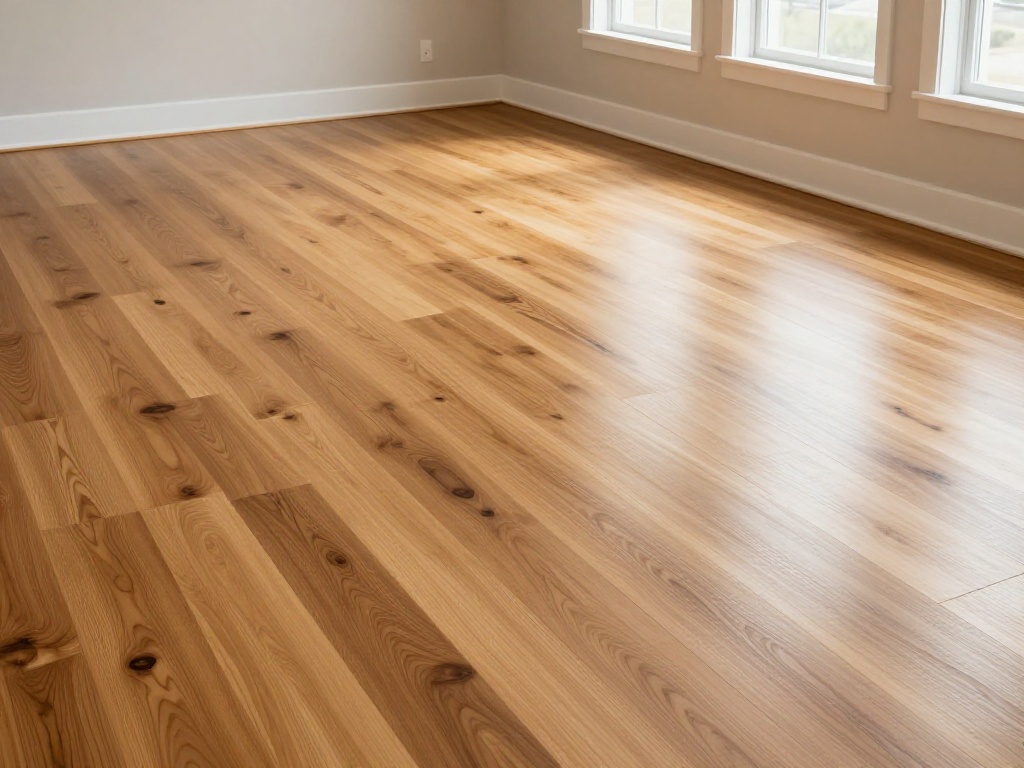
Builder-grade engineered hardwood is not bad flooring. Floors and Beyond wants to be clear about that. It’s real hardwood — a genuine wood veneer over a plywood or HDF core — and it will perform fine for years with the right care. The problem isn’t the material. The problem is that most Ashburn homeowners treat it like it’s either indestructible or disposable, and neither is true. There’s a middle path: a consistent maintenance plan that protects the wear layer, manages Northern Virginia’s humidity challenge, and gets you to year 10 with floors that still look good and still have life in them.
What Builder-Grade Engineered Hardwood Actually Is
Before the survival guide makes sense, you need to understand what you’re working with. Here’s the honest spec profile of what Floors and Beyond typically sees in Ashburn new construction.
The 2–3mm wear layer is the single most important fact about builder-grade engineered hardwood. That thin veneer of real wood is all that stands between you and the plywood core beneath. When it’s gone — through scratching, sanding, or wear-through — the floor is done. Everything in this guide is designed to protect that wear layer for as long as possible.
The Threats Specific to Ashburn New Construction
Northern Virginia’s new construction environment creates specific threats to engineered hardwood that homeowners in other climates or older homes don’t face. Floors and Beyond sees the same damage patterns repeatedly across Ashburn, Brambleton, One Loudoun, and surrounding communities.
The region’s wide swing between humid summers (65–85% RH) and dry winters (25–40% RH) stresses every wood product. Engineered hardwood handles it better than solid — but the thin wear layer is still vulnerable to repeated swelling and contraction. Humidity management isn’t optional here.
In production home building, trades work on top of each other. Floors frequently go in before HVAC, painting, and trim work are complete — meaning they absorb construction debris, paint drips, drywall dust, and foot traffic from every subsequent trade. Many Ashburn floors arrive at closing already scratched at the factory finish level.
Ashburn’s new construction communities skew young family — and young families have dogs. Pet nails on a 2mm wear layer accelerate surface scratching faster than almost any other use pattern. Move-in is the time to establish floor protection habits with pets, not year three.
Builder-grade factory finish is hard — but it’s not scratch-proof. Furniture legs without quality felt pads create localized wear points that cut through the finish layer and into the veneer far faster than general foot traffic. The kitchen table and chairs are the most common culprit in Ashburn homes.
Ashburn’s new construction homes frequently feature large south-facing windows and open-concept layouts that flood the main level with direct sunlight. UV exposure fades wood flooring unevenly — the area near windows changes color faster than protected areas, creating visible lines over years.
Steam mops and wet mops on engineered hardwood are the fastest way to compromise the wear layer and cause delamination. Factory-applied finishes on builder-grade products are not rated for steam or excessive moisture — and many new homeowners use steam mops thinking they’re protecting their investment.
The Year-by-Year Survival Guide
Here’s exactly what to do — and what to avoid — at each stage of your floor’s life in an Ashburn new construction home.
Year one is your most important year — not because the floor is most vulnerable, but because it’s when habits form. Everything you establish now will either protect or accelerate the wear of your 2–3mm veneer over the next decade.
- Put quality felt pads on every furniture leg in the house — chairs, tables, sofas, everything. Do this before moving furniture in.
- Place entry mats at every exterior door — coarse exterior mat, soft interior mat. Grit on a thin-wear-layer floor cuts through the finish faster than almost anything else.
- Buy a hygrometer and keep indoor humidity between 35–55% year-round. Run the AC during summer, a humidifier during winter.
- Use only manufacturer-approved cleaner or Floors and Beyond’s recommended pH-neutral alternative. Never use steam, vinegar, or oil soap.
- Photograph any damage you found at move-in and document it with the builder’s warranty team before the 1-year punch list deadline.
By year two the floor has been through one full Northern Virginia humidity cycle — the summer expansion and winter contraction that engineered hardwood is designed to handle but that builder-grade products handle with less margin. Walk the floor carefully and note any changes from move-in.
- Check all seams in high-traffic areas for any gapping or peaking — slight movement is normal, significant gapping or raised edges is not.
- Look at entry areas and traffic lanes under good light — this is where wear-through begins first.
- Confirm humidity management has been consistent. If you skipped the humidifier this winter, the floor will tell you.
- Refresh felt pads on any furniture that has moved — pads compress over time and lose effectiveness.
By year three, most Ashburn new construction floors show the first visible signs of finish wear in traffic lanes — a slight dulling in the path from kitchen to living area, or through the main entry. This is normal for builder-grade. The question is whether you’re at light finish wear or approaching the wear layer itself. The difference matters enormously.
- Pour a few drops of water on worn areas. If it beads, finish is intact. If it absorbs immediately, the wear layer is exposed and needs attention now — not later.
- Add area rugs to the highest-traffic zones — not to cover the problem, but to stop it from progressing faster than it would otherwise.
- Consider a professional floor polish/refresher — some engineered hardwood manufacturers offer revitalizer products that restore shine to worn finish without sanding.
- Replace any felt pads that have worn flat — they lose 80% of their effectiveness within 2–3 years of heavy use.
Year four is when Floors and Beyond most frequently recommends a professional floor refresh for Ashburn new construction homes that have been well-maintained. The finish is showing visible wear in traffic lanes, the sheen is uneven, and the choice is clear: address it now while there’s still finish to work with, or let it continue degrading toward the veneer.
- Schedule a professional assessment to measure remaining wear layer and evaluate finish condition.
- If finish is worn but veneer is intact — a light screen and application of compatible finish coat is often the right answer. Fast, minimally disruptive, significantly extends the floor’s useful life.
- If wear-through to the veneer has already occurred in spots — discuss options with Floors and Beyond. Limited spot repair may be possible; full replacement planning should begin.
- Consider UV-protective window film on south-facing windows if fading lines are visible near glass.
Floors that received professional attention in year four enter year five in significantly better condition than those that didn’t. A fresh finish coat protects what’s left of the wear layer and resets the degradation clock by several years. The same maintenance habits that got you here continue to apply — with one addition.
- Continue all year-one habits: humidity management, pH-neutral cleaning, entry mats, furniture pads.
- Consider rotating area rugs in traffic lanes annually so wear distributes evenly rather than concentrating in one path.
- Begin researching replacement options — not because the floor is failing, but so you’re informed when the time comes. Floors and Beyond can walk you through what makes sense as an upgrade from your builder-grade starting point.
- Schedule a professional check-in every 2 years going forward to monitor remaining wear layer.
Builder-grade engineered hardwood with a 2–3mm wear layer, well-maintained, realistically gets you 8–12 years before replacement is the right conversation. Floors and Beyond’s honest advice: don’t wait for wear-through to force an emergency replacement. Plan the upgrade on your terms — your timeline, your budget, your product choice.
- Use this window to research your upgrade: solid hardwood, premium engineered hardwood (4–6mm wear layer), or quality LVP for specific rooms.
- Get a Floors and Beyond assessment to time the replacement correctly — not too early (waste money) and not too late (damage subfloor or create safety issues from wear-through).
- Consider that Ashburn’s newer communities are maturing — updated flooring before a listing in years 8–12 is among the highest-ROI improvements you can make in this market.
- If the floor has lasted this long in good condition, congratulations — your maintenance habits made a real difference.
The Honest Summary
"Builder-grade engineered hardwood is a starting point, not an endpoint. The homeowners who get 10+ years from it are the ones who treated it like what it actually is — a thin veneer over a core, not an indestructible surface. The ones who call us at year 5 with floors beyond saving are almost always the ones who never put felt pads on their chairs and mopped with whatever was under the sink."
Not sure where your Ashburn floors stand? Floors and Beyond offers free assessments across Loudoun, Fairfax, Prince William, and Arlington Counties.
Book a Free AssessmentFrequently Asked Questions
Can builder-grade engineered hardwood be refinished?
In limited circumstances, yes — but the window is narrow. A 2–3mm wear layer leaves very little material for sanding. In many cases a light professional screen and compatible finish coat is possible without full sanding — which refreshes the appearance without removing significant veneer material. A full drum sand is almost never appropriate on builder-grade engineered hardwood. Floors and Beyond will measure your remaining wear layer and tell you honestly what’s possible before recommending any approach.
Why is my Ashburn new construction floor already scratched after 6 months?
Builder-grade factory finish is hard — harder than most site-applied finishes — but the thin wear layer means scratches that reach the wood fiber are permanent and visible. The most common causes in the first year: furniture without felt pads, grit tracked in on shoes before entry mats were placed, and pet nails on an unprotected surface. None of these are manufacturer defects — they’re use patterns. The good news: if you’re at 6 months, you have time to establish the right habits before the scratches become a bigger problem.
How do I know when my builder-grade floors need to be replaced?
The clearest signal is water absorption in traffic lanes — pour a few drops and watch. Beads up: finish is intact. Absorbs immediately: the veneer is exposed. At that point, depending on how much veneer remains, you’re looking at either a light professional coat or a replacement conversation. Additional signals: visible color change where the finish is gone, soft spots or delamination, or areas where the surface texture is completely different from protected areas of the same floor. Floors and Beyond assesses this at no charge.
Is engineered hardwood in a new Ashburn home worth upgrading immediately?
Not necessarily — but it depends on your specific product and wear layer. If your builder offered a standard package and you know the wear layer is 2mm, upgrading sooner rather than later avoids the managed-decline maintenance cycle this guide describes. If you’re in a higher spec package with 4–6mm wear layer, your timeline is significantly more forgiving and immediate upgrade is not indicated. Floors and Beyond can measure your actual wear layer during a free assessment and give you an honest recommendation either way.
Can I use a steam mop on my Ashburn engineered hardwood?
No. Steam mops on engineered hardwood — regardless of the product or the marketing — introduce heat and moisture at levels that compromise the factory finish and can cause delamination of the veneer from the core over time. Virtually every engineered hardwood manufacturer explicitly excludes steam cleaning from their warranty coverage. Use a dry microfiber mop for daily maintenance and a pH-neutral cleaner with a barely-damp microfiber pad for deeper cleaning. That’s the complete appropriate routine.
// Free Floor Assessment · Ashburn
Know Where Your Floors
Actually Stand.
Floors and Beyond assesses engineered hardwood in Ashburn new construction homes at no charge — wear layer measurement, finish condition, and honest next steps. Serving Loudoun, Fairfax, Prince William, and Arlington since 1987.
Book a Free Assessment



