
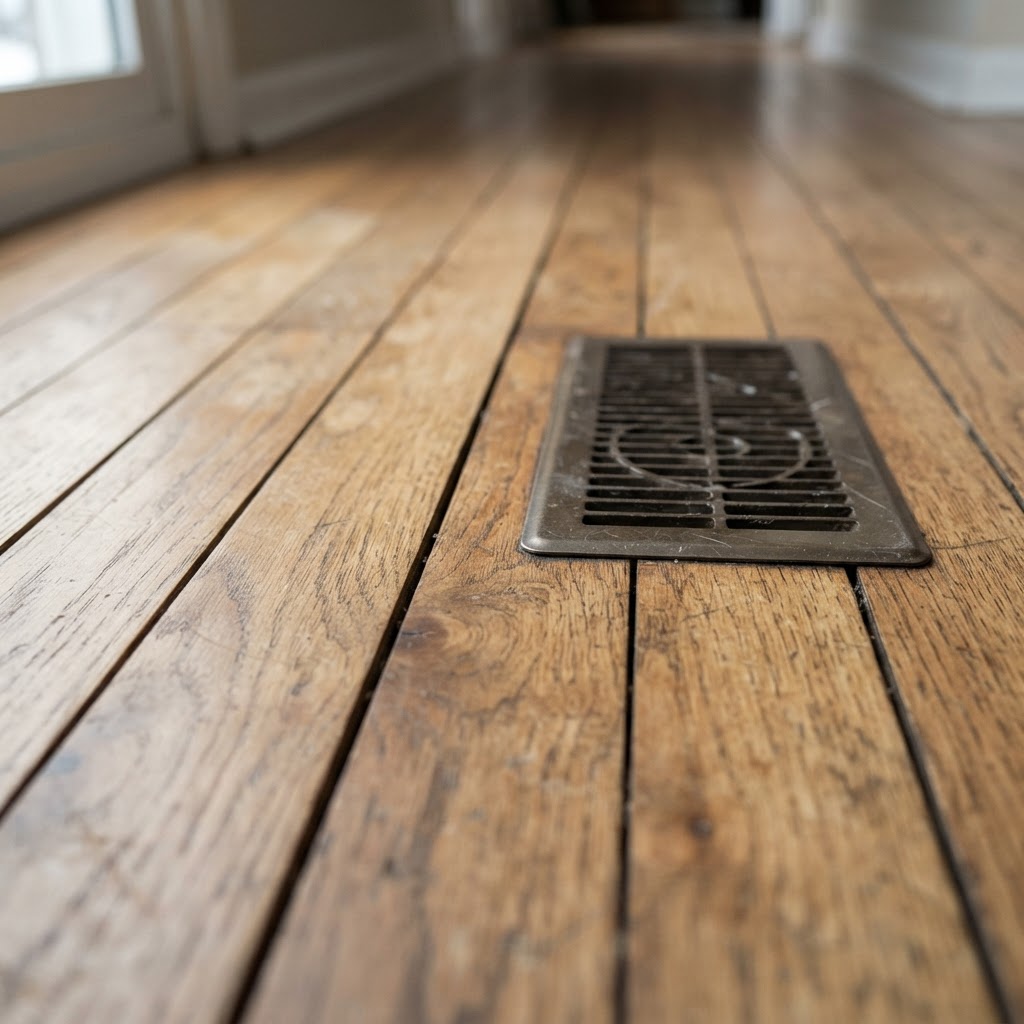
Every winter, homeowners in Vienna notice the same thing: thin lines between the boards of floors that looked tight in September. In houses built in the mid-century, with solid oak that has been in place for decades, seasonal gaps are normal, and they usually close again by summer. Sometimes, though, gaps are a sign of something else. This guide explains why hardwood floors gap in winter in Vienna, VA homes, what is normal, what to do and when to have the floor looked at.
Floors and Beyond VA is a family-owned flooring company that has served Northern Virginia since 1987, and our own crews handle the work from the first visit to the final cleanup.
Why Wood Shrinks in Winter
Wood absorbs and releases moisture. When the heating comes on and the air gets dry, boards give up moisture and shrink across their width. A floor made of many boards adds up those small changes into visible gaps. In summer, humid air swells the boards and the gaps close. This seasonal movement is natural.
What Is Normal in an Older Oak Floor
In solid oak strip floors common in Vienna's mid-century houses, gaps about the thickness of a thin card are typical in dry months. They may be wider along heating vents, near radiators or baseboard heat, and along walls with sun exposure. If they close or nearly close in summer, the floor is behaving normally.
Why Vienna Homes See It
Many Vienna homes have forced-air heat that dries the air quickly, and older houses have little control over indoor humidity. Floors that were nailed down decades ago have been through many cycles and may have loosened fastenings, which makes gaps more noticeable. Oak is a stable wood, but it still moves.
What Not to Do
Do not fill seasonal gaps with rigid filler, caulk or putty in winter. When the boards swell in summer, they push against the filler and can crush edges or cause cupping. If you want to fill gaps, wait until humidity is at the middle of the range, and use a flexible material chosen by a professional.
What Helps
Keep indoor humidity steady. A humidifier in winter can bring relative humidity toward the 35 to 55 range many makers recommend, and a dehumidifier or air conditioning in summer helps. Keep furniture off heating vents, and avoid placing rugs that trap heat. A hygrometer in the main rooms shows you what the house is doing.
When Gaps Are a Problem
Call a professional if gaps stay wide in summer, if boards are cupping or crowning, if gaps are uneven across the room, if boards are loose or if you see cracking in the finish. These can point to moisture below, loose fasteners or damaged boards. See our article on why hardwood floors gap in winter for related causes.
Refinishing and Closing Gaps
If you are refinishing a floor with gaps, the crew can fasten loose boards before sanding and, where appropriate, fill gaps with a flexible filler or wood slivers. Decide before refinishing whether you want to keep the natural look of an old floor, with its gaps, or reduce them. Our floor restoration service covers both.
In Northern Virginia Homes
If you plan to refinish or repair your floor, winter is a good time to take readings. Note where the gaps are widest, which rooms are driest and how they compare with summer. Share those notes and a few photos with your installer. They show whether the pattern is seasonal movement or a fault, and they help the crew plan fastening, filling and finishing so the floor looks right in every season, not just on the day the work is done.
Frequently Asked Questions
Are winter gaps in hardwood normal?
Yes, small gaps that close in summer are normal.
Should I fill the gaps?
Not with rigid filler in winter. Wait for mid-range humidity and use a flexible material.
Will a humidifier help?
It can reduce gapping by keeping humidity steadier.
Can gaps mean the floor is failing?
Only if they stay wide, if boards cup or if the floor is loose.
Can refinishing fix gaps?
It can address loose boards and fill some gaps, but seasonal movement continues.
Ready When You Are
If your Vienna floor has gaps that worry you, an in-person look can tell whether they are seasonal or a sign of something to fix. Floors and Beyond VA serves Fairfax, Loudoun, Prince William and Arlington counties, Alexandria and the Washington, DC area. Schedule an in-home estimate at contact Floors and Beyond VA or call (703) 906-5698.
Read more about our flooring company in Vienna, VA, or see our hardwood flooring services.

